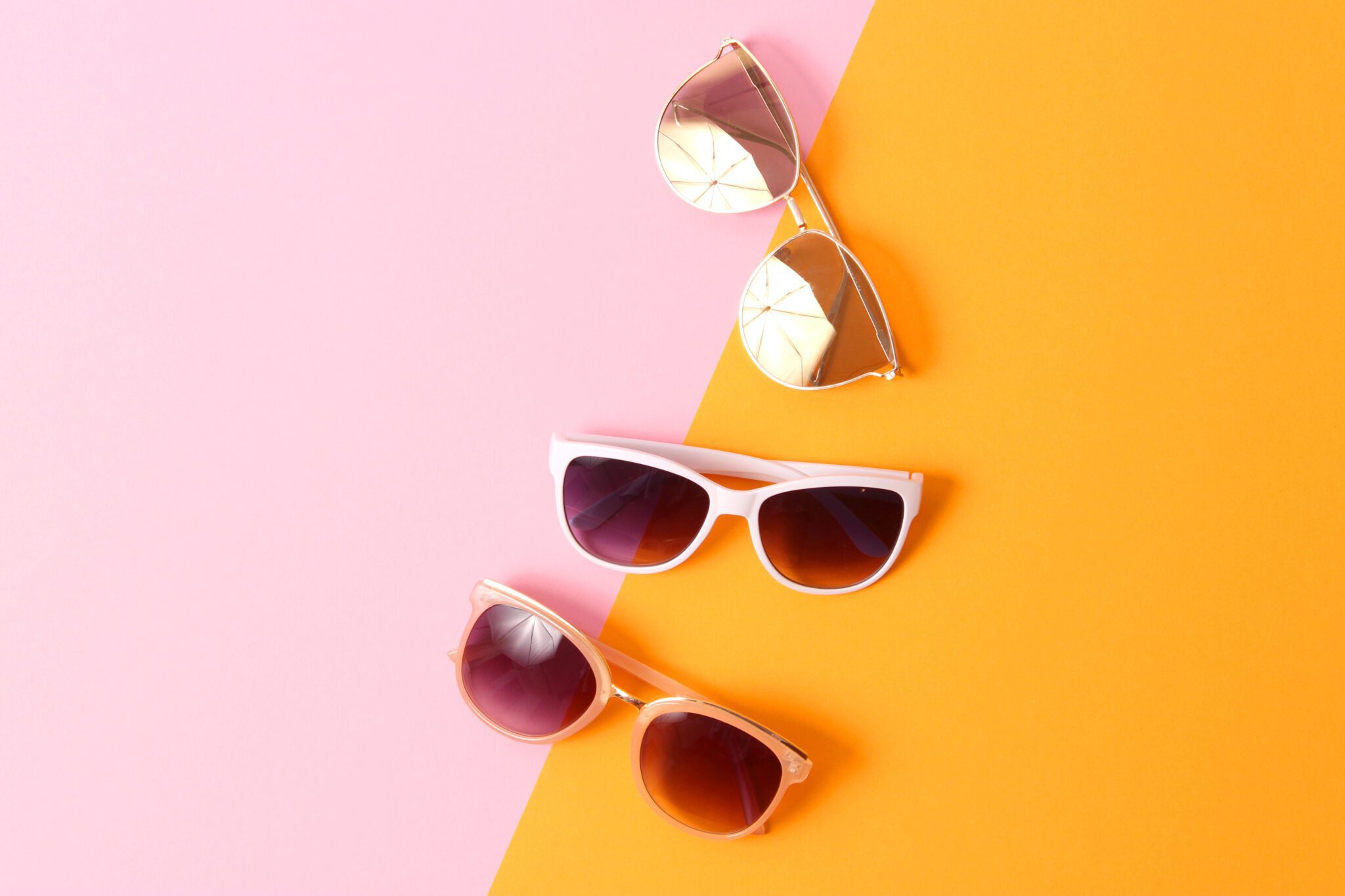
In a wardrobe defined by intention, every piece earns its place. The tailored blazer, the cashmere knit, the structured leather bag — each one communicates refinement without announcing it. Sunglasses operate on the same principle, yet they are often treated as an afterthought: a seasonal purchase, a trend-chasing impulse, or simply whatever was near the register.
That approach misses what a well-chosen pair of sunglasses actually does. At its best, eyewear frames the face, completes a silhouette, and adds a layer of quiet authority to even the simplest outfit. Chosen poorly, it undercuts everything else. This guide treats sunglasses the way quiet luxury treats every other wardrobe decision: with care, with a long view, and with the understanding that the best choices are rarely the loudest ones.
Why Sunglasses Belong in the Quiet Luxury Conversation
Quiet luxury is a philosophy about signal-to-noise ratio. High quality, low volume. Sunglasses that carry oversized logos or trend-dependent shapes belong to a different category — useful for the season they arrive in, obsolete by the next.
A pair chosen for fit, construction, and timelessness behaves more like a cashmere sweater than a fast-fashion print. It does not demand attention. It simply belongs. That distinction — between pieces that ask to be noticed and pieces that make an entire look feel considered — is exactly what the quiet luxury framework is built around.
Eyewear also occupies a unique position in the accessories hierarchy: it sits at eye level, in the center of the face, present in every photograph and every first impression. This makes the case for treating it as a long-term investment rather than a seasonal placeholder.
Start With Face Shape, Not Trend
The most reliable framework for choosing sunglasses that will still feel right in five years is the same one used to select prescription frames: face shape. Silhouettes that flatter bone structure do not expire the way trend-driven shapes do.
A useful starting point is to browse women’s sunglasses filtered by frame shape rather than by what’s featured on the homepage. You can look for face shape guides that break down exactly which silhouettes work for each face type. That shift in orientation — from “what’s popular” to “what fits my face” — is the same mental move that separates an investment wardrobe from a reactive one.
The goal is not transformation but balance. A frame that works with facial structure rather than against it reads as natural, uncontrived — which is precisely the quiet luxury standard.
Frame Materials and What They Communicate
Material choice in eyewear carries the same weight as fabric choice in clothing. It affects durability, aesthetic, and how the piece ages. The same principles that define high-end glasses — dense construction, quality hinges, finishes that hold over time — apply equally to sun frames.
Thin metal frames — gold, silver, or gunmetal — communicate restraint. They have a long design history that predates any current trend and will outlast whatever is next. They suit a wardrobe already anchored in neutral tones and clean lines.
High-quality acetate offers more range. Tortoiseshell, deep black, and muted translucents have all demonstrated staying power across decades. The quality differentiation matters here: thin, brittle acetate discolors and warps; dense, well-finished acetate maintains its shape and develops a subtle patina.
Avoid materials that feel fashionable but function poorly — oversized plastic constructions that flex at the hinges within months, or thin wire styles with no structural reinforcement at the temples. Longevity is part of the value proposition.
Lens Quality Is Not Optional
A frame chosen for fit and longevity can be undone by poor lens quality. Scratched, poorly coated, or optically distorted lenses create visual fatigue and undermine the overall impression of the piece.
UV protection is the baseline requirement. The AAO’s guide on how to choose sunglasses for UV protection recommends lenses that block 99 to 100 percent of both UVA and UVB radiation — a standard that has nothing to do with price point and everything to do with specification. Many affordable lenses meet it; many expensive ones do not. Verify before purchasing.
Beyond UV, consider:
- Polarisation — reduces glare from reflective surfaces, particularly useful near water or on high-glare days.
- Anti-reflective coating — improves clarity and reduces the “fish-eye” effect visible to others when light catches the lens at certain angles.
- Scratch resistance — a quality coating extends the usable life of the lens significantly.
A pair with a well-chosen frame and degraded lenses reads as neglected, not luxurious. Lens maintenance — a microfibre case, a proper cleaning cloth, never placing them lens-down — is part of ownership.
The Case for Neutral Lenses
Lens tint follows the same logic as palette choices in a quiet luxury wardrobe. Neutrals — grey, brown, and green-tinted lenses — offer the widest range of use and the longest aesthetic shelf life.
Grey lenses reduce brightness without significantly shifting color perception, making them a strong all-purpose choice. Brown lenses warm contrast and perform particularly well in lower light. Green lenses sit between the two, preserving color accuracy while reducing overall brightness.
Mirrored, heavily tinted, or fashion-specific lens colors tend to date a pair quickly. They can work within a specific look but limit versatility in the way a statement-print blouse limits versatility — useful in the right context, absent from most others.
How Sunglasses Integrate Into a Quiet Luxury Wardrobe
The strength of sunglasses as a quiet luxury accessory is their ability to work across contexts without adjustment.
Worn with a wool coat and loafers, a clean metal or acetate frame reinforces the considered quality of the outfit. With a linen dress on a warm day, they provide the only accessory the look needs. Tucked into a blazer lapel when not in use — a small detail that photographers and stylists use frequently — they suggest a certain ease without performing it.
They do not need to match. They need to belong. That distinction is worth sitting with: matching implies coordination for its own sake; belonging implies that each element was chosen with enough care that they coexist naturally.
Longevity Over Seasons: Buying Once and Buying Well
The quiet luxury approach to sunglasses is the same as it is to any other investment piece: buy fewer, buy better, and choose with the long view in mind.
A pair purchased on a clear set of criteria — face shape fit, material quality, neutral lens, UV specification — will perform across years and contexts in a way that a trend-driven purchase will not. The cost-per-wear mathematics, which applies equally to a cashmere sweater or a structured bag, applies here too.
For a deeper look at what makes a frame worth keeping, Vogue Scandinavia’s edit of the best sunglasses for women covers exactly this territory — organised by shape and category, with clear thinking on what justifies the spend and what does not. A well-maintained pair in a timeless silhouette retains value in a way that an oversized neon frame from a viral moment does not.
Final Thought
Quiet luxury is not a checklist. It is a way of making decisions — one that prioritises enduring quality over immediate novelty, and that treats each wardrobe choice as a considered addition rather than a reactive purchase.
Sunglasses, chosen well, are no different from a tailored trouser or a silk blouse in that respect. They carry the weight of the look without asking for attention. And in a wardrobe built around that principle, that is precisely the point.