
Key Takeaways
- Identifying industries with consistent demand can enhance job security.
- Developing transferable skills increases adaptability across various sectors.
- Continuous learning and networking are essential for career resilience.
Table of Contents
- Healthcare: A Sector of Steady Demand
- Technology and Information Security: Safeguarding the Digital World
- Education: Shaping Future Generations
- Skilled Trades: The Backbone of Infrastructure
- Sustainability and Environmental Sciences: Addressing Global Challenges
- Finance and Accounting: Managing Economic Health
- Building Personal Career Resilience
In the current economic climate, uncertainties can arise quickly and have far-reaching effects on employment and job security. Workers today face new challenges brought on by rapid technological innovation, global economic shifts, and unexpected world events. As a result, building a resilient career is vital. Navigating this landscape requires choosing professions that offer stability and preparing strategically for future uncertainties. Utilizing career development resources can be an excellent way to stay informed and adaptable while plotting a path toward a secure future.
Long-term job stability hinges not only on the sector in which you work but also on your ability to adapt to change. Choosing a resilient career means not only finding a job that can weather economic storms, but also developing versatile skills and continually refining your knowledge. Investing in learning, networking, and upskilling can maximize opportunities and reduce risk in tumultuous times.
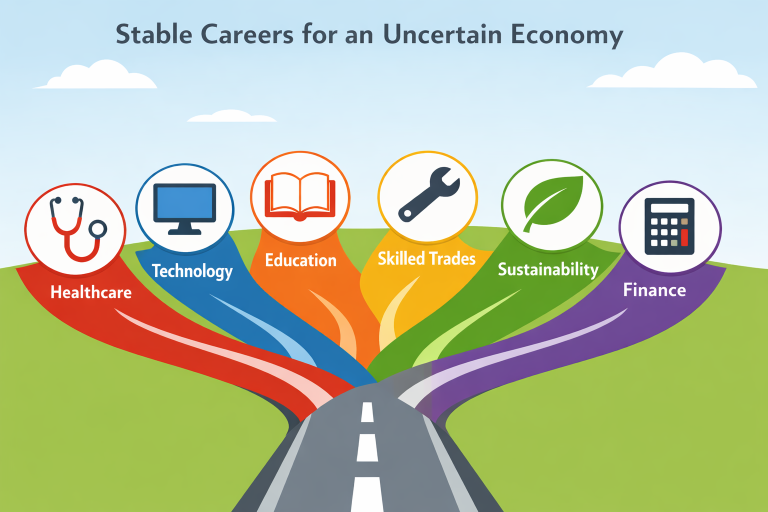
Below, we explore several industries and approaches that consistently demonstrate resilience across economic cycles. These paths offer growth, security, and the opportunity to make a meaningful impact, valuable qualities no matter the broader economic conditions.
If you’re curious about future job trends or want data-backed career advice, sources such as the U.S. Bureau of Labor Statistics regularly publish statistics that can help you make more informed choices regarding your professional path.
Healthcare: A Sector of Steady Demand
The healthcare industry is uniquely resilient, regardless of broader economic trends. Healthcare professionals, from home health aides to physicians, remain indispensable to society, thanks to ongoing medical needs and an aging population. For example, job postings for home health and personal care aides have significantly increased in recent years, underscoring their essential role. According to industry sources, physician and surgeon opportunities have also expanded well above pre-pandemic numbers, reflecting both ongoing population health needs and a growing focus on preventative care and wellness.
Technology and Information Security: Safeguarding the Digital World
As the digital world expands, technology professionals occupy a crucial space in maintaining data security and digital infrastructure. Information security, in particular, has seen explosive growth, with demand for cybersecurity analysts far exceeding the occupational average. Businesses and governments alike rely on these experts to protect sensitive information and maintain trust. This ongoing need for security, software development, and digital innovation means that tech careers remain among the most resilient, regardless of short-term economic cycles. Insights on this can be found in this Forbes analysis.
Education: Shaping Future Generations
Education is foundational to any society’s progress and prosperity. Teaching roles remain secure and in demand, as schools and institutions require qualified educators to mentor the next generation. Economic fluctuations rarely affect the long-term importance of education, and the need for educators remains robust. Additionally, with the rise of digital classrooms and online learning platforms, positions in educational technology and curriculum development are expanding, creating new opportunities for those with teaching credentials and technical expertise.
Skilled Trades: The Backbone of Infrastructure
Skilled trades such as electricians, plumbers, and carpenters often offer high job security, regardless of economic conditions. These professionals are essential for constructing and maintaining buildings, infrastructure, and essential services, tasks that cannot easily be outsourced or automated. Apprenticeship programs and vocational training offer accessible entry points into these fields, making them attractive choices for those seeking stable, well-compensated careers.
Sustainability and Environmental Sciences: Addressing Global Challenges
As environmental awareness grows, careers in sustainability and environmental science are increasingly important. Professionals in these sectors work on renewable energy, environmental conservation, and sustainable business practices, all of which are critical to meeting present and future global needs. The shift toward greener economies has opened many career opportunities for those focused on environmental impact, making these roles both futureproof and impactful. For more on green careers and their outlook, visit this National Geographic article.
Finance and Accounting: Managing Economic Health
Careers in finance and accounting are essential for both individuals and organizations as they navigate complex markets, tax systems, and long-term planning. Financial professionals are invaluable during all market conditions and play critical roles in budgeting, investing, regulatory compliance, and strategic planning. Their skills remain highly transferable, allowing career mobility even as industries and economies evolve.
Building Personal Career Resilience
While choosing a resilient sector is important, individual adaptability is just as essential. Career resilience is built through:
- Developing Transferable Skills: Strong communication, analytical reasoning, adaptability, and leadership are in demand across all industries.
- Continuous Learning: Those who invest in certifications, formal education, or on-the-job learning boost their employability and prepare themselves for changes ahead.
- Networking: A robust professional network supports career growth and provides critical opportunities during industry shifts or personal transitions.
Proactively managing your career through skill development, industry research, and thoughtful networking dramatically increases resilience and opens doors to new opportunities, no matter the wider economic environment.