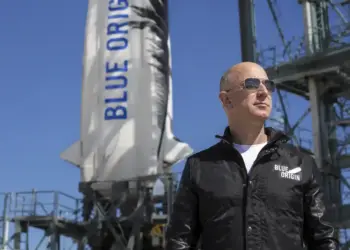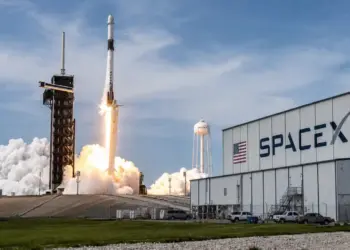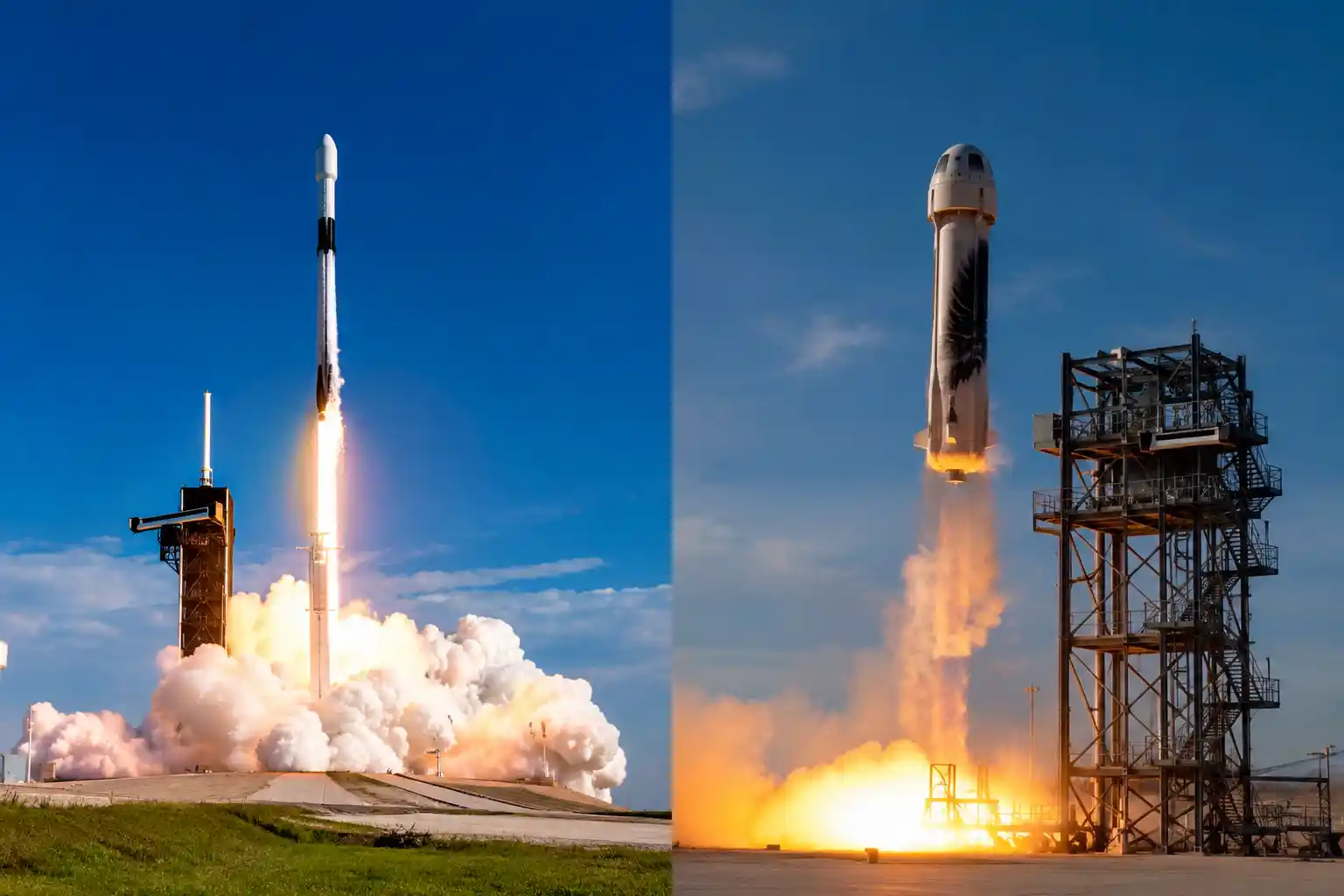
SpaceX vs Blue Origin has become one of the most important rivalries in modern technology, shaping not only the future of space exploration but also the direction of the global economy. Within just two decades, these private space companies have transformed what was once the exclusive domain of governments into a rapidly expanding commercial marketplace filled with investment opportunities, technological breakthroughs, and ambitious visions for humanity’s future.
The rise of the commercial space industry reflects broader trends in innovation, private capital, and frontier technology investing. As governments increasingly partner with private firms, the competition between Elon Musk vs Jeff Bezos has become a defining narrative within aerospace. Both entrepreneurs believe humanity’s future extends beyond Earth, yet they pursue that goal through dramatically different strategies.
At the center of this competition lies reusable rocket technology, one of the most significant advancements in aerospace economics. By reducing launch costs and increasing access to orbit, both companies are helping accelerate space economy growth and opening new commercial opportunities in communications, transportation, defense, tourism, and infrastructure.
While SpaceX dominates headlines with frequent launches and ambitious Mars plans, Blue Origin continues building a long-term platform focused on sustainable human expansion into space. Their rivalry extends beyond rockets and contracts. It represents competing philosophies about innovation, risk-taking, and the future role of private enterprise in humanity’s next great frontier.
The Origins of SpaceX and Blue Origin
SpaceX and Blue Origin emerged from the ambitions of two of the world’s most influential entrepreneurs.
SpaceX was founded in 2002 by Elon Musk after the sale of PayPal. Musk believed space transportation costs remained prohibitively expensive and that reducing those costs was essential for establishing a self-sustaining human presence on Mars. From the beginning, SpaceX pursued aggressive technological development, vertical integration, and rapid testing cycles.
Blue Origin, founded by Jeff Bezos in 2000, predates SpaceX by two years. Bezos envisioned a future where millions of people live and work in space. His philosophy emphasized gradual progress, reflected in the company’s well-known motto: “Gradatim Ferociter,” meaning “step by step, ferociously.”
Although both companies entered the aerospace sector with similar ambitions, their execution strategies differed significantly. SpaceX prioritized speed, iteration, and commercialization. Blue Origin focused on patient development, long-term infrastructure, and sustained investment funded largely through Bezos’ personal wealth.
These foundational differences continue to influence every aspect of the competition today, from launch schedules to strategic priorities.
Elon Musk vs Jeff Bezos: Two Different Visions for Space
The rivalry between Elon Musk vs Jeff Bezos extends beyond corporate competition and reflects contrasting leadership philosophies.
Musk approaches innovation with urgency. He often accepts short-term setbacks in pursuit of rapid progress. SpaceX engineers operate within a culture that prioritizes experimentation, iteration, and ambitious deadlines. This approach helped the company achieve breakthroughs in reusable rockets, satellite deployment, and spacecraft development at unprecedented speed.
Bezos, by contrast, advocates long-term planning and disciplined execution. Blue Origin emphasizes reliability, sustainability, and infrastructure development. Rather than focusing exclusively on Mars or exploration missions, Bezos envisions creating industrial ecosystems in space that eventually reduce pressure on Earth’s resources.
Several strategic differences define their approaches:
- Musk focuses on making humanity multiplanetary.
- Bezos focuses on enabling large-scale economic activity in space.
- SpaceX embraces rapid deployment and commercialization.
- Blue Origin prioritizes infrastructure and long-term ecosystem building.
- SpaceX aggressively pursues government and commercial opportunities.
- Blue Origin emphasizes foundational capabilities for future expansion.
Both strategies have merit. One prioritizes speed and disruption, while the other prioritizes durability and long-term capacity building. Together, they reflect two distinct paths toward humanity’s future beyond Earth.
SpaceX vs Blue Origin in Technology and Innovation
Technology remains the central battleground in the SpaceX vs Blue Origin competition.
SpaceX revolutionized the aerospace industry through reusable rocket systems. The Falcon 9 became the first orbital-class rocket capable of routine booster recovery and reuse, dramatically lowering launch costs. This achievement transformed industry economics and forced competitors worldwide to accelerate reusable rocket development.
Blue Origin followed a different path. Its New Shepard vehicle successfully demonstrated reusable suborbital flight and helped validate technologies that later informed larger projects such as New Glenn.
The contrast between the companies becomes clearer when examining their technological positions.
SpaceX vs Blue Origin Comparison
| Category | SpaceX | Blue Origin |
|---|---|---|
| Founder | Elon Musk | Jeff Bezos |
| Founded | 2002 | 2000 |
| Core Vision | Mars colonization | Space-based economy |
| Main Launch Systems | Falcon 9, Falcon Heavy, Starship | New Shepard, New Glenn |
| Reusability Experience | Extensive operational history | Growing deployment |
| Launch Frequency | Very high | Limited but expanding |
| Commercial Revenue | Diverse and substantial | Developing revenue base |
| Satellite Network | Starlink | Limited presence |
| Space Tourism | Secondary focus | Major focus |
| Funding Source | Commercial contracts and private capital | Bezos-funded investment |
The table highlights how SpaceX currently leads in operational maturity, while Blue Origin continues investing in future infrastructure capabilities. The technological race remains dynamic because both companies continue pushing the boundaries of aerospace engineering.
Launches, Contracts, and Commercial Success
Operational scale provides one of the clearest indicators of competitive positioning.
SpaceX has achieved extraordinary launch frequency, becoming a dominant provider of orbital transportation services. The company conducts missions for commercial customers, scientific organizations, defense agencies, and government institutions. Frequent launches create operational experience that reinforces its competitive advantage.
Government contracts have played a crucial role in SpaceX’s growth. Partnerships with major agencies accelerated development while validating the company’s technology. Defense contracts have further strengthened revenue streams and expanded strategic influence.
Blue Origin has secured important government partnerships as well, particularly through lunar exploration initiatives and defense-related projects. However, its launch cadence remains lower than SpaceX’s.
From a financial markets perspective, launch volume creates significant advantages. More launches generate revenue, produce operational data, improve reliability, and attract additional customers. This creates a powerful feedback loop that currently favors SpaceX.
Nevertheless, Blue Origin’s substantial financial backing allows it to pursue long-term investments without immediate pressure for commercialization. This flexibility could prove valuable as the broader market evolves.
Starlink, Space Tourism, and Revenue Models
One of the most important distinctions in the SpaceX vs Blue Origin debate involves business models.
SpaceX has built a diversified ecosystem centered around launch services and Starlink. The satellite network represents one of the most ambitious infrastructure projects ever undertaken by a private company. By providing global internet connectivity, Starlink generates recurring revenue that supports broader aerospace development.
Many analysts evaluating SpaceX valuation view Starlink as a critical driver of future growth. Unlike launch contracts, subscription-based connectivity services provide scalable and predictable cash flows.
Blue Origin follows a different path. The company’s highly visible space tourism initiatives have demonstrated public demand for commercial human spaceflight. Through suborbital experiences, Blue Origin has introduced private citizens to space travel while establishing a premium tourism market.
Key differences include:
- SpaceX focuses heavily on orbital infrastructure.
- Blue Origin emphasizes human experience and tourism.
- Starlink creates recurring revenue streams.
- Blue Origin leverages luxury and experiential offerings.
- SpaceX benefits from network effects.
- Blue Origin benefits from brand exclusivity.
Both approaches address different segments of the emerging space economy, demonstrating the diversity of opportunities available within the commercial space race.
Which Company Has the Stronger Competitive Position?
Assessing competitive strength requires examining more than launch counts.
SpaceX currently leads across several measurable dimensions, including launch frequency, commercial market share, revenue generation, and infrastructure deployment. Its integrated business model creates significant barriers to entry while strengthening its influence across multiple sectors.
However, Blue Origin possesses unique advantages that investors and industry observers should not ignore. The company enjoys access to substantial long-term capital, maintains a strong focus on infrastructure, and operates with a strategic horizon extending decades into the future.
The broader Blue Origin space program also aligns with long-term economic trends. As industrial activity expands beyond Earth, infrastructure-focused businesses could become increasingly important.
Rather than viewing the competition solely through today’s metrics, analysts must consider how future markets may evolve. Space tourism, orbital manufacturing, lunar development, and space-based energy systems could create opportunities that reward different strategic approaches.
Consequently, the competitive landscape remains far from settled.
Competitive Advantages Comparison
| Factor | SpaceX Advantage | Blue Origin Advantage |
|---|---|---|
| Innovation Speed | Rapid iteration cycles | Deliberate engineering |
| Launch Frequency | Industry-leading cadence | Growing capacity |
| Revenue Generation | Starlink and launches | Long-term capital support |
| Funding Model | Commercially diversified | Strong founder backing |
| Strategic Vision | Mars settlement | Space industrialization |
| Market Influence | Dominant launch provider | Infrastructure potential |
| Brand Positioning | Technological disruption | Sustainable expansion |
These differences illustrate why the rivalry continues attracting attention from investors, governments, and technology leaders worldwide.
The Role of Competition in Accelerating Space Innovation
Competition has historically driven technological progress, and the space industry is no exception.
The rivalry between SpaceX and Blue Origin has accelerated investment in reusable rockets, satellite networks, lunar exploration systems, and advanced manufacturing technologies. Companies throughout the aerospace ecosystem now face pressure to innovate more quickly.
Several industry-wide benefits have emerged:
- Lower launch costs.
- Increased private investment.
- Greater commercial participation.
- Faster technological advancement.
- Expanded market opportunities.
Importantly, competition encourages efficiency. As companies race to improve performance and reduce costs, customers gain access to better services and more affordable solutions.
This dynamic mirrors developments seen in computing, telecommunications, and renewable energy. Innovation thrives when ambitious competitors pursue overlapping opportunities while challenging one another’s assumptions.
The Future of the Commercial Space Industry
The next decade may determine whether space becomes a major pillar of the global economy.
Analysts studying space economy growth increasingly view the sector as a long-term investment theme. Research firms, investment banks, and venture capital funds continue allocating resources toward satellite communications, launch services, robotics, logistics, and lunar infrastructure.
Several trends support continued expansion:
- Growing demand for satellite connectivity.
- Increasing defense and security spending.
- Advances in reusable rocket technology.
- Expansion of commercial lunar missions.
- Rising private investment in aerospace ventures.
The future of the commercial space industry will likely involve multiple winners rather than a single dominant player. SpaceX and Blue Origin are helping establish the infrastructure, capabilities, and market confidence required for sustained growth.
As barriers to entry decline and commercial opportunities expand, the industry may eventually resemble today’s aviation or telecommunications sectors.
Unique Insight: Why SpaceX vs Blue Origin Is Bigger Than a Corporate Rivalry?
The true significance of SpaceX vs Blue Origin extends far beyond competition between two billionaires.
For most of modern history, governments controlled access to space. Today, private companies increasingly provide launch services, communications infrastructure, transportation systems, and exploration capabilities. This transition represents a fundamental shift in economic organization.
Infrastructure is becoming the foundation of the emerging space economy. Launch systems, satellite networks, orbital platforms, and lunar transportation corridors may eventually support entirely new industries.
At the same time, competition continues lowering costs and accelerating innovation. Every improvement in efficiency makes new business models economically viable. Investors, entrepreneurs, and governments respond by allocating more resources to the sector.
The result is a self-reinforcing cycle of innovation and growth. What began as a contest between private space companies now influences communications, defense, transportation, manufacturing, and global connectivity.
Ultimately, this rivalry may help determine how humanity lives, works, communicates, and travels beyond Earth. That possibility makes SpaceX vs Blue Origin one of the most consequential business competitions of the twenty-first century.
Frequently Asked Questions
What is the difference between SpaceX and Blue Origin?
SpaceX focuses heavily on launch services, Mars exploration, and satellite infrastructure, while Blue Origin emphasizes long-term space infrastructure development and commercial human spaceflight.
Who founded SpaceX and Blue Origin?
SpaceX was founded by Elon Musk in 2002, while Blue Origin was founded by Jeff Bezos in 2000.
Which company is more advanced, SpaceX or Blue Origin?
Based on launch frequency, operational scale, and commercial deployment, SpaceX currently maintains a stronger market position. However, Blue Origin continues investing heavily in future capabilities.
How does Blue Origin make money?
Blue Origin generates revenue through government contracts, aerospace partnerships, and commercial space tourism activities, while continuing to receive significant founder-backed investment.
What role does Starlink play in SpaceX’s strategy?
Starlink provides recurring revenue and global communications infrastructure, strengthening SpaceX’s financial position while supporting broader growth objectives.
Which company has more launches?
SpaceX has significantly more launches than Blue Origin and currently leads the commercial launch market.
Is Blue Origin competing directly with SpaceX?
Yes. Both companies compete for launch contracts, government partnerships, technological leadership, and influence within the commercial space race.
What is the future of the commercial space industry?
The industry is expected to expand through satellite services, lunar exploration, infrastructure development, defense applications, and commercial human spaceflight.
Who is winning the SpaceX vs Blue Origin race?
At present, SpaceX leads in operational performance, launch frequency, and commercial scale. However, the long-term outcome of the SpaceX vs Blue Origin competition remains uncertain because future space markets are still developing.
Why is SpaceX vs Blue Origin important for the future of space?
The rivalry drives innovation, lowers costs, attracts investment, and accelerates the development of technologies that may enable large-scale human activity beyond Earth.