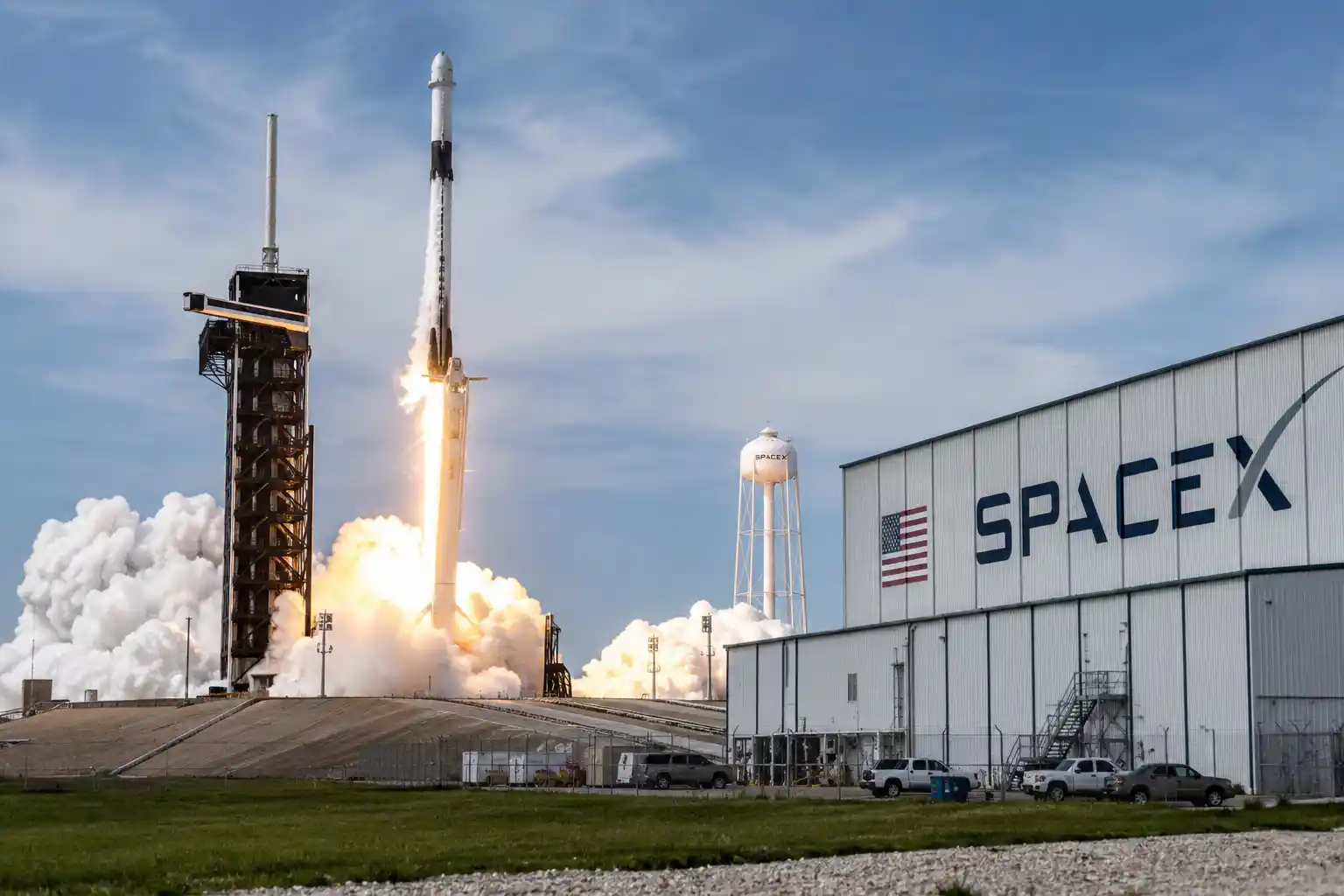
SpaceX wealth creation has become one of the most remarkable financial stories of the 21st century. Within just two decades, the company transformed from a risky aerospace startup struggling to secure launch contracts into one of the world’s most valuable private enterprises. In the process, SpaceX wealth creation generated enormous fortunes not only for founder Elon Musk but also for employees, executives, investors, venture funds, and stakeholders who participated in its extraordinary growth journey.
Few examples of modern technology wealth creation rival the scale of value generated by SpaceX. As the company’s valuation climbed from millions to hundreds of billions of dollars, ownership stakes that once seemed highly speculative evolved into life-changing assets. This growth accelerated alongside the expansion of commercial space services, satellite communications, and reusable rocket technology.
The story is also central to understanding Elon Musk wealth creation. While Tesla often dominates headlines, a significant portion of Musk’s net worth stems from his ownership in SpaceX. At the same time, the company’s rise highlights how private company stock wealth can accumulate outside public markets, creating substantial fortunes before an initial public offering ever occurs.
Today, SpaceX stands at the center of the emerging commercial space economy. Its continued expansion, driven by launch services, government contracts, and Starlink business growth, illustrates how innovation, private capital, and technological leadership can create entirely new categories of wealth in global markets.
The Origins of SpaceX and the Risks Behind Early Investment
When Elon Musk founded SpaceX in 2002, the company faced skepticism from nearly every corner of the aerospace industry. Established defense contractors dominated the market, launch failures were common among new entrants, and private space exploration appeared financially unrealistic.
Musk invested much of the capital earned from earlier ventures into the company. During the early years, SpaceX experienced multiple failed launches and significant cash burn. At several points, the company’s survival appeared uncertain.
Early employees accepted below-market compensation in exchange for equity ownership. Investors who supported the company during its formative years faced unusually high risks because commercial space ventures required substantial capital investments, long development timelines, and uncertain revenue prospects.
However, these risks eventually became the foundation for one of the largest examples of private-market value creation in modern business history. The willingness of founders, employees, and investors to tolerate uncertainty positioned them to benefit from unprecedented valuation growth years later.
As SpaceX secured contracts from NASA and commercial customers, investor confidence improved. Each successful mission reduced perceived risk and increased the company’s strategic value. What began as a highly speculative venture gradually evolved into a dominant force in global aerospace.
How SpaceX Wealth Creation Accelerated Through Innovation?
The primary engine behind SpaceX wealth creation has been technological innovation. Unlike many startups that focus primarily on software, SpaceX combined advanced engineering, manufacturing, logistics, and infrastructure development into a highly integrated business model.
The company’s breakthrough came through reusable rocket technology. By significantly reducing launch costs, SpaceX altered the economics of space transportation and created competitive advantages that traditional aerospace companies struggled to match.
Several innovation milestones accelerated valuation growth:
- Reusable Falcon rocket systems
- NASA Commercial Crew Program participation
- Growing commercial launch market share
- Government defense contracts
- Starlink satellite deployment
- Expansion into deep-space missions
Each achievement increased revenue opportunities while strengthening investor confidence. Consequently, SpaceX valuation expanded dramatically as markets began recognizing the company’s ability to generate long-term cash flows across multiple sectors.
Unlike many venture-backed firms that depend on a single product, SpaceX developed multiple growth engines simultaneously. This diversification reduced business risk and contributed significantly to its status as one of the world’s most valuable private companies.
The result was a powerful cycle in which technological achievements drove valuation increases, which attracted additional capital, enabling further innovation and even greater value creation.
The Role of Employee Equity and Stock Ownership
One of the most fascinating aspects of the SpaceX story is the impact on employees. Discussions about SpaceX employees wealth have intensified as private market valuations continued rising through successive funding rounds.
Equity compensation allowed thousands of employees to participate directly in company growth. Engineers, executives, managers, and technical specialists who joined during earlier stages often received stock grants that appreciated substantially over time.
Unlike traditional salary-based compensation models, employee ownership aligns incentives with long-term company performance. As SpaceX expanded its valuation, many workers saw their personal net worth increase alongside corporate growth.
This model reflects a broader trend in modern innovation economics. Companies increasingly use equity ownership to attract talent, particularly in industries requiring highly specialized technical expertise.
Employee participation in wealth creation generated several benefits:
- Improved talent retention
- Stronger alignment with company objectives
- Increased long-term commitment
- Shared value creation across organizational levels
The SpaceX example demonstrates how ownership structures can distribute economic gains beyond founders and investors, creating a wider ecosystem of wealth beneficiaries.
Key Drivers Behind SpaceX Wealth Creation
| Wealth Driver | Impact on SpaceX Wealth Creation | Beneficiary Group |
|---|---|---|
| Reusable Rockets | Reduced launch costs and expanded margins | Shareholders, employees |
| Government Contracts | Stable revenue generation | Investors, executives |
| Starlink Expansion | New high-growth revenue stream | All equity holders |
| Private Funding Rounds | Increased company valuation | Existing shareholders |
| Employee Stock Programs | Direct equity appreciation | Workforce |
| Global Market Leadership | Strengthened competitive position | Founders and investors |
These drivers collectively created a compounding effect. Rather than relying on a single breakthrough, SpaceX built value across multiple operational and financial dimensions, supporting long-term wealth generation.
Starlink and the Expansion of Billionaire-Making Potential
If reusable rockets established SpaceX’s foundation, Starlink dramatically expanded its economic potential.
Starlink business growth transformed investor perceptions by introducing a scalable recurring-revenue business alongside launch operations. The satellite internet network serves consumers, businesses, governments, and remote communities worldwide.
From a valuation perspective, recurring subscription revenue often commands higher market multiples than project-based aerospace contracts. As a result, Starlink significantly increased investor enthusiasm regarding future earnings potential.
Many analysts view Starlink as one of the most important contributors to modern SpaceX valuation growth because it broadens revenue diversification and expands addressable markets beyond traditional aerospace activities.
The implications for wealth creation are substantial. Every increase in Starlink adoption potentially enhances company valuation, benefiting founders, employees, institutional investors, and venture funds.
Furthermore, Starlink demonstrates how commercial space businesses can move beyond launch services into infrastructure, telecommunications, and digital connectivity markets. This evolution reinforces the broader investment case for the emerging space economy.
Why Investors Continue to Chase SpaceX Exposure?
The rise of private market billionaires has encouraged investors to seek exposure to companies capable of replicating SpaceX-like growth trajectories.
Institutional investors increasingly view SpaceX as a rare combination of:
- Strong technological leadership
- Large addressable markets
- Multiple revenue streams
- Long-term growth visibility
- Strategic geopolitical importance
Because SpaceX remains privately held, direct ownership opportunities remain limited. Consequently, secondary market transactions have become increasingly important.
Secondary liquidity events allow existing shareholders and employees to sell portions of their holdings while enabling new investors to gain exposure. These transactions also help establish market-based valuation benchmarks between funding rounds.
The company’s private status further contributes to wealth accumulation. Without public-market pressures emphasizing short-term earnings, management can prioritize long-term strategic investments that support future growth.
This dynamic illustrates how private company stock wealth increasingly shapes modern capital markets. Some of the world’s largest fortunes now emerge before companies ever become publicly traded.
Comparing SpaceX With Other Wealth-Creation Giants
SpaceX is not the first company to generate extraordinary wealth. However, its trajectory shares several characteristics with technology leaders that reshaped entire industries.
Comparing Major Wealth-Creation Companies
| Company | Founder Wealth Impact | Employee Wealth Impact | Investor Outcome |
| SpaceX | Massive ownership appreciation for Elon Musk | Significant equity gains | Exceptional private-market returns |
| Tesla | Major increase in Musk’s net worth | Strong stock-based wealth creation | Extraordinary long-term returns |
| Amazon | Significant wealth for Jeff Bezos | Extensive stock appreciation | Multi-decade value creation |
| Billionaire founders and executives | Broad employee wealth generation | Exceptional IPO and post-IPO returns | |
| Nvidia | Massive founder appreciation | Strong equity participation | Explosive valuation growth |
Although each company operates in different industries, several common themes emerge.
Tesla generated wealth through electric vehicle disruption and energy innovation. Amazon transformed retail and cloud computing. Google dominated digital advertising and internet search. Nvidia became a cornerstone of artificial intelligence infrastructure.
SpaceX differs because it combines advanced manufacturing, aerospace engineering, telecommunications, software, and infrastructure development under a single corporate umbrella.
As a result, its valuation growth reflects both technology-sector dynamics and industrial-scale execution, creating a unique path toward wealth generation.
The Rise of Aerospace Industry Billionaires
Historically, aerospace was not considered a major source of billionaire creation compared with software or consumer technology.
That perception has changed dramatically.
The success of commercial space enterprises has expanded opportunities for founders, executives, engineers, investors, and suppliers throughout the ecosystem. New fortunes increasingly emerge from launch services, satellite networks, space infrastructure, and related technologies.
The rise of aerospace industry billionaires reflects broader economic shifts. As launch costs decline and private capital flows into space-related ventures, commercial opportunities continue expanding.
SpaceX has played a central role in this transformation. By demonstrating that private companies can build sustainable space businesses, it encouraged investment throughout the broader industry.
Consequently, wealth creation now extends beyond SpaceX itself. Suppliers, venture-backed startups, satellite operators, and infrastructure providers all benefit from the growing commercial space economy.
What SpaceX Means for the Future of Private Market Wealth?
The broader significance of SpaceX private market success extends well beyond aerospace.
The company illustrates several powerful trends shaping global investment markets:
- Growth of mega-unicorn valuations
- Expansion of private capital markets
- Increased employee equity participation
- Longer private-company lifecycles
- Technology-driven productivity gains
These developments suggest future wealth creation may increasingly occur before public listings. Investors who gain access to successful private companies can potentially capture substantial value appreciation during earlier growth stages.
At the same time, companies benefit from greater flexibility to pursue long-term innovation strategies without quarterly earnings pressure.
The SpaceX model therefore provides an important case study in how private ownership structures can support large-scale technological transformation while generating significant economic rewards for stakeholders.
Unique Insight: Why SpaceX Wealth Creation Is Different?
What makes SpaceX wealth creation particularly distinctive is that it combines characteristics rarely found together in a single enterprise.
Most technology success stories revolve around software platforms, digital networks, or consumer applications. SpaceX, however, integrates physical infrastructure, advanced manufacturing, software systems, telecommunications networks, and transportation services.
Several factors distinguish its model:
- Multiple independent revenue engines
- Infrastructure and software integration
- Significant employee participation in equity gains
- Commercialization of space-based industries
- Creation of entirely new market categories
Unlike many technology companies that optimize existing markets, SpaceX actively creates new ones. The company expands economic activity into sectors that previously had limited commercial viability.
This distinction matters because wealth generation becomes tied not merely to market share capture but to the creation of entirely new industries. As commercial space activities expand, SpaceX stands to benefit from growth opportunities that did not exist when the company was founded.
Therefore, SpaceX is not simply creating shareholder value. It is helping establish a new class of fortunes linked directly to the emerging global space economy.
Conclusion
The story of SpaceX wealth creation extends far beyond Elon Musk. It represents a broader transformation in how innovation, private capital, and technological leadership generate wealth in modern markets. Through reusable rockets, Starlink expansion, strategic execution, and continuous innovation, SpaceX evolved from a risky startup into one of the most valuable private companies in history.
Its journey illustrates the growing influence of private company stock wealth, the rise of private market billionaires, and the emergence of the commercial space economy as a major source of future value creation. For employees, investors, founders, and industry participants, SpaceX demonstrates how breakthrough innovation can create fortunes across multiple layers of ownership.
As global investment increasingly focuses on transformative technologies and new economic frontiers, SpaceX will likely remain one of the defining examples of technology wealth creation and private-market success in the modern era.
Frequently Asked Questions
What is SpaceX wealth creation?
SpaceX wealth creation refers to the process through which SpaceX generated significant financial value for founders, employees, executives, and investors through valuation growth, innovation, and expanding commercial opportunities in the space economy.
How has Elon Musk benefited from SpaceX growth?
A substantial portion of Elon Musk’s net worth comes from his ownership stake in SpaceX. As company valuations increased, the value of his equity rose dramatically.
Have SpaceX employees become wealthy?
Yes. Many employees received stock-based compensation, allowing them to participate in company growth and benefit from rising valuations.
Why is SpaceX valuation so important?
SpaceX valuation reflects market expectations regarding future growth, revenue potential, and technological leadership. Higher valuations increase the value of shareholder equity.
How does Starlink contribute to SpaceX wealth creation?
Starlink adds recurring subscription revenue and expands SpaceX into telecommunications markets, making SpaceX wealth creation more sustainable and diversified.
Can investors buy SpaceX stock?
SpaceX remains privately held. Most investors can only gain exposure through private funding rounds or secondary market transactions.
How does SpaceX compare to Tesla and Amazon?
All three companies generated enormous founder and investor wealth. However, SpaceX differs through its focus on aerospace infrastructure, satellite communications, and commercial space development.
What role do private markets play in wealth creation?
Private markets allow companies to remain private longer, enabling founders, employees, and investors to accumulate value before any public listing occurs.
Has SpaceX created new billionaires?
Yes. The company’s valuation growth has significantly increased the wealth of founders, executives, investors, and stakeholders associated with its success.
Why is SpaceX wealth creation attracting global attention?
Investors view it as one of the most successful examples of innovation-led value creation, demonstrating how technology, private capital, and long-term vision can generate extraordinary economic outcomes.