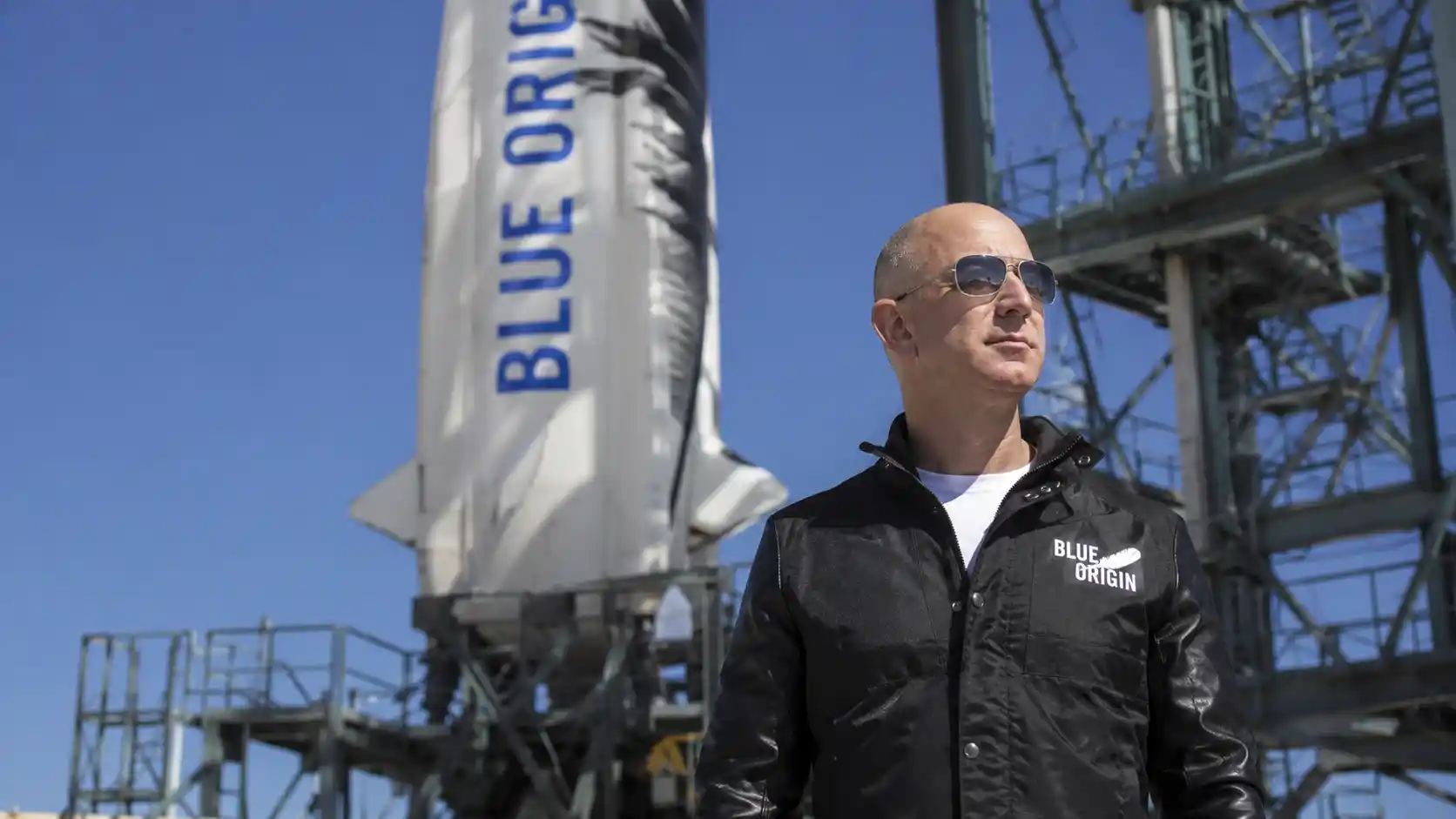
Blue Origin stands as one of the most ambitious long-term investments in modern aerospace history. While many private space companies focus on near-term launch revenue and rapid commercialization, Blue Origin reflects a broader vision centered on humanity’s future beyond Earth. Founded by Jeff Bezos in 2000, the company has evolved from a relatively secretive venture into a major participant in the rapidly expanding commercial space industry.
As governments increasingly partner with private operators and investors pour capital into aerospace innovation, the future of space exploration is becoming a major economic theme. Reusable rocket technology, space tourism, orbital infrastructure, and lunar development are no longer speculative concepts. Instead, they are emerging industries attracting billions of dollars in investment and strategic attention.
At the center of this transformation is Bezos’ belief that humanity must eventually expand into space to sustain long-term economic growth and innovation. His vision extends far beyond launching satellites or offering tourist flights. Through Blue Origin, Bezos aims to create the infrastructure that could support future industries, transportation networks, manufacturing systems, and potentially millions of people living and working beyond Earth.
Understanding Blue Origin therefore requires examining not only its rockets and missions but also the economic philosophy driving one of the most significant private investments in the history of space development.
The Origins of Blue Origin and Jeff Bezos’ Vision
Jeff Bezos founded Blue Origin with a mission that differed substantially from traditional aerospace goals. Inspired by physicist Gerard K. O’Neill’s ideas about large-scale space habitats, Bezos envisioned a future where humanity expands into space to preserve Earth’s resources while enabling continued industrial growth.
The company’s motto, Gradatim Ferociter, meaning “step by step, ferociously,” reflects a strategy based on gradual progress rather than rapid expansion. Unlike startups seeking quick commercialization, Blue Origin was designed from the beginning as a multi-decade project.
The core of the Jeff Bezos space vision revolves around a simple premise: Earth should remain primarily residential and environmentally sustainable, while heavy industry eventually moves into space. Achieving that objective requires transportation systems, orbital infrastructure, power generation, manufacturing capabilities, and reliable access to space.
Consequently, Blue Origin was never intended merely as a launch provider. It was conceived as an infrastructure company focused on lowering the cost of reaching space and enabling future economic activity beyond Earth.
Over the past two decades, this mission has guided the company’s investments in propulsion systems, reusable rockets, lunar transportation concepts, and advanced aerospace technologies.
Why Bezos Is Investing Billions Into Space?
One of the most frequently asked questions surrounding Blue Origin is why Bezos continues investing enormous personal resources into the company.
The answer lies in the long-term nature of the opportunity.
Unlike many technology sectors that mature within years, the commercial space industry may require decades before reaching its full economic potential. Bezos has repeatedly emphasized that transformative infrastructure projects demand patient capital and long investment horizons.
Several factors support this strategy:
- Growth in satellite deployment and communications networks
- Expansion of national security and defense launch demand
- Development of lunar exploration initiatives
- Emerging space tourism business opportunities
- Future manufacturing and energy applications in orbit
Bezos reportedly funds Blue Origin through substantial annual sales of his holdings in Amazon. This funding model gives the company access to capital without relying heavily on public markets or short-term investor expectations.
As a result, Blue Origin can pursue projects that might not generate immediate returns but could become foundational components of the future space economy.
From an investment perspective, Bezos appears to view space infrastructure similarly to how earlier generations viewed railroads, telecommunications networks, or the internet. The largest value creation may ultimately come from enabling entirely new industries rather than simply selling transportation services.
Blue Origin’s Technology and Innovation Strategy
Technology development sits at the center of the Blue Origin space program. The company has consistently focused on reducing launch costs through reusable rocket technology, one of the most important innovations in modern aerospace.
Historically, rockets were used once and discarded. This approach made space access extremely expensive and limited launch frequency. Reusability fundamentally changes the economics by allowing critical components to fly multiple missions.
Blue Origin has invested heavily in:
- Reusable launch vehicles
- Advanced rocket engines
- Autonomous landing systems
- Lunar transportation technologies
- Human-rated spacecraft systems
Its BE-series engines represent a major strategic asset. The BE-4 engine powers Blue Origin’s New Glenn rocket and is also used by United Launch Alliance’s Vulcan rocket, creating an additional revenue and strategic partnership opportunity.
The company’s emphasis on engineering reliability and gradual testing reflects its broader philosophy of incremental development. Although this approach sometimes appears slower than competitors, it aims to create sustainable capabilities rather than short-term achievements.
The result is a growing portfolio of technologies designed to support both current launch markets and future space infrastructure development.
Comparing the Major Players in the Commercial Space Industry
The competitive landscape has become increasingly dynamic as private space companies expand their capabilities and ambitions.
| Company | Core Focus | Competitive Advantage | Long-Term Goal |
|---|---|---|---|
| Blue Origin | Space infrastructure and transportation | Long-term funding and infrastructure focus | Build foundations for a space-based economy |
| SpaceX | Launch services and satellite networks | Rapid innovation and launch frequency | Enable settlement of Mars |
| Rocket Lab | Small and medium satellite launches | Operational efficiency in niche markets | Expand end-to-end space services |
| United Launch Alliance (ULA) | Government and defense launches | Reliability and heritage expertise | Maintain strategic launch leadership |
| Arianespace | European launch services | Institutional support across Europe | Independent European space access |
Among these competitors, SpaceX often receives the most public attention because of its aggressive pace of development and ambitious Mars objectives.
Rocket Lab has successfully carved out a specialized position serving smaller satellite missions, while ULA remains a major supplier for national security launches. Arianespace continues to play a critical role in preserving European access to space.
Blue Origin occupies a unique position within this ecosystem because its strategy extends beyond launch services alone. The company aims to participate in multiple layers of future space infrastructure, creating a broader platform for long-term growth.
New Shepard, New Glenn, and the Path to Growth
Blue Origin’s most visible achievements are represented by its New Shepard and New Glenn programs.
New Shepard
New Shepard serves as the company’s suborbital vehicle designed for scientific research and commercial passenger flights.
The program has become a flagship example of the growing space tourism business. Passengers experience several minutes of weightlessness while crossing the internationally recognized boundary of space.
Although tourism revenue remains relatively small compared with broader aerospace markets, New Shepard demonstrates the commercial viability of human spaceflight services while generating public awareness and technological validation.
New Glenn
If New Shepard established Blue Origin’s public profile, New Glenn is expected to define its long-term competitive position.
New Glenn is a heavy-lift orbital rocket designed to compete directly in major commercial, government, and defense launch markets.
The rocket incorporates reusable first-stage technology and targets missions involving:
- Satellite deployment
- National security launches
- Scientific exploration
- Lunar logistics
- Commercial orbital infrastructure
Success with New Glenn could significantly expand Blue Origin’s revenue opportunities while strengthening its role in future space transportation networks.
Importantly, the program also positions the company to compete for increasingly valuable government contracts that support both economic growth and national security objectives.
How Blue Origin Competes in the Commercial Space Industry
Competition in the commercial space industry increasingly revolves around economics, reliability, scalability, and strategic vision.
Blue Origin competes differently from many rivals.
Rather than focusing exclusively on launch cadence, the company seeks to establish a comprehensive ecosystem capable of supporting future industrial activity in space.
Its competitive strengths include:
- Significant long-term capital backing
- Proprietary engine technology
- Strong government relationships
- Infrastructure-focused strategy
- Diversified future market opportunities
At the same time, Blue Origin faces pressure from competitors that have achieved higher launch frequencies and faster commercialization.
SpaceX currently dominates many launch categories through scale and operational efficiency. However, market demand continues expanding, creating room for multiple successful providers.
The growing need for satellite deployment, defense missions, lunar exploration, and orbital infrastructure suggests that competition may increasingly reward specialization and strategic positioning rather than simple market share.
Consequently, Blue Origin’s differentiated approach could prove valuable as the industry matures.
The Economics of Building a Space Infrastructure Company
Building a space infrastructure company requires a fundamentally different financial model than operating a conventional aerospace contractor.
Infrastructure investments typically involve:
- High upfront costs
- Long development timelines
- Significant technological risk
- Delayed profitability
- Large future market potential
This dynamic explains why private capital has become increasingly important in aerospace innovation investment.
Blue Origin’s financing structure provides unusual flexibility. Bezos can continue funding projects based on strategic importance rather than quarterly earnings expectations.
This patient-capital approach mirrors historical investments in railroads, electricity grids, and internet infrastructure. Early expenditures often appear excessive until entire ecosystems emerge around the infrastructure being built.
For investors observing broader space economy growth trends, Blue Origin represents a case study in long-duration capital allocation designed to capture future rather than current demand.
Strategic Programs Driving Blue Origin’s Future
Several major initiatives illustrate how the company plans to expand its role within the evolving space economy.
| Blue Origin Program | Purpose | Strategic Importance |
| New Shepard | Suborbital tourism and research | Demonstrates reusable human spaceflight |
| New Glenn | Heavy-lift orbital launches | Expands commercial and government market access |
| BE-4 Engine | Rocket propulsion systems | Generates partnerships and revenue opportunities |
| Blue Moon | Lunar transportation and cargo delivery | Supports future lunar infrastructure |
| Orbital Reef | Commercial space station development | Enables future orbital commerce |
These programs collectively illustrate a strategy focused on building interconnected capabilities rather than isolated products.
The broader objective involves creating transportation, logistics, and infrastructure systems that support sustained economic activity beyond Earth.
Blue Origin and the Future of the Space Economy
The future space economy may eventually encompass industries that extend far beyond traditional aerospace activities.
Analysts increasingly discuss opportunities involving:
- Space-based manufacturing
- Orbital energy systems
- Lunar resource development
- Commercial space stations
- Advanced telecommunications networks
Blue Origin aims to position itself as a foundational participant in these emerging markets.
This aligns closely with broader trends in the future of space exploration, where governments increasingly collaborate with private companies to achieve ambitious objectives. Rather than acting solely as contractors, private firms now help shape strategic direction and technological priorities.
As launch costs continue declining and infrastructure expands, entirely new economic sectors could emerge. Companies capable of supporting transportation, logistics, and industrial activity may capture significant long-term value.
Blue Origin’s emphasis on infrastructure places it directly within this emerging investment narrative.
Challenges and Opportunities Ahead
Despite its ambitions, Blue Origin faces substantial challenges.
Technical complexity remains immense. Rocket development, human spaceflight, and lunar transportation all require sustained execution and significant capital.
Competitive pressures also continue intensifying as established players and new entrants expand capabilities.
Key challenges include:
- Maintaining technological competitiveness
- Scaling launch operations
- Winning major government contracts
- Managing development timelines
- Converting long-term vision into commercial success
Nevertheless, opportunities remain equally significant.
Government space spending continues increasing. Defense requirements are expanding. Commercial satellite demand remains strong. Lunar exploration initiatives are accelerating worldwide.
These trends create a favorable environment for companies capable of providing reliable and scalable space infrastructure.
For Blue Origin, execution rather than opportunity may ultimately determine success.
Unique Insight: Why Blue Origin Represents a Different Philosophy of Space Development?
The most important aspect of Blue Origin may not be its rockets at all.
Unlike many aerospace ventures that prioritize rapid growth, Blue Origin represents a fundamentally different philosophy centered on long-term infrastructure development. The company measures progress in decades rather than quarters and evaluates success based on future economic possibilities rather than immediate revenue.
This distinction matters because Bezos is not merely funding launch vehicles. He is investing in the foundations of a future space-based civilization.
The company’s gradual approach reflects a belief that sustainable expansion beyond Earth requires transportation networks, industrial systems, logistics capabilities, and commercial infrastructure operating together. Launch services alone cannot achieve that objective.
In this sense, Blue Origin resembles an early railroad builder more than a traditional aerospace contractor. The goal is not simply moving payloads from one location to another. The goal is enabling entirely new industries to exist.
If that vision succeeds, Blue Origin could become one of the foundational infrastructure providers of the twenty-first century’s next major economic frontier.
Conclusion
Blue Origin has evolved from a visionary startup into one of the most significant players in modern aerospace. Backed by Jeff Bezos’ commitment and billions of dollars in patient capital, the company represents a distinctive approach to space development centered on infrastructure, sustainability, and long-term economic expansion.
While competitors often emphasize speed and market share, Blue Origin focuses on creating the systems required for future industries beyond Earth. Through reusable rocket technology, the Blue Origin New Glenn program, government partnerships, and emerging space infrastructure initiatives, the company is positioning itself for a future where space becomes an increasingly important part of the global economy.
Whether that vision unfolds over decades or generations, Blue Origin remains one of the clearest examples of how private capital, technological innovation, and strategic patience are reshaping the future of space exploration.
Frequently Asked Questions
What is Blue Origin?
Blue Origin is a private aerospace company focused on reusable rockets, human spaceflight, orbital infrastructure, and technologies that support long-term space development.
Who founded Blue Origin?
Jeff Bezos founded the company in 2000 as part of his broader vision for humanity’s future in space.
How does Blue Origin make money?
The company generates revenue through launch services, government contracts, engine development, research missions, and space tourism operations.
What is the purpose of New Shepard?
New Shepard is designed for suborbital research missions and commercial passenger flights, allowing customers to experience space and weightlessness.
What is Blue Origin New Glenn?
Blue Origin New Glenn is a heavy-lift orbital rocket intended to compete in commercial, government, and defense launch markets while supporting future space infrastructure projects.
How does Blue Origin compete with SpaceX?
Blue Origin emphasizes long-term infrastructure development, while SpaceX focuses heavily on rapid launch expansion and Mars-related objectives. Both leverage reusable rocket technology but pursue different strategic priorities.
Why is Jeff Bezos investing so heavily in space?
Bezos believes future economic growth will require expanding industrial activity beyond Earth and creating sustainable space infrastructure.
What role does Blue Origin play in the commercial space industry?
Blue Origin contributes launch services, propulsion systems, human spaceflight capabilities, and infrastructure initiatives that support the broader commercial space industry.
Is Blue Origin involved in space tourism?
Yes. Through New Shepard, the company operates commercial suborbital flights that serve the growing space tourism business.
Why is Blue Origin important for the future of space exploration?
Blue Origin is important because it focuses on reducing access costs, developing infrastructure, and enabling future economic activity in space. Its long-term strategy aligns closely with the future of space exploration and the expansion of the global space economy.