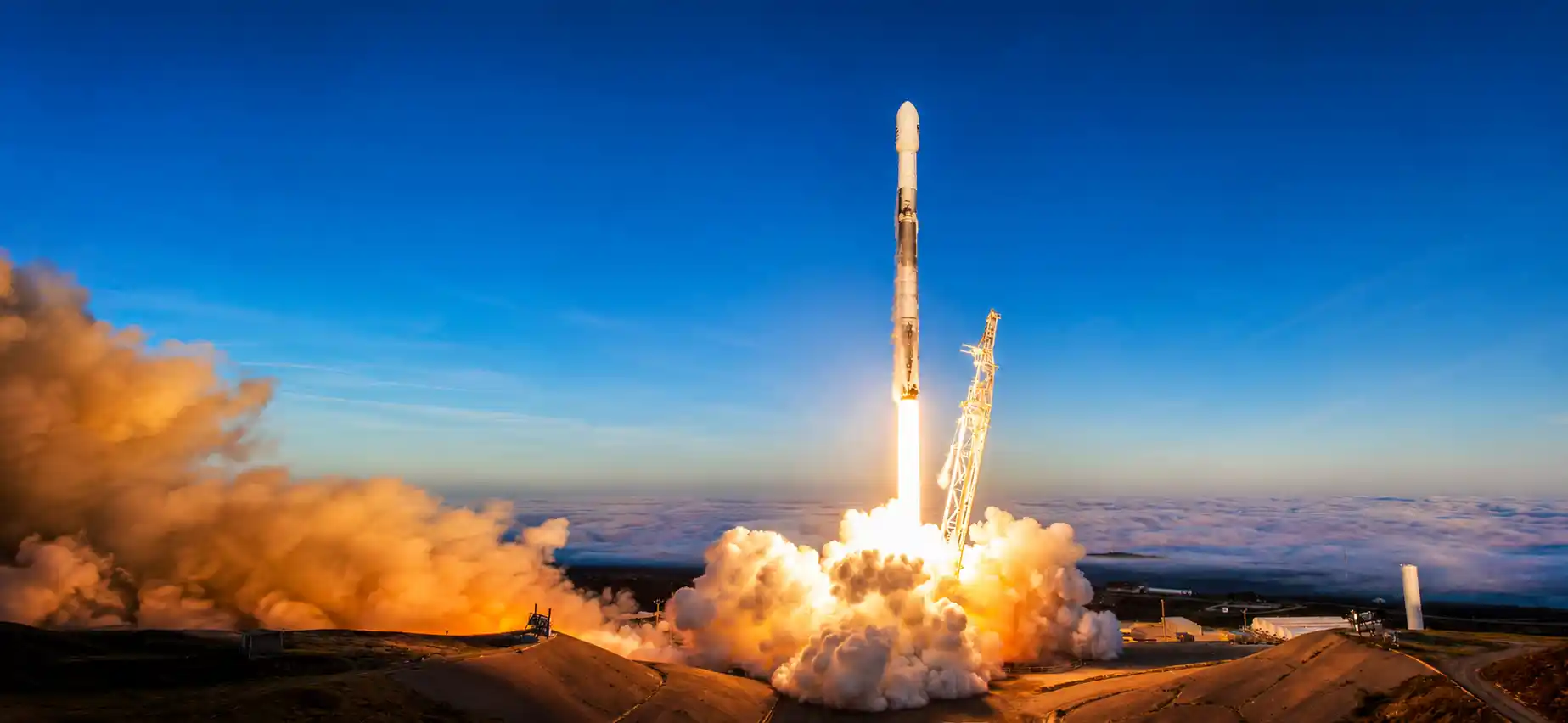
The SpaceX IPO has become one of the defining market narratives of the decade because investors increasingly see the company as more than a rocket manufacturer. Within the first wave of discussions surrounding public market access, analysts began framing SpaceX as a new category of infrastructure company that combines launch capability, satellite connectivity, industrial scale manufacturing, and long-duration technological ambition.
That perception matters because capital markets increasingly reward businesses that extend beyond a single product cycle. Elon Musk SpaceX strategy transformed what began as a high-risk aerospace startup into one of the most closely watched private market unicorns in the world. Moreover, the expansion of the space economy has created an entirely new conversation around ownership, infrastructure, and global connectivity.
Investor anticipation also reflects broader Wall Street IPO trends 2026 has accelerated. Markets increasingly favor companies that combine artificial intelligence, communications networks, industrial capability, and recurring revenue models. Consequently, the SpaceX valuation story now sits at the intersection of frontier innovation and institutional capital deployment.
This is why investors are not treating the SpaceX IPO as another listing event. They increasingly view it as a structural shift in how public markets assign value to infrastructure-scale technology businesses.
Why the SpaceX IPO Could Define a New Market Era?
Few companies have reached public-market expectations with the combination of scale, scarcity, and narrative strength associated with SpaceX.
For years, private capital absorbed the company’s funding requirements while public investors watched from the sidelines. Meanwhile, institutional portfolios increasingly sought exposure to frontier technologies capable of delivering infrastructure-level returns.
The pressure for market access intensified for several reasons:
- Continued expansion in SpaceX valuation
- Limited supply of private secondary shares
- Institutional demand for long-duration growth
- Liquidity expectations among existing investors
- Increased global interest in infrastructure technology
However, this moment extends beyond simple investor enthusiasm.
SpaceX emerged during an era dominated by software economics. Instead of following that playbook directly, the company built vertically integrated industrial systems designed to reduce costs while increasing operational speed.
Consequently, investors began assigning value not only to launches but to future network effects surrounding communications, logistics, and orbital infrastructure.
Private markets historically rewarded growth.
Public markets traditionally rewarded earnings.
SpaceX sits between those frameworks.
Moreover, liquidity pressure inside private capital markets created additional momentum. Long-held private investments eventually seek broader ownership and more transparent valuation discovery.
That dynamic explains why investors increasingly discuss the SpaceX IPO as a market event rather than merely a company milestone.
SpaceX Business Model: The Foundation of a Future Giant
SpaceX’s business model changed investor expectations because it created multiple interconnected revenue engines rather than relying on launch contracts alone.
The company’s Falcon launch platform became the foundation.
Reusable rockets transformed launch economics by reducing manufacturing replacement costs and increasing deployment frequency. As a result, launch services evolved from episodic aerospace projects into scalable industrial operations.
However, launches alone do not explain investor enthusiasm.
Starlink introduced recurring revenue.
Satellite internet fundamentally changed the investment case because connectivity businesses generate more predictable financial characteristics than project-based aerospace operations.
Core business drivers include:
- Falcon launch services
- Starlink subscription revenue
- Government and defense partnerships
- Starship commercialization initiatives
- Infrastructure and communications expansion
Additionally, government contracts strengthened operational credibility.
Space agencies and defense institutions increasingly rely on private providers for execution speed and technological flexibility. That relationship created a diversified operating structure unavailable to most aerospace businesses.
Then comes the Starship program economics story.
Starship represents more than transportation.
Supporters believe lower launch costs could unlock manufacturing, logistics, communications, and industrial applications beyond Earth.
Critics argue commercialization timelines remain uncertain.
Nevertheless, investors increasingly value SpaceX as a multi-layer infrastructure platform rather than a traditional aerospace company.
How SpaceX Compares to Historic Tech IPOs?
Historic IPO comparisons help explain why market attention surrounding SpaceX reached unusual levels.
Unlike conventional aerospace listings, SpaceX is increasingly compared with platform technology leaders.
| Company | IPO Era | Market Expectation | Long-Term Outcome |
|---|---|---|---|
| Apple | Early personal computing | Hardware growth | Global technology leader |
| Internet expansion | Search dominance | Digital infrastructure giant | |
| Social scale | Platform monetization | Global communications platform | |
| Tesla | EV disruption | High execution risk | Industry transformation |
Apple’s listing reflected belief in personal computing becoming mainstream.
Google represented confidence in internet infrastructure.
Facebook demonstrated the power of digital networks.
Tesla showed that capital markets sometimes reward industrial disruption when paired with technological ambition.
SpaceX combines elements of all four.
For example:
- Apple’s hardware integration
- Google’s infrastructure economics
- Facebook’s network expansion
- Tesla’s industrial disruption
Investor sentiment differs because SpaceX operates in a sector traditionally associated with governments rather than public shareholders.
Therefore, expectations around long-term valuation expansion remain unusually large.
Investor Frenzy and Private Market Valuation Dynamics
Private market activity became one of the strongest indicators of investor demand.
Secondary markets increasingly allowed limited ownership transfers while maintaining private control.
Institutional space investing accelerated through several channels:
- Sovereign wealth participation
- Venture capital exposure
- Secondary market acquisitions
- Strategic infrastructure mandates
- Long-duration thematic investing
Meanwhile, liquidity scarcity created valuation premiums.
Investors often paid elevated prices because opportunities remained limited.
However, elevated demand also introduces risks.
Private pricing environments can diverge from public market expectations.
Additionally, valuation compression remains possible when broader economic conditions change.
Nevertheless, investor appetite suggests capital markets increasingly seek exposure to infrastructure-scale innovation.
That shift has implications far beyond SpaceX.
IPO Timing and Market Conditions
Timing remains one of the most debated variables.
Market conditions strongly influence investor participation and valuation outcomes.
Several factors shape timing expectations.
| Factor | Bull Case | Bear Case |
| Interest rates | Lower financing costs | Higher discount rates |
| Market sentiment | Strong demand | Risk aversion |
| Starlink growth | Revenue expansion | Growth normalization |
| Regulation | Stable listing process | Increased oversight |
| Macro conditions | Capital availability | Liquidity contraction |
Macroeconomic cycles increasingly influence listing decisions.
Periods of lower capital costs typically support ambitious growth narratives.
Meanwhile, infrastructure-scale companies benefit from investor willingness to extend valuation time horizons.
Starlink IPO potential remains another recurring topic.
Some investors believe separation unlocks value.
Others argue integration strengthens strategic execution.
Elon Musk historically prioritized operational flexibility.
Therefore, timing decisions often reflect business readiness more than market excitement.
Risks and Structural Challenges
Despite enthusiasm, meaningful challenges remain.
Space businesses require extraordinary capital.
Execution risks remain high.
Key risk themes include:
- Launch failures
- Regulatory intervention
- Geopolitical exposure
- Infrastructure costs
- Competitive pressure
Additionally, satellite markets continue becoming more crowded.
Government relationships remain strategically important.
Launch economics may improve, yet capital intensity remains substantial.
On the other hand, valuation expectations can become a challenge of their own.
Investors may expect future performance faster than industrial systems can realistically deliver.
That tension remains central to long-term investment outcomes.
The Future of the Space Economy
The future of satellite internet increasingly sits at the center of investment discussions.
Connectivity may become the first truly global commercial layer of space infrastructure.
Several trends support that thesis:
- Global broadband expansion
- Satellite-first connectivity models
- Defense and intelligence applications
- AI-enabled network optimization
- Orbital infrastructure development
Moreover, convergence between artificial intelligence and communications networks may redefine infrastructure ownership.
Satellite systems increasingly generate data.
AI increasingly creates value from data.
Consequently, infrastructure businesses capable of controlling both layers may attract long-duration capital.
Mars colonization remains the most ambitious narrative.
However, nearer-term opportunities likely emerge from communications and infrastructure.
Unique Insight: The Financial Institutionalization of Space Infrastructure
The most important implication of the SpaceX IPO is not public liquidity.
It is financial institutionalization.
For decades, governments controlled large-scale space development.
That framework is evolving.
Space increasingly resembles an investable asset class.
Starlink evolves toward foundational digital infrastructure.
SpaceX becomes a bridge between terrestrial economies and orbital systems.
Meanwhile, investors gain access to entirely new categories of economic participation.
This transition could redefine how markets price innovation.
Instead of evaluating quarterly earnings alone, investors may increasingly value decades of infrastructure creation.
The SpaceX IPO therefore represents a possible turning point in how capital markets understand technological progress.
Conclusion
The SpaceX IPO stands out because it reflects far more than investor excitement around a recognizable brand. It represents a broader shift in how markets evaluate infrastructure, technological ambition, and long-duration capital deployment.
SpaceX’s rise from disruptive startup to aerospace platform reshaped assumptions about launch economics, satellite networks, and industrial scale innovation. Moreover, institutional investors increasingly view space economy investment as a legitimate strategic allocation rather than a speculative theme.
Whether SpaceX ultimately transforms public markets at the scale supporters expect remains uncertain.
What appears increasingly clear is that the next generation of market leadership may emerge not only from software and digital platforms, but from companies building the infrastructure of the space age.
Frequently Asked Questions
What is the SpaceX IPO?
The SpaceX IPO refers to the company’s potential transition from private ownership into public markets, giving broader investor access to one of the world’s most closely watched aerospace businesses.
Why is SpaceX not public yet?
Private capital allowed SpaceX to scale aggressively while maintaining strategic flexibility and reducing short-term public market pressure.
What is SpaceX’s current valuation?
SpaceX valuation estimates continue evolving through private transactions and institutional demand, making it one of the largest private companies globally.
Will Starlink have its own IPO?
Starlink IPO potential remains widely discussed because recurring subscription revenue could support an independent market valuation.
Why is the SpaceX IPO so important?
The SpaceX IPO could reshape investor expectations around infrastructure, frontier technology, and the commercial expansion of the space economy.
How does SpaceX make money?
Revenue comes from launch services, satellite internet subscriptions, government partnerships, and emerging infrastructure opportunities.
What are the risks of SpaceX IPO?
Major risks include execution challenges, regulatory oversight, competition, and the capital-intensive nature of space infrastructure.
How does SpaceX compare to Tesla IPO?
Both represent industrial disruption stories, although SpaceX combines aerospace, communications, and infrastructure economics.
When could the SpaceX IPO happen?
Timing depends on capital markets, strategic priorities, operational milestones, and broader economic conditions.
Is SpaceX a good long-term investment?
Long-term attractiveness depends on valuation discipline, infrastructure growth, and execution across launch and connectivity businesses.