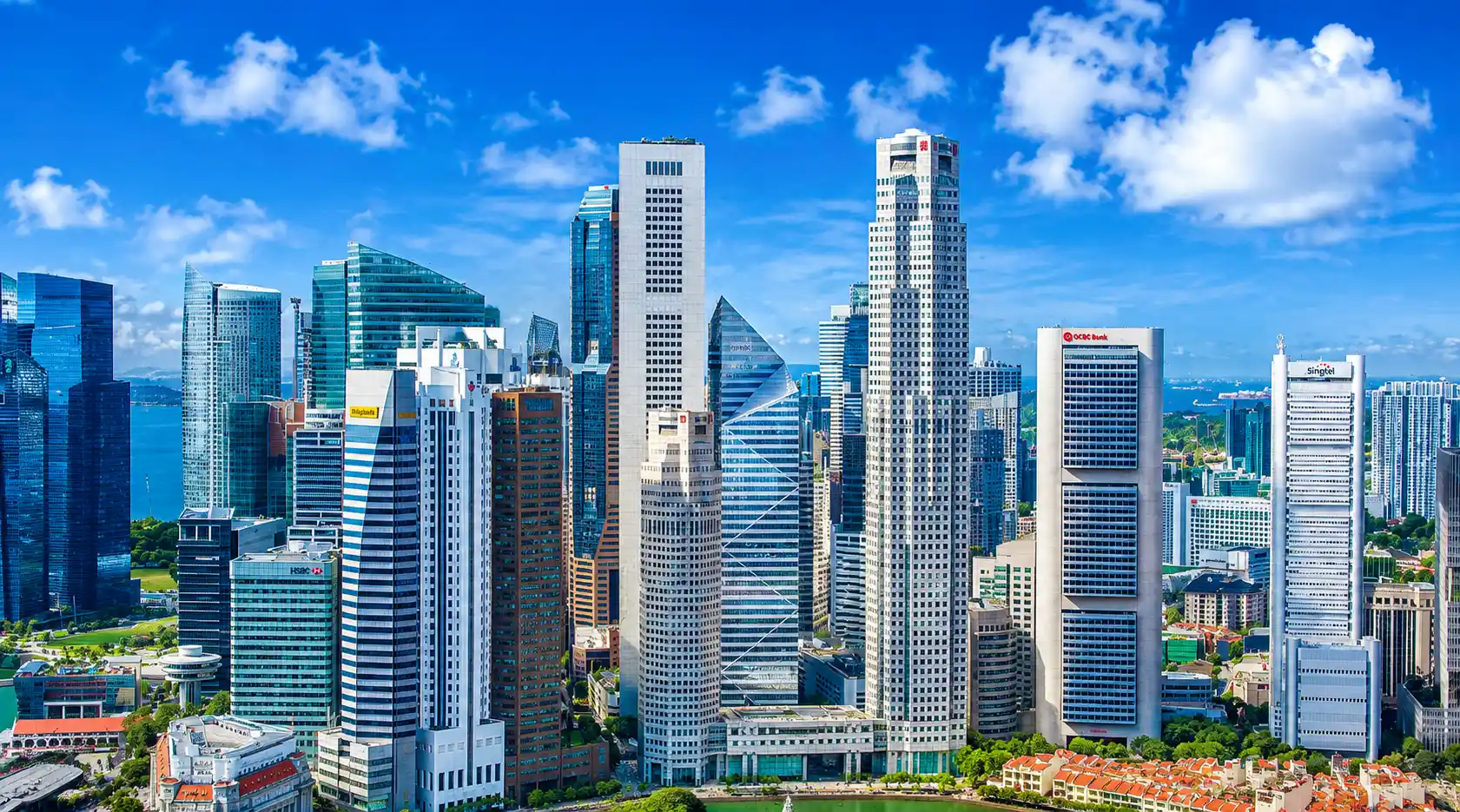
Singapore real estate investment has become one of the most strategically important asset allocations for global family offices seeking stability, long-term capital protection, and exposure to Asia’s expanding wealth ecosystem. Increasingly, private capital is shifting toward jurisdictions that combine institutional credibility with resilient property fundamentals, and Singapore sits at the center of that movement.
Over the last decade, global family office expansion has accelerated dramatically. Wealth creators, multigenerational investment vehicles, and ultra-high-net-worth investors now manage capital with a broader institutional mindset. Instead of concentrating exposure in traditional Western markets, they increasingly seek diversified allocations capable of preserving value through changing economic cycles.
This shift has elevated Singapore’s role as a regional and global wealth hub. The Singapore property market increasingly reflects broader transformations in wealth management Asia, where geopolitical positioning, regulatory confidence, and long-duration investment planning influence capital allocation decisions.
At the same time, family office investment Singapore strategies increasingly incorporate institutional-quality real estate as a core portfolio component. Commercial and residential property now play a larger role in high net worth property allocation because they combine income generation, asset scarcity, and long-term appreciation in one of the world’s most stable financial environments.
Why Family Offices Are Focusing on Singapore?
Family offices rarely pursue real estate for short-term returns alone. Their investment horizons typically extend across generations, making stability, governance, and preservation central to decision-making.
Singapore aligns closely with those objectives.
Its position as a politically stable, globally connected financial center has strengthened during periods of elevated market uncertainty. Investors increasingly evaluate jurisdictions not only by economic growth but also by legal protections, institutional continuity, and geopolitical resilience.
Several developments have accelerated Singapore’s attractiveness:
- Expansion of Asia-focused private wealth platforms
- Greater demand for jurisdictional diversification
- Rising concern over geopolitical concentration risk
- Increasing preference for income-producing hard assets
- Institutionalization of private capital management
Family offices increasingly view Singapore as infrastructure for wealth rather than merely a location for deployment.
Consequently, Singapore’s property market now benefits from strategic capital that emphasizes durability and capital discipline over cyclical momentum.
Inside Singapore Real Estate Investment Landscape
The evolution of Singapore real estate investment reflects changing priorities among private and institutional investors.
Historically, global wealth favored financial assets and developed-market property portfolios. Today, investors increasingly seek assets capable of delivering defensive characteristics while maintaining long-term upside.
Singapore offers that combination.
The market spans multiple investment categories including residential, commercial, mixed-use, logistics, and institutional-grade developments. Each category serves distinct wealth objectives.
Commercial assets continue attracting long-duration capital because of stable income characteristics.
Prime residential assets increasingly appeal to investors seeking both asset protection and geographic diversification.
Institutional property investment Singapore strategies increasingly emphasize quality rather than broad market exposure.
This transition mirrors larger capital market trends where investors prefer concentrated ownership of premium assets with structural scarcity.
As a result, Singapore increasingly functions as a capital destination rather than simply a regional real estate market.
Residential vs Commercial Property Demand in Singapore
Family office allocations increasingly divide between residential preservation assets and commercial income-producing assets.
Residential demand remains concentrated in premium neighborhoods and trophy assets that combine prestige with long-term scarcity.
Commercial demand, meanwhile, reflects broader economic activity and institutional occupancy.
Key differences continue shaping allocation choices:
- Residential property supports wealth storage and diversification
- Commercial real estate Singapore provides recurring cash flow
- Mixed-use assets combine resilience with operational flexibility
- Institutional projects create scalable portfolio exposure
Residential vs Commercial Investment Characteristics
| Factor | Residential Property | Commercial Property |
|---|---|---|
| Income Generation | Moderate | Strong |
| Liquidity | Moderate | Moderate–High |
| Scarcity Premium | High | High |
| Institutional Demand | Growing | Very Strong |
| Wealth Preservation | Strong | Strong |
Family offices increasingly blend both categories instead of selecting one exclusively.
That approach reflects a broader transition toward portfolio construction models historically associated with sovereign and institutional capital.
Key Drivers Behind Family Office Capital Allocation
Family office investment decisions increasingly resemble institutional allocation frameworks.
Rather than targeting isolated market opportunities, investors focus on structural drivers that support long-term outcomes.
Capital flows into Singapore increasingly reflect several interconnected themes.
First, investors continue seeking safe haven real estate Asia exposure amid rising uncertainty.
Second, inflation has renewed interest in assets capable of preserving purchasing power.
Third, growing wealth concentration has increased demand for scalable and professionally managed investment platforms.
Additional factors influencing allocations include:
- Predictable regulatory systems
- Reliable transaction frameworks
- Strong financial sector integration
- Long-term demographic and wealth expansion
- Stable operating conditions
Importantly, family offices increasingly prioritize downside protection as much as upside participation.
Singapore’s investment profile aligns closely with that philosophy.
Singapore vs Global Real Estate Markets
Global investors rarely evaluate Singapore in isolation.
Instead, they compare its characteristics against established wealth and property destinations.
Comparison of Major Global Real Estate Markets
| Market | Regulation | Capital Appreciation Potential | Liquidity | Investor Sentiment |
| Singapore | Very Strong | Strong | High | Highly Positive |
| Hong Kong | Strong | Moderate | High | Selective |
| London | Mature | Moderate | Strong | Stable |
| New York | Mature | Variable | Very High | Cyclical |
| Dubai | Improving | Higher | Moderate | Growth Focused |
Hong Kong remains important due to market depth and international connectivity, although investor perceptions increasingly incorporate geopolitical considerations.
London continues attracting global capital because of legal transparency and institutional maturity, yet taxation and growth dynamics affect investor positioning.
New York remains central to global finance but experiences greater cyclical volatility across commercial segments.
Dubai attracts entrepreneurial wealth and growth-oriented investors through higher upside expectations.
Singapore increasingly differentiates itself by combining Asian economic access with institutional predictability and long-term confidence.
Role of Regulation, Stability, and Governance
Regulation often receives less attention than returns during bull markets.
However, family offices frequently prioritize governance during uncertain periods.
Singapore’s investment environment benefits from transparent legal frameworks, consistent administration, and strong investor protections.
This regulatory discipline reduces friction across acquisition, ownership, and succession planning.
Moreover, institutional governance supports pricing credibility.
Investors often accept lower nominal yields when confidence in asset durability increases.
That dynamic explains why prime Singapore real estate frequently trades at valuation premiums relative to less regulated markets.
Over time, trust itself becomes an economic asset.
Family offices recognize this relationship and increasingly incorporate governance quality into portfolio construction.
Wealth Migration and Institutional Capital Flows
Cross-border wealth migration increasingly influences property markets.
Asia now plays a larger role in global capital accumulation, and Singapore benefits from that transition.
As private wealth expands across emerging and developed economies, investors increasingly seek jurisdictions capable of supporting mobility, administration, and preservation.
Singapore attracts these flows because it combines financial infrastructure with geographic accessibility.
Several trends continue reinforcing demand:
- Growth in cross-border family structures
- Increased institutional participation
- Expansion of regional headquarters activity
- Rising demand for globally connected wealth centers
The institutionalization of private wealth also changes how capital enters property markets.
Investors increasingly behave like pension funds and sovereign institutions.
Consequently, real estate becomes less speculative and more strategic.
Future Outlook for Singapore Real Estate Investment
The outlook for Singapore property remains closely linked to long-term wealth formation trends.
Asia’s economic influence continues expanding.
Private capital pools continue growing.
Investors increasingly seek stable jurisdictions capable of absorbing large allocations.
Future opportunities are likely to concentrate in:
- Prime mixed-use developments
- Institutional-grade commercial assets
- Scarcity-driven residential segments
- Sustainable urban projects
At the same time, disciplined policy frameworks may continue limiting excess speculation.
That balance supports resilient market conditions rather than unsustainable expansion.
For family offices, this combination remains highly attractive.
Unique Insight: Why Singapore Real Estate Investment Has Become a Structural Allocation?
Singapore real estate investment increasingly functions as capital preservation infrastructure rather than a cyclical opportunity.
For global family offices, property ownership in Singapore reflects confidence in governance, legal continuity, and geopolitical positioning.
Scarcity amplifies value stability.
Institutional trust replaces speculative momentum.
Commercial and residential assets increasingly act as repositories of strategic capital rather than purely return-generating instruments.
This shift mirrors broader wealth behavior across global private markets.
Singapore increasingly operates as Asia’s wealth anchor—where capital seeks resilience first and appreciation second.
Conclusion
Family offices are increasing their exposure because Singapore increasingly satisfies multiple objectives simultaneously: preservation, diversification, income generation, and long-term positioning.
Singapore real estate investment now sits at the intersection of global wealth management, institutional real estate strategy, and geopolitical capital allocation.
As investors diversify beyond traditional Western markets and place greater importance on governance and resilience, Singapore’s role continues expanding.
Rather than representing a temporary capital trend, the market increasingly reflects a structural evolution in how private wealth allocates for the future.
Frequently Asked Questions
What is Singapore real estate investment?
Singapore real estate investment refers to allocating capital into residential, commercial, mixed-use, logistics, and institutional property assets located in Singapore.
Why are family offices investing in Singapore property?
Family offices increasingly favor Singapore because of regulatory confidence, political stability, strong wealth infrastructure, and long-term capital preservation characteristics.
Is Singapore real estate a safe investment?
Many investors view Singapore as relatively defensive due to disciplined regulation, market transparency, and limited land supply.
What types of properties do investors prefer in Singapore?
Prime residential assets, institutional commercial property, and mixed-use developments remain especially attractive.
How does Singapore compare to Hong Kong and London?
Singapore often appeals to investors seeking stronger policy consistency and direct access to Asian growth markets.
Why is Singapore attractive for wealth management Asia?
Singapore combines financial sophistication, international connectivity, and governance standards that support long-term wealth planning.
What drives demand in Singapore property market?
Demand is supported by wealth migration, institutional capital, corporate expansion, and land scarcity.
Are foreign investors allowed in Singapore real estate?
Foreign investors can participate in many segments, although rules and taxes vary by property category.
What risks exist in Singapore real estate investment?
Potential risks include valuation premiums, policy changes, and cyclical shifts in global capital markets.
Why is Singapore considered a global safe haven for property?
Singapore real estate investment is considered a safe-haven approach because investors associate the market with political stability, regulatory certainty, and durable long-term demand.