In the recent past, we all know of a certain massive investment that Meta made – the Metaverse. It was not the only project to put serious cash into the then virtual reality boom, in which people were shipped headsets so they could live even the most ordinary interactions out, not only in real life but in this completely artificial world. Meta had this big vision. People were supposed to work there, study there, consume entertainment, and even buy properties.
Meta changed the name of its own parent company, declaring the Metaverse as its new main area of focus. It ended up losing big. It wasn’t the only one though. Countless players bit on the new industry. Microsoft gave up on its AltspaceVR in 2023. That same year, Disney’s storytelling world in VR was nipped at the butt. Apple’s Vision Pro also took a loss. Meta is quite unique though in sustaining a loss of North of $80 billion, in the greatest failed gamble in the history of business.
In 2026, Meta has now scaled back its once-prominent virtual reality social platform Horizon Worlds and announced that its appetite for risk is not done yet. In fact, it has already gone on to invest even more than it did in the metaverse, but this time in AI. While Meta was trying to convince users to spend more time in virtual worlds, many consumers remained satisfied with the digital services they already used daily, whether that meant social media, streaming platforms, mobile gaming, or Odds96 online casino. The question is “Will Meta be held accountable for its massive blunder?”
How Meta Became the Metaverse’s Biggest Believer
Long before it came up with the Metaverse, the company had been investing in virtual and augmented reality for a long time. It started with acquiring Oculus VR for $2 billion, believing that VR was going to be the next big platform after smartphones. Of course, Facebook had a great thing going. The only problem was it was running out of opportunities for growth, and a company has to keep growing to collect investments. So Zuckerberg got really ambitious.
The Metaverse was launched in 2021, along with a Reality Labs division. Tens of billions were invested into research, product development, and infrastructure. They shipped out headsets left and right in the Quest series and with Horizon Worlds as a social media platform. Zuckerberg thought that he was “ahead of the curb” and that this would be rewarded with a massive economic ecosystem. So he pursued an aggressive vector. Soon enough, everything quieted down and it’s as if it never existed.
Why the Metaverse Failed to Go Mainstream
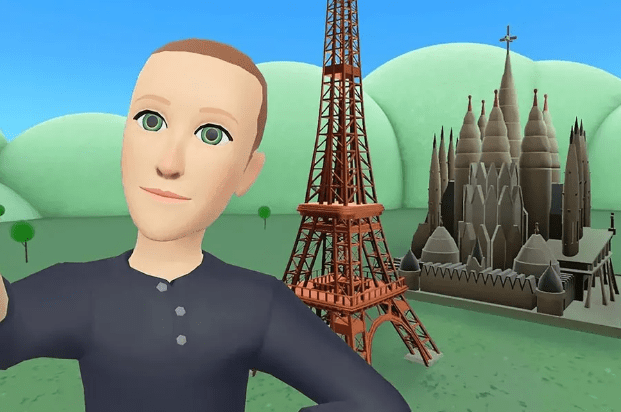
The problem here is that people just didn’t need it. It didn’t solve any kind of pain point. Oftentimes, some people may desire something if it’s really stunning, but for instance, when a post for Horizon Worlds was made, with Zuck posting a couple pictures of his avatar in France and Spain, people were appalled at how basic and minimalistic the images looked. He had to backtrack, saying that it was just a quick rendering and that they were capable of doing better. However, later on, he actually pulled Horizon Worlds from Quest headsets.
A Future No One Else Believed In
Speaking of the headsets, they remained quite expensive for the average consumer and were also seen mostly as accessories rather than essential devices. People are still much happier playing ordinary video games, many of which have better graphics than the Metaverse and don’t require wearing something uncomfortable on their eyes for hours. These never became convenient enough to replace household devices like computers and smartphones.
It was reported that only 9% of the worlds created were ever visited by more than 50 users. Meta’s own team was open that they didn’t go and use the Metaverse much, and Zuckerberg had to instruct them to go into the Metaverse more often. That’s how bad the platform’s popularity was. There was a lack of clear, immediate commercial potential as well.
An Overoptimistic Future
Usually when a revolution arrives, it doesn’t announce itself with a big parade. What it does is solve problems before people begin to rejoice at how much easier and more exciting their lives have become. Meta also had way too much baggage. The truth was that Meta was just ahead of its time. And at the time that it launched, late in COVID, people just wanted to get back out into the real world.
How Meta Survived
First of all, though the multiverse has faded into the past, it has still left a legacy. There are many use cases that have remained, such as digital twins, simulation platforms, and spatial collaboration tools for all kinds of industries where it serves a clear immediate purpose. It’s almost unfathomable that a company could crash and burn so badly and still go on. The reality though is that Facebook generates over $200 billion in ad and operational revenue per year. So it could afford this gamble.
Why Meta Is Now Betting Even Bigger on AI
In just one year, Meta has committed to spending $115-135 billion on its new AI pivot – all in 2026. This is doubling down on its decision to expand out into new sectors, and it’s already gaining a lot of confidence. Meta seems like one of the few companies on earth that could eat crow so hard and then live to tell another day and not get eaten alive by Wall Street. It has lost no credibility.
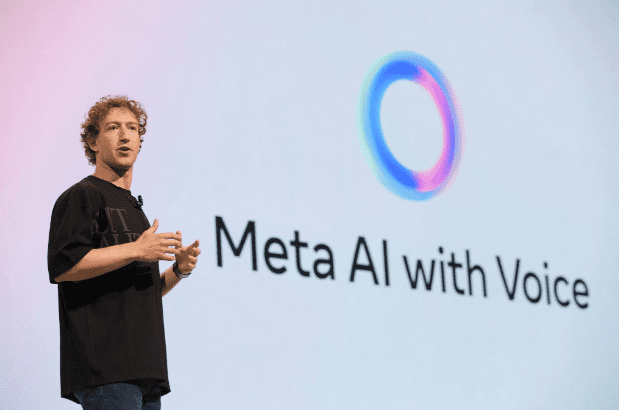
The big difference this time though is the Metaverse was a fantasy land and the AI operates in the real world, and it’s demonstrated massive popularity and utility. Meta writes its new rebranded goal on its website: “Meta’s vision is to bring personal superintelligence to everyone. We believe in putting this power in people’s hands to direct it towards what they value in their own lives.”
The project is quite young, only having existe for months. The directions Zuckerberg has announced that the project will take include:
- Building “personal superintelligence” for everyone that can help individuals and businesses live off the “dole” of AI’s productivity.
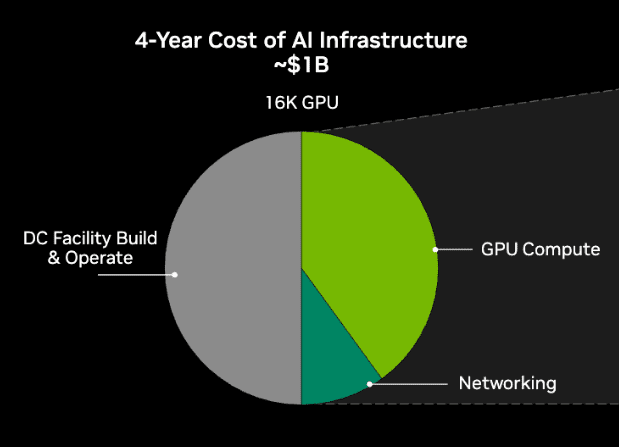
- Its Mega Compute initiative: for data centers, computing power, and energy capacity in the amount of tens of gigawatts of AI infrastructure this decade
- Transforming itself into an AI-native company
- Stronger reasoning and multimodal capabilities
- Open source models
June Employee Mutiny
Because Zuckerberg considers the best engineers capable of making the AI transition to be his own in-house engineers, he has created a department to work on the project and moved his old employees to work to develop the AI. Many of those engineers are not too pleased with this, and a large number of them have quit. Many of them believe the technology is nowhere near what it should be.
A livestream in early June this past week was hijacked, in which company executives were decried, the working environment was compared to a “gulag”, and that the technology used required much more practical implementation than they were being instructed to use. Nevertheless, Facebook certainly has the in-house talent and the capital to potentially become a dominant force in the AI sector. Only time will tell.
Will Meta Retain Its Reputation?
Meta faces legitimate questions about the scale of its investment, the expectations it created, and the opportunity costs that were associated with its Metaverse strategy and now with its AI strategy. Critics believe that Meta overstated both consumer demand and the technological readiness of the metaverse. Many people contend that Meta pursued a vision driven more by executive conviction than by market evidence.
However, technological innovation always comes with a huge amount of risk, and success is never guaranteed. Many transformative technologies also just took a long time to catch on, and virtual worlds may indeed become a feature of every household sometime in the future. The legacy of the technologies is indeed likely to generate value for decades to come.
On top of all that, there is no questioning the dominance that Facebook has maintained for so long. It could never have attempted such a gamble if it couldn’t afford to make it with the potential of the money going to waste.