The SpaceX valuation story has become one of the most remarkable examples of wealth creation in modern business history. Within just two decades, SpaceX evolved from a high-risk startup facing repeated launch failures into one of the most valuable private companies in the world. Its rise has captured the attention of investors, entrepreneurs, governments, and financial markets alike.
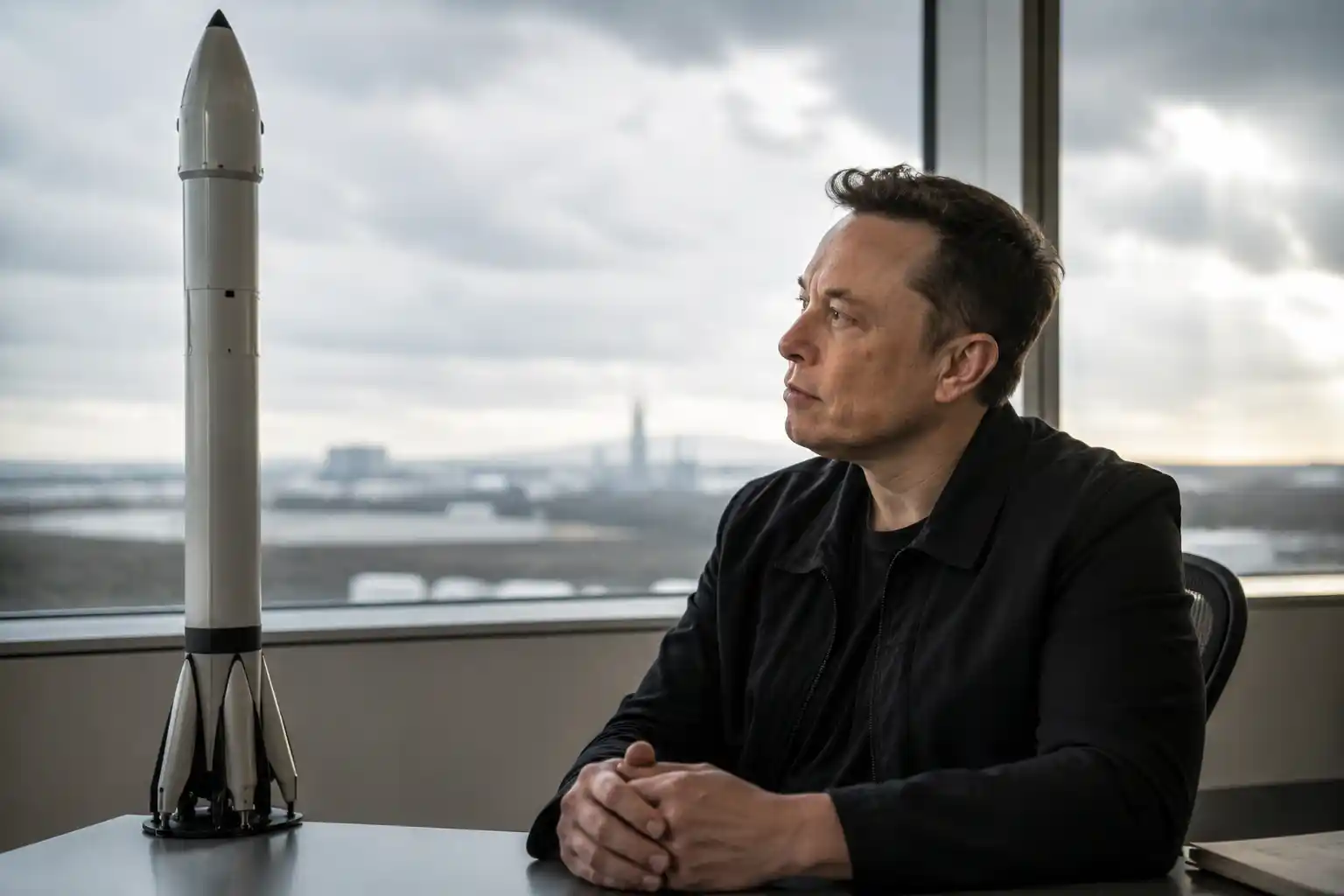
At the center of this transformation stands Elon Musk, whose ambitious vision extended far beyond building rockets. Instead, he sought to reduce the cost of accessing space, create a sustainable commercial ecosystem beyond Earth, and establish entirely new markets. As a result, discussions around Elon Musk wealth creation, private market investing, and the future of innovation increasingly include SpaceX as a defining case study.
The company’s success also reflects broader shifts in global capital markets. Investors have become increasingly interested in high-growth private firms capable of creating immense value before reaching public markets. In this environment, private company valuation has become a critical measure of future economic potential.
Today, SpaceX sits at the intersection of aerospace innovation, telecommunications, infrastructure development, and the emerging space economy. Its journey demonstrates how technological disruption, disciplined execution, and long-term thinking can generate extraordinary value. More importantly, it highlights how space economy growth may become one of the defining wealth creation themes of the coming decades.
The Origins of SpaceX and Its Early Risks
When Elon Musk founded SpaceX in 2002, few industry observers believed a private company could successfully compete with established aerospace giants. The industry was dominated by government-backed contractors with decades of experience, massive budgets, and entrenched relationships.
The early years were marked by uncertainty and repeated setbacks. Several launch failures pushed the company close to collapse. Financial resources dwindled, and many investors questioned whether private space exploration was commercially viable.
However, Musk maintained a singular focus on lowering launch costs through vertical integration and engineering innovation. Rather than relying heavily on external suppliers, SpaceX designed and manufactured many components internally. This approach gave the company greater control over costs, timelines, and product development.
The turning point arrived when SpaceX secured important government contracts and successfully demonstrated reliable launch capabilities. These milestones validated the business model and laid the foundation for future expansion.
From a venture capital perspective, the company represented an extreme example of high-risk, high-reward investing. Investors who recognized the long-term potential of space commercialization gained exposure to one of the most significant value creation stories of the modern era.
How SpaceX Built a Multi-Billion-Dollar Competitive Advantage?
Many technology companies succeed through software innovation. SpaceX succeeded by fundamentally changing the economics of space transportation.
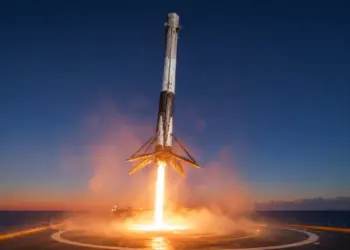
The company’s greatest breakthrough came through reusable rocket technology. Traditionally, rockets were discarded after launch, making each mission extraordinarily expensive. SpaceX challenged this model by designing rockets capable of returning to Earth and being reused multiple times.
This innovation created several advantages:
- Lower launch costs
- Faster launch frequency
- Greater operational efficiency
- Improved customer economics
- Higher profit potential over time
The significance extends beyond engineering. Lower costs expand the addressable market for space services. Businesses, governments, and research organizations gain access to affordable launch opportunities that were previously impossible.
As launch economics improved, SpaceX strengthened its competitive moat. New entrants faced enormous barriers to entry because matching the company’s infrastructure, expertise, and operational experience required billions of dollars and years of execution.
This combination of technological leadership and cost efficiency became a major driver of long-term value creation, helping justify increasingly ambitious private market valuations.
The Evolution of SpaceX Valuation
The growth of SpaceX valuation reflects both operational achievement and changing investor attitudes toward innovation-led businesses.
In its early stages, the company attracted relatively modest capital compared with today’s standards. Investors viewed commercial space ventures as speculative and uncertain. Over time, however, successful launches, government partnerships, and expanding commercial demand transformed perceptions.
Several factors contributed to rising valuation levels:
- Consistent technological execution
- Expanding launch market share
- Growth of Starlink
- Increasing revenue diversification
- Strong investor demand for private innovation assets
As successive SpaceX funding rounds attracted institutional investors, the company’s valuation climbed dramatically. Unlike many startups that depend heavily on future promises, SpaceX demonstrated measurable progress through operational milestones and growing commercial activity.
Key Drivers Behind SpaceX Valuation Growth
| Growth Driver | Impact on SpaceX Valuation | Long-Term Significance |
|---|---|---|
| Reusable Rockets | Reduced launch costs and improved margins | Sustainable competitive advantage |
| Government Contracts | Stable revenue and credibility | Long-term financial foundation |
| Starlink Expansion | New recurring revenue stream | Diversified business model |
| Vertical Integration | Operational efficiency | Better cost control |
| Global Investor Demand | Increased private market interest | Higher valuation multiples |
| Space Economy Growth | Expanded addressable market | Future wealth creation opportunities |
Importantly, the company’s value increasingly reflects future economic potential rather than solely current earnings. Investors are betting on SpaceX becoming a foundational infrastructure provider for the emerging space economy.
Starlink and the Expansion of Revenue Streams
The launch business alone made SpaceX significant. Starlink transformed it into something much larger.
The Starlink business model introduced recurring subscription revenue to complement the cyclical nature of launch services. By deploying thousands of satellites into low-Earth orbit, SpaceX created a global broadband network capable of serving residential, enterprise, maritime, aviation, and government customers.
This diversification fundamentally changed investor perception.
Traditional aerospace companies often rely heavily on project-based contracts. Starlink introduced a scalable platform business with characteristics similar to successful telecommunications and technology firms.
Several advantages emerged:
- Recurring subscription income
- Global customer reach
- High growth potential
- Network effects through scale
- Expanded monetization opportunities
The strategic importance of Starlink extends beyond internet connectivity. It demonstrates how aerospace infrastructure can generate continuous commercial revenue, making SpaceX more resilient and attractive from an investment standpoint.
As subscriber growth continues, Starlink may become one of the largest contributors to future enterprise value, reinforcing the company’s position within the broader digital economy.
Why Investors Are Fascinated by SpaceX?
Investor enthusiasm for SpaceX reflects broader trends shaping modern capital markets.
Over the past decade, private market investing has experienced substantial growth. Institutional investors increasingly seek exposure to transformative companies before they become publicly traded.
Several themes drive demand:
- Rise of mega-unicorn companies
- Frontier technology investing
- Long-term innovation opportunities
- Scarcity of elite private assets
- Exposure to emerging industries
SpaceX embodies all these characteristics simultaneously.
Unlike many startups focused on a single product, SpaceX participates across multiple markets, including launch services, telecommunications, satellite infrastructure, national security, logistics, and future space commercialization.
This broad exposure creates a compelling investment narrative. Investors are not merely funding rockets; they are gaining access to an ecosystem that could influence numerous sectors over the coming decades.
The company’s ability to attract capital demonstrates how modern wealth creation increasingly centers on innovation platforms rather than traditional industrial assets.
Comparing SpaceX to Other Wealth-Creating Innovators
SpaceX shares several characteristics with disruptive companies that reshaped industries and generated substantial shareholder wealth.
While each organization operates in a different market, their journeys reveal common patterns involving innovation, scalability, and long-term strategic thinking.
Tesla transformed transportation through electric vehicles and battery technology. Amazon revolutionized commerce and cloud computing. Google redefined information access and digital advertising. Nvidia became a critical infrastructure provider for artificial intelligence.
Like these companies, SpaceX built a technological advantage that competitors struggle to replicate.
SpaceX Compared With Major Innovation Leaders
| Company | Innovation Advantage | Wealth Creation Outcome |
| SpaceX | Reusable rockets and satellite infrastructure | Massive private valuation growth |
| Tesla | Electric vehicle ecosystem | Significant shareholder wealth creation |
| Amazon | E-commerce and cloud computing | Multi-trillion-dollar enterprise value |
| Search and digital advertising dominance | Long-term technology leadership | |
| Nvidia | AI and advanced semiconductor platforms | Exceptional market capitalization growth |
Investor perception followed a similar pattern across these firms. Early skepticism gradually gave way to recognition as execution validated ambitious visions.
The key difference is that SpaceX operates within an industry previously dominated by governments. Its success represents not only corporate growth but also the commercialization of an entirely new economic frontier.
The Role of SpaceX in the Future Space Economy
The future of space economy growth may depend heavily on infrastructure providers capable of reducing costs and expanding access.
Historically, space activity remained limited because launching payloads into orbit was prohibitively expensive. SpaceX changed that equation.
Lower launch costs enable:
- Satellite deployment
- Space-based communications
- Earth observation services
- Scientific research
- Future commercial space ventures
Financial institutions increasingly view space as an emerging economic sector rather than a niche scientific endeavor. Research from investment firms suggests that the global space economy could expand significantly over the coming decades as commercial activity accelerates.
SpaceX occupies a central position within this transformation. By providing transportation and communications infrastructure, the company benefits from growth occurring across multiple industries.
As new markets emerge, SpaceX may capture value from sectors that do not yet fully exist, further reinforcing investor optimism regarding long-term growth potential.
The Economics of Innovation-Driven Wealth Creation
The story of SpaceX illustrates a broader principle in innovation economics: transformative technologies create value by expanding economic possibilities.
Traditional businesses often compete for existing market share. Innovative companies frequently create entirely new markets.
SpaceX generated wealth through several mechanisms:
- Cost reduction
- Market expansion
- Infrastructure creation
- Technology leadership
- Platform development
This pattern mirrors some of history’s most successful enterprises. Rather than improving existing aerospace models incrementally, SpaceX redesigned core industry economics.
The result is a business capable of capturing value from multiple sources simultaneously. Launch services, satellite communications, government partnerships, and future space infrastructure all contribute to the investment thesis.
For those interested in wealth creation through innovation, SpaceX provides a compelling example of how technological breakthroughs can generate economic value far beyond their original applications.
Unique Insight: Why SpaceX Valuation Is Fundamentally Different?
The most important aspect of SpaceX valuation may be that it combines characteristics rarely found within a single company.
Most businesses fit neatly into one category. SpaceX does not.
It functions simultaneously as:
- An aerospace company
- A telecommunications provider
- An infrastructure platform
- A technology innovator
- A space economy enabler
Starlink creates recurring revenue, while launch economics improve as operational scale increases. Meanwhile, growing commercial activity in space expands future opportunities.
This combination gives investors exposure to multiple industries through a single enterprise. Few companies possess such a diverse set of value drivers.
Perhaps most importantly, SpaceX may represent one of the earliest large-scale examples of wealth creation directly linked to the commercialization of space. Rather than merely supporting exploration, it is helping build the economic foundations of a new marketplace beyond Earth.
That distinction could make the SpaceX valuation story one of the most influential investment case studies of the twenty-first century.
Conclusion
The rise of SpaceX valuation represents far more than the success of a private aerospace company. It reflects the power of innovation, long-term vision, and disciplined execution to create extraordinary economic value. Through reusable rockets, Starlink, strategic capital raising, and relentless technological advancement, SpaceX transformed from a risky startup into one of the world’s most valuable private enterprises.
Its journey echoes the disruptive paths of Amazon, Google, Tesla, and Nvidia, yet it occupies a category of its own. By enabling the commercialization of space, SpaceX has positioned itself at the center of a potentially massive economic transformation.
For investors, entrepreneurs, and market observers, the company demonstrates how private company valuation, aerospace innovation investment, private market investing, and wealth creation through innovation increasingly intersect. As the future of the space economy unfolds, SpaceX may remain one of the most important examples of how technological ambition can generate lasting wealth on a global scale.
Frequently Asked Questions
What is SpaceX valuation?
SpaceX valuation refers to the estimated market value of SpaceX as determined through private funding rounds and investor transactions. The SpaceX valuation reflects investor expectations regarding future growth, Starlink expansion, launch services, and the broader space economy.
Why has SpaceX become so valuable?
SpaceX has become valuable because of its reusable rocket technology, expanding commercial opportunities, Starlink network, government contracts, and leadership position within the emerging space industry.
How does Starlink contribute to SpaceX growth?
The Starlink business model creates recurring subscription revenue, diversifies income sources, and expands SpaceX beyond launch services into global telecommunications.
Who invests in SpaceX?
Investors include institutional funds, venture capital firms, private equity groups, sovereign wealth funds, and select strategic investors seeking exposure to frontier technologies.
What makes SpaceX different from traditional aerospace companies?
SpaceX emphasizes vertical integration, reusable technology, rapid innovation cycles, and commercial scalability, while many traditional aerospace firms rely heavily on conventional contracting models.
How has Elon Musk created wealth through SpaceX?
The Elon Musk wealth creation strategy centered on long-term innovation, reinvesting capital, solving large-scale technological challenges, and building businesses capable of creating entirely new markets.
Can retail investors buy SpaceX shares?
Because SpaceX remains privately held, retail investors generally cannot purchase shares directly. Exposure typically occurs through private investment vehicles or indirect holdings.
How does SpaceX compare with Tesla and Amazon?
Like Tesla and Amazon, SpaceX combines disruptive innovation with long-term strategic execution. However, its focus on space infrastructure creates unique opportunities linked to future economic expansion beyond Earth.
What role does SpaceX play in the space economy?
SpaceX provides critical transportation and communications infrastructure that enables satellite deployment, global connectivity, scientific research, and future commercial space activities.
Why is SpaceX valuation closely watched by investors?
Investors closely monitor SpaceX valuation because it serves as a benchmark for innovation-led private companies, frontier technology investing, and the future commercial potential of the space economy.