The Tesla Cybertruck has become one of the most polarizing and influential vehicles of the modern automotive era. Within only a short period of public availability, it has evolved from an unconventional concept into a cultural and luxury phenomenon. Among affluent consumers, entrepreneurs, technology leaders, and early adopters, the Cybertruck increasingly represents something larger than transportation: it signals identity, technological optimism, and participation in a new premium economy.
Luxury itself is changing. Traditional prestige once centered on handcrafted interiors, heritage badges, and familiar design language. However, today’s affluent buyers often prioritize software, innovation, sustainability, and digital ecosystems. As a result, the definition of automotive status is shifting from ownership of legacy products to ownership of transformative experiences.
This transition aligns with broader luxury automotive trends 2026, where technology and exclusivity increasingly outweigh conventional luxury cues. The rise of electric mobility among wealthy consumers has accelerated demand for products that feel disruptive rather than established. Consequently, the Tesla Cybertruck has emerged as both a luxury electric truck and a modern statement piece that fits the evolving premium EV lifestyle.
Rather than competing directly with traditional premium vehicles, Tesla created a new category: the technology-first Tesla luxury vehicle that challenges expectations around what high-end transportation should look and feel like.
Why the Tesla Cybertruck Redefines Luxury?
Luxury has historically rewarded familiarity. Premium sedans and SUVs typically communicated exclusivity through polished surfaces, elegant proportions, and recognizable brand codes. Tesla deliberately rejected those conventions.
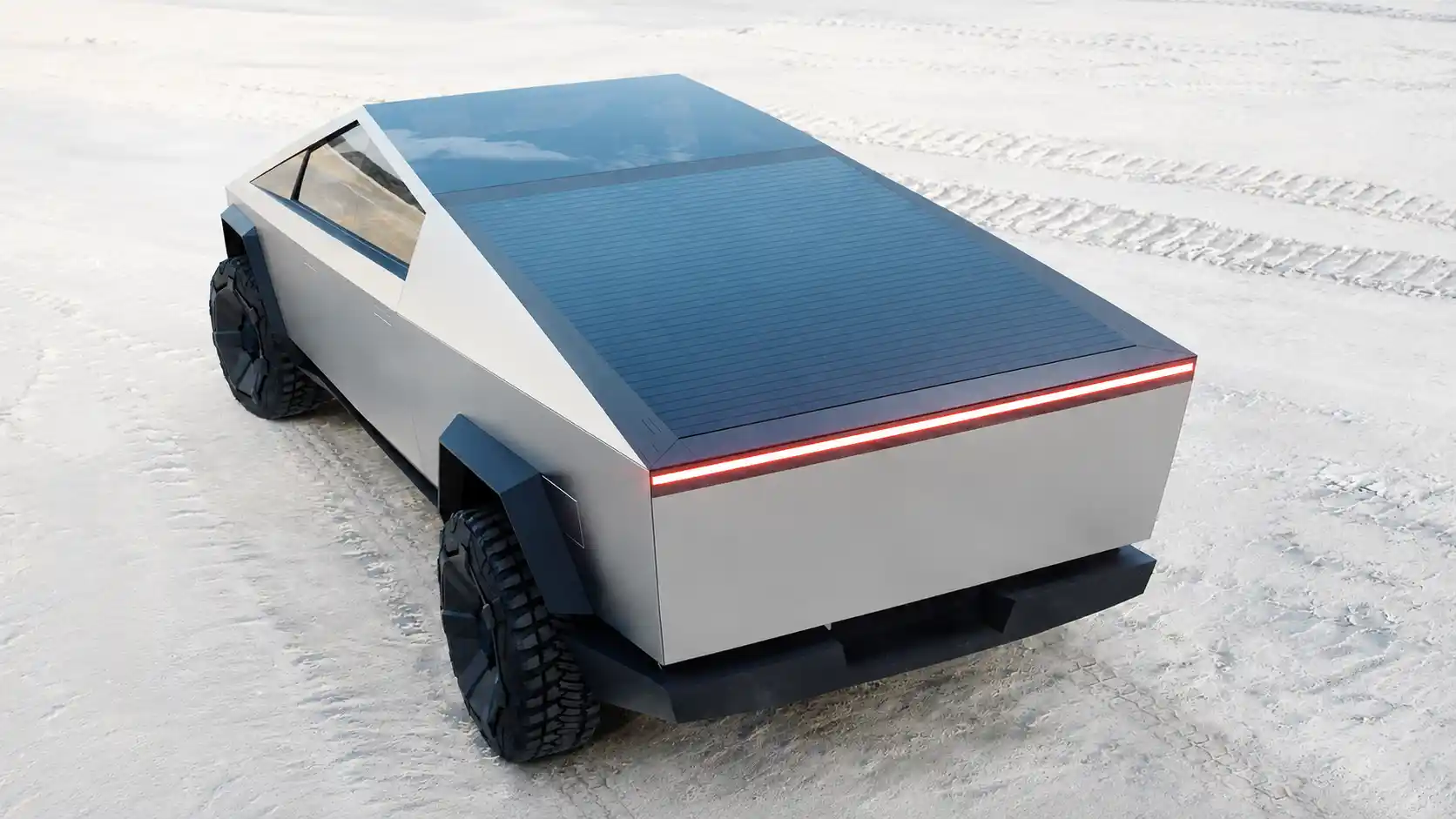
The Cybertruck’s angular geometry and industrial appearance represent a philosophy that values innovation over tradition. Instead of attempting to resemble other premium vehicles, Tesla embraced radical differentiation. That decision transformed design itself into a luxury feature.
For affluent buyers, uniqueness increasingly carries social value. Driving something immediately recognizable creates distinction in environments where conventional luxury cars have become common.
Several factors explain the Cybertruck’s luxury appeal:
- Extreme visual differentiation
- Technology-first ownership experience
- Association with innovation leadership
- Limited availability and strong demand
- Connection to future-focused lifestyles
Moreover, luxury consumers increasingly seek products that communicate ambition and progress. The Cybertruck delivers precisely that message.
Unlike traditional premium vehicles that emphasize comfort first, Tesla positions technological capability as emotional value. Therefore, ownership becomes participation in a broader movement around electrification, software, and modern prestige.
This shift signals something larger than automotive disruption—it reflects changing cultural definitions of wealth itself.
Engineering, Performance, and Capability
Behind the dramatic styling lies engineering that supports Tesla’s unconventional positioning.
The Cybertruck’s stainless steel exoskeleton departs from conventional body-on-frame construction. Rather than relying heavily on decorative surfaces, Tesla emphasizes durability and structural performance. The approach creates visual simplicity while supporting practical capability.
Meanwhile, the electric architecture introduces performance characteristics that challenge expectations for an electric pickup truck.
Performance advantages include:
- Instant electric torque delivery
- Rapid acceleration despite size
- Competitive towing capability
- Adaptive suspension systems
- Enhanced stability from low battery placement
Traditional luxury often prioritized isolation from mechanical sensation. Tesla takes a different approach by turning performance responsiveness into the luxury experience itself.
Capability Comparison
| Feature | Tesla Cybertruck | Traditional Luxury SUV |
|---|---|---|
| Power Delivery | Instant electric torque | Gradual combustion output |
| Updates | Over-the-air | Service-dependent |
| Exterior Material | Stainless steel exoskeleton | Painted panels |
| Interior Philosophy | Minimal digital design | Conventional premium trim |
| Utility | High versatility | Lifestyle focused |
Additionally, electric propulsion supports long-term usability advantages. Owners experience fewer routine maintenance requirements and a more integrated digital environment.
Off-road capability further expands ownership appeal. Adaptive ride systems and torque control allow the vehicle to move beyond urban luxury expectations.
Consequently, the Cybertruck becomes not merely a premium product but an engineered statement of modern capability.
The Digital Ownership Experience
If traditional luxury was built around materials, Tesla builds luxury around software.
Inside the Cybertruck, the environment favors digital simplicity over decorative complexity. Clean surfaces, centralized controls, and integrated displays reduce visual clutter while emphasizing interaction.
The ownership experience extends beyond driving.
Key digital features include:
- Over-the-air software updates
- Connected mobile ecosystem
- Personalized driver settings
- Continuous feature evolution
- Intelligent interface design
Unlike conventional vehicles that remain mostly unchanged after purchase, Tesla continuously modifies functionality through software deployment.
Moreover, software updates reshape consumer expectations. Buyers increasingly expect their vehicles to improve over time rather than depreciate technologically.
Connectivity also strengthens brand loyalty. Owners become participants in a living ecosystem rather than users of static hardware.
As a result, the Cybertruck aligns naturally with the expectations of buyers who already live inside interconnected digital environments.
Cultural Influence and Status Symbol Appeal
Luxury products succeed when they influence culture beyond their functional purpose.
The Cybertruck’s cultural footprint extends across entrepreneurship circles, social media, technology communities, and celebrity visibility. Public attention itself has become part of the ownership experience.
Traditional status symbols once depended on scarcity and heritage. However, modern prestige increasingly depends on narrative and innovation.
Several dynamics strengthen Cybertruck ownership appeal:
- Strong public recognizability
- Association with emerging technology
- Digital community engagement
- Visibility among influential adopters
- Distinct social identity
Meanwhile, exclusivity emerges naturally from demand dynamics and production limitations.
For affluent buyers, ownership communicates more than purchasing power. It suggests alignment with progress and willingness to embrace unconventional ideas.
This repositioning turns the vehicle into one of the most discussed status symbol vehicles of the decade.
Tesla Cybertruck vs Competing Luxury Vehicles
The Cybertruck does not operate in isolation. Several premium vehicles compete for affluent buyers seeking capability, innovation, and exclusivity.
Rivian R1T
The Rivian R1T embraces adventure luxury.
Its design feels approachable and premium rather than disruptive. Technology integration remains strong, although the ownership experience emphasizes exploration and outdoor identity.
For buyers seeking refined utility, Rivian offers balance.
GMC Hummer EV Pickup
The Hummer EV reinterprets American excess through electrification.
Its strategy prioritizes power, presence, and scale. In contrast, Tesla focuses more aggressively on software and ecosystem integration.
Mercedes-Benz G-Class
The G-Class remains a benchmark for heritage luxury.
Its appeal centers on craftsmanship, recognition, and long-standing prestige. However, technology serves tradition rather than defining it.
Range Rover SV
Range Rover SV emphasizes refined sophistication.
The ownership experience highlights comfort and premium personalization. Nevertheless, it retains traditional luxury values more than technological disruption.
Luxury Vehicle Comparison
| Vehicle | Technology | Luxury | Performance | Status Appeal |
| Tesla Cybertruck | Exceptional | Modern Digital | Extremely Strong | Innovation Prestige |
| Rivian R1T | Advanced | Adventure Premium | Strong | Emerging |
| GMC Hummer EV Pickup | High | Bold Premium | Powerful | Presence |
| Mercedes-Benz G-Class | Moderate | Heritage Luxury | Excellent | Iconic |
| Range Rover SV | High | Traditional Premium | Balanced | Elite |
The comparison reveals an important distinction.
Competitors largely extend existing luxury philosophies into electrification. Meanwhile, Tesla attempts to redefine luxury entirely.
The Future of Luxury Electric Mobility (2026 and Beyond)
The premium automotive market is entering a software-defined era.
Across luxury automotive trends 2026, affluent buyers increasingly expect seamless integration between vehicles, devices, and digital services.
Several trends are shaping future prestige:
- AI-driven personalization
- Connected ownership ecosystems
- Sustainable premium positioning
- Continuous software enhancement
- Subscription-enabled functionality
Moreover, environmental awareness increasingly complements luxury rather than opposing it.
Future high-end electric vehicles may compete less on craftsmanship alone and more on intelligence, adaptability, and technological leadership.
Therefore, premium mobility increasingly resembles consumer technology ecosystems.
The Cybertruck sits directly inside that transformation.
Unique Insight: The Cybertruck as a Technological Luxury Asset
The most interesting aspect of the Cybertruck is not that it electrifies the pickup category.
Its deeper significance is philosophical.
The Tesla Cybertruck demonstrates how wealth signaling is evolving. Historically, prestige relied heavily on heritage, craftsmanship, and mechanical excellence. Today, affluent consumers increasingly value technological leadership and visible innovation.
Several forces drive this transition:
- Innovation replacing heritage
- Software becoming a premium asset
- Uniqueness outperforming tradition
- Digital ecosystems creating long-term value
- Unconventional design becoming aspirational
Consequently, ownership communicates participation in future markets and future lifestyles.
The Cybertruck suggests that tomorrow’s luxury icons may be judged less by their badges and more by their ability to shape behavior, culture, and digital experiences.
That possibility makes it one of the most important case studies in modern luxury.
Conclusion
The Tesla Cybertruck represents far more than an electric vehicle launch. It illustrates a broader shift in how affluent consumers define prestige and evaluate premium ownership.
By prioritizing engineering, software, bold aesthetics, and ecosystem integration, Tesla challenged traditional assumptions about what luxury should look like. Meanwhile, consumers increasingly reward products that express innovation instead of heritage.
As luxury mobility continues evolving, vehicles will likely become technological platforms as much as transportation tools.
The Cybertruck’s rise suggests that future symbols of wealth may not be the quietest or most refined vehicles—they may be the boldest, smartest, and most unconventional.
For buyers embracing the premium EV lifestyle, the Cybertruck stands as one of the clearest signals of where luxury is heading next.
Frequently Asked Questions
Is the Cybertruck considered a luxury vehicle?
Yes. Although unconventional, its positioning combines premium pricing, advanced technology, exclusivity, and a digitally integrated ownership experience.
Why do affluent buyers choose electric vehicles?
Many wealthy buyers value innovation, sustainability, performance, and future-ready ecosystems alongside traditional comfort.
How does the Cybertruck differ from traditional luxury SUVs?
It prioritizes software, capability, and distinctive design instead of heritage styling and conventional premium cues.
Is the Tesla Cybertruck practical for everyday use?
Yes. The combination of utility, connectivity, and electric performance makes the Tesla Cybertruck suitable for daily ownership.
Does software influence vehicle luxury today?
Increasingly, yes. Continuous updates and personalization now contribute significantly to perceived premium value.
How does Cybertruck compare with Rivian R1T?
Cybertruck emphasizes disruptive design and ecosystem integration, while Rivian focuses on refined adventure luxury.
Why is exclusivity important in luxury markets?
Exclusivity creates differentiation and increases emotional value among buyers seeking unique experiences.
What defines luxury automotive trends 2026?
Technology integration, AI personalization, sustainability, and digital ownership experiences are becoming central.
Are electric pickup trucks becoming premium products?
Yes. Electrification has accelerated innovation and elevated expectations around capability and ownership.
Could future luxury become more digital than mechanical?
Current market trends suggest software and connected ecosystems may become major prestige indicators.