Fine dining at home is no longer reserved for special occasions or moments when someone with professional culinary training happens to be in the kitchen. More and more home cooks are elevating their everyday meals to restaurant-quality experiences — investing in premium ingredients, refining their techniques, and paying close attention to the details that separate a good meal from a truly exceptional one. Among the tools that make this elevation possible, a wireless meat thermometer stands out as one of the most transformative additions a home cook can make. It is the kind of tool that professional chefs have relied on for years, and understanding why it belongs in any kitchen aspiring to fine dining standards reveals a great deal about what truly makes food exceptional.
What Fine Dining Actually Means at Home
Before exploring the role of temperature monitoring in elevated home cooking, it’s worth briefly defining what fine dining at home actually means. It doesn’t necessarily require elaborate multi-course tasting menus or obscure luxury ingredients — though those certainly have their place. At its core, fine dining is about intentionality. It’s about treating every element of a meal with care: the quality of the ingredients, the precision of the technique, the thoughtfulness of the presentation, and the overall experience at the table.
Precision is the operative word here. In professional kitchens, precision is non-negotiable. Chefs work to exacting standards not because they’re perfectionists by nature, but because they understand that small variations in technique produce dramatically different results on the plate. Temperature is perhaps the single most critical variable in that equation.
The Central Role of Temperature in Fine Dining Results
Ask any trained chef what separates a perfectly executed piece of protein from a disappointing one, and the answer will almost always come back to temperature. Internal temperature determines texture, moisture retention, flavor development, and ultimately the entire eating experience.
Consider the difference between a steak cooked to 52°C (125°F) versus one that reaches 65°C (150°F). Both are cooked. Both are safe to eat. But the first will be buttery, tender, and pink throughout — the kind of steak that draws genuine appreciation from anyone fortunate enough to eat it. The second will be firmer, drier, and significantly less pleasurable to eat. That difference is not about talent or instinct — it’s about temperature control.
The same principle applies across the entire spectrum of fine dining proteins:
- Duck breast at the right temperature is silky and richly flavored. Overcooked, it becomes tough and loses its remarkable character entirely.
- Rack of lamb cooked to a perfect medium-rare is one of the most elegant dishes a home cook can prepare. Overcooked, it’s simply expensive and disappointing.
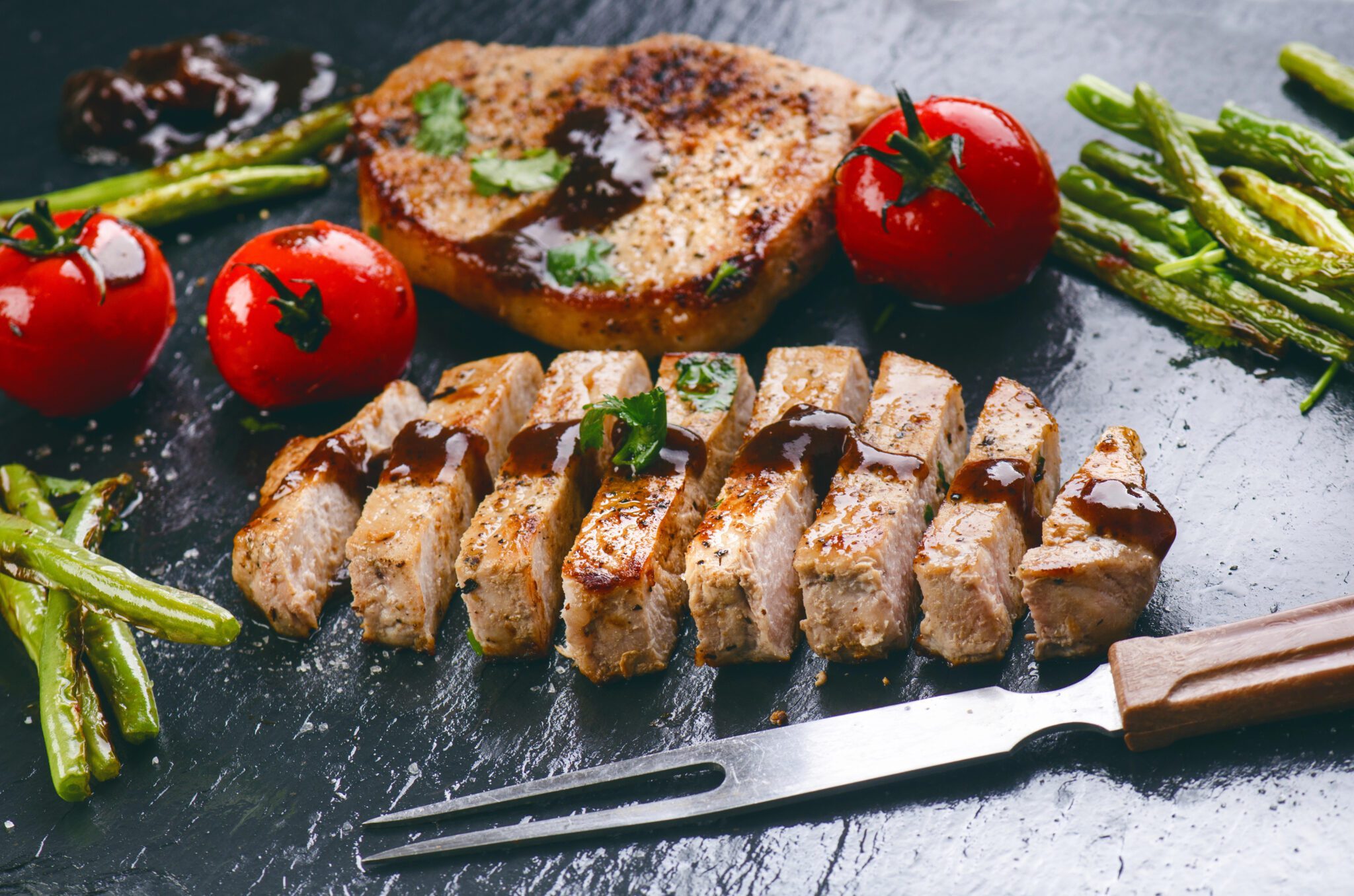
- Pork tenderloin served at the precise sweet spot between fully cooked and overly dry is a revelation — and that sweet spot is a narrow window of just a few degrees.
- Whole roasted chicken that reaches the right internal temperature without exceeding it is juicy, perfectly textured, and memorable. Exceed that temperature and the breast dries out regardless of every other technique applied.
Without accurate temperature monitoring, achieving these results consistently relies on guesswork — and guesswork has no place in fine dining.
Why Wireless Technology Changes Everything
A traditional probe thermometer helps with temperature accuracy but introduces its own limitations. Every time you want a reading, you have to physically be at the oven or grill, open the door, insert the probe, and wait. Repeatedly opening an oven door drops the cooking temperature significantly. Puncturing the meat multiple times to check progress allows precious juices to escape. The process is disruptive, imprecise, and incompatible with the calm, controlled environment that fine dining cooking requires.
A wireless meat thermometer solves all of these problems simultaneously. The probe is inserted once, before cooking begins, and from that point forward it delivers continuous, real-time temperature readings to a connected device — typically a smartphone — wherever you are in the house.
This changes the cooking dynamic entirely. Instead of hovering anxiously over the oven, you can focus on preparing accompaniments, setting the table beautifully, attending to your guests, or simply being present in the moment. The thermometer handles the monitoring while you handle everything else that goes into creating a fine dining experience.
Consistency: The Hallmark of Professional Cooking
One of the most recognizable characteristics of professional restaurant cooking is consistency. When a restaurant earns a reputation for its signature dish, guests return expecting the same exceptional experience every single time. That consistency is not accidental — it is the product of standardized processes, precise techniques, and accurate measurement.
For home cooks aspiring to fine dining standards, consistency is often the hardest element to achieve. The same dish can turn out beautifully one evening and disappointingly the next, even when the same recipe and ingredients are used. More often than not, inconsistency traces back to temperature variation — the oven ran hot, the resting period was shorter, the cut was thicker than last time.
Wireless temperature monitoring introduces the kind of precision that produces repeatable results. When you know the exact internal temperature at which your roast lamb was perfect last time, you can replicate that result with confidence. Over time, this builds a repertoire of reliably exceptional dishes — the foundation of genuine fine dining at home.
Resting: The Step Most Home Cooks Skip
Fine dining isn’t just about reaching the right cooking temperature — it’s also about what happens after. Resting meat properly after cooking is a technique that professional kitchens treat with absolute seriousness, and it’s a step that many home cooks either skip or underestimate.
When meat rests, the muscle fibers relax and reabsorb the juices that migrated toward the center during cooking. The result is a significantly juicier, more tender piece of meat when it’s finally sliced. But resting also involves carryover cooking — the internal temperature continues to rise for several minutes after the heat source is removed.
Understanding this carryover effect is essential for fine dining results. A steak removed from the pan at exactly the target temperature will continue cooking during the rest period and end up overcooked. A wireless thermometer that allows you to monitor temperature in real time helps you time the pull point correctly, accounting for carryover so the food reaches its perfect final temperature precisely during the rest — not before and not after.
Multi-Protein Meals and Dinner Party Cooking
Fine dining at home frequently involves preparing multiple dishes simultaneously — a scenario where wireless temperature monitoring moves from helpful to genuinely essential. Managing a dinner party where the main course involves multiple proteins, each with different target temperatures and different cooking times, is a logistical challenge that can easily overwhelm even experienced cooks.
Multi-probe wireless systems allow the cook to monitor several dishes at once, receiving independent notifications for each as they approach their respective target temperatures. This capability transforms a potentially stressful cooking session into a calm, organized, and controlled process that reflects the composure and precision that fine dining demands.
Elevating the Experience Beyond the Technical
There is also a softer, more human dimension to what wireless temperature monitoring contributes to fine dining at home. When you know your food is cooking precisely and you’re not anxiously second-guessing the process, you cook differently. You’re more relaxed. You’re more present. You’re able to give attention to the other elements that create a genuinely special dining experience — the candlelight, the music, the wine, the conversation.
Fine dining is ultimately about creating moments. The technical precision that wireless temperature monitoring provides creates the foundation for those moments to happen without the stress and uncertainty that commonly accompany ambitious home cooking.
A Tool That Pays for Itself Immediately
Premium cuts of meat represent a meaningful financial investment. A dry-aged ribeye, a whole rack of lamb, or a prime beef tenderloin are not ingredients where you want to leave the outcome to chance. A wireless thermometer protects that investment by ensuring the food you paid a premium price for is cooked to the precise standard it deserves.
The peace of mind alone makes it worthwhile. But when you factor in the improved results, the consistency, the freedom it provides during cooking, and the elevated dining experiences it enables, this compact piece of technology represents one of the best value investments a serious home cook can make.
Fine dining at home begins with intention and is executed through precision — and there is no more precise or practical tool in that pursuit than a reliable wireless meat thermometer.