The debate surrounding Superyacht vs Megayacht remains one of the most misunderstood topics in the global luxury marine industry. In 2026, the terms appear constantly across media headlines, yacht brokerage listings, billionaire lifestyle reporting, and luxury travel publications. However, despite their widespread use, there is still no universally standardized global definition separating a superyacht from a megayacht. Consequently, terminology often overlaps depending on shipbuilders, brokers, yacht designers, charter companies, and media organizations.
Part of the confusion comes from how the yacht industry evolved over the past two decades. Traditionally, the term “superyacht” became associated with professionally crewed luxury yachts above approximately 24 meters in length. Meanwhile, “megayacht” emerged more as a marketing and media term used informally to describe substantially larger and more complex vessels, often ranging beyond 60 meters or even 100 meters. Therefore, understanding Superyacht vs Megayacht requires separating industry classifications from branding language and public perception.
Moreover, yacht classification matters far beyond simple terminology. Size categories influence engineering complexity, operational costs, crew requirements, marina accessibility, insurance structures, and ownership economics. Billionaires, charter clients, investors, and marine industry professionals increasingly evaluate yachts not only as leisure assets but also as private mobility infrastructure. Consequently, the distinction between superyachts and megayachts reflects broader changes happening throughout luxury travel, marine engineering, and ultra-high-net-worth lifestyle strategy.
Superyacht vs Megayacht: Understanding the Core Definitions
The most widely accepted superyacht definition within the marine industry generally refers to professionally crewed luxury yachts measuring approximately 24 meters or longer. This threshold is commonly recognized because many international maritime regulations begin applying additional operational standards once vessels exceed this size category. Consequently, yachts above 24 meters typically involve professional crews, advanced navigation systems, and commercial-grade operational management.
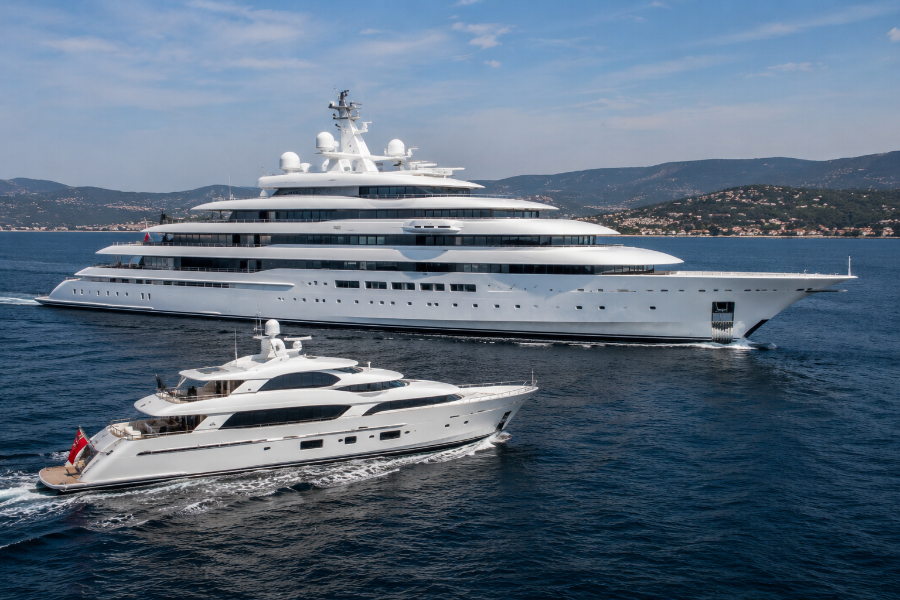
However, the term “megayacht” is much less formally standardized. In most cases, the mega yacht meaning refers informally to exceptionally large luxury yachts often measuring 60 meters, 80 meters, or even beyond 100 meters in length. Media outlets frequently use the term megayacht to emphasize scale, extravagance, and engineering complexity rather than to indicate a specific regulatory classification. Therefore, a megayacht is usually also a superyacht, but not every superyacht would be considered a megayacht.
Several commonly referenced yacht classifications include:
- Luxury yacht: Broad general category
- Superyacht: Usually 24m+
- Megayacht: Often 60m–100m+
- Gigayacht: Informal term for 100m+ vessels
- Explorer yacht: Expedition-focused luxury vessels
- Support yacht: Auxiliary operational vessels
Moreover, there is no single global authority defining these terms universally. Yacht builders, brokers, classification societies, and charter firms often use slightly different language depending on marketing objectives and regional industry practices. Consequently, the Superyacht vs Megayacht discussion frequently varies between technical marine conversations and luxury media reporting.
Importantly, scale dramatically changes operational realities. Once yachts move into megayacht territory, ownership shifts from luxury recreation into infrastructure-level management. Larger vessels require more sophisticated engineering systems, expanded crews, larger marina facilities, enhanced cybersecurity, and significantly greater maintenance coordination. Therefore, terminology increasingly reflects operational complexity as much as physical size.
Size, Scale & Engineering Differences
The biggest distinction in the Superyacht vs Megayacht comparison involves engineering scale and onboard infrastructure. Smaller superyachts between 24 and 50 meters may still function similarly to luxury vacation properties at sea. However, as yachts exceed 60 meters and enter megayacht territory, they become highly sophisticated floating ecosystems requiring commercial-grade operational planning.
Hull design changes substantially as yacht size increases. Larger megayachts require more advanced naval architecture to manage stability, fuel efficiency, vibration reduction, and long-range performance. Gross tonnage also becomes increasingly important because interior volume directly influences onboard amenities, crew facilities, storage systems, and operational flexibility. Consequently, megayachts often resemble floating luxury resorts more than conventional pleasure boats.
Key engineering differences between yacht categories include:
- Increased deck count
- Larger engine systems
- Expanded fuel storage
- Advanced stabilization systems
- Commercial-grade HVAC infrastructure
- Dedicated crew operational areas
- Helicopter and tender integration
- Long-range navigation systems
Crew requirements also rise dramatically as scale increases. A 30-meter superyacht may operate with a crew of five to eight people, while a 100-meter megayacht may require more than 40 crew members working across hospitality, engineering, security, navigation, culinary, and maintenance departments. Therefore, yacht ownership economics become exponentially more complex as vessels grow larger.
Moreover, propulsion systems evolve significantly within larger yacht categories. Many modern megayachts now incorporate hybrid-electric technologies, advanced stabilization systems, smart energy management software, and AI-assisted operational monitoring. Consequently, engineering sophistication increasingly defines the distinction between superyachts and megayachts beyond simple length measurements.
However, larger scale also creates practical limitations. Megayachts face marina accessibility challenges, regulatory complexity, and increased maintenance burdens that smaller superyachts can often avoid. Therefore, size delivers prestige and capability but introduces substantial operational trade-offs.
Superyacht vs Megayacht Comparison
| Feature | Superyacht | Megayacht |
|---|---|---|
| Typical Size | 24m–60m | 60m–100m+ |
| Crew Size | 5–15 crew | 20–50+ crew |
| Ownership Type | Private + charter | Mostly billionaire private ownership |
| Operating Complexity | Moderate | Extremely high |
| Fuel Capacity | Standard long-range | Massive expedition capability |
| Infrastructure | Luxury-focused | Floating private ecosystem |
| Annual Costs | Millions annually | Tens of millions annually |
| Features | Pools, spas, lounges | Helipads, submarines, cinemas, wellness centers |
| Marina Access | More flexible | Highly restricted |
| Engineering Systems | Advanced | Commercial-grade complexity |
Luxury Features & Onboard Experience
Luxury yacht categories increasingly compete through onboard experience rather than simple size. Modern superyachts now feature amenities once reserved only for megayachts, including beach clubs, wellness spas, infinity pools, gyms, private cinemas, and advanced entertainment systems. Consequently, even smaller luxury yachts deliver extremely sophisticated hospitality experiences.
Megayachts, however, operate on an entirely different infrastructure scale. These vessels frequently include helicopter landing pads, submarine garages, scientific laboratories, medical suites, underwater observation lounges, multi-level wellness centers, and expedition-ready support systems. Therefore, megayachts increasingly resemble floating luxury compounds rather than traditional marine leisure vessels.
Common luxury megayacht features include:
- Helicopter hangars
- Submarine integration
- Multi-deck wellness centers
- Infinity swimming pools
- Private cinemas
- High-security communication systems
- Beach clubs and sea terraces
- Expedition support facilities
Moreover, explorer yacht capabilities are becoming increasingly important within both superyacht and megayacht markets. Billionaires now prioritize long-range travel, remote destinations, and operational autonomy more than highly visible Mediterranean luxury circuits. Consequently, shipbuilders are designing vessels with ice-class hulls, larger fuel reserves, and enhanced expedition systems.
However, luxury complexity also raises maintenance demands significantly. Advanced entertainment systems, wellness infrastructure, and high-end mechanical equipment require specialized crews and constant servicing. Therefore, onboard luxury directly impacts ownership costs and operational logistics.
Ownership Costs & Billionaire Economics
The economics of yacht ownership represent one of the most important differences in the Superyacht vs Megayacht discussion. Entry-level superyachts may cost several million dollars, while large megayachts can exceed hundreds of millions depending on customization, technology integration, and engineering complexity.
Annual operating expenses also rise dramatically with vessel size. Industry estimates often suggest yearly operating costs equal approximately 10% of a yacht’s original purchase price. Consequently, a $300 million megayacht may require tens of millions annually for staffing, fuel, insurance, maintenance, marina fees, and technical operations.
Major ownership expense categories include:
- Crew salaries and benefits
- Fuel consumption
- Insurance coverage
- Marina and docking fees
- Engineering maintenance
- Security operations
- Compliance and licensing
- Hospitality provisioning
Moreover, billionaire ownership strategy is evolving rapidly in 2026. Wealthy individuals increasingly view yachts as strategic mobility infrastructure rather than purely recreational assets. These vessels support global travel, executive networking, secure communications, and family privacy simultaneously. Therefore, ownership decisions increasingly involve operational utility as much as prestige.
Charter markets also influence ownership economics significantly. Many superyachts participate in luxury charter programs that offset operational costs during periods when owners are not onboard. Megayachts participate less frequently because of security, privacy, and complexity concerns. Consequently, charter economics often differ substantially between yacht categories.
Yacht Ownership Economics
| Expense Category | Superyacht | Megayacht |
|---|---|---|
| Purchase Cost | $5M–$80M | $100M–$600M+ |
| Annual Maintenance | Hundreds of thousands to millions | Tens of millions |
| Crew Expense | Moderate staffing | Large multi-department crews |
| Fuel Cost | High | Extremely high |
| Charter Potential | Common | Selective/private |
| Liquidity | Moderate resale market | Limited buyer pool |
| Insurance | Expensive | Extremely expensive |
| Marina Costs | Flexible access | Premium infrastructure required |
Why Billionaires Prefer Larger Yachts in 2026?
Billionaires increasingly favor larger yachts because luxury mobility has become strategically important. Privacy, security, and operational autonomy now influence purchasing decisions more heavily than simple visual status display. Consequently, megayachts function as floating private infrastructure capable of supporting global lifestyles independently.
Large yachts provide controlled environments for business meetings, family travel, entertainment, and secure communication. In many cases, billionaires prefer mobile private ecosystems over traditional luxury tourism because yachts offer greater flexibility and isolation from public exposure. Therefore, megayachts increasingly resemble offshore private estates with advanced mobility capabilities.
Several trends driving larger yacht demand include:
- Privacy-focused luxury travel
- Long-range mobility requirements
- Quiet luxury preferences
- Family security considerations
- Global operational flexibility
- Wellness-centered lifestyles
- Reduced public visibility
- Integrated digital infrastructure
Moreover, modern billionaire culture increasingly values autonomy over visibility. Quiet luxury design, explorer yacht functionality, and sustainable engineering are becoming more important than overt extravagance. Consequently, the yacht market is shifting toward operational sophistication rather than purely decorative luxury.
However, billionaire ownership also involves growing public scrutiny. Environmental criticism, wealth inequality debates, and emissions concerns continue shaping how large yacht ownership is perceived globally. Therefore, sustainability systems and hybrid propulsion technologies are becoming increasingly important across luxury yacht markets.
Challenges & Trade-Offs of Mega Yacht Ownership
Despite their prestige, megayachts present major operational and financial challenges. Marina access limitations remain one of the most practical problems because many ports cannot accommodate vessels exceeding 80 or 100 meters. Consequently, owners often compete for limited docking infrastructure globally.
Environmental scrutiny is another growing challenge. Large yachts attract criticism due to fuel consumption, emissions, and symbolic associations with extreme wealth. Therefore, shipbuilders increasingly prioritize hybrid propulsion systems, sustainable materials, and energy-efficient engineering to improve environmental performance.
Major ownership challenges include:
- Port accessibility limitations
- Extremely high operating costs
- Regulatory complexity
- Specialized maintenance demands
- Environmental criticism
- Insurance escalation
- Crew recruitment difficulty
- Limited resale liquidity
Resale markets also become narrower as yacht size increases. While smaller superyachts may attract broader charter and ownership interest, megayachts appeal only to extremely wealthy buyers with operational infrastructure already in place. Consequently, resale timelines can become lengthy and highly negotiated.
Nevertheless, for billionaires prioritizing privacy, autonomy, and luxury mobility, megayachts continue offering unmatched advantages. Therefore, despite operational complexity, demand for large yachts remains exceptionally strong within the ultra-high-net-worth market.
2026 Trends Reshaping the Yacht Industry
Several major trends are reshaping the global yacht industry in 2026 and influencing both superyacht and megayacht development. Sustainable propulsion systems are becoming central priorities as environmental regulations and public scrutiny intensify throughout luxury marine markets.
Hybrid-electric experimentation is accelerating rapidly. Many newly launched yachts now integrate battery-supported propulsion, smart energy systems, and AI-assisted operational optimization designed to improve efficiency and reduce emissions. Consequently, technological sophistication increasingly defines the future of luxury yacht ownership.
Key yacht industry trends include:
- Hybrid-electric propulsion growth
- Expansion of explorer yachts
- AI-driven operational systems
- Quiet luxury aesthetics
- Sustainable construction materials
- Smart energy management
- Wellness-focused onboard design
- Increased cybersecurity integration
Ultimately, the Superyacht vs Megayacht conversation reflects a broader evolution happening throughout luxury mobility. Modern yacht ownership increasingly prioritizes autonomy, privacy, flexibility, and operational infrastructure over simple status symbolism. Consequently, the future of billionaire yachts is being shaped as much by technology and strategic mobility as by luxury itself.
FAQs
What is the difference between Superyacht vs Megayacht?
A superyacht generally refers to luxury yachts above 24 meters, while megayacht is an informal term often used for much larger yachts above 60 meters.
What size is considered a superyacht?
Most industry professionals consider yachts above approximately 24 meters to qualify as superyachts.
What qualifies as a megayacht?
Megayachts are usually very large luxury yachts measuring around 60 meters or more.
How much do megayachts cost?
Megayachts can cost anywhere from $100 million to more than $600 million depending on size and customization.
How many crew members are required?
Crew sizes vary greatly, ranging from 5–15 on smaller superyachts to 40+ on large megayachts.
Are megayachts bigger than superyachts?
Yes. Megayachts are generally considered a larger category within the broader superyacht market.
Why do billionaires buy large yachts?
Billionaires buy large yachts for privacy, global mobility, security, luxury travel, and operational independence.
What is a giga-yacht?
A giga-yacht is an informal term sometimes used for yachts exceeding 100 meters in length.
Can superyachts be chartered?
Yes. Many superyachts participate in luxury charter programs when not used privately.
What are yacht industry trends in 2026?
Major trends include hybrid propulsion, explorer yachts, AI integration, sustainability systems, and quiet luxury design.