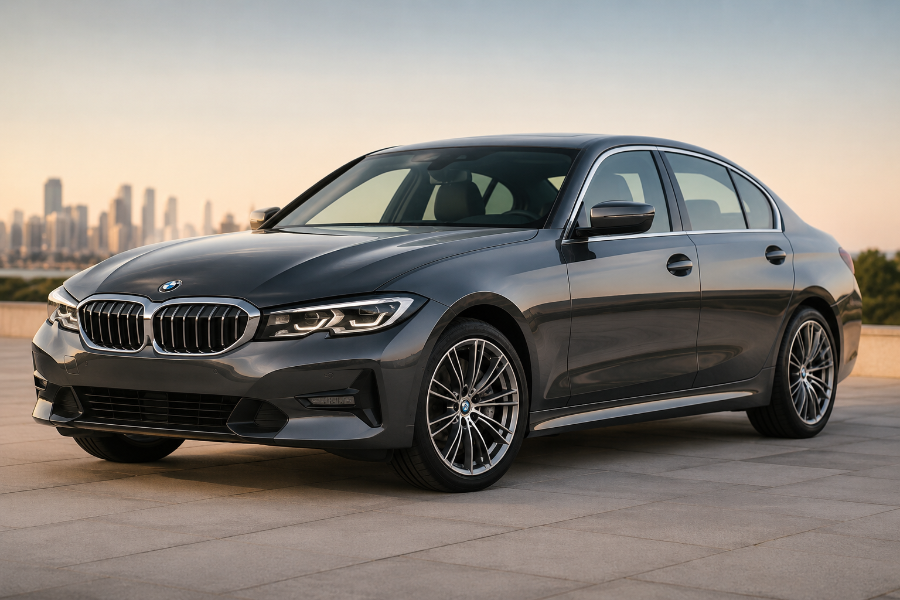
The BMW 3 Series LWB is no longer positioned purely as a driver’s sedan. In 2026, it represents a broader transformation taking place across the global premium car market, where rear-seat comfort, executive mobility, and chauffeur-oriented refinement are becoming increasingly important alongside performance and brand prestige.
For decades, the standard BMW 3 Series built its identity around agile handling, sporty steering, and a strong connection between driver and machine. However, shifting buyer behavior in Asia, the Middle East, and urban luxury markets has changed how premium sedans are being designed and marketed. Affluent buyers now spend more time in traffic-heavy cities, often seated in the rear rather than behind the wheel. Consequently, automakers are adapting their executive sedans to prioritize comfort, space, and long-distance refinement.
The rise of the BMW 3 Series long wheelbase format reflects this industry-wide evolution. Buyers increasingly expect luxury sedans to function as mobile executive lounges rather than simply dynamic driving tools. Therefore, BMW’s long-wheelbase strategy is not merely about adding extra centimeters to the cabin. Instead, it represents a calculated shift toward chauffeur-driven luxury cars that balance traditional German engineering with modern executive expectations.
BMW 3 Series LWB and the Rise of Chauffeured Luxury Sedans
The expansion of long-wheelbase luxury sedans has become one of the defining trends in the premium automotive industry. Markets such as China, the UAE, Saudi Arabia, and India have shown strong demand for sedans that emphasize rear passenger comfort without moving entirely into full-size limousine territory. As a result, automakers are extending wheelbases on midsize executive sedans to create a more spacious and versatile ownership experience.
The BMW executive sedan strategy increasingly recognizes that many affluent buyers no longer prioritize aggressive driving dynamics every day. Urban congestion, extended commute times, and chauffeur usage patterns have changed luxury ownership behavior. Consequently, vehicles like the BMW 3 Series LWB are engineered to provide both driving engagement and premium rear-seat usability.
BMW’s approach differs slightly from some competitors because the company still aims to preserve a recognizable level of athleticism. Unlike traditional chauffeur-focused sedans that isolate occupants entirely from the road, the 3 Series LWB attempts to retain BMW’s signature chassis communication while softening ride behavior for executive passengers. This balance is central to the car’s positioning in the 2026 luxury sedan market.
However, there are trade-offs associated with this strategy. Extending the wheelbase naturally changes handling dynamics, especially in tighter urban corners and aggressive driving situations. Although rear passengers benefit from improved stability and comfort, enthusiastic drivers may notice slightly reduced agility compared with the standard wheelbase 3 Series. Nevertheless, for many luxury buyers, the comfort gains outweigh these compromises.
Key Reasons Long-Wheelbase Sedans Are Growing
- Increased chauffeur usage among executives
- Rising urban traffic congestion
- Demand for rear-seat productivity space
- Luxury buyers prioritizing comfort over sportiness
- Strong growth in Asian executive mobility markets
- Premium brands competing on passenger experience
- Greater focus on cabin refinement and technology
BMW 3 Series LWB
The BMW 3 Series LWB demonstrates how modern premium sedans are evolving from driver-centric machines into sophisticated executive transport solutions. The longer wheelbase primarily enhances second-row accommodation, creating noticeably improved legroom and cabin openness compared with the standard sedan.
BMW has carefully integrated these changes without dramatically altering the overall exterior proportions. Consequently, the vehicle still maintains the familiar athletic stance associated with the 3 Series lineage. The stretched architecture subtly improves rear door dimensions and passenger entry while preserving the sedan’s premium appearance.
Moreover, the additional wheelbase contributes to improved ride composure at highway speeds. Longer wheelbase vehicles generally exhibit smoother vertical motion over uneven road surfaces, which benefits rear-seat passengers significantly. In real-world executive mobility scenarios, this translates into reduced fatigue during long commutes or intercity travel.
Nevertheless, buyers expecting flagship-level limousine comfort should maintain realistic expectations. The 3 Series LWB remains a midsize luxury sedan rather than a full-size executive limousine. Therefore, while rear-seat comfort improves considerably, it still prioritizes balance rather than outright softness or ultra-plush isolation.
Rear-Seat Comfort: What Makes the BMW 3 Series LWB Different
One of the most significant changes in the rear seat luxury sedan segment involves how manufacturers design second-row experiences. In the BMW 3 Series LWB, the additional wheelbase directly translates into expanded knee room, improved seating posture, and a more relaxed passenger environment.
Rear-seat passengers benefit from enhanced cushioning, better thigh support, and a greater sense of cabin openness. These improvements may appear incremental on paper, yet they meaningfully influence everyday usability. Executives traveling between meetings, airport transfers, or city commutes often value comfort consistency more than outright acceleration performance.
The suspension tuning also plays a major role in differentiating the LWB model. BMW engineers have recalibrated damping characteristics to prioritize ride absorption and stability. Consequently, the vehicle handles broken urban roads and highway imperfections with greater composure than a standard sport-oriented sedan setup.
However, achieving this balance requires compromise. Softer suspension tuning can slightly reduce the sharp steering feedback traditionally associated with BMW sedans. Enthusiasts seeking maximum cornering precision may still prefer the standard wheelbase version. Yet for chauffeur-driven luxury cars, smoother ride quality usually carries greater practical value.
Rear-Seat Features That Matter in Daily Use
- Increased legroom for executive passengers
- Improved ingress and egress
- Better ride stability at highway speeds
- Enhanced rear climate comfort
- Softer suspension calibration
- Reduced cabin vibrations
- Improved rear-seat posture support
- Greater long-distance comfort
BMW 3 Series LWB vs Rivals
| Feature | BMW 3 Series LWB | Mercedes C-Class LWB | Audi A4L |
|---|---|---|---|
| Wheelbase Extension | Moderate | Moderate | Moderate |
| Rear Legroom | Excellent | Excellent | Very Good |
| Ride Comfort | Balanced | Softer | Firm-balanced |
| Technology | Advanced digital cockpit | Luxury-focused UI | Tech-centric cabin |
| Chauffeur Appeal | Strong | Very Strong | Moderate |
| Driving Dynamics | Sport-oriented | Comfort-oriented | Neutral |
| Noise Insulation | High | Very High | High |
| Pricing Strategy | Premium balanced | Higher luxury positioning | Competitive premium |
The competition between BMW, Mercedes-Benz, and Audi increasingly centers on how effectively each brand balances passenger comfort with brand identity. The BMW 3 Series long wheelbase attempts to maintain driver engagement while adapting to changing luxury expectations.
Mercedes traditionally leans further toward comfort and isolation, which appeals strongly to chauffeur-driven users. Audi, meanwhile, often emphasizes technology integration and understated sophistication. BMW positions itself between these philosophies by offering a more balanced blend of dynamics and executive usability.
Driving Experience and Suspension Tuning
Although the BMW 3 Series LWB prioritizes rear-seat comfort more heavily than previous generations, it still preserves core elements of BMW’s performance DNA. Steering remains relatively precise, body control stays disciplined, and acceleration continues to feel responsive compared with many comfort-oriented rivals.
The longer wheelbase contributes to greater high-speed stability, especially during highway cruising. Consequently, the sedan feels planted and composed over long distances. This characteristic benefits both chauffeur-driven passengers and owner-drivers seeking refinement during extended travel.
Noise insulation improvements also contribute significantly to perceived luxury. Enhanced sound deadening, improved sealing, and suspension tuning reduce road harshness and cabin intrusion. Therefore, passengers experience a quieter environment suitable for calls, productivity, or relaxation.
However, physics inevitably influences the overall character of the vehicle. A longer wheelbase reduces some of the immediate directional agility that enthusiasts associate with compact sports sedans. While the difference may not matter in daily driving, highly spirited drivers may notice the altered balance.
Real-World Driving Strengths
- Better highway composure
- Improved rear passenger comfort
- Reduced road harshness
- More refined urban ride quality
- Stable long-distance cruising
- Balanced sport-luxury character
Potential Trade-Offs
- Slightly less agile than standard 3 Series
- Softer suspension feel
- Increased pricing
- Heavier executive-oriented setup
Technology and Interior Luxury Features
Modern luxury sedans increasingly compete through technology rather than traditional prestige cues alone. The luxury sedan 2026 market places enormous emphasis on connectivity, digital ecosystems, ambient experiences, and intelligent cabin design.
The BMW 3 Series LWB incorporates a digital cockpit environment that integrates infotainment, navigation, climate controls, and driver assistance technologies into a cohesive interface. Large curved displays, connected services, and smartphone integration support both convenience and productivity.
Rear passengers also benefit from expanded convenience technology. USB charging points, rear climate management, ambient lighting customization, and enhanced connectivity features contribute to the executive mobility experience. Consequently, the vehicle functions as both transportation and mobile workspace.
Nevertheless, increasing technological complexity introduces potential ownership considerations. Advanced digital systems may increase long-term maintenance costs and software dependency. Buyers prioritizing simplicity could view this as a disadvantage despite the premium experience offered.
Interior Luxury Highlights
- Digital curved display interface
- Advanced connectivity ecosystem
- Premium ambient lighting
- Enhanced rear-seat climate comfort
- Executive-focused cabin layout
- High-quality material finishes
- Improved infotainment responsiveness
Luxury Sedan Ownership Comparison
| Category | BMW 3 Series LWB | Standard 3 Series | Mercedes C-Class LWB |
|---|---|---|---|
| Driving Dynamics | Strong | Strongest | Moderate |
| Rear-Seat Luxury | Excellent | Moderate | Excellent |
| Comfort Focus | High | Medium | Very High |
| Maintenance Costs | Premium | Premium | Premium-high |
| Brand Prestige | Strong | Strong | Very Strong |
| Chauffeur Suitability | Excellent | Limited | Excellent |
| Urban Executive Use | Ideal | Good | Ideal |
| Value Proposition | Balanced | Driver-focused | Luxury-focused |
The ownership experience increasingly depends on lifestyle priorities rather than raw specifications alone. Buyers who frequently use chauffeurs or spend long hours commuting may derive greater value from the LWB configuration compared with traditional enthusiast-focused sedans.
Why Executives and Millionaires Are Choosing Long-Wheelbase Sedans
The growth of chauffeur-driven luxury cars reflects broader urban mobility realities. Executives in major metropolitan areas often spend significant time traveling between meetings, airports, hotels, and corporate districts. Consequently, comfort, productivity, and reduced fatigue have become essential purchasing considerations.
Long-wheelbase sedans address these needs by transforming travel time into usable time. Rear-seat passengers can work, conduct calls, review documents, or simply relax more effectively in a spacious cabin environment. Therefore, the premium sedan increasingly functions as an extension of executive lifestyle infrastructure.
Moreover, affluent buyers are embracing a quieter form of luxury. Rather than focusing solely on aggressive styling or extreme performance figures, many now prioritize understated sophistication, comfort efficiency, and refined technology integration. The BMW 3 Series LWB aligns closely with this “quiet luxury” movement.
However, not every luxury buyer desires a chauffeur-focused experience. Some still prefer direct driver engagement and compact sedan agility. Therefore, the success of long-wheelbase sedans depends heavily on regional preferences and urban usage patterns.
Challenges and Trade-Offs of the BMW 3 Series LWB
Despite its strengths, the BMW 3 Series LWB is not without limitations. Extending the wheelbase inevitably changes the vehicle’s handling character and overall market positioning. Enthusiast drivers accustomed to the sharpest versions of the 3 Series may perceive the LWB model as slightly softer and less playful.
Pricing also becomes an important consideration. Additional cabin engineering, rear comfort upgrades, and premium equipment naturally increase costs. Consequently, some buyers may question whether the added rear-seat benefits justify the price premium over the standard sedan.
Another challenge involves market identity. BMW built its reputation largely around driving engagement and sporty engineering. As the brand expands deeper into comfort-focused luxury territory, it must carefully preserve its traditional enthusiast appeal while attracting executive buyers seeking refinement.
Nevertheless, the broader market trend clearly supports comfort-oriented executive sedans. Therefore, the LWB strategy appears aligned with evolving luxury mobility priorities rather than temporary consumer behavior shifts.
2026 Luxury Sedan Trends Reshaping Executive Mobility
The luxury sedan 2026 landscape increasingly revolves around comfort-first engineering, integrated technology, and passenger-centered design. Long-wheelbase sedans are becoming especially important in Asia and Middle Eastern markets where chauffeur-driven usage patterns continue expanding.
Technology now serves as a primary differentiator between premium brands. Buyers increasingly evaluate infotainment ecosystems, cabin refinement, connectivity features, and ride isolation alongside traditional measures like horsepower and acceleration.
Additionally, urban infrastructure realities are influencing vehicle development priorities. Congestion, longer commute times, and hybrid work lifestyles encourage manufacturers to focus on in-cabin comfort rather than purely aggressive performance metrics. Consequently, executive mobility is evolving toward efficiency, serenity, and productivity.
The BMW 3 Series LWB represents this broader transformation particularly well. It illustrates how luxury is shifting from driver-focused performance toward passenger-focused executive mobility. Affluent buyers increasingly prioritize comfort, practicality, and refined travel experiences over constant sporty engagement.
At the same time, BMW continues attempting to preserve enough dynamic character to maintain its brand identity. This balancing act may ultimately define the future of premium German sedans as luxury expectations continue evolving across global markets.
FAQs
What is BMW 3 Series LWB?
The BMW 3 Series LWB is a long-wheelbase version of the standard 3 Series sedan designed to provide increased rear-seat space and executive comfort.
What does LWB mean in BMW?
LWB stands for “Long Wheelbase,” meaning the distance between the front and rear axles has been extended for improved cabin space.
Is BMW 3 Series LWB good for chauffeur driving?
Yes, the additional rear legroom, smoother ride quality, and enhanced cabin comfort make it well suited for chauffeur-driven use.
How much rear legroom does it offer?
The BMW 3 Series LWB offers noticeably more rear passenger space than the standard model, improving executive comfort significantly.
Is BMW 3 Series LWB better than standard 3 Series?
It depends on priorities. The LWB version offers better rear comfort, while the standard 3 Series typically feels sportier and more agile.
How does it compare with Mercedes C-Class LWB?
The BMW generally balances comfort and sportiness, while the Mercedes C-Class LWB leans more heavily toward luxury-focused ride comfort.
Is BMW 3 Series LWB luxurious?
Yes, it includes premium materials, advanced technology, rear-seat comfort enhancements, and refined ride quality expected from a modern executive sedan.
What engine options are available?
Engine availability varies by market, typically including turbocharged petrol and hybrid-assisted powertrains designed for balanced efficiency and performance.
Why are long-wheelbase sedans popular?
They provide improved rear-seat comfort, smoother ride quality, and better suitability for chauffeur-driven executive lifestyles.
Is BMW 3 Series LWB worth buying in 2026?
For buyers prioritizing executive comfort, rear-seat usability, and premium urban mobility, the BMW 3 Series LWB presents a compelling option in 2026.