The global SUV market is entering a major transition period, and the emergence of the Jaecoo SUV brand reflects a wider shift happening across the automotive industry. Chinese automakers are no longer focused solely on affordability. Instead, many are aggressively moving into premium segments by combining advanced technology, modern design, electrified powertrains, and competitive pricing strategies. As a result, brands like Jaecoo are beginning to attract attention far beyond China.
Developed under the broader Chery Group portfolio, Jaecoo represents an upscale push aimed at buyers who want premium styling and advanced digital features without paying traditional luxury-brand prices. Moreover, the company is targeting markets across the Middle East, Southeast Asia, Latin America, Australia, and parts of Europe, where consumer openness toward emerging automotive brands continues to grow. This expansion strategy reflects broader industry trends in which Chinese manufacturers are increasingly competing on innovation rather than cost alone.
Consumer expectations are also changing rapidly in 2026. Buyers are prioritizing connectivity, driver assistance systems, infotainment quality, and hybrid efficiency more than traditional badge prestige. Consequently, technology-focused vehicles are reshaping the definition of luxury in the SUV sector. The rise of value-driven premium ownership creates an opportunity for brands like Jaecoo to challenge established competitors, although significant hurdles around brand trust, long-term reliability, and dealer infrastructure still remain.
Jaecoo SUV and the Rise of Chinese Premium Automakers
The rise of the Jaecoo SUV brand is closely tied to the broader transformation of China’s automotive industry. Over the last decade, Chinese manufacturers evolved from low-cost producers into globally competitive technology-driven automakers. Companies such as Chery, BYD, Geely, and Great Wall Motors have invested heavily in research, battery systems, software integration, and modern vehicle platforms. Consequently, Chinese brands now compete in categories previously dominated by Japanese, Korean, and European manufacturers.
Chery Group’s international strategy has become especially aggressive in recent years. The company expanded exports significantly while launching new sub-brands designed to target specific consumer segments. Jaecoo was created as a premium-oriented SUV brand focused on urban buyers seeking sophisticated styling and modern technology. Unlike older budget-focused Chinese vehicles, Jaecoo models are positioned to deliver upscale interiors, advanced connectivity, and electrified drivetrains while maintaining competitive pricing.
Moreover, the premium SUV market itself is evolving rapidly. Traditional luxury brands still benefit from strong heritage and customer loyalty; however, younger buyers increasingly evaluate vehicles through technology and value metrics rather than brand history alone. Features such as panoramic displays, voice-assisted controls, Level 2 driver assistance systems, and hybrid efficiency are becoming central purchasing factors. Therefore, newer brands capable of delivering those features at lower prices can gain market traction quickly.
Still, Chinese premium automakers face several limitations. Brand perception in Western markets remains mixed, and concerns about resale value, long-term durability, and servicing support continue to influence purchasing decisions. Furthermore, established competitors possess decades of engineering reputation and strong dealership networks. As a result, Jaecoo’s challenge is not simply building attractive SUVs but also developing long-term consumer trust in highly competitive international markets.
Key Drivers Behind Chinese Premium SUV Growth
- Strong government-backed EV and hybrid investment
- Competitive manufacturing costs and scale efficiency
- Rapid software and infotainment innovation
- Younger consumers valuing technology over heritage branding
- Increasing global demand for affordable premium SUVs
- Faster adoption of digital cockpit ecosystems
- Expanding export strategies from Chinese automakers
Design, Technology & Premium Positioning
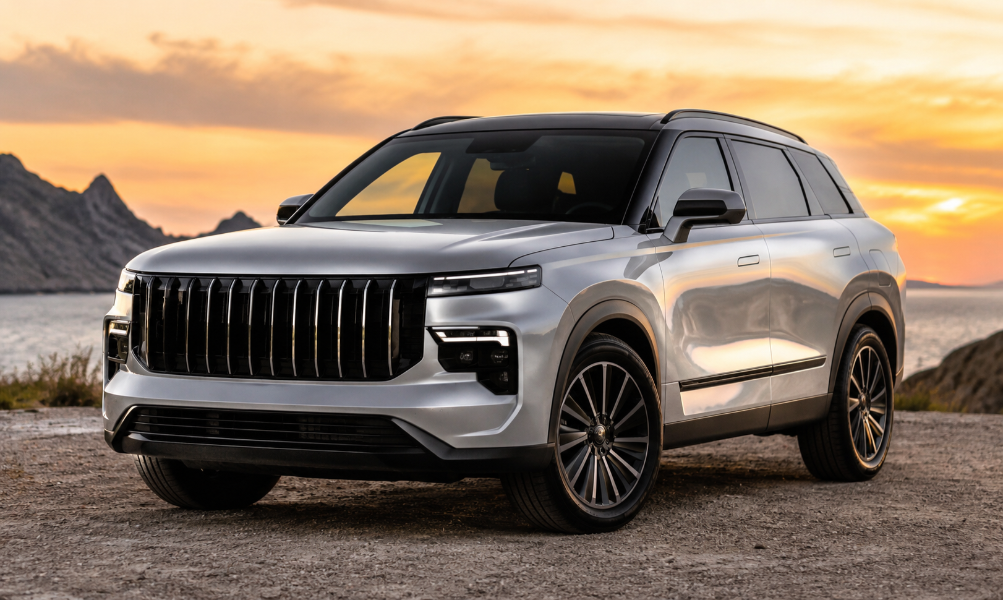
Jaecoo’s design philosophy clearly targets buyers seeking a premium visual experience. The exterior styling combines angular body lines, large front grilles, LED lighting signatures, and upright SUV proportions that resemble trends popularized by European luxury brands. However, Jaecoo also incorporates modern minimalist themes that appeal to younger urban consumers. Consequently, the vehicles project a more sophisticated image than earlier Chinese SUV generations.
Inside the cabin, Jaecoo emphasizes technology as a core premium differentiator. Large infotainment displays, digital instrument clusters, wireless smartphone integration, ambient lighting, and voice-controlled functions create a highly connected interior environment. Moreover, many configurations include premium materials, panoramic roofs, and advanced seating options typically associated with higher-priced competitors. This technology-heavy approach aligns closely with shifting consumer priorities in the global SUV market.
Advanced Driver Assistance Systems are another major focus. Many Jaecoo models include adaptive cruise control, lane-keeping assist, autonomous emergency braking, traffic sign recognition, and 360-degree camera systems. These features are increasingly expected by consumers in the premium SUV market 2026 environment. Therefore, Jaecoo attempts to compete by offering extensive safety technology as standard equipment rather than expensive optional upgrades.
However, premium perception involves more than features alone. Ride quality, refinement, software stability, and long-term durability significantly influence ownership satisfaction. Some emerging Chinese brands still face criticism regarding suspension tuning consistency, software glitches, and dealership support outside major cities. Consequently, Jaecoo must prove that its vehicles can deliver reliable premium experiences over extended ownership periods rather than only strong first impressions.
Technology Features Supporting Premium Positioning
- Large vertically oriented infotainment displays
- AI-assisted voice interaction systems
- Wireless Apple CarPlay and Android Auto
- Adaptive cruise control and lane-centering technology
- Multi-camera parking assistance systems
- OTA software update capability
- Digital cockpit personalization features
Jaecoo SUV vs Premium SUV Rivals
| Feature | Jaecoo SUV | Korean Premium SUVs | Japanese Premium SUVs | European Premium SUVs |
|---|---|---|---|---|
| Pricing | Competitive | Mid-range | Higher | Premium-priced |
| Powertrain Options | Petrol + Hybrid | Petrol + Hybrid + EV | Hybrid-focused | Petrol + Mild Hybrid + EV |
| Infotainment | Large digital displays | Advanced | Reliable but conservative | Highly refined |
| Interior Quality | Improving rapidly | Strong value | Durable | Benchmark premium |
| ADAS Features | High equipment levels | Competitive | Safety-focused | Advanced |
| Warranty | Aggressive in some markets | Strong coverage | Reliable reputation | Varies by region |
| Value Proposition | Technology-rich affordability | Balanced | Reliability | Prestige and heritage |
Powertrains, Hybrid Strategy & Driving Experience
The Jaecoo premium SUV lineup reflects the industry-wide transition toward electrification. Most current models use turbocharged petrol engines combined with increasingly sophisticated hybrid systems. Chery Group has invested heavily in electrified powertrains, particularly plug-in hybrid technologies designed to improve urban fuel efficiency while maintaining SUV practicality. Consequently, Jaecoo aims to appeal to buyers who want lower operating costs without fully committing to battery-electric vehicles.
Hybrid systems are becoming essential in the premium SUV market 2026 landscape. Governments worldwide continue tightening emissions regulations, while consumers seek vehicles capable of balancing performance and efficiency. Jaecoo’s hybrid strategy therefore represents both a competitive necessity and a market opportunity. Moreover, hybrid SUVs often appeal strongly in regions where EV charging infrastructure remains underdeveloped.
Driving dynamics are another important consideration. Early reviews of Chery Jaecoo products indicate that ride comfort and cabin quietness are key priorities. Suspension setups generally focus on urban usability and highway stability rather than aggressive sporty handling. This tuning strategy aligns with mainstream SUV buyer expectations, particularly among families and commuters. Furthermore, lightweight platform engineering and improved chassis refinement contribute to more mature driving characteristics compared with older Chinese SUVs.
Powertrain Advantages and Risks
Advantages
- Strong hybrid efficiency potential
- Competitive fuel economy targets
- Lower pricing than many rivals
- Urban-friendly driving characteristics
- Expanding electrification roadmap
Risks
- Limited long-term reliability data
- Hybrid servicing complexity in emerging markets
- Dependence on software optimization
- Brand unfamiliarity among premium buyers
Why Buyers Are Paying Attention to Jaecoo?
One major reason consumers are noticing the Jaecoo SUV brand is pricing strategy. Traditional premium SUVs have become increasingly expensive, especially as manufacturers add more digital features and electrified systems. Jaecoo, however, positions itself as a value-driven premium alternative by offering extensive technology and upscale styling at lower price points. Consequently, buyers who previously considered mainstream brands may now explore premium-oriented Chinese SUVs instead.
Technology-first ownership experiences also attract younger consumers. Modern buyers often prioritize screen quality, app connectivity, smartphone integration, and semi-autonomous driving systems as heavily as engine performance. Therefore, Jaecoo’s emphasis on digital interfaces aligns well with current consumer behavior trends. The company essentially markets technology accessibility as a form of modern luxury.
Additionally, changing perceptions toward Chinese manufacturing are influencing purchasing decisions. Chinese electronics, smartphones, and EV companies have gained significant global credibility in recent years. This broader acceptance benefits automotive brands as well. Moreover, many consumers are increasingly willing to consider newer automotive brands if they deliver strong features, attractive design, and competitive ownership costs.
However, pricing advantages alone cannot sustain premium positioning indefinitely. Consumers eventually evaluate resale value, servicing convenience, parts availability, and long-term ownership quality. Therefore, Jaecoo’s ability to build strong dealer and aftersales networks will likely determine whether early market curiosity evolves into lasting customer loyalty.
Traditional Premium SUVs vs Emerging Chinese Premium SUVs
| Category | Traditional Premium SUVs | Emerging Chinese Premium SUVs |
|---|---|---|
| Prestige | Strong heritage | Developing reputation |
| Technology | Advanced but costly | Feature-rich and competitive |
| Pricing | Expensive | Aggressive value positioning |
| Ownership Cost | Higher maintenance | Lower entry costs |
| Features | Often optional packages | High standard equipment |
| Consumer Perception | Trusted luxury | Technology-driven disruptors |
Challenges Facing Jaecoo’s Global Expansion
Despite rapid momentum, Jaecoo faces substantial global expansion challenges. Brand recognition remains limited outside selected markets, and many consumers still associate Chinese vehicles with affordability rather than premium quality. Consequently, building strong brand identity will require extensive marketing investment and positive ownership experiences over several years.
Dealer and service network development is another critical factor. Premium SUV buyers expect reliable aftersales support, fast parts availability, and professional customer service. Established Japanese, Korean, and European manufacturers already possess mature global infrastructure. Therefore, Jaecoo must expand dealership partnerships carefully to ensure customer confidence remains high after purchase.
Long-term reliability perception also remains a major concern. Automotive reputation is built over decades rather than product cycles alone. While Chinese brands have improved dramatically in engineering quality, many consumers still wait for proven durability records before making purchasing decisions. Furthermore, resale value uncertainty can discourage buyers in mature automotive markets.
Geopolitical and trade-related pressures could additionally impact expansion efforts. Tariffs, regulatory scrutiny, and shifting international trade policies may affect pricing competitiveness in some regions. Consequently, Jaecoo’s global strategy must balance rapid expansion with localized manufacturing, compliance adaptation, and careful market prioritization.
Key Expansion Obstacles
- Limited historical brand reputation
- Developing dealer infrastructure
- Consumer concerns about resale value
- Competition from established luxury brands
- Regulatory complexity across export markets
- Long-term reliability verification needs
Jaecoo SUV and the Future of the Premium SUV Market
The Jaecoo SUV brand represents a broader industry shift toward technology-driven premium disruption. In the past, luxury positioning depended heavily on heritage, craftsmanship, and exclusivity. Today, however, many buyers increasingly associate premium value with connectivity, automation, software integration, and intelligent cabin experiences. Consequently, newer automotive brands can compete more effectively despite lacking decades of legacy prestige.
Software-defined vehicles are becoming central to the automotive industry. Features such as OTA updates, AI-assisted interfaces, predictive maintenance systems, and cloud-based services increasingly shape ownership experiences. Jaecoo’s strategy strongly aligns with this transformation. Moreover, younger consumers often adapt quickly to technology-oriented automotive ecosystems, reducing the influence of traditional luxury hierarchies.
The premium SUV market 2026 environment also reflects growing demand for “accessible luxury.” Consumers want upscale experiences without excessive ownership costs. Therefore, brands capable of delivering premium styling and advanced technology at lower prices may gain significant momentum globally. Chinese luxury SUV manufacturers are aggressively targeting this market gap.
Still, long-term success depends on execution consistency. Technology innovation attracts buyers initially, but reliability, customer satisfaction, and infrastructure determine sustained market performance. Consequently, Jaecoo’s future position will depend not only on competitive products but also on its ability to evolve into a trusted international automotive brand.
2026 SUV Industry Trends Reshaping the Market
Electrification continues reshaping the global SUV sector at an accelerated pace. Hybrid and plug-in hybrid adoption is rising quickly as governments implement stricter emissions regulations. Moreover, consumers increasingly expect electrified options even in mainstream SUV categories. Therefore, manufacturers without clear electrification strategies risk losing competitiveness.
Smart cockpit integration is another defining trend. Large touchscreens, AI voice assistants, digital personalization, and connected vehicle ecosystems are becoming standard expectations. Consequently, technology capability now directly influences brand perception in the premium segment. Jaecoo’s strong digital focus positions it well within this evolving environment.
Affordable premium vehicles are also gaining traction globally. Rising inflation and higher vehicle prices encourage consumers to seek maximum feature value rather than traditional luxury badges alone. Chinese premium SUV brands are benefiting significantly from this shift because they often deliver extensive equipment at lower prices.
Competition is intensifying rapidly across every SUV segment. Established automakers are accelerating software development and hybrid rollouts while newer Chinese brands expand internationally. Therefore, the coming years could fundamentally reshape the global premium SUV hierarchy as technology-first manufacturers challenge traditional industry leaders.
FAQs
What is Jaecoo SUV?
Jaecoo SUV is a premium-oriented automotive brand developed under Chery Group, focused on technology-rich SUVs with upscale styling and competitive pricing.
Is Jaecoo a luxury SUV brand?
Jaecoo positions itself as a premium SUV brand rather than a traditional ultra-luxury manufacturer, emphasizing technology, comfort, and value.
Who owns Jaecoo?
Jaecoo is owned by Chery Group, one of China’s largest automotive manufacturers.
Is Jaecoo part of Chery?
Yes, Jaecoo operates under Chery’s expanding portfolio of international automotive brands.
What makes Jaecoo different?
Jaecoo focuses heavily on digital technology, advanced safety systems, modern design, and competitive pricing strategies.
Is Jaecoo better than traditional premium SUVs?
Jaecoo offers strong value and technology features, although established premium brands still lead in heritage, resale value, and long-term reputation.
Are Chinese SUVs reliable?
Reliability has improved significantly among Chinese automakers, although long-term global ownership data remains more limited than established brands.
What engines does Jaecoo use?
Jaecoo primarily uses turbocharged petrol engines along with hybrid and plug-in hybrid powertrains developed through Chery Group engineering.
Why are Chinese car brands growing globally?
Chinese brands are growing due to competitive pricing, rapid technology development, electrification leadership, and expanding global export strategies.
Is Jaecoo worth considering in 2026?
For buyers seeking advanced features, modern design, and strong value positioning, Jaecoo is becoming an increasingly competitive option in 2026.