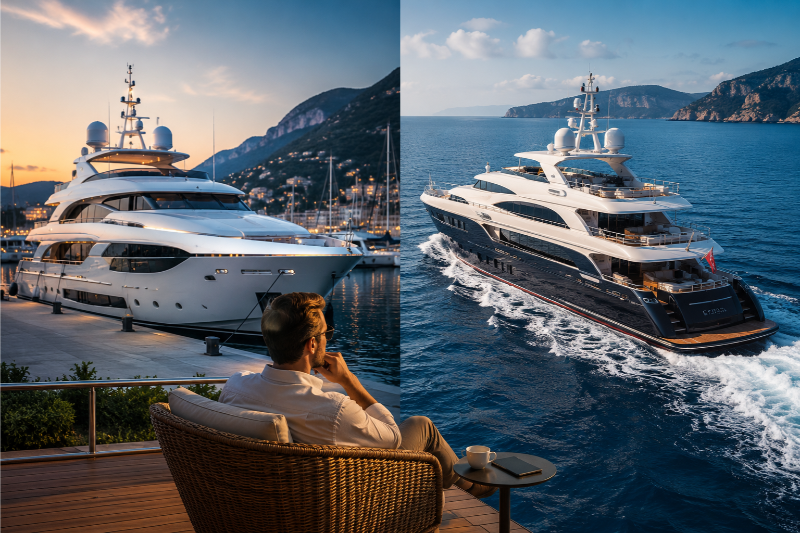
The debate around Yacht Ownership vs Chartering has become far more relevant in 2026 as affluent travelers rethink how they use luxury mobility assets. Rising operational costs, shifting travel habits, and evolving wealth-management priorities are changing the way wealthy buyers approach maritime lifestyles. While private yacht ownership still represents exclusivity and long-term prestige, luxury yacht charter activity continues to expand globally as high-net-worth individuals seek flexibility with fewer operational burdens.
Meanwhile, younger affluent consumers increasingly prioritize experiences over permanent ownership. This shift reflects broader luxury travel behavior seen across aviation, hospitality, and automotive sectors. Wealthy travelers now compare convenience, customization, liquidity, and lifestyle efficiency more carefully before committing to major maritime purchases. Consequently, the discussion surrounding Yacht Ownership vs Chartering no longer centers solely on status. Instead, it focuses on practicality, mobility, and long-term value alignment.
Operational complexity also shapes modern decisions. Yacht maintenance costs, marina and docking expenses, crew management realities, and insurance obligations have increased substantially across global yacht markets. As a result, many wealthy yacht buyers now evaluate whether full ownership truly aligns with their usage frequency and lifestyle expectations.
However, ownership still carries undeniable appeal. A privately owned yacht offers complete personalization, unrestricted access, enhanced privacy, and long-term family utility that charter arrangements cannot fully replicate. Therefore, the decision between chartering and ownership increasingly depends on how affluent travelers balance prestige, flexibility, and operational tolerance within today’s evolving luxury maritime ecosystem.
Why Yacht Ownership vs Chartering Matters More in 2026
The Yacht Ownership vs Chartering conversation matters more today because luxury maritime travel has entered a new economic phase. Operational costs continue rising across fuel, staffing, maintenance, and marina infrastructure. Moreover, international compliance standards and sustainability requirements have increased operating complexity for private yacht owners.
At the same time, affluent travel preferences are changing rapidly. Wealthy consumers increasingly prioritize curated experiences over permanent possession. Consequently, many individuals who once viewed yacht ownership as a necessary status symbol now consider chartering a more efficient lifestyle solution. This trend aligns with broader luxury mobility behavior, where flexibility competes directly with exclusivity.
The global charter market has also become more accessible. Professional yacht-management firms now offer sophisticated booking systems, concierge support, and hybrid ownership structures that simplify luxury maritime travel. Additionally, rising charter demand in 2026 reflects growing consumer confidence in temporary-access models.
For many wealthy buyers, strategic usage patterns now drive decision-making. Someone spending only a few weeks annually onboard may find chartering more practical than maintaining a permanently staffed vessel year-round. Nevertheless, individuals prioritizing privacy, spontaneous travel, and legacy ownership still favor private acquisition despite increasing operational expenses.
Advantages of Owning a Private Yacht
Private yacht ownership continues attracting ultra-high-net-worth individuals because it provides unmatched control and personalization. Owners can customize interiors, onboard technology, entertainment spaces, wellness facilities, and staffing arrangements according to highly specific preferences. Moreover, complete ownership allows families to create consistent long-term travel environments that evolve with their lifestyle needs.
Privacy also remains a significant factor. Wealthy families, public figures, and corporate leaders often value the discretion associated with private yacht ownership. Unlike charter arrangements, ownership eliminates scheduling uncertainties and reduces exposure to third-party usage. Consequently, many affluent buyers continue viewing ownership as the highest expression of maritime exclusivity.
Additionally, ownership provides unrestricted access to global luxury maritime travel. Owners can depart spontaneously, modify itineraries without negotiation, and maintain preferred onboard crews familiar with personal expectations. This continuity enhances convenience during extended Mediterranean, Caribbean, or South Pacific travel seasons.
Long-term family utility further supports ownership decisions. Many owners use yachts as multigenerational lifestyle assets for vacations, celebrations, and private business hospitality. Furthermore, some buyers integrate yachts into broader wealth-management and legacy planning strategies.
Key ownership advantages include:
- Complete personalization and onboard customization
- Enhanced privacy and operational control
- Immediate travel access without booking limitations
- Long-term family and hospitality utility
- Strong prestige value within luxury circles
However, these benefits come with substantial financial and operational commitments that not every wealthy traveler wishes to maintain.
Yacht Ownership vs Chartering Comparison
| Category | Yacht Ownership | Yacht Chartering | Lifestyle Impact | Financial Consideration |
|---|---|---|---|---|
| Flexibility | Full itinerary control | Seasonal access only | Ownership favors spontaneity | Chartering reduces fixed costs |
| Personalization | Complete customization | Limited customization | Ownership enhances familiarity | Chartering avoids upgrade costs |
| Privacy | Maximum privacy | Shared usage environment | Ownership offers exclusivity | Chartering varies by provider |
| Operational Responsibility | High | Minimal | Chartering simplifies logistics | Ownership carries ongoing expenses |
| Crew Management | Owner responsibility | Professionally handled | Chartering reduces complexity | Staffing costs remain significant |
| Usage Frequency | Ideal for frequent use | Better for occasional use | Depends on travel habits | Chartering improves efficiency |
| Asset Value | Subject to depreciation | No asset exposure | Ownership builds prestige | Chartering preserves liquidity |
Why Chartering Appeals to Modern Wealthy Travelers?
The growing popularity of the luxury yacht charter market reflects changing affluent lifestyle priorities. Many wealthy travelers now prefer access over permanent ownership because chartering provides exceptional flexibility with significantly lower commitment levels.
For example, charter clients can experience different yacht styles, destinations, and onboard atmospheres without maintaining a single vessel year-round. One season may involve Mediterranean cruising aboard a wellness-focused superyacht, while another emphasizes expedition travel in Northern Europe. Consequently, chartering aligns closely with experiential luxury trends dominating modern affluent travel behavior.
Operational simplicity also plays a major role. Chartering removes the burden of crew recruitment, maintenance scheduling, insurance management, compliance oversight, and marina coordination. Meanwhile, professional service firms handle logistics, provisioning, and itinerary planning.
Younger wealthy buyers especially value convenience. Many emerging millionaires prioritize time efficiency and mobility over traditional ownership structures. Therefore, chartering fits naturally into broader luxury ecosystems that emphasize on-demand access rather than permanent possession.
Additional chartering benefits include:
- Reduced operational responsibilities
- Seasonal flexibility across global destinations
- Easier budgeting for occasional usage
- Access to multiple yacht categories
- Professional hospitality and management services
Moreover, charter availability trends continue expanding as management firms modernize booking infrastructure and increase fleet accessibility worldwide.
Hidden Costs of Yacht Ownership Many Buyers Underestimate
One of the biggest realities shaping the charter vs buy yacht debate involves operational expenses. Many first-time buyers underestimate the true financial complexity associated with private yacht ownership.
Crew salaries alone represent a major ongoing obligation. Captains, engineers, chefs, deckhands, hospitality personnel, and security staff require competitive compensation packages. Additionally, owners must cover training, insurance, accommodations, and rotational staffing expenses.
Maintenance inflation further complicates ownership economics. Engines, generators, electronics, hull systems, air-conditioning equipment, and navigation technology require continuous servicing. Consequently, even lightly used yachts generate substantial annual costs.
Marina and docking expenses have also increased significantly in premium destinations. Berths in Monaco, Ibiza, Miami, and Saint-Tropez command exceptionally high seasonal rates. Moreover, insurance premiums and international compliance requirements continue rising alongside environmental regulations.
Other underestimated ownership expenses include:
- Fuel and operational consumption
- Refit and modernization projects
- Regulatory inspections and certifications
- Security and communication systems
- Tender and water-toy maintenance
Nevertheless, ownership still provides long-term advantages for certain buyers. Some owners offset expenses through charter-management programs that generate seasonal income when the vessel remains unused. Additionally, ownership offers prestige, personalization, and immediate accessibility that chartering cannot fully replicate.
Ownership and Chartering Cost Factors
| Expense Area | Ownership Impact | Chartering Impact | Risk Level | Long-Term Financial Effect |
|---|---|---|---|---|
| Crew Salaries | Continuous expense | Included in charter fee | High | Significant annual burden |
| Maintenance | Ongoing obligation | Operator responsibility | High | Escalates with vessel age |
| Docking Fees | Seasonal and annual | Temporary only | Medium | Premium locations costly |
| Insurance | Owner-funded | Included indirectly | Medium | Increases with yacht size |
| Fuel Costs | Variable but substantial | Usage-based | Medium | Depends on travel frequency |
| Depreciation | Asset value declines | No exposure | High | Impacts resale value |
| Refit Costs | Periodic major investment | None | High | Essential for competitiveness |
| Charter Fees | Optional income potential | Primary expense | Low | Predictable short-term spending |
How Luxury Travel Trends Are Changing Buyer Preferences?
Global luxury maritime travel trends increasingly favor flexibility, personalization, and curated experiences over static ownership models. This evolution reflects broader shifts across affluent consumer behavior.
Experiential luxury now dominates spending priorities among younger wealthy demographics. Instead of focusing exclusively on permanent assets, affluent consumers seek memorable travel experiences, wellness-oriented itineraries, and location diversity. Consequently, chartering often aligns better with modern lifestyle expectations.
The rise of hybrid luxury mobility ecosystems also influences yacht decisions. Many wealthy individuals already utilize private aviation memberships, luxury residence clubs, and chauffeur-driven transportation networks. Therefore, temporary-access maritime models feel increasingly natural within broader wealth-management strategies.
Sustainability awareness further shapes the Yacht Ownership vs Chartering debate. Environmentally conscious consumers increasingly question the efficiency of underutilized luxury assets. As a result, professionally managed charter fleets may appear more operationally sustainable than privately maintained vessels used only a few weeks annually.
Meanwhile, professional yacht-management firms continue expanding service capabilities. These organizations simplify ownership administration while enhancing charter accessibility. Consequently, affluent buyers now enjoy more flexible entry points into the superyacht lifestyle than previous generations.
The Privacy and Prestige Factor
Despite changing consumer behavior, private yacht ownership still carries considerable prestige. Ownership signals exclusivity, financial capability, and access to highly personalized maritime experiences. Moreover, many wealthy buyers appreciate the symbolic value associated with maintaining a private vessel.
Privacy remains equally important. High-profile families and executives often require controlled environments for vacations, confidential meetings, and private celebrations. Ownership offers greater consistency in security protocols, crew familiarity, and onboard discretion.
Additionally, owned yachts provide tailored hospitality environments difficult to duplicate through charter arrangements. Owners can customize dining experiences, wellness spaces, entertainment systems, and interior aesthetics according to personal preferences. Consequently, ownership continues appealing strongly to individuals prioritizing highly curated lifestyles.
However, modern affluent buyers increasingly evaluate prestige alongside practicality. In contrast to previous generations, younger consumers frequently question whether permanent ownership justifies the associated operational complexity.
Risks and Challenges of Chartering
Although chartering offers flexibility and reduced responsibility, it also presents limitations. Peak-season availability remains a significant challenge in destinations such as the Mediterranean and Caribbean. Consequently, travelers often face restricted options during high-demand periods.
Customization also remains limited compared to ownership. Charter guests cannot fully personalize onboard layouts, staffing structures, or long-term design elements. Therefore, travelers seeking highly individualized environments may eventually prefer ownership.
Pricing volatility presents another challenge. Premium charter rates fluctuate significantly depending on seasonality, destination demand, and vessel popularity. As a result, luxury yacht charter expenses can escalate rapidly during peak travel windows.
Additional chartering limitations include:
- Limited scheduling flexibility
- Reduced long-term crew familiarity
- Potential privacy differences
- Variable onboard experiences
- Dependence on market availability
Nevertheless, many affluent travelers still accept these trade-offs because chartering substantially reduces operational burdens and long-term financial exposure.
Risks and Challenges of Yacht Ownership
The realities of yacht ownership expenses extend well beyond the initial acquisition price. Annual operating costs often reach substantial percentages of a yacht’s total value, particularly within the superyacht category.
Depreciation also affects long-term economics. While certain rare or iconic vessels retain strong market interest, most yachts decline in value over time. Consequently, resale performance rarely matches traditional investment expectations.
Management complexity creates further pressure. Owners must coordinate staffing, maintenance, legal compliance, security, provisioning, and technical operations across multiple jurisdictions. Meanwhile, recruiting and retaining qualified crew members has become increasingly competitive globally.
Underutilization represents another major concern. Many privately owned yachts remain inactive for much of the year while still generating considerable expenses. Therefore, some owners eventually transition toward hybrid ownership structures or charter-revenue strategies to improve asset efficiency.
Despite these challenges, ownership still appeals strongly to individuals prioritizing exclusivity, spontaneous access, and highly personalized maritime lifestyles.
Which Option Makes More Sense for Modern Wealthy Buyers?
The smartest choice in the Yacht Ownership vs Chartering debate depends largely on usage patterns, lifestyle expectations, and operational tolerance rather than prestige alone.
Frequent travelers who spend extended periods onboard may benefit more from ownership. Families requiring consistent privacy, customized hospitality environments, and unrestricted travel flexibility often justify the operational commitment associated with owning a yacht.
However, affluent individuals prioritizing convenience, destination variety, and financial flexibility increasingly favor chartering. For travelers using yachts only occasionally, chartering often delivers superior lifestyle efficiency with fewer long-term obligations.
Modern wealthy buyers also approach luxury assets differently than previous generations. Flexibility now competes directly with permanence. Experiential luxury increasingly overtakes traditional ownership models, while professionally managed mobility ecosystems continue expanding across aviation, hospitality, and maritime sectors.
Additionally, sustainability considerations influence purchasing behavior more than before. Wealthy consumers increasingly evaluate operational efficiency alongside exclusivity. Consequently, hybrid ownership and charter-revenue strategies are becoming more common among sophisticated buyers seeking balance between access and practicality.
Ultimately, the future of luxury maritime lifestyles may involve coexistence between selective private ownership and increasingly sophisticated flexible-access models. Some buyers will always value the prestige and personalization of ownership. Meanwhile, others will continue embracing chartering as a smarter and more adaptable approach to modern luxury travel.
FAQs
Is yacht ownership better than chartering?
It depends on travel frequency, privacy needs, and lifestyle priorities. Ownership suits frequent users seeking exclusivity, while chartering favors flexibility and lower commitment.
Why are wealthy travelers chartering yachts more often?
Many affluent travelers prioritize convenience, experiential travel, and operational simplicity. Chartering reduces long-term responsibilities while expanding destination flexibility.
What are the biggest hidden costs of yacht ownership?
Crew salaries, marina fees, maintenance inflation, insurance, refits, fuel consumption, and compliance expenses represent major hidden ownership costs.
Is chartering a yacht more cost-effective?
For occasional users, chartering is often more cost-effective because it eliminates year-round operational and maintenance obligations.
Why do younger millionaires prefer chartering?
Younger affluent consumers frequently prioritize mobility, flexibility, and curated experiences over permanent asset ownership.
How expensive is private yacht maintenance?
Annual maintenance and operating expenses can represent a substantial percentage of a yacht’s value depending on vessel size and usage.
Can yacht owners offset costs through charter programs?
Yes. Many owners participate in charter-management programs that generate seasonal revenue when the yacht is not in personal use.
Does yacht ownership still symbolize status?
Yes. Ownership still conveys exclusivity, prestige, and access to highly personalized luxury maritime experiences.
Are charter yachts less private than owned yachts?
Generally, yes. Owned yachts provide greater control over crew familiarity, scheduling, and onboard privacy standards.
Which option makes more sense: yacht ownership or chartering?
The better option depends on usage frequency, financial priorities, operational tolerance, and desired lifestyle flexibility.