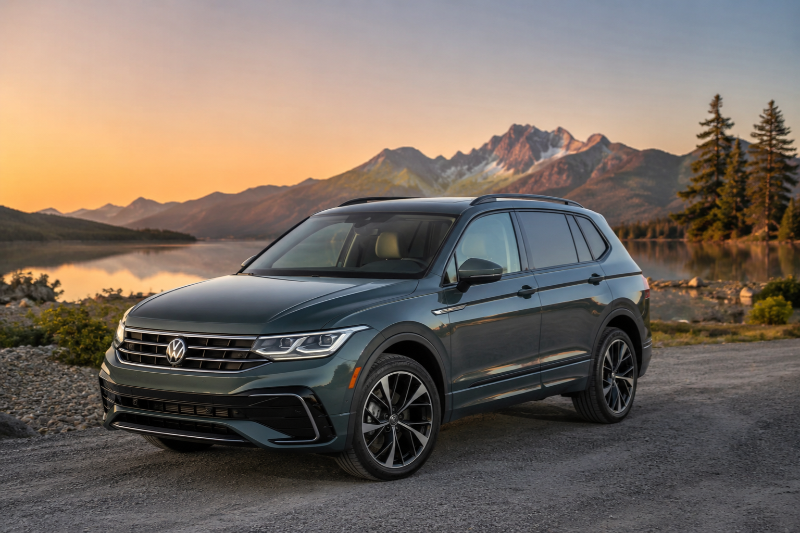
The global compact SUV market continues to evolve rapidly in 2026. Buyers no longer want vehicles that simply offer practicality or luxury independently. Instead, modern consumers increasingly expect premium comfort, advanced technology, fuel efficiency, executive styling, and everyday usability within a single package. Consequently, manufacturers across the automotive industry are competing aggressively to satisfy these shifting expectations.
Among the most consistent performers in this competitive segment, the Volkswagen Tiguan continues to maintain strong relevance. The model successfully bridges the gap between mainstream affordability and premium SUV ownership. Moreover, it appeals to a broad demographic that includes urban professionals, growing families, executive commuters, and technology-focused drivers seeking refined mobility without entering ultra-luxury pricing territory.
The growth of premium compact SUV demand has intensified worldwide. Buyers increasingly prioritize versatility, understated luxury, digital integration, and long-term ownership value. Therefore, SUVs like the Tiguan occupy a particularly important space within the luxury crossover market. While some competitors focus heavily on performance branding or extravagant styling, the Tiguan emphasizes balance, refinement, comfort, and intelligent practicality.
Meanwhile, evolving mobility trends continue reshaping buyer behavior. Consumers now expect seamless connectivity, advanced safety ecosystems, efficient powertrains, and elevated cabin experiences even in mid-range premium vehicles. As a result, the Tiguan remains highly competitive because it delivers many upscale features associated with luxury brands while maintaining realistic ownership costs and daily usability.
Additionally, Volkswagen continues to benefit from strong global brand trust and a long-standing reputation for engineering consistency. That credibility reinforces the Tiguan’s position among buyers seeking premium transportation that feels sophisticated yet approachable.
Why the Volkswagen Tiguan Continues to Stand Out?
The modern premium SUV market has become crowded with crossovers offering aggressive styling, oversized infotainment displays, and increasingly complex branding strategies. However, the Volkswagen Tiguan succeeds because it avoids unnecessary excess while still delivering a refined ownership experience.
Its exterior styling reflects mature European design principles. Rather than relying on dramatic visual elements, the Tiguan presents clean proportions, subtle sophistication, and balanced detailing. Consequently, the vehicle appeals to drivers who prefer understated premium aesthetics over attention-seeking luxury trends.
Moreover, the Tiguan’s dimensions remain ideal for modern urban mobility. It feels compact enough for city maneuverability while still offering practical interior space for families and professionals. This versatility significantly contributes to its broad consumer appeal across different lifestyles and age groups.
The SUV also benefits from strong international market recognition. Buyers often associate Volkswagen with engineering reliability, practical refinement, and long-term ownership confidence. Therefore, the Tiguan occupies a trusted position between mainstream SUVs and higher-priced luxury crossovers.
Key reasons the Tiguan remains competitive include:
- Balanced premium positioning
- Refined yet conservative styling
- Strong practicality for daily driving
- Comfortable urban and highway usability
- Accessible premium ownership experience
In contrast, some luxury crossover competitors focus heavily on exclusivity or aggressive performance branding. The Tiguan instead emphasizes intelligent everyday mobility, which resonates strongly with modern consumers prioritizing practicality alongside comfort.
Interior Technology and Premium Comfort Features
Technology now shapes nearly every modern SUV purchasing decision. Buyers increasingly expect vehicles to function as connected digital environments rather than simple transportation tools. Consequently, cabin technology and user experience have become critical differentiators within the premium SUV segment.
The Volkswagen Tiguan addresses these expectations with a refined digital cockpit environment that emphasizes clarity, usability, and driver comfort. Moreover, Volkswagen’s interface design generally prioritizes intuitive functionality rather than overwhelming complexity.
Digital instrumentation, large infotainment displays, smartphone integration, and voice-assisted systems collectively create a more connected driving experience. Additionally, modern connectivity features support evolving mobility lifestyles where work, navigation, communication, and entertainment increasingly overlap.
Cabin refinement also plays a major role in the Tiguan’s premium positioning. Soft-touch materials, supportive seating, ambient lighting, and improved noise insulation contribute to a more sophisticated atmosphere. As a result, the vehicle feels more executive-oriented than many mainstream compact SUVs.
Interior advantages commonly associated with the Tiguan include:
- Digital cockpit integration
- Advanced infotainment responsiveness
- Premium seating comfort
- High-quality cabin materials
- Practical ergonomic design
| Feature Category | Volkswagen Tiguan Advantage | Driver Benefit | Family Convenience | Premium Appeal |
|---|---|---|---|---|
| Digital Cockpit | Fully integrated displays | Better driving focus | Easy information access | Modern luxury feel |
| Connectivity | Smartphone ecosystem support | Seamless mobility | Entertainment integration | Tech-forward ownership |
| Cabin Comfort | Premium seating materials | Reduced fatigue | Comfortable long trips | Executive atmosphere |
| Interior Space | Balanced cabin layout | Better ergonomics | Practical storage | Sophisticated usability |
| Noise Refinement | Improved cabin insulation | Quieter driving | Relaxed passenger experience | Upscale driving character |
Meanwhile, consumer expectations continue rising regarding technology integration. SUVs are no longer judged solely by horsepower or cargo capacity. Instead, buyers increasingly evaluate how seamlessly technology enhances everyday life.
Why Families and Executives Both Choose the Tiguan?
One of the Tiguan’s greatest strengths lies in its unusually broad demographic appeal. Many SUVs target either family practicality or executive prestige. However, the Volkswagen Tiguan successfully combines both characteristics.
Families appreciate the versatile cabin layout, cargo practicality, and comfortable seating arrangements. Moreover, the vehicle provides sufficient interior flexibility for school runs, road trips, shopping, and daily commuting without feeling oversized.
Executives, on the other hand, value the Tiguan’s restrained styling and premium presentation. The SUV communicates sophistication without appearing excessively luxurious or financially extravagant. Consequently, it aligns well with modern professional lifestyles where understated success increasingly replaces overt status signaling.
Long-distance comfort further strengthens the Tiguan’s appeal across demographics. Comfortable ride quality, supportive seats, and refined cabin acoustics make extended highway travel significantly more relaxing.
Several factors contribute to its dual-purpose appeal:
- Executive styling without excessive luxury branding
- Comfortable daily commuting characteristics
- Family-friendly practicality
- Refined long-distance driving experience
- Balanced ownership costs
Furthermore, modern consumers increasingly seek products capable of serving multiple lifestyle roles simultaneously. The Tiguan reflects this broader trend toward versatile premium ownership.
Performance, Efficiency, and Driving Experience
Modern premium SUVs must balance performance with efficiency and comfort. Buyers rarely seek extreme sports-car dynamics in compact crossovers. Instead, they prioritize smooth power delivery, stable handling, comfortable ride quality, and efficient operation.
The Volkswagen Tiguan performs particularly well within this balanced approach. Its driving characteristics emphasize refinement and predictability rather than aggressive performance theatrics.
Engine refinement remains an important advantage. Turbocharged powertrains deliver sufficient acceleration for urban driving and highway merging while maintaining respectable fuel efficiency. Consequently, the Tiguan feels responsive without becoming overly performance-focused.
Ride quality also contributes heavily to the ownership experience. Suspension tuning prioritizes comfort and composure, especially during long-distance travel. Meanwhile, urban maneuverability remains practical despite the SUV’s premium proportions.
Fuel efficiency improvements continue gaining importance as consumers become more cost-conscious and environmentally aware. Therefore, efficient powertrain engineering significantly enhances the Tiguan’s long-term market relevance.
| Category | Volkswagen Tiguan | Traditional Compact SUV | Premium Driver Impact | Ownership Value |
|---|---|---|---|---|
| Ride Comfort | Refined suspension tuning | Firmer economy focus | Reduced fatigue | Better long-term satisfaction |
| Performance Delivery | Smooth turbocharged response | Basic acceleration feel | Confident driving | Balanced practicality |
| Cabin Noise | Enhanced insulation | More road noise | Executive refinement | Improved comfort |
| Fuel Efficiency | Competitive modern efficiency | Varies widely | Lower running costs | Stronger ownership value |
| Driving Character | Premium composure | Utility-focused handling | More sophisticated feel | Broader lifestyle appeal |
Nevertheless, Volkswagen avoids positioning the Tiguan as a performance SUV. Instead, the brand emphasizes balanced mobility, which aligns more closely with evolving mainstream premium buyer expectations.
How the Tiguan Competes in the Premium SUV Market?
Competition within the luxury crossover market continues intensifying in 2026. Brands across Europe, Asia, and North America aggressively pursue premium SUV buyers through advanced technology, electrification, and lifestyle-oriented branding.
However, the Volkswagen Tiguan occupies a particularly strategic market position. It delivers many premium ownership characteristics without reaching the pricing levels associated with ultra-luxury competitors.
This value-focused premium positioning remains highly attractive. Consumers increasingly question whether expensive luxury SUVs justify their significantly higher ownership costs. Consequently, vehicles offering balanced premium experiences gain stronger market traction.
Additionally, Volkswagen benefits from a reputation for engineering practicality rather than excessive luxury experimentation. Many buyers appreciate this predictable reliability and ownership consistency.
The Tiguan competes effectively because it offers:
- Premium styling without luxury-brand inflation
- Strong technology integration
- Practical ownership economics
- Comfortable daily usability
- Broad consumer accessibility
In contrast, some luxury crossover competitors prioritize exclusivity over practicality. The Tiguan instead emphasizes intelligent premium value.
Technology and Safety Expectations in 2026 SUVs
Modern SUV buyers increasingly prioritize intelligent mobility ecosystems. Safety technologies, AI-supported driving assistance, and connected digital platforms now influence purchasing decisions as strongly as traditional mechanical specifications.
The Volkswagen Tiguan aligns well with these expectations through its evolving driver assistance technologies and connectivity systems. Moreover, advanced safety integration continues becoming essential across premium vehicle categories.
Adaptive cruise control, lane assistance systems, parking automation, and collision prevention technologies collectively enhance driver confidence. Consequently, safety now contributes directly to perceived luxury and ownership quality.
Meanwhile, infotainment ecosystems increasingly integrate cloud connectivity, navigation intelligence, smartphone synchronization, and voice interaction capabilities. Buyers expect vehicles to function as seamless digital environments connected to everyday life.
Important technology trends influencing SUV demand include:
- AI-enabled infotainment systems
- Smart driver assistance technologies
- Connected mobility ecosystems
- Enhanced digital personalization
- Advanced safety automation
As a result, intelligent technology integration now represents a core component of premium automotive identity rather than an optional feature category.
The Lifestyle Appeal Behind the Volkswagen Tiguan
The popularity of the Volkswagen Tiguan extends beyond engineering and practicality alone. Lifestyle branding increasingly shapes consumer preferences within the premium SUV market.
Modern buyers often seek vehicles that reflect personal values such as sophistication, balance, practicality, and understated confidence. Therefore, the Tiguan’s restrained premium image resonates strongly with professionals and families seeking elegant mobility without excessive extravagance.
Urban mobility trends also reinforce the appeal of compact premium SUVs. Drivers want vehicles capable of navigating dense cities comfortably while still supporting weekend travel, professional commuting, and family responsibilities.
Additionally, many consumers increasingly prefer subtle luxury experiences over highly conspicuous status symbols. The Tiguan aligns perfectly with this evolving mindset because it communicates refinement through usability, comfort, and intelligent design rather than aggressive branding.
The SUV’s lifestyle appeal includes:
- Sophisticated urban mobility
- Comfortable family transportation
- Executive practicality
- Understated premium image
- Balanced everyday usability
Consequently, the Tiguan represents a broader shift toward practical luxury consumption within the automotive industry.
The Future of the Volkswagen Tiguan in 2026 and Beyond
The future of premium SUVs will likely depend heavily on electrification, sustainability, digital integration, and evolving mobility expectations. Consequently, manufacturers must continuously adapt to changing consumer priorities and regulatory pressures.
The Volkswagen Tiguan remains well positioned for this transition because its core strengths already align with future mobility trends. Practicality, efficiency, technology integration, and balanced premium value will likely become even more important during the next decade.
Hybrid and electrified variants may further strengthen the Tiguan’s appeal as governments worldwide push stricter emissions regulations. Meanwhile, expanding digital ecosystems will continue transforming how drivers interact with vehicles.
Future developments may include:
- Greater electrification integration
- Enhanced AI-assisted driving systems
- Expanded digital personalization
- Improved sustainability engineering
- Smarter mobility ecosystems
Nevertheless, maintaining affordability alongside premium quality will remain critical. Buyers increasingly demand realistic ownership value even as technology becomes more sophisticated.
Unique Insight: Why the Tiguan Reflects Modern Consumer Priorities?
The continued success of the Volkswagen Tiguan reflects broader transformations occurring across the global automotive market.
Consumers increasingly prioritize balanced premium value rather than excessive status-driven consumption. Consequently, practical luxury is replacing highly conspicuous ownership trends in many markets. Buyers want vehicles that combine comfort, efficiency, technology, and versatility without unnecessary extravagance.
Moreover, understated premium branding continues gaining popularity. Many professionals and families now prefer refined sophistication over aggressive luxury signaling. The Tiguan succeeds because it embodies this modern consumer psychology exceptionally well.
Additionally, future mobility trends increasingly favor intelligent practicality. SUVs must now integrate connectivity, efficiency, safety, and comfort simultaneously. Therefore, vehicles emphasizing balanced ownership experiences may outperform competitors focused purely on luxury prestige or performance branding.
Ultimately, the Tiguan remains relevant because it delivers realistic premium mobility for everyday life.
FAQs
Why is the Volkswagen Tiguan so popular?
The Tiguan combines premium styling, practicality, technology, and affordability within a balanced compact SUV package.
Is the Volkswagen Tiguan considered a premium SUV?
Yes. The Tiguan occupies a premium mainstream position with upscale comfort, advanced technology, and refined design.
How reliable is the Volkswagen Tiguan in 2026?
The Tiguan benefits from Volkswagen’s global engineering reputation and continues improving through modern platform development.
What are the best features of the Tiguan?
Digital cockpit technology, comfortable interior refinement, connectivity features, and practical versatility remain standout strengths.
Is the Tiguan good for families?
Yes. Its spacious cabin, cargo practicality, comfort, and safety technologies make it highly family-friendly.
How fuel efficient is the Volkswagen Tiguan?
Modern turbocharged engines and efficiency-focused engineering help the Tiguan maintain competitive fuel economy for its segment.
Does the Tiguan compete with luxury SUVs?
Yes. It competes indirectly by offering many premium features at more accessible pricing levels.
What technology does the Tiguan offer?
The Tiguan includes advanced infotainment systems, smartphone integration, digital displays, and driver assistance technologies.
Why do executives choose compact premium SUVs?
Compact premium SUVs provide comfort, executive styling, practicality, and urban usability without excessive luxury costs.
What is the future of the Volkswagen Tiguan?
The Tiguan will likely evolve through electrification, smarter digital ecosystems, and expanded sustainability technologies.