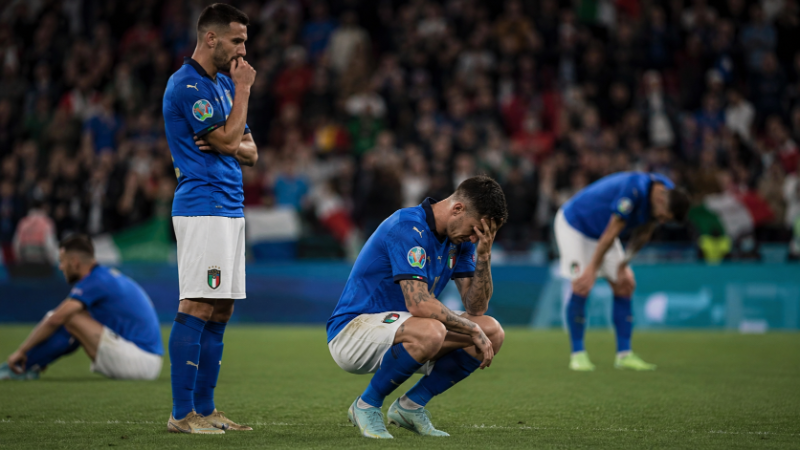
The Italy World Cup qualification failure story has become one of the most surprising developments in modern international football. For decades, Italy stood among the sport’s most successful nations, winning four FIFA World Cups and building a reputation for tactical excellence, defensive discipline, and tournament resilience. However, recent qualification campaigns have exposed structural weaknesses that few expected from a football powerhouse.
Italy’s absence from multiple World Cup cycles has generated significant debate across the football world. Historically, the Azzurri rarely struggled to reach major tournaments. Nevertheless, football has changed dramatically during the past two decades. European qualification campaigns have become increasingly competitive, while emerging football nations have narrowed the gap through improved coaching, youth development, and tactical innovation.
Moreover, Italy’s struggles cannot be explained by a single factor. Tactical inconsistency, generational transition problems, youth development concerns, coaching instability, and psychological pressure have all contributed to the current situation. Consequently, Italian football finds itself in a critical rebuilding phase.
The contrast between Italy’s historic achievements and recent qualification failures highlights broader trends within modern football. Traditional powers can no longer rely solely on reputation or past success. Instead, continuous development, long-term planning, and adaptation have become essential requirements for sustained international competitiveness.
The Reality of Italy Missing Three Straight World Cups
The reality of Italy missing multiple World Cup qualification cycles represents an unprecedented period in the country’s football history. For generations, World Cup participation was considered almost automatic for the Azzurri. However, recent campaigns have demonstrated how unforgiving modern qualification systems can be.
The 2018 qualification failure remains one of the most significant disappointments in Italian football. Italy fell into the playoff route and ultimately lost to Sweden over two legs. As a result, the nation missed its first World Cup since 1958. The defeat shocked supporters, players, and football administrators alike.
Meanwhile, hopes of immediate recovery were damaged during the next qualification cycle. Despite winning UEFA Euro 2020, Italy failed to secure automatic qualification and suffered a devastating playoff defeat against North Macedonia. Therefore, the European champions once again watched the World Cup from home.
Several recurring themes emerged during these campaigns:
- Failure to convert dominance into goals
- Difficulties against defensive opponents
- Costly dropped points in group matches
- Pressure-related performances in decisive fixtures
- Lack of clinical finishing in key moments
In contrast to previous generations, modern Italy has struggled to consistently perform when qualification pressure reaches its highest level. Consequently, repeated setbacks have created questions about the broader direction of Italian football.
Tactical Decline and Identity Crisis
For decades, Italy possessed one of football’s clearest tactical identities. The national team became synonymous with defensive organization, tactical intelligence, and efficient game management. However, that identity has gradually become less defined.
Modern football demands greater flexibility and attacking fluidity. Italy has attempted to evolve alongside these changes. Nevertheless, the transition has often appeared incomplete. Different coaches have introduced varying tactical approaches, creating periods of uncertainty regarding the team’s long-term philosophy.
Moreover, Italy has struggled to maintain midfield control against elite opponents. Previous generations featured world-class playmakers and controlling midfielders capable of dictating matches. In recent years, that level of influence has appeared less consistent.
Another challenge involves squad evolution. Experienced players often remained central to qualification campaigns, while younger replacements required additional time to establish themselves. As a result, transitions between generations became more complicated than expected.
Tactical and Structural Comparison
| Factor | Historical Strength | Current Weakness | Impact on Qualification | Long-Term Effect |
|---|---|---|---|---|
| Defensive Organization | Elite defensive structure | Reduced consistency | More goals conceded | Less tactical reliability |
| Midfield Control | Dominant possession management | Limited creativity | Fewer chances created | Reduced game control |
| Tactical Identity | Clear football philosophy | Frequent adjustments | Inconsistent performances | Uncertain development path |
| Squad Experience | Balanced generations | Transition difficulties | Key-match struggles | Delayed rebuilding |
| Finishing Efficiency | Clinical tournament football | Missed opportunities | Lost qualification points | Lower confidence |
Furthermore, Italy has occasionally struggled against modern pressing systems. Many European nations now employ aggressive pressing and rapid transitions. Consequently, teams must adapt quickly or risk being overwhelmed in critical moments.
Youth Development and Serie A Structural Issues
Youth development plays a central role in understanding the Italy World Cup qualification failure. While Italy continues to produce talented footballers, concerns remain regarding the pathway from academy football to senior international competition.
Historically, Italian football relied on strong technical education and tactical instruction. However, many analysts argue that the development environment has become less effective compared with leading European competitors. Meanwhile, nations such as Spain, Germany, France, and England have heavily invested in academy infrastructure and player development programs.
Additionally, opportunities for young domestic players in Serie A have often been limited. Clubs competing for immediate results frequently prefer experienced options. Therefore, emerging Italian talents sometimes receive fewer top-level minutes during crucial developmental years.
Several development challenges have been identified:
- Limited first-team opportunities for young players
- Inconsistent academy-to-professional transitions
- Reduced production of elite attacking players
- Heavy competition from imported talent
- Development gaps between age groups
Moreover, Italy has particularly struggled to produce world-class attacking talent at the same rate as previous generations. While defensive and midfield prospects continue to emerge, the shortage of elite forwards has affected scoring efficiency during qualification campaigns.
As a result, national team managers have occasionally lacked sufficient attacking depth when facing decisive matches.
Coaching Changes and Instability
Successful international football programs often benefit from long-term strategic planning. However, coaching instability can disrupt progress and create uncertainty within the squad.
Italy has experienced several managerial transitions during recent qualification cycles. Although coaching changes are common in football, frequent shifts in leadership can interrupt tactical development and player integration.
Moreover, different managers naturally prefer different styles of play. One coach may emphasize possession football, while another prioritizes defensive structure or pressing intensity. Consequently, players must continually adapt to new expectations and tactical frameworks.
Federation pressure also contributes to instability. Expectations remain exceptionally high because of Italy’s historic success. Therefore, disappointing results often trigger calls for immediate change rather than long-term continuity.
Qualification Cycles and Lessons
| Qualification Cycle | Coach | Key Issue | Result | Structural Lesson |
| 2018 World Cup | Gian Piero Ventura | Tactical uncertainty | Failed qualification | Clear identity is essential |
| Euro 2020 Cycle | Roberto Mancini | Successful rebuild | European champions | Long-term planning works |
| 2022 World Cup | Roberto Mancini | Qualification inconsistency | Failed qualification | Success requires consistency |
| Post-2022 Rebuild | Multiple transitions | Squad evolution challenges | Ongoing rebuild | Stability remains crucial |
Furthermore, international football provides limited training time compared with club football. Therefore, continuity becomes even more important because coaches have fewer opportunities to implement complex systems.
Rising Competition in European Football
One of the most overlooked explanations for Italy missing World Cup tournaments involves the dramatic improvement of European football as a whole.
In previous decades, traditional powers enjoyed a larger competitive advantage. Today, however, mid-tier European nations possess sophisticated coaching structures, modern training methods, and talented players competing in elite leagues.
For example, nations once considered outsiders regularly challenge established powers during qualification campaigns. Teams such as North Macedonia, Switzerland, Croatia, Denmark, and others have demonstrated impressive tactical organization and competitive consistency.
Several factors have increased qualification difficulty:
- Improved coaching standards across Europe
- Greater tactical sophistication
- Enhanced sports science programs
- Increased player mobility across elite leagues
- Highly competitive qualification groups
Meanwhile, playoff systems add another layer of unpredictability. A single poor performance can eliminate even strong teams. Consequently, qualification campaigns often depend on small margins rather than overall reputation.
In contrast to earlier eras, simply being a traditional football power no longer guarantees tournament participation. Therefore, every qualification match requires maximum concentration and preparation.
Psychological Pressure and National Expectations
Psychological pressure has played a significant role in Italy’s qualification struggles. Expectations surrounding the national team remain enormous because of its World Cup-winning history.
Players understand the significance of representing one of football’s most successful nations. However, that responsibility can become a burden during critical qualification matches. When expectations rise, confidence sometimes decreases.
Moreover, media scrutiny in Italy remains intense. Every performance receives extensive analysis, while disappointing results generate widespread criticism. Consequently, players often operate under extraordinary levels of public attention.
The effects of psychological pressure include:
- Increased anxiety in decisive fixtures
- Reduced confidence after setbacks
- Fear of making costly mistakes
- Difficulty handling expectations
- Momentum loss following negative results
Additionally, repeated qualification failures can create a cycle of pressure. Each campaign carries memories of previous disappointments. As a result, players must overcome both current challenges and historical baggage.
Nevertheless, psychological issues rarely exist in isolation. Instead, they often amplify tactical, structural, and developmental weaknesses already present within the team.
What Italy Must Fix to Return to the World Cup?
Italy possesses the resources, football culture, and talent base necessary for recovery. However, meaningful progress requires addressing several structural issues simultaneously.
First, youth development must remain a priority. Increased opportunities for domestic talent could strengthen the long-term player pipeline. Additionally, closer collaboration between clubs and national team structures may improve development outcomes.
Second, tactical modernization remains essential. Italy does not need to abandon its traditional strengths. Instead, it must combine defensive organization with modern attacking flexibility and pressing systems.
Third, leadership development should receive greater attention. Every successful generation requires influential figures capable of guiding teammates through difficult qualification campaigns.
Key priorities include:
- Academy investment and reform
- Greater youth integration in Serie A
- Consistent tactical philosophy
- Improved attacking creativity
- Long-term coaching stability
Therefore, rebuilding should focus on sustainable development rather than short-term fixes.
The Future of Italian Football
Despite recent setbacks, the future of Italian football remains promising. Emerging players continue to demonstrate significant potential, while clubs increasingly recognize the importance of youth development and modernization.
Serie A has also undergone important changes. Improved financial management, tactical innovation, and infrastructure investments have strengthened the league’s overall environment. Consequently, domestic football remains capable of supporting international success.
Moreover, federation officials understand the urgency of reform. Long-term planning initiatives aim to strengthen development pathways and improve competitive consistency across all levels of Italian football.
Several positive indicators support optimism:
- Talented young player generation emerging
- Greater focus on development systems
- Modernized coaching approaches
- Strong football culture and infrastructure
- Continued competitiveness at club level
Therefore, Italy’s current difficulties should not be interpreted as permanent decline. Instead, they represent a critical transition period requiring patience and strategic planning.
A Broader Warning for Modern Football
The Italy World Cup qualification failure story extends beyond one national team. In many ways, it reflects broader transformations occurring throughout global football.
Traditional powers can no longer rely on legacy alone. Modern success depends on continuous adaptation, elite player development systems, tactical innovation, and long-term organizational planning. Meanwhile, emerging football nations continue to close historical gaps through investment and modernization.
Moreover, football hierarchies now change more rapidly than in previous eras. Nations that fail to evolve risk falling behind competitors regardless of historical achievements. Consequently, consistency has become more valuable than occasional bursts of excellence.
Italy’s struggles demonstrate that sustainable success requires structural strength across every level of the game. Individual stars remain important. Nevertheless, long-term systems ultimately determine competitive outcomes.
Therefore, Italy’s absence from multiple World Cups serves as a warning for every traditional football nation. Success in modern football belongs to organizations that continuously adapt, innovate, and invest in future generations.
Conclusion
The Italy World Cup qualification failure cannot be explained by a single cause. Instead, it represents the intersection of tactical uncertainty, generational transition challenges, youth development concerns, coaching instability, increasing European competition, and psychological pressure.
However, Italy’s situation is not irreversible. The country’s football culture remains strong, its talent base remains significant, and meaningful reforms are already underway. Moreover, history shows that football cycles often include periods of decline followed by successful renewal.
Ultimately, Italy’s recent qualification struggles highlight the realities of modern international football. Legacy creates expectations, but sustained success requires continuous evolution. If Italian football can address its structural weaknesses while embracing modernization, the Azzurri possess every opportunity to return to the World Cup stage and reestablish themselves among the sport’s leading nations.
People also ask
Why has Italy missed the World Cup three times?
Italy has missed World Cups primarily because of qualification failures caused by tactical inconsistency, development issues, pressure in decisive matches, and stronger European competition.
When did Italy last qualify for a World Cup?
Italy last participated in the 2014 FIFA World Cup in Brazil.
What went wrong in Italy’s qualification campaigns?
Dropped points, playoff defeats, missed scoring opportunities, and inconsistent performances contributed to unsuccessful qualification campaigns.
Is Italy’s football system declining?
Italy is not necessarily declining permanently, but it faces structural challenges that require modernization and reform.
How strong is Serie A compared to other leagues?
Serie A remains one of Europe’s strongest leagues, although competition from the Premier League, La Liga, and Bundesliga remains intense.
Who are Italy’s emerging young players?
Italy continues to develop promising young talents across Serie A, particularly in midfield and defensive positions.
Can Italy qualify for the next World Cup?
Yes. Italy possesses sufficient talent and infrastructure to qualify if current rebuilding efforts succeed.
How important is youth development in Italy’s failure?
Youth development is a major factor because long-term national team success depends on a steady pipeline of elite players.
What tactical problems does Italy face?
Key issues include inconsistent systems, limited attacking creativity, and difficulties adapting to modern pressing football.
Will Italy return to World Cup success?
Italy has the potential to return to World Cup success if it combines tactical modernization with structural development reforms.