Asset-light luxury is redefining how the world’s wealthiest individuals approach travel, lifestyle, and long-term wealth management. Rather than investing heavily in high-maintenance assets, ultra-high-net-worth individuals, entrepreneurs, family offices, and global executives increasingly favor flexible access to exceptional experiences. This shift has become especially visible in the superyacht industry, where superyacht charter experiences are replacing traditional ownership for a growing number of affluent travelers.
The transformation extends beyond yachting. Across luxury aviation, private clubs, branded residences, and concierge memberships, affluent consumers are embracing access-based models that maximize freedom while preserving liquidity. Instead of measuring success through the number of assets they own, many now evaluate luxury by the quality of experiences, the flexibility of their lifestyle, and the efficiency of their capital allocation. Consequently, changing luxury travel trends continue to accelerate the movement away from permanent ownership toward curated experiences.
Within the yachting sector, the debate surrounding yacht charter vs ownership has become central to this evolution. Chartering allows travelers to enjoy different vessels, destinations, and onboard experiences without assuming the financial and operational responsibilities of ownership. Combined with advances in concierge services and personalized hospitality, this approach reflects the growing demand for experiential luxury that adapts to changing lifestyles rather than limiting them.
As wealth strategies evolve, asset-light thinking has become more than a financial concept. It now represents a sophisticated lifestyle philosophy that values access, personalization, and mobility above traditional ownership.
Understanding the Asset-Light Luxury Movement
The concept of asset-light luxury centers on one simple idea: enjoying premium experiences without permanently owning every luxury asset. While previous generations often associated prestige with ownership, today’s affluent consumers increasingly prioritize flexibility, convenience, and financial efficiency.
This change reflects broader shifts in wealth management. High-net-worth families now seek diversified investment portfolios, greater liquidity, and the ability to respond quickly to emerging opportunities. Rather than allocating significant capital to depreciating lifestyle assets, they often prefer access models that preserve wealth while maintaining exceptional standards of living.
Several trends continue to fuel this transformation:
- Premium access replacing permanent ownership.
- Concierge-led luxury experiences.
- Subscription and membership-based services.
- Personalized travel planning.
- Greater financial flexibility.
- Seamless global mobility.
Importantly, this evolution is not about spending less. Instead, it focuses on spending more intelligently by directing capital toward investments while enjoying luxury through carefully curated experiences.
As a result, luxury increasingly revolves around freedom rather than possession. Consumers expect every experience to adapt to their schedules, preferences, and ambitions without creating unnecessary long-term obligations.
Why the Superyacht Industry Is Embracing Flexible Access
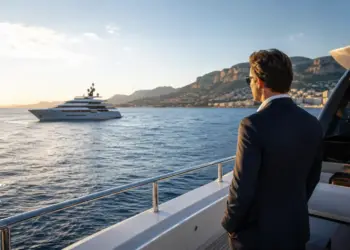
Few sectors illustrate the rise of asset-light luxury more clearly than the superyacht market. For decades, owning a yacht represented one of the ultimate symbols of success. Today, however, many affluent travelers are discovering that charter access often provides greater overall value.
A private yacht charter offers immediate access to some of the world’s finest vessels without requiring a multimillion-dollar purchase or continuous operational oversight. Guests can select different yachts for every voyage, choosing vessels that perfectly match the destination, group size, and style of travel.
This flexibility has become particularly attractive for globally mobile executives and family offices whose schedules frequently change. Rather than relocating a privately owned yacht between cruising regions, they simply charter the ideal vessel wherever their travels take them.
Modern charter experiences also deliver exceptional personalization. Professional crews, private chefs, wellness specialists, and concierge teams coordinate every detail, transforming each voyage into a fully tailored journey. Whether guests seek a Mediterranean escape, a Caribbean family holiday, or an Arctic expedition, charter specialists create experiences that rival the world’s finest luxury resorts.
Consequently, the superyacht industry is gradually evolving from an ownership-driven business into a service-oriented ecosystem centered on hospitality, flexibility, and premium experiences.
Financial Efficiency and the Economics of Luxury Access
Financial considerations play an increasingly important role in luxury decision-making. While purchasing a superyacht remains possible for many affluent individuals, ownership requires substantial ongoing investment beyond the initial acquisition.
Annual expenses commonly include:
- Professional crew salaries.
- Marina and berthing fees.
- Insurance.
- Fuel.
- Technical maintenance.
- Interior upgrades.
- Mechanical servicing.
- Regulatory compliance.
For many investors, these recurring costs compete with opportunities that may generate significantly stronger financial returns. Chartering, by contrast, converts ownership obligations into predictable travel expenses while preserving liquidity for business ventures, diversified investments, and estate planning.
Family offices increasingly recognize this advantage. Rather than allocating large amounts of capital to a depreciating lifestyle asset, they maintain financial flexibility while still enjoying world-class maritime experiences whenever required.
| Traditional Ownership | Asset-Light Luxury | Key Advantage |
|---|---|---|
| Large capital purchase | Pay only when using luxury services | Greater liquidity |
| Continuous operating expenses | Predictable experience-based spending | Better financial flexibility |
| One privately owned yacht | Access to multiple yachts worldwide | More destination choices |
| Owner manages maintenance | Professional charter management | Reduced complexity |
| Permanent ownership commitment | Flexible access model | Lifestyle adaptability |
| Fixed luxury asset | Curated experiences on demand | Freedom and personalization |
The growing popularity of asset-light luxury demonstrates that affluent consumers increasingly define value by flexibility rather than possession. This mindset is reshaping not only yacht chartering but also the broader luxury economy, setting the stage for new approaches to wealth management, travel, and premium lifestyle experiences.
How Asset-Light Luxury Is Changing Wealth Management?
The growing influence of asset-light luxury extends well beyond travel. It has become an important consideration within modern wealth management, particularly for family offices, entrepreneurs, and globally mobile executives seeking to balance exceptional lifestyles with disciplined financial planning.
Rather than accumulating expensive lifestyle assets that require continuous maintenance, many affluent individuals now prioritize liquidity and portfolio diversification. Capital that might once have been tied to a privately owned yacht can instead remain invested in businesses, real estate, private equity, or emerging technologies while still providing access to world-class experiences through a superyacht charter.
This philosophy also reflects changing attitudes toward luxury itself. Increasingly, wealth is measured by freedom of choice rather than the number of possessions. Access to multiple destinations, bespoke travel experiences, and concierge-led services often delivers greater satisfaction than maintaining a single high-value asset throughout the year.
Technology has accelerated this transformation. Digital charter platforms, private travel advisors, and integrated concierge networks allow affluent travelers to arrange highly personalized journeys with remarkable speed. Every aspect of the experience—from private aviation and ground transportation to onboard dining and wellness programs—can be coordinated through a seamless ecosystem of premium service providers.
As a result, luxury asset management increasingly focuses on optimizing experiences while minimizing unnecessary operational commitments.
Asset-Light Luxury vs. Traditional Yacht Ownership
The debate surrounding yacht charter vs ownership has become a defining conversation within the modern superyacht industry. While ownership still appeals to passionate yachting enthusiasts who spend significant time aboard a single vessel, charter access increasingly aligns with contemporary lifestyle priorities.
Owners enjoy complete customization, unrestricted availability, and the satisfaction of possessing a unique asset. However, they also assume responsibility for crew management, maintenance schedules, insurance, regulatory compliance, refits, and depreciation.
By contrast, an asset-light luxury approach emphasizes convenience, adaptability, and efficiency. Travelers simply choose the ideal yacht for each destination, relying on experienced charter companies to manage every operational detail. This model allows guests to experience the newest yachts, explore diverse cruising regions, and avoid the complexities associated with long-term ownership.
| Luxury Model | Best For | Primary Benefit |
|---|---|---|
| Traditional Yacht Ownership | Dedicated long-term owners | Complete personalization |
| Superyacht Charter | Seasonal travelers | Maximum flexibility |
| Concierge Memberships | Frequent luxury travelers | Seamless planning |
| Private Aviation Access | Global executives | Time efficiency |
| Luxury Subscription Services | Experience-focused consumers | Continuous variety |
| Asset-Light Luxury Model | Family offices and entrepreneurs | Capital preservation with premium access |
Ultimately, the comparison highlights a broader change in consumer priorities. Luxury increasingly revolves around access, personalization, and flexibility rather than permanent ownership.
The Impact on Yacht Builders, Brokers, and Charter Companies
The rise of asset-light luxury is reshaping every segment of the superyacht ecosystem. Builders, brokers, charter companies, and hospitality providers are adapting to meet growing demand for experience-driven services.
Charter fleets continue to expand as owners place more vessels into professionally managed programs, creating greater availability for travelers seeking premium experiences. Meanwhile, yacht brokers increasingly provide advisory services that extend beyond sales, helping clients evaluate charter opportunities, management solutions, and hybrid ownership models.
Builders are also responding by designing yachts with charter appeal in mind. Spacious wellness areas, flexible accommodation layouts, advanced entertainment systems, and environmentally efficient technologies have become increasingly important as charter demand grows.
For hospitality brands and concierge companies, the opportunity extends beyond the yacht itself. Partnerships with private aviation operators, luxury resorts, Michelin-starred chefs, wellness providers, and destination specialists allow charter experiences to become fully integrated luxury travel ecosystems.
Consequently, the future of the superyacht industry appears increasingly service-driven, with long-term success depending as much on guest experience as on vessel design.
The Future of Luxury Ownership Models
Luxury consumption continues to evolve at an extraordinary pace. Across industries, consumers increasingly embrace subscription models, membership programs, and on-demand access rather than traditional ownership.
The superyacht sector reflects this broader transformation. Future growth is likely to focus on curated experiences supported by digital innovation, concierge expertise, and personalized travel planning. Artificial intelligence, predictive guest preferences, and integrated booking platforms may further simplify access while enhancing customization.
Sustainability will also influence future decision-making. Shared access models encourage more efficient utilization of luxury assets while supporting investment in cleaner technologies and environmentally responsible operations.
For globally mobile families, entrepreneurs, and executives, these developments reinforce one clear trend: flexibility is becoming one of luxury’s most valuable characteristics.
Unique Insight
The significance of asset-light luxury extends far beyond reducing costs or simplifying travel arrangements. It represents a fundamental redefinition of wealth itself.
For previous generations, prestige often centered on ownership. Today, however, many affluent individuals recognize that liquidity, adaptability, and freedom create greater long-term value than maintaining numerous underutilized assets. Experiences have become more meaningful than possessions because they evolve alongside changing lifestyles, interests, and global opportunities.
Concierge-led ecosystems reinforce this transformation by removing operational complexity from luxury consumption. Travelers no longer need to own every premium asset to enjoy exceptional experiences. Instead, they access the world’s finest yachts, residences, aviation services, and hospitality whenever required.
Perhaps the greatest achievement of asset-light luxury is its ability to maximize freedom without compromising exclusivity. The superyacht industry is therefore evolving from a business centered on ownership into one driven by personalized access, intelligent service, and extraordinary experiences.
Conclusion
The rise of asset-light luxury is reshaping the superyacht industry and redefining modern luxury consumption. As affluent travelers prioritize flexibility, personalized experiences, and wealth optimization, charter access has become an increasingly attractive alternative to traditional ownership.
For family offices, entrepreneurs, executives, and globally mobile individuals, the future of luxury lies in intelligent access rather than permanent possession. By preserving capital, simplifying operations, and expanding lifestyle possibilities, asset-light luxury reflects a new era in which freedom, mobility, and exceptional experiences have become the ultimate indicators of success.
Frequently Asked Questions
What is asset-light luxury?
Asset-light luxury is a lifestyle approach that emphasizes premium access to luxury experiences instead of owning expensive assets.
Why is asset-light luxury becoming more popular?
Affluent consumers increasingly value flexibility, liquidity, personalized experiences, and operational simplicity over permanent ownership.
How does asset-light luxury affect the superyacht industry?
It encourages greater demand for yacht charters, concierge services, and flexible travel models while reducing reliance on traditional ownership.
Is chartering a yacht part of the asset-light luxury model?
Yes. A private yacht charter is one of the clearest examples of an asset-light luxury strategy because it provides access without ownership responsibilities.
Why are affluent travelers choosing access over ownership?
Access offers greater flexibility, broader travel options, and fewer long-term financial and operational commitments.
How do family offices benefit from asset-light luxury?
Family offices preserve capital, simplify lifestyle management, and provide exceptional travel experiences without maintaining depreciating assets.
Does asset-light luxury help preserve wealth?
Yes. By avoiding significant ownership costs, investors can keep more capital allocated to diversified investment opportunities.
What role do concierge services play in asset-light luxury?
Concierge teams coordinate every aspect of travel, creating seamless, highly personalized experiences while reducing administrative burdens.
Is traditional yacht ownership still worthwhile?
Ownership remains attractive for individuals who spend extensive time aboard a single yacht and value complete customization.
Why is asset-light luxury shaping the future of luxury travel?
Because it combines flexibility, personalized hospitality, financial efficiency, and premium access, making luxury experiences easier to enjoy and manage.