In the world of ultra-premium aviation, the conversation around Private Jet Speed vs Comfort has evolved dramatically. A decade ago, the focus often centered on which aircraft could fly the fastest or break the latest range milestone. However, in 2026, billionaire travel priorities look very different. Today’s ultra-high-net-worth travelers increasingly value wellness, productivity, privacy, and seamless mobility as much as raw performance.
The growth of ultra-long-range business jets has transformed private aviation into far more than transportation. Aircraft now function as flying offices, executive lounges, wellness environments, and family living spaces. Moreover, nonstop intercontinental travel has become standard among elite travelers who regularly move between New York, Dubai, London, Singapore, and Los Angeles within compressed schedules.
As a result, the debate surrounding Private Jet Speed vs Comfort reflects a larger shift in luxury travel culture. Billionaires still appreciate speed because time optimization remains critical. Nevertheless, many affluent travelers now define luxury through reduced fatigue, personalized cabin environments, and uninterrupted productivity during long-haul flights.
Meanwhile, manufacturers such as Gulfstream, Bombardier, and Dassault compete aggressively to deliver quieter cabins, lower cabin altitude systems, advanced air purification, and wellness-focused interiors. Consequently, private aviation increasingly resembles high-end hospitality combined with executive mobility infrastructure.
The modern private jet market is no longer simply about arriving first. Instead, it is about arriving rested, productive, connected, and ready for business or leisure immediately after landing.
Why Private Jet Speed Still Matters for Billionaires?
Despite the growing focus on comfort, speed continues to hold enormous strategic value in luxury private aviation 2026. For billionaire executives, entrepreneurs, investors, and global business leaders, time remains the ultimate luxury asset.
A faster cruise speed can reduce flight times across major international routes. Although the difference may only amount to 30 to 60 minutes on some long-haul journeys, those saved hours accumulate significantly over a year of global travel. Therefore, many executives still prioritize aircraft capable of efficient high-speed performance.
Moreover, nonstop global mobility has become central to executive air travel preferences. Billionaires often maintain businesses, residences, and investments across multiple continents. Consequently, private aviation allows them to maintain schedule flexibility without relying on commercial airline limitations.
High-speed business jets also support:
- Tight international meeting schedules
- Same-day intercontinental business trips
- Faster repositioning between global hubs
- Reduced overnight travel disruptions
- Greater operational flexibility during peak demand
Meanwhile, speed plays an important psychological role in the UHNW aviation lifestyle. Elite travelers often value efficiency because it reflects control over time and mobility. In contrast, commercial aviation frequently introduces delays, airport congestion, and scheduling compromises.
However, the conversation around speed has matured. Most buyers no longer seek extreme velocity purely for prestige. Instead, they view performance as one component within a broader luxury mobility ecosystem.
Why Comfort Often Matters More Than Raw Speed?
While speed remains important, comfort increasingly defines the private jet cabin experience. Long-haul travel can create significant physical and mental fatigue, particularly for travelers crossing multiple time zones within compressed business schedules.
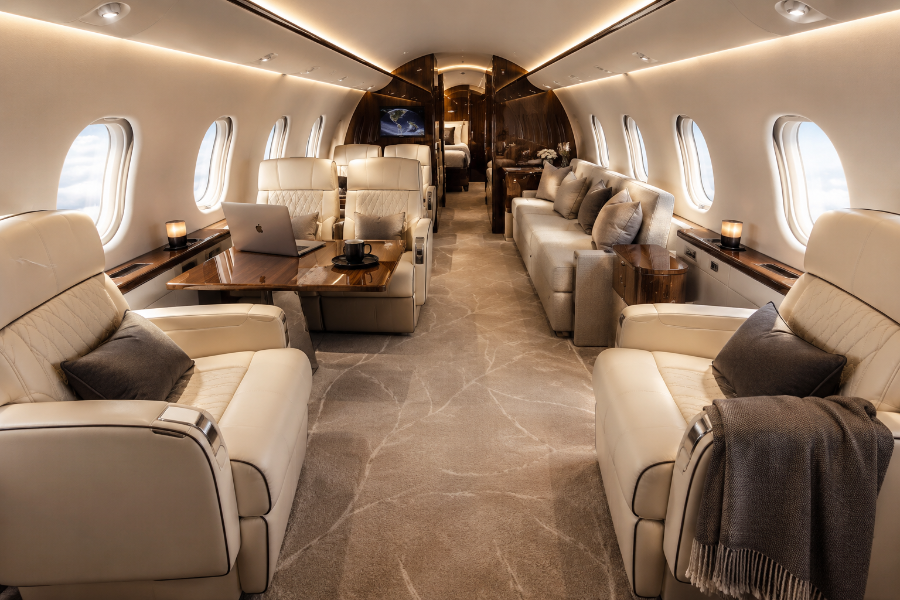
As a result, billionaires now prioritize aircraft capable of minimizing travel stress while maximizing productivity and recovery. Cabin altitude systems, quiet interiors, ergonomic seating, and spacious sleeping arrangements have become major competitive differentiators among ultra-long-range business jets.
Lower cabin altitude represents one of the most significant innovations in premium jet interiors. Aircraft designed with reduced cabin altitude help passengers feel less fatigued after extended flights. Moreover, advanced humidity systems improve hydration and overall comfort during long-haul travel.
Quiet cabin environments also matter enormously. Many billionaires treat flights as uninterrupted work periods where they conduct meetings, review sensitive documents, or rest privately. Therefore, acoustic engineering has become central to luxury aviation design.
Comfort-focused features increasingly include:
- Full-flat sleeping suites
- Dedicated dining and lounge zones
- Wellness-oriented lighting systems
- High-speed global connectivity
- Personalized temperature controls
Meanwhile, the concept of productivity during travel has reshaped executive air travel preferences. Billionaires increasingly view flight time as usable executive time rather than downtime. Consequently, comfort directly influences decision-making quality, energy levels, and post-flight performance.
On the other hand, excessive focus on raw speed may create compromises in cabin layout, noise management, or operational efficiency. Therefore, many buyers now favor balanced aircraft capable of combining strong performance with exceptional onboard comfort.
Key Factors Influencing Private Jet Buyer Preferences
| Factor | Speed Priority | Comfort Priority | Lifestyle Impact | UHNW Importance |
|---|---|---|---|---|
| Cruise Speed | High | Moderate | Faster global mobility | Very High |
| Cabin Quietness | Moderate | Very High | Reduced fatigue and stress | Extremely High |
| Nonstop Range | High | High | Seamless travel convenience | Extremely High |
| Sleeping Arrangements | Low | Very High | Better long-haul recovery | Very High |
| Connectivity | Moderate | High | Productivity during flights | Extremely High |
| Cabin Altitude | Moderate | Very High | Wellness and energy preservation | Extremely High |
| Interior Personalization | Low | High | Lifestyle integration | High |
| Fuel Efficiency | Moderate | Moderate | Operational sustainability | Growing Importance |
How Luxury Jet Manufacturers Balance Speed and Comfort?
The leading players in luxury private aviation understand that buyers rarely choose aircraft based on a single specification. Instead, manufacturers compete through holistic passenger experience strategies.
Gulfstream, for example, has built a strong reputation by balancing impressive speed with refined cabin environments. Its aircraft often emphasize large panoramic windows, low cabin altitude, and long-range efficiency. Moreover, the brand positions itself around seamless executive mobility rather than pure performance statistics.
Bombardier, meanwhile, continues focusing heavily on wellness-oriented design and cabin sophistication. The company highlights quiet cabins, ergonomic seating, and flexible interior layouts that support both business productivity and leisure travel. Consequently, its jets appeal strongly to travelers seeking long-haul comfort without sacrificing operational capability.
Dassault approaches the market somewhat differently. Its aircraft frequently emphasize efficiency, reliability, and aerodynamic performance while maintaining elegant cabin environments. In contrast to more aggressively luxurious competitors, Dassault often appeals to buyers seeking understated executive sophistication.
Manufacturers increasingly compete through:
- Personalized cabin configurations
- Advanced entertainment systems
- Smart lighting environments
- Wellness-focused engineering
- Seamless digital integration
Additionally, technology integration has become essential in business jet comfort comparison discussions. High-speed satellite connectivity, encrypted communications, and remote office functionality now influence purchasing decisions almost as much as speed or range.
As a result, private jets increasingly function as mobile headquarters designed for elite global lifestyles.
The Rise of Wellness-Focused Aviation Design?
One of the most important private aviation market trends involves the rise of wellness-centered aircraft design. Billionaires increasingly expect private jets to support physical wellbeing during frequent long-haul travel.
Modern premium jet interiors now incorporate circadian lighting systems that help passengers adapt to changing time zones more effectively. Moreover, advanced air purification technology improves cabin air quality while reducing fatigue during extended flights.
Ergonomic seating has also evolved significantly. Manufacturers now invest heavily in seating systems designed for posture support, pressure distribution, and sleeping comfort. Consequently, passengers can arrive more rested after ultra-long-haul flights.
Key wellness innovations include:
- Lower cabin altitude systems
- Enhanced humidity management
- Circadian rhythm lighting
- Advanced air filtration
- Noise-reduction engineering
However, these innovations increase development complexity and aircraft costs. Personalized cabin layouts often require extensive customization, certification adjustments, and advanced engineering integration. Therefore, manufacturers must balance luxury expectations with operational practicality.
Nevertheless, growing UHNW aviation lifestyle expectations continue driving investment in wellness-focused aviation design. Billionaires increasingly prioritize reduced stress and long-term travel sustainability over small increases in speed.
Ultra-Long-Range Private Jets Compared in 2026
| Aircraft | Speed Focus | Comfort Focus | Range | Ideal Traveler |
|---|---|---|---|---|
| Gulfstream G700 | Strong | Exceptional | Ultra-long-range | Global executives needing balance |
| Bombardier Global 8000 | Very High | Exceptional | Ultra-long-range | Time-sensitive international travelers |
| Dassault Falcon 10X | Moderate | Extremely High | Long-range | Wellness-focused luxury travelers |
| Gulfstream G800 | High | Very High | Ultra-long-range | Frequent intercontinental flyers |
| Bombardier Global 7500 | High | Exceptional | Ultra-long-range | Productivity-oriented executives |
Why Billionaires Increasingly Treat Jets as Lifestyle Infrastructure?
The modern private jet has evolved into lifestyle infrastructure rather than luxury transportation alone. Billionaires now integrate aircraft into broader global living and business ecosystems.
Flights increasingly function as productive work environments where executives conduct negotiations, review investments, and coordinate international operations. Therefore, cabin design directly affects business efficiency.
Meanwhile, family travel expectations have also changed. Many UHNW travelers use private jets for multi-generational leisure trips, wellness retreats, and extended international mobility. Consequently, aircraft interiors increasingly blend executive functionality with residential-style comfort.
Private jets now support:
- Executive meetings in flight
- Family leisure integration
- Secure communications
- Seamless global mobility
- Flexible international scheduling
Additionally, younger billionaire demographics often prioritize flexibility and experience quality over visible status signaling. In contrast to previous generations, many affluent travelers now view seamless travel and reduced stress as the ultimate luxury markers.
As a result, private aviation increasingly aligns with hospitality, wellness, and lifestyle design industries.
Risks and Trade-Offs Between Speed and Comfort
Although buyers desire both performance and luxury, achieving the perfect balance remains challenging. Faster cruise speeds typically increase fuel burn and operational costs. Consequently, aircraft optimized heavily for speed may face efficiency trade-offs.
Extreme performance can also create engineering complexity that affects maintenance schedules and long-term operating expenses. Therefore, many buyers carefully evaluate lifecycle costs rather than focusing solely on headline speed figures.
Cabin layout compromises may also emerge. Larger sleeping suites, lounge areas, and wellness spaces require cabin volume that could otherwise support aerodynamic efficiency or weight reduction.
Key trade-offs include:
- Higher fuel consumption at top speeds
- Increased maintenance complexity
- Reduced cabin optimization flexibility
- Greater development costs
- Diminishing practical time savings
Moreover, diminishing returns increasingly influence buyer behavior. Saving 20 additional minutes on a transatlantic flight may matter less than arriving fully rested and ready for critical meetings.
Therefore, modern affluent travelers often prioritize overall travel quality instead of maximum speed alone.
Why the Future of Private Aviation Is Experience-Driven?
The future of luxury private aviation 2026 appears increasingly centered around personalized passenger experience. Speed will remain important; however, the strongest competitive advantage may come from delivering seamless, wellness-oriented mobility environments.
Manufacturers increasingly compete through personalization ecosystems that combine aviation, hospitality, technology, and luxury lifestyle services. Consequently, cabin experience now influences purchasing decisions more strongly than marginal speed differences.
Younger billionaire travelers especially prioritize flexibility, sustainability, wellness, and digital integration. Moreover, these travelers often expect private aviation to support hybrid lifestyles blending business, leisure, and family mobility.
Emerging trends include:
- AI-assisted cabin personalization
- Wellness-centric interior architecture
- Sustainable aviation innovations
- Fully connected productivity ecosystems
- Hospitality-inspired service models
Meanwhile, technology continues redefining premium air travel. Advanced connectivity allows executives to remain fully operational during intercontinental flights. As a result, flying time increasingly becomes productive executive time rather than lost hours.
The broader transformation reflected in Private Jet Speed vs Comfort demonstrates how luxury itself is evolving. Affluent travelers increasingly define luxury through reduced friction, greater flexibility, and enhanced wellbeing.
Why Time Efficiency Is the Real Luxury Asset?
Ultimately, billionaire travel priorities reveal that time efficiency matters more than raw speed alone. The true value of private aviation lies in controlling schedules, reducing travel friction, and preserving productivity across global operations.
Nonstop travel convenience remains enormously valuable because it minimizes interruptions, layovers, and logistical complications. Meanwhile, comfortable cabins support sharper decision-making, better rest, and higher productivity during long-haul journeys.
Private aviation now operates as an integrated lifestyle system supporting:
- Global business continuity
- Wellness-oriented mobility
- Flexible personal scheduling
- High-value executive productivity
- Seamless international movement
Consequently, the real competition in luxury aviation no longer revolves solely around who builds the fastest aircraft. Instead, manufacturers compete to create the most intelligent, productive, and comfortable travel ecosystems for elite global travelers.
The future of private aviation may involve fewer speed records and greater emphasis on personalization, wellness, and seamless luxury mobility. Billionaires increasingly seek aircraft that enhance how they live and work rather than simply how fast they travel.
FAQs
Why does private jet speed matter to billionaires?
Speed helps billionaires optimize schedules, reduce travel time, and maintain global business flexibility. Faster aircraft improve executive efficiency during international travel.
Why is comfort becoming more important in private aviation?
Long-haul travel fatigue affects productivity and wellness. Therefore, affluent travelers increasingly prioritize quiet cabins, better sleeping environments, and healthier cabin conditions.
What is cabin altitude in private jets?
Cabin altitude refers to the pressure level maintained inside the aircraft cabin. Lower cabin altitude systems help passengers feel less fatigued during flights.
Which private jets balance speed and comfort best?
Aircraft such as the Gulfstream G700, Bombardier Global 8000, and Dassault Falcon 10X are widely recognized for balancing performance with premium comfort.
Why do UHNW travelers prioritize nonstop flights?
Nonstop travel reduces delays, transfers, and scheduling friction. Consequently, it improves convenience, privacy, and time efficiency.
How are private jets becoming wellness-focused?
Manufacturers now incorporate circadian lighting, advanced air purification, ergonomic seating, and wellness-oriented cabin layouts into modern aircraft.
What factors influence private jet buying decisions?
Range, comfort, speed, operating costs, cabin customization, connectivity, and productivity features all influence purchasing decisions.
Are faster private jets less comfortable?
Not necessarily. However, some high-speed aircraft may involve trade-offs related to fuel efficiency, cabin layout, or operational complexity.
How do luxury jet brands compete today?
Manufacturers increasingly compete through cabin experience, personalization, wellness technologies, and integrated lifestyle services rather than speed alone.
What trends are shaping the future of private aviation?
Wellness-focused design, seamless connectivity, personalization, sustainability, and experience-driven luxury are shaping the future of private aviation.