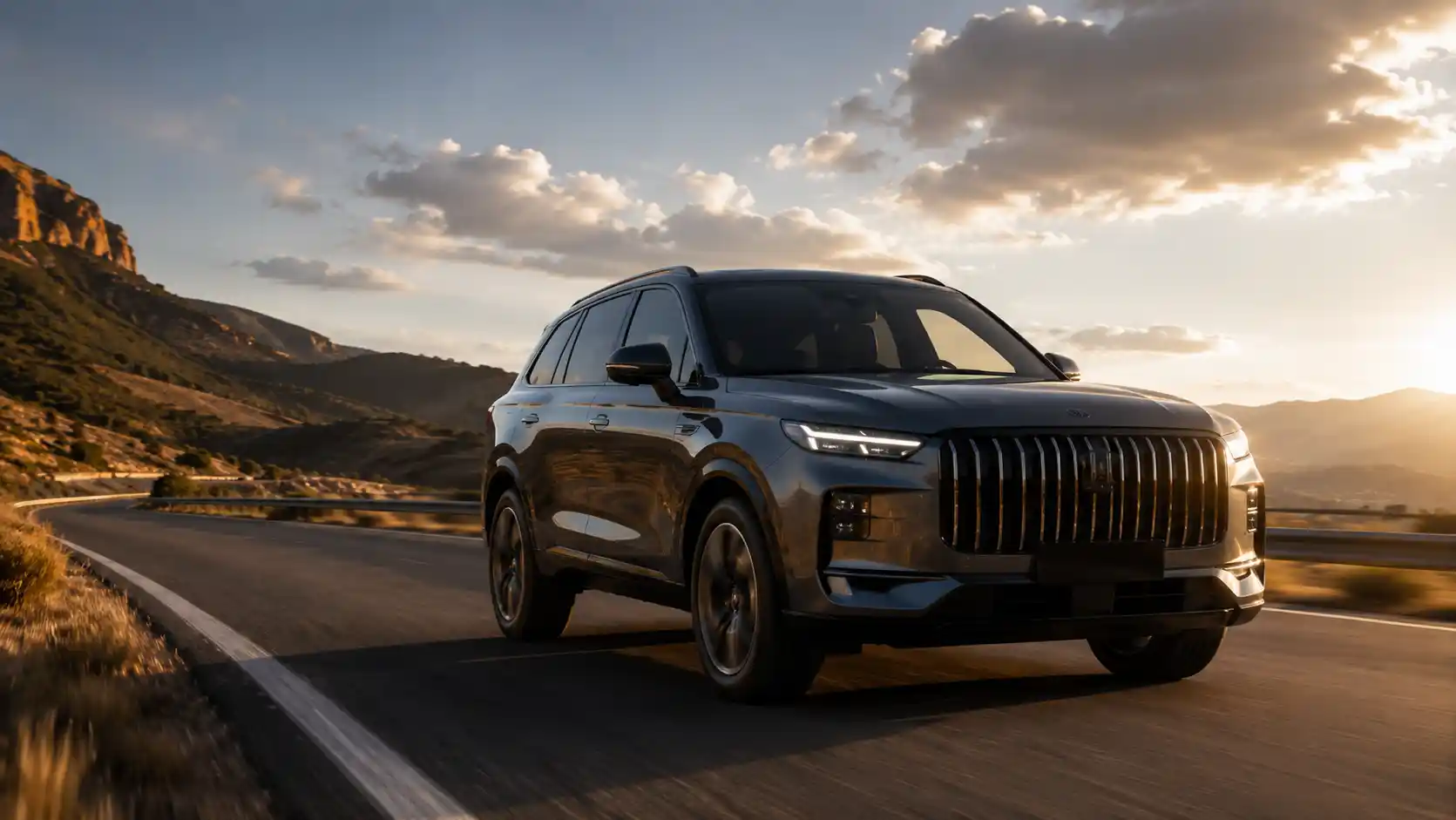
Jaecoo is rapidly emerging as one of the most closely watched challengers in the global SUV landscape, and Jaecoo is already reshaping expectations in the premium SUV segment. Backed by Chery Automobile’s international ambitions, the Jaecoo SUV lineup is entering a global SUV market that is increasingly defined by electrification, software intelligence, and design-led branding. At a time when established manufacturers are defending decades of dominance, Chery Jaecoo is positioning itself as a Chinese SUV brand capable of competing on both technology and perception, not just price.
What makes this moment particularly significant is the broader shift underway in the automotive industry. Electrification is accelerating, plug-in hybrid SUV demand is expanding, and consumers are beginning to prioritize smart SUV technology alongside traditional performance metrics. In this environment, Jaecoo is not simply launching another model line; it is attempting to redefine what a premium SUV can represent in emerging and mature markets alike.
As competition intensifies across Europe, the Middle East, Southeast Asia, Latin America, and Africa, Jaecoo’s strategy reflects a clear intent: to challenge the global SUV hierarchy through a blend of intelligent mobility, off-road capability, and accessible luxury. This is no longer just a product story—it is a global industrial repositioning.
The Vision Behind Jaecoo
The foundation of Jaecoo lies in a deliberate attempt to bridge two traditionally separate worlds: rugged off-road heritage and modern urban sophistication. While many premium SUV brands lean heavily on either lifestyle luxury or technical capability, Jaecoo aims to combine both into a single, cohesive identity.
This vision is closely tied to the rise of global consumer demand for versatile vehicles. Drivers want a premium SUV that performs equally well in city traffic and on challenging terrain. As a result, Jaecoo is positioning itself as an “urban off-road” brand—one that blends practicality with aspirational design.
Moreover, Chery Automobile is leveraging its manufacturing scale to ensure that Jaecoo can compete globally without sacrificing cost efficiency. This allows the brand to offer advanced features at pricing that undercuts traditional European and Japanese rivals. In doing so, Jaecoo is not just entering the market—it is attempting to reset expectations around value in the premium SUV segment.
This early strategic clarity sets the stage for a broader industrial play, where branding, technology, and global positioning converge into a single long-term ambition.
How Chery Is Building a Global Premium SUV Brand?
Chery Automobile’s role in the Jaecoo strategy cannot be overstated. Over the past decade, Chery has transitioned from a domestic Chinese automaker into a global exporter with increasingly sophisticated product lines. Now, through Jaecoo, it is targeting the premium SUV segment with a more refined and internationally aligned identity.
Rather than competing purely on cost, Chery is investing heavily in design language, interior quality, and digital ecosystem integration. This shift reflects a broader trend among Chinese automotive brands moving up the value chain. According to industry analysis frequently highlighted by outlets such as Automotive News and Car and Driver, Chinese brands are increasingly focusing on global credibility rather than regional dominance alone.
Jaecoo benefits directly from this strategy. The brand is designed for export-first scalability, meaning its vehicles are engineered with international regulations, road conditions, and consumer expectations in mind from the outset. This global-first approach gives Jaecoo a structural advantage in rapidly entering multiple regions simultaneously.
At the same time, Chery is carefully positioning Jaecoo as a premium SUV brand rather than a mass-market label. This distinction is crucial because it shapes everything from design philosophy to dealership experience and after-sales support systems.
The result is a brand architecture that feels intentionally global, not locally adapted.
Technology, Electrification, and Intelligent Mobility
Technology is where Jaecoo attempts to differentiate itself most aggressively. The brand is deeply aligned with the broader shift toward software-defined vehicles, where digital systems increasingly shape driving experience, safety, and performance.
Inside the cabin, Jaecoo SUVs emphasize smart SUV technology through digital cockpit layouts, AI-assisted interfaces, and connected infotainment ecosystems. These systems are designed to evolve over time via over-the-air updates, ensuring long-term relevance in a rapidly changing automotive environment.
Electrification is another cornerstone of the strategy. The brand is actively developing plug-in hybrid SUV models that balance efficiency with performance, particularly for markets where full EV infrastructure is still developing. This transitional approach allows Jaecoo to remain competitive across both developed and emerging economies.
Key technological pillars include:
- Plug-in hybrid and electrified powertrains for global flexibility
- AI-assisted driving support systems for enhanced safety
- Fully digital cockpit interfaces with cloud connectivity
- Modular platforms designed for multi-market adaptation
- Urban off-road capability with adaptive terrain response systems
Industry observers at publications such as Autocar and MotorTrend have noted that this combination of affordability and high-spec technology is becoming a defining trait of new Chinese SUV brands.
By integrating these systems early, Jaecoo is effectively positioning itself as a software-first automotive brand rather than a traditional hardware manufacturer.
Jaecoo Strengths and Market Positioning
| Jaecoo Strength | Customer Benefit | Competitive Advantage |
|---|---|---|
| Electrified powertrains | Lower fuel costs and flexibility | Competes with both hybrid and EV rivals |
| Smart SUV technology | Enhanced driving experience | Software-driven adaptability |
| Premium design language | Elevated brand perception | Closes gap with European rivals |
| Urban off-road capability | Versatility across terrains | Unique dual-use positioning |
| Competitive pricing | Accessibility to premium features | Undercuts established brands |
This combination of strengths highlights why Jaecoo is being closely watched as a serious contender in the evolving SUV hierarchy. As technology and electrification continue to converge, the brand’s next move will be scaling this proposition globally.
Global Expansion Strategy and Competitive Positioning
Jaecoo’s global expansion strategy is one of its most ambitious components. Instead of entering markets gradually, the brand is pursuing a multi-region rollout that targets Europe, the Middle East, Southeast Asia, Latin America, and Africa almost simultaneously.
This strategy is enabled by Chery Automobile’s established export infrastructure, which already supports large-scale distribution networks. As a result, Jaecoo can leverage existing logistics, manufacturing capacity, and supplier ecosystems to accelerate entry into new markets.
In Europe, the brand is positioning itself as a value-driven alternative to established players. In the Middle East, it is emphasizing durability and off-road capability. Meanwhile, in Southeast Asia and Latin America, affordability combined with premium features is the core selling point.
Industry analysts at Bloomberg and Reuters have repeatedly highlighted that Chinese automakers are increasingly challenging legacy brands not just on pricing, but on feature density and speed of innovation.
Jaecoo’s competitive positioning is therefore multi-layered:
- Premium styling at mid-range pricing
- Electrified options across multiple markets
- Fast adaptation to regional demand trends
- Strong reliance on Chery’s global supply chain
- Aggressive dealership expansion strategy
This hybrid approach allows Jaecoo to compete simultaneously with both mainstream and premium brands, depending on the region.
How Jaecoo Compares With Established SUV Brands?
The global SUV segment is already crowded with strong incumbents, but Jaecoo is entering with a distinctly different playbook. Its closest competitors include Toyota, Hyundai, Kia, Volkswagen, and Land Rover, each representing different strengths and market philosophies.
Toyota leads with reliability and hybrid leadership, while Hyundai and Kia focus on design innovation and value. Volkswagen emphasizes engineering consistency and European refinement. Land Rover remains the benchmark for luxury off-road capability.
Jaecoo, however, is attempting to blend these identities into a single offering.
It aims to match Toyota’s hybrid strategy, Hyundai and Kia’s design evolution, Volkswagen’s global reach, and Land Rover’s off-road credibility—while undercutting them on pricing and accelerating technology integration.
This positioning creates both opportunity and tension, particularly in markets where brand heritage still plays a dominant role in purchasing decisions.
SUV Brand Competitive Comparison
| SUV Brand | Key Strength | Jaecoo’s Competitive Position |
|---|---|---|
| Toyota | Reliability & hybrid leadership | Matches efficiency with lower pricing |
| Hyundai | Design & value innovation | Competes with stronger tech integration |
| Kia | Youth-focused branding | Offers more premium positioning |
| Volkswagen | Engineering & global scale | Competes through faster feature rollout |
| Land Rover | Luxury off-road heritage | Targets similar capability at lower cost |
This comparison highlights how Jaecoo is not targeting a single competitor but rather assembling a cross-category challenge that spans mainstream and premium segments simultaneously.
Challenges, Opportunities, and the Road Ahead
Despite its momentum, Jaecoo faces significant challenges as it scales globally. Brand recognition remains limited in mature markets, and trust-building will take time. Additionally, after-sales service networks and long-term reliability perception will play a decisive role in shaping consumer confidence.
However, the opportunities are equally substantial. The global SUV market is undergoing structural transformation driven by electrification, digitalization, and shifting consumer expectations. In this environment, new entrants have more room to redefine categories than at any point in the past two decades.
Jaecoo’s success will depend on three critical factors:
- Building strong international service infrastructure
- Maintaining consistent product quality across regions
- Developing long-term brand credibility beyond pricing advantage
If executed effectively, the brand could become a case study in how Chinese automakers transition from volume-driven exporters to global premium contenders.
Why Jaecoo Could Redefine the Next Generation of SUVs?
Jaecoo represents more than another emerging SUV brand; it reflects China’s broader transition from manufacturing scale to innovation leadership. As electrification accelerates globally, premium features are becoming more accessible, and software-driven mobility is redefining vehicle value.
In this context, Jaecoo’s strategy is particularly significant. It is not simply competing on cost—it is reshaping expectations around what a premium SUV should deliver. The combination of intelligent systems, plug-in hybrid capability, and global accessibility positions the brand at the intersection of multiple industry shifts.
However, long-term success will depend on trust. Without strong brand credibility in mature markets, even the most advanced technology may struggle to convert into sustained loyalty. Therefore, Jaecoo’s real challenge is not engineering—it is perception.
If the brand succeeds, it could fundamentally alter how consumers evaluate SUVs, moving the conversation from heritage and legacy to technology, accessibility, and adaptability.
Conclusion
Jaecoo is entering the global SUV market at a moment of unprecedented transformation. With backing from Chery Automobile, a strong focus on electrification, and a clear premium positioning strategy, the brand is attempting to redefine expectations across multiple regions simultaneously.
While competition remains intense, Jaecoo’s blend of smart SUV technology, plug-in hybrid innovation, and aggressive global expansion gives it a unique starting position. Ultimately, its success will depend on execution, consistency, and the ability to build trust in markets long dominated by established players.
If these elements align, Jaecoo could emerge as one of the most influential disruptors in the future of SUVs.
Frequently Asked Questions
What is Jaecoo?
Jaecoo is a global SUV brand under Chery Automobile focused on premium, electrified, and intelligent SUVs designed for international markets.
Who owns the Jaecoo brand?
Jaecoo is owned by Chery Automobile, one of China’s leading global automakers.
Is Jaecoo part of Chery Automobile?
Yes, Jaecoo operates as a premium sub-brand within Chery Automobile’s global portfolio strategy.
What makes Jaecoo SUVs different from competitors?
Jaecoo SUVs combine premium design, smart SUV technology, and plug-in hybrid systems at competitive pricing.
Does Jaecoo offer hybrid and electric SUVs?
Yes, Jaecoo is actively developing plug-in hybrid SUV models and expanding its electrification strategy.
Which countries does Jaecoo operate in?
Jaecoo is expanding across Europe, the Middle East, Southeast Asia, Latin America, and Africa.
How does Jaecoo compare with Toyota and Hyundai?
Jaecoo competes with Toyota’s hybrid strength and Hyundai’s design innovation but focuses more on integrated smart technology and pricing advantage.
Is Jaecoo considered a premium SUV brand?
Yes, Jaecoo is positioned as a premium SUV brand targeting global mid-to-high segments.
What is Jaecoo’s global expansion strategy?
The brand uses Chery’s export infrastructure to rapidly enter multiple international markets with localized positioning.
Why is Jaecoo becoming one of the fastest-growing SUV brands?
Because it combines electrification, smart technology, and premium design with aggressive global rollout strategies supported by Chery Automobile.