Luxury has traditionally relied on recognition. A logo, signature pattern or famous name could communicate wealth quickly, allowing a product to function as a visible status signal. But the emotional economy of luxury is becoming more complex. Increasingly, consumers are asking whether a product, place or experience says something meaningful about who they are.
That does not mean logos have disappeared. Instead, luxury value is fragmenting across identity, craftsmanship, experiences, provenance, cultural knowledge and personal relevance. McKinsey’s 2026 research found that emotional connection has become a leading driver of luxury desirability in both the United States and China, while consumers increasingly value experiences and insider recognition.
The change is significant because it shifts the question from Who will recognize this? to What does this mean to me?
From Conspicuous Consumption to Personal Expression
For much of modern consumer culture, luxury served a straightforward social function. Expensive watches, cars, handbags and clothing could communicate purchasing power and position within a hierarchy.
Economist Thorstein Veblen’s concept of conspicuous consumption remains useful for understanding this behavior: consumption can become a public display of wealth rather than simply a means of satisfying a practical need.
Yet luxury consumption has never been exclusively about showing off. Research has also identified motivations involving uniqueness, personal goals, self-expression and individual identity. Studies of luxury consumers have found that people with stronger needs for uniqueness can be more inclined toward less conspicuous forms of consumption.
That distinction matters today. A recognizable logo may still provide social recognition, but a bespoke object, rare artwork or personally meaningful experience can communicate something more specific: taste, history, achievement or belonging.
The Rise of the Identity-Driven Luxury Consumer
Luxury increasingly operates as a language of personal identity.
Someone may choose a particular watch because of its mechanical history, collect contemporary art because of a cultural interest, commission furniture because of a connection to craftsmanship, or travel privately to places that have personal significance.
These choices may still carry status. However, the status signal becomes more layered.
Research published in the Journal of Consumer Marketing has linked luxury purchasing to individual and social value, while other consumer research shows that personal values can influence perceptions of luxury and the desire to consume it.
For affluent consumers, greater purchasing power can also expand the range of choices available. Once basic scarcity becomes less important, the distinction between an expensive object and a personally meaningful one becomes more significant.
The Emotional Economy of Luxury Is Changing What “Value” Means
The emotional economy of luxury extends the definition of value beyond price, rarity and brand recognition.
A possession can carry memories of a milestone. A piece of jewelry can represent family history. A painting can connect its owner to a particular artistic movement. A private journey can become part of a family’s shared history.
These forms of value are difficult to quantify, but consumer research increasingly recognizes emotional attachment as an important mechanism in luxury consumption. A 2025 study of pre-owned luxury consumption, for example, found that uniqueness and hedonic value can strengthen emotional attachment, which in turn influenced intentions to switch and repurchase.
This helps explain why provenance and personal history can sometimes matter as much as visibility.
From Logos to Meaning
| Luxury Value Model | Primary Signal | Emotional Function |
|---|---|---|
| Logo-Driven Luxury | Brand recognition | External status |
| Quiet Luxury | Discretion and quality | Insider recognition |
| Personalized Luxury | Individuality | Self-expression |
| Experiential Luxury | Memory and access | Emotional fulfillment |
| Heritage Luxury | Provenance and history | Cultural connection |
| Craftsmanship-Led Luxury | Skill and authenticity | Appreciation and identity |
These models do not replace one another. They coexist.
A consumer can value a recognizable luxury house while also wanting an understated design. Another may prefer a bespoke object with almost no visible branding. The relevant point is that luxury status has become more fragmented.
Quiet Luxury and the New Language of Status
Quiet luxury became a major cultural shorthand for understated wealth, but it is better understood as one part of a larger movement toward less explicit status signaling.
Subtle branding, exceptional materials, construction quality and insider knowledge can communicate status to a narrower audience.
Research published in 2026 found that prominent logos can create identity-avoidance effects for some consumers, particularly when they anticipate negative stereotypes associated with conspicuous consumption.
Another longitudinal study published in 2026 connected inconspicuous luxury with value expression, social connectedness and sustainable consumption intentions.
Still, visible branding remains powerful in many markets and categories. The more accurate conclusion is that status signaling is diversifying, not disappearing.
Personalization Turns Luxury Into a Personal Narrative
Personalization changes the relationship between the consumer and the product.
A standard luxury product communicates membership in a recognizable category. A bespoke product can communicate individual authorship.
That distinction explains the appeal of commissioned art, custom jewelry, tailored interiors, bespoke clothing, personalized travel and private dining. The object or experience becomes connected to a particular person rather than simply to a brand.
Luxury brands increasingly recognize this. McKinsey’s 2026 research found that personalized experiences are a major area of interest among luxury companies, while consumers increasingly expect brands to understand their preferences and provide relevant experiences.
However, personalization only works when it feels genuine. Adding a person’s initials to a standardized product is not necessarily meaningful customization.
Experiences Become Emotional Assets
The rise of experiential luxury reinforces the same shift.
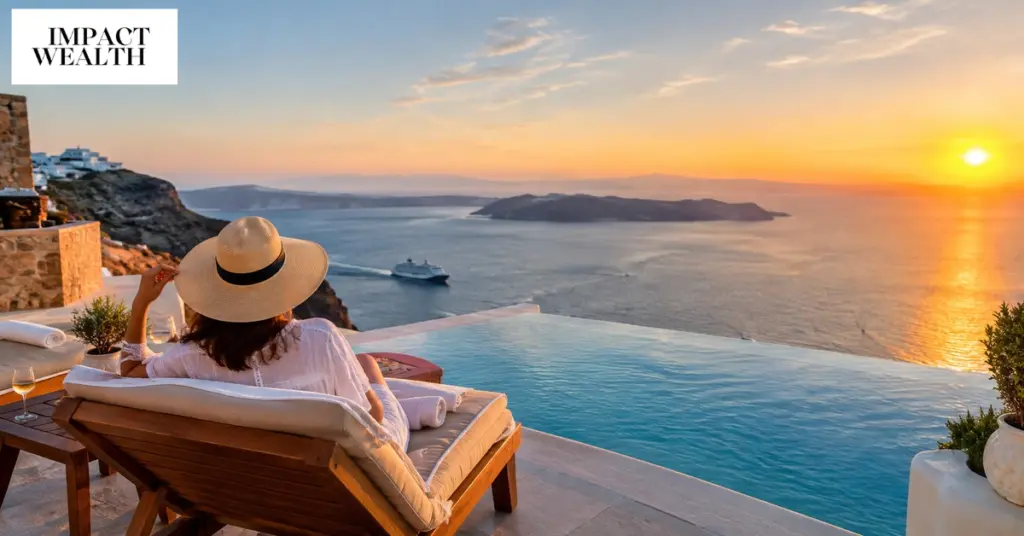
Travel, wellness, culinary experiences, cultural access, private events and educational experiences can create value through memory rather than ownership.
McKinsey’s 2026 US-China luxury research found that travel ranked as the leading choice for additional discretionary spending in both markets, while experiences increasingly compete with physical luxury goods for consumer attention and spending.
This connects with the broader rise of cultural capital. For some affluent consumers, the value of attending an important exhibition, visiting an artist’s studio or experiencing a culturally significant destination lies partly in what the experience means and whom it connects them with.
That is why cultural capital increasingly matters alongside material ownership.
Cultural Capital, Belonging and the Luxury Consumer
Luxury can communicate not only wealth but knowledge.
Art, architecture, design, food, heritage and travel can function as cultural signals. Understanding why something matters can become as important as owning it.
This creates a distinction between recognition and belonging.
A widely recognized handbag may tell observers that someone can afford luxury. A rare book collection, architectural knowledge or specialist art collection may communicate belonging to a particular cultural community.
The latter can be harder to manufacture because it requires knowledge, participation and sustained interest.
When Provenance Becomes More Valuable Than Recognition
Provenance gives luxury an additional layer of meaning.
The origin of a material, the history of an object, the identity of its maker and the continuity of a craft can all influence how consumers perceive value.
This is particularly relevant to heritage luxury, collecting and craftsmanship. The story behind an object can become part of the object itself.
That does not mean every heritage story is authentic. In fact, the growing commercial value of provenance makes credibility more important.
The distinction between genuine history and manufactured storytelling is becoming increasingly important to sophisticated consumers.
Social Media Has Complicated the Luxury Signal
Digital platforms have created a paradox.
Social media has made visible luxury easier to display, reproduce and circulate. At the same time, it has created enormous demand for differentiation.
When the same products appear repeatedly across feeds, owning the same recognizable item may provide less distinctive identity value. Consumers can instead signal belonging through niche interests, aesthetics, travel choices, communities and cultural references.
AI is adding another layer. McKinsey’s 2026 research found that luxury consumers are already using AI tools for product discovery, comparison and recommendations.
As discovery becomes more algorithmic, personal taste becomes both easier to express and easier to commercialize.
The UHNW Consumer and the Search for Personal Meaning
UHNW consumers do not form a single behavioral group. Their preferences vary by geography, age, culture, profession and personal history.
However, greater purchasing power can allow individuals to prioritize attributes that are difficult to obtain at scale: privacy, customization, personal access, collecting, cultural experiences and family heritage.
McKinsey’s 2025 research found that luxury consumers were increasingly trading some goods spending for travel, health and wellness experiences, while 80% of UHNW respondents said they wanted to discover new niche brands.
The implication is not that wealthy consumers have stopped caring about famous brands. Rather, the luxury portfolio can become more individualized as purchasing constraints become less important.
This is also why private dining, bespoke travel and personalized hospitality can carry a different type of value from a conventional status product.
The New Sources of Luxury Value
| Luxury Trend | Rising Demand Driver | Key Challenge |
|---|---|---|
| Personalization | Desire for individuality | Scalability |
| Quiet Luxury | Discretion and insider knowledge | Risk of becoming another trend |
| Experiential Luxury | Memory and emotional value | Difficult to standardize |
| Heritage and Provenance | Authenticity and cultural connection | Avoiding manufactured narratives |
| Values-Driven Luxury | Personal beliefs and identity | Credibility and consistency |
| Private Communities | Belonging and exclusivity | Maintaining genuine community |
The Risk of Manufactured Authenticity
The emotional economy has an obvious weakness: emotional meaning cannot simply be manufactured on demand.
Brands can create artificial heritage, overstate craftsmanship, manufacture scarcity or turn individuality into another marketing category.
Consumers can also become skeptical when every product is presented as “personal,” “exclusive” or “authentic.”
The more luxury relies on emotional connection, the more important credibility becomes. A genuine relationship with an artist, craft tradition, cultural institution or community is fundamentally different from attaching a narrative to a product after it has been designed.
This is where the broader evolution of luxury matters. Heritage luxury can derive its power from continuity and provenance, but those qualities lose meaning when they become purely promotional language.
What Happens When Everyone Has a Personal Brand?
There is another contradiction.
If personal identity becomes a major source of luxury value, identity itself can become commercialized.
Social media encourages people to curate lifestyles, aesthetics and consumption patterns. Luxury can become content, while personal taste becomes part of a public brand.
That creates a new question: can individuality remain meaningful when everyone is encouraged to market their individuality?
The answer may depend on whether consumption reflects genuine interests or simply reproduces the latest aesthetic.
Unique Insight: The Consumer Is Taking Back the Meaning
The emotional economy of luxury represents something deeper than the decline of visible logos.
Luxury is moving from a system in which brands largely tell consumers what their purchases signify toward one in which consumers increasingly decide what those purchases mean about themselves.
The shift changes the relationship between brand and consumer, product and identity, ownership and experience.
A logo can communicate recognition. Personalization can communicate individuality. Provenance can communicate cultural knowledge. An experience can become part of personal memory.
The most powerful luxury object, therefore, may not always be the one that the greatest number of people recognize. It may be the one that its owner considers most closely connected to a particular life.
Conclusion
The emotional economy of luxury is reshaping the meaning of premium consumption without eliminating traditional status symbols.
Logos still matter. Heritage still matters. Craftsmanship, rarity and exclusivity remain fundamental to luxury. Yet they increasingly operate alongside personalization, cultural knowledge, experiences, provenance and emotional attachment.
The result is a more fragmented luxury landscape in which status can be public or private, obvious or subtle, inherited or self-created.
The future of luxury may therefore depend less on how many people recognize a symbol and more on how deeply the owner recognizes themselves in what they buy.
Frequently Asked Questions
1. What is the emotional economy of luxury?
The emotional economy of luxury describes the growing importance of personal meaning, identity, emotional attachment, cultural connection and experience alongside traditional luxury attributes such as price, rarity and brand recognition.
2. Why is personal identity becoming more important in luxury consumption?
Luxury products and experiences can help consumers express individual taste, values, interests, achievements and cultural affiliations rather than simply communicate wealth.
3. Is quiet luxury replacing logo-driven luxury?
No. Quiet luxury is one form of contemporary status signaling. Visible logos remain important in many categories and markets; the broader change is the diversification of how consumers communicate status and identity.
4. What is identity-driven luxury?
Identity-driven luxury refers to purchases shaped partly by how closely a product or experience reflects the consumer’s sense of self, values, interests or personal history.
5. Why are consumers increasingly interested in personalized luxury?
Personalization can make an otherwise standardized product or service feel more individual, relevant and connected to the buyer.
6. How does experiential luxury create emotional value?
Experiences can create memories, relationships and personal narratives that continue to have meaning after the experience itself has ended.
7. What role does cultural capital play in luxury consumption?
Cultural capital can involve knowledge, taste and participation in areas such as art, architecture, design, food and heritage. These can communicate belonging as well as status.
8. Why are craftsmanship and provenance becoming more important?
They provide evidence of origin, skill, continuity and authenticity, giving consumers reasons to value an object beyond its recognizable branding.
9. How has social media changed luxury status signaling?
Social media has made visible luxury easier to display while also encouraging consumers to differentiate themselves through niche communities, aesthetics, experiences and personal narratives.
10. Do UHNW consumers still value recognizable luxury brands?
Yes. Recognizable brands remain important to many UHNW consumers, but their luxury choices can also include highly personalized, private, experiential and culturally specific forms of consumption.