Luxury travel has traditionally been associated with newness: newly built hotels, contemporary architecture, flawless interiors and ever-expanding amenities. Yet heritage luxury is challenging that definition by making something far less reproducible increasingly valuable: history.
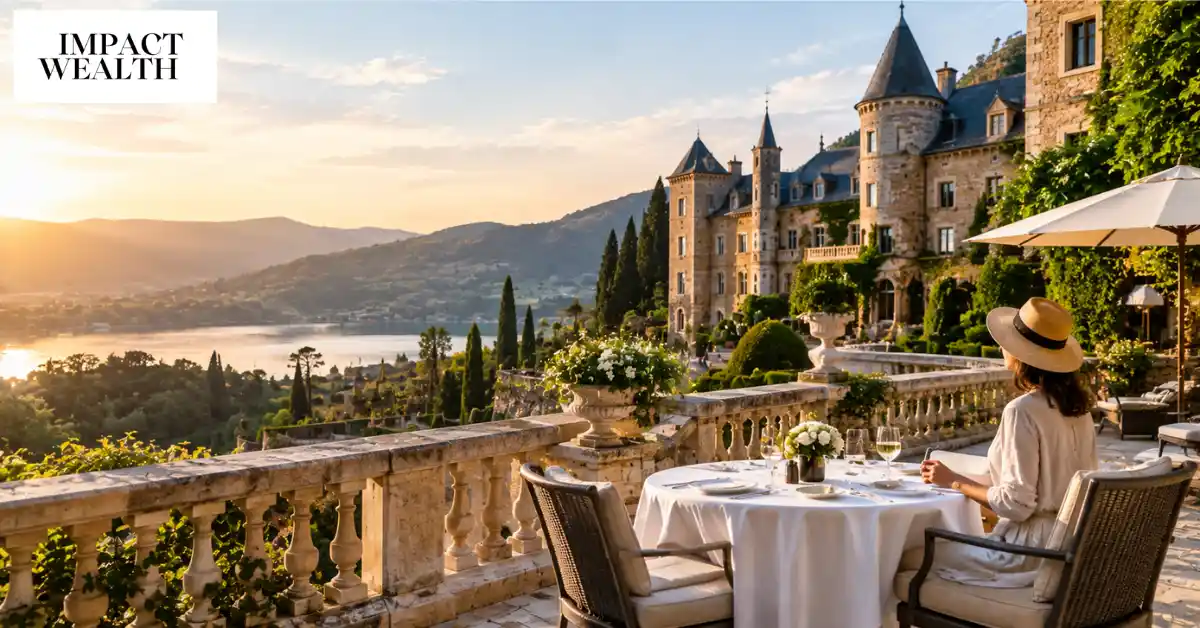
For affluent travelers, the appeal of historic properties is no longer limited to nostalgia. Castles, palaces, monasteries, villas, manor houses and historic estates offer provenance, craftsmanship, cultural identity and a sense of continuity that new construction cannot simply manufacture. In an increasingly standardized global hospitality market, the story of a place can become as important as the room itself.
That shift matters because luxury is increasingly moving toward experiences that feel distinctive rather than interchangeable. Knight Frank’s 2026 Wealth Report highlights a broader evolution in luxury spending, arguing that luxury is increasingly connected to who people are becoming rather than simply what they own. For affluent travelers, that shift strengthens the appeal of experiences built around authenticity, meaning and a deeper connection to place.
The implication is significant: the value of a luxury retreat may increasingly depend not only on what has been built, but on what happened there before the guest arrived.
Why New Luxury Is Losing Some of Its Appeal
The global expansion of luxury hospitality has created extraordinary choice, but it has also created familiarity.
A contemporary luxury hotel in London, Dubai, Paris or Singapore can deliver exceptional service, advanced technology, private dining, wellness facilities and highly polished interiors. Yet the same marble, lighting, neutral palettes, private pools and carefully designed suites can begin to look remarkably similar across continents.
That creates an unusual problem for luxury: abundance can weaken distinction.
Historic properties solve part of that problem through scarcity. A centuries-old staircase, original stonework, traditional courtyard or surviving timber structure cannot be duplicated simply by increasing a construction budget. A developer can commission craftsmanship inspired by another era, but imitation is not provenance.
This is where heritage luxury becomes more than a design aesthetic. Genuine heritage gives a property a fixed identity. Its architecture, materials, setting and historical narrative establish boundaries that modern development often tries to create artificially.
The imperfections can even become part of the appeal. Uneven walls, original structures and architectural constraints can communicate authenticity in a way that flawless new construction cannot.
The distinction, however, matters. A hotel decorated with antique furniture is not necessarily a heritage property. Authentic heritage depends on the historical, architectural or cultural significance of the place itself not simply the appearance of age.
The Rise of Heritage Luxury
Historic luxury hotels increasingly sit at the intersection of hospitality, conservation and cultural tourism. The category encompasses far more than grand European estates. It includes palaces, castles, monasteries, villas, manor houses, haciendas, historic urban buildings and properties connected to distinctive regional traditions.
UNESCO describes cultural tourism as a major and growing tourism market and emphasizes the ability of cultural assets to create local distinctiveness in an increasingly competitive global marketplace.
That distinctiveness is precisely what luxury hospitality needs.
| Heritage Property Type | Primary Appeal | Why Luxury Travelers Choose It |
|---|---|---|
| Historic estates | Privacy and provenance | Space, seclusion and a strong sense of ownership history |
| Palaces and castles | Architectural significance | Rare environments that cannot easily be recreated |
| Monasteries and religious properties | Cultural depth | Quiet, distinctive settings connected to centuries of history |
| Historic villas | Intimacy and local identity | Private-feeling accommodation with authentic architectural character |
| Heritage urban properties | Culture and location | Direct connection to historic districts, art, cuisine and city life |
| Traditional regional properties | Craftsmanship and place | Architecture, materials and traditions specific to the destination |
What distinguishes heritage luxury is therefore not simply the price of the room. It is the combination of rarity, provenance, architectural integrity and experience.
When History Becomes Part of the Guest Experience
In a historic property, architecture can become part of the itinerary.
Original materials, furniture, gardens, artwork, kitchens, courtyards and craftsmanship can create experiences that extend beyond accommodation. A meal can connect guests with local culinary traditions. A restored workshop can introduce traditional craftsmanship. A historic landscape can become part of a wellness retreat or private celebration.
UNESCO’s recent work on community-led heritage tourism illustrates the importance of keeping local people and living culture within that experience. In Agra, for example, community-based initiatives place residents, artisans and family homes at the center of heritage experiences rather than treating monuments as isolated attractions.
This distinction is important for luxury hospitality. The objective should not be to turn history into theatrical entertainment. It should be to make the property’s authentic character accessible without stripping it of context.
That is also why heritage travel can feel fundamentally different from staying in a newly constructed luxury resort. The building is not simply a backdrop. It is part of the story.
The Economics of Restoring Luxury’s Past
The romance of historic properties conceals a difficult operating reality.
Converting an old building into a luxury hotel or private retreat can require complex restoration, specialist craftsmanship, structural work and careful modernization. The operator must introduce modern bathrooms, climate control, high-speed connectivity, security, accessibility and energy systems without destroying the architectural qualities that justify the property’s premium in the first place.
That makes heritage hospitality an unusual economic proposition. The very constraints that increase development complexity can also create market differentiation.
Adaptive reuse can offer environmental and economic advantages in appropriate circumstances, but it is not automatically sustainable. ICOMOS research stresses that reuse decisions need to consider energy performance, environmental impacts, economic viability and cultural identity together.
For owners, the calculation therefore extends beyond renovation cost. Insurance, maintenance, specialist materials, skilled artisans, regulatory requirements and long-term climate resilience can all influence the economics of a historic property.
The result is a paradox: the older the building, the more expensive it may be to make it function like a modern luxury property and the more valuable its original character may become once that transformation succeeds.
Privacy, Provenance, and the UHNW Traveler
For UHNW travelers, luxury increasingly involves control over the environment rather than simply access to expensive amenities.
A private historic estate can combine architectural significance with privacy, personalization and multigenerational space. A secluded villa can provide an experience that feels removed from the standard luxury-hotel ecosystem. A restored manor house can offer exclusivity precisely because its physical limitations prevent it from becoming a mass-market property.
This connects heritage with a broader shift toward experiential luxury.
Provenance also changes the meaning of exclusivity. A new hotel can be replicated. A genuine historic property has a finite supply.
That scarcity can be especially compelling for affluent travelers who already have access to conventional luxury. When material abundance becomes easier to obtain, distinction can move toward things that are harder to acquire: privacy, cultural depth, access, authenticity and time.
Heritage as an Experiential Luxury
The strongest heritage properties do not isolate guests from their destination. They connect accommodation with it.
That might mean local food, regional architecture, traditional crafts, historic landscapes, art, music or cultural programming. It can also mean slower travel: spending several days understanding one place rather than moving rapidly between recognizable luxury destinations.
UNESCO’s sustainable tourism framework emphasizes destination-level management and the involvement of local communities because heritage tourism affects more than the property itself.
This creates an important distinction between experiencing a living culture and consuming a packaged version of one.
Authentic luxury does not require every experience to be untouched by tourism. It requires greater honesty about what is authentic, what has been restored, what has been reconstructed and who benefits from the commercial activity.
The Sustainability and Preservation Paradox
Heritage properties occupy a complicated position in the sustainability debate.
Reusing an existing structure can avoid some impacts associated with demolition and new construction. ICOMOS identifies adaptive reuse and thoughtful retrofitting as important avenues for improving the environmental performance of historic buildings while retaining cultural value.
However, an old building is not automatically an environmentally responsible one.
Historic properties may require substantial energy upgrades, specialized maintenance and climate adaptation. Rising temperatures, flooding, storms and changing environmental conditions can threaten both buildings and the traditional materials and practices used to maintain them. ICOMOS now describes climate change as a major and growing threat to cultural heritage, while UNESCO has also documented the increasing vulnerability of heritage sites to climate impacts and poorly managed tourism.
| Heritage Luxury Trend | Rising Demand Driver | Key Challenge |
|---|---|---|
| Adaptive reuse | Demand for distinctive properties | Balancing modernization with conservation |
| Heritage resorts | Search for authentic destinations | Avoiding cultural commodification |
| Historic estates | Privacy and exclusivity | High restoration and maintenance costs |
| Cultural programming | Demand for meaningful experiences | Protecting living traditions from commercialization |
| Heritage wellness retreats | Wellness plus sense of place | Retrofitting historic structures responsibly |
| Community-led tourism | Desire for authentic local experiences | Ensuring economic benefits reach communities |
Tourism itself can create both value and pressure. UNESCO notes that tourism can support heritage preservation and local economies, but unmanaged visitor flows can damage sites, strain communities and threaten cultural traditions.
For that reason, heritage hospitality should never be marketed as sustainable simply because a building is old.
When Preservation Becomes Part of the Luxury Proposition
There is another emerging dimension to heritage hospitality: conservation itself can become part of the proposition.
Guests may value properties that employ traditional artisans, preserve original materials, support local cultural institutions or maintain historic landscapes. In those cases, the experience connects luxury consumption with stewardship.
But this relationship must be demonstrated rather than assumed.
A luxury hotel occupying a historic building does not automatically preserve its cultural significance. Nor does high room pricing guarantee benefits for the surrounding community.
The strongest model is more demanding: conservation, commercial viability and local participation must reinforce one another.
That approach can create economic value beyond the hotel. UNESCO’s current community heritage projects, for instance, emphasize local entrepreneurship, traditional knowledge, crafts and community ownership as components of heritage-based tourism.
The New Geography of Historic Luxury
The future of heritage travel will also broaden the geography of luxury.
Historic European estates will remain important, but affluent travelers are increasingly able to encounter distinctive forms of heritage through Asian palaces, Middle Eastern historic properties, African cultural destinations, Latin American haciendas and historic urban districts.
These should not be treated as interchangeable versions of the same luxury product.
A palace carries a different cultural narrative from a hacienda. A historic South Asian urban property operates within a different social context from a European country estate. Indigenous heritage involves questions of ownership, representation and cultural authority that cannot be reduced to architecture.
That diversity is precisely the opportunity. Luxury can become more geographically sophisticated when it values the identity of the place rather than applying one global aesthetic to every destination.
The Future of Heritage Hospitality
The next phase of luxury hospitality may compete less aggressively on novelty and more on provenance.
Adaptive reuse, private estates, heritage resorts, cultural programming and personalized hospitality are likely to remain important because they respond to a fundamental limitation of modern luxury: almost anything newly built can eventually be replicated.
History cannot.
Technology will still matter. Guests will expect seamless connectivity, advanced wellness facilities, sophisticated security and modern comfort. The challenge will be integrating those systems without allowing technology to overwhelm architectural identity.
That is where the best historic luxury hotels can distinguish themselves. They do not ask guests to choose between history and comfort. They make modern comfort subordinate to the character of the place.
Unique Insight: The Luxury of What Cannot Be Reproduced
Heritage luxury represents a deeper change in what luxury means.
For decades, luxury was closely associated with what was newest, largest, most technologically advanced or most expensive. Heritage reverses that equation.
A new hotel can reproduce marble, chandeliers, private pools, exceptional service and sophisticated interiors. It cannot reproduce centuries of history.
It cannot manufacture original craftsmanship, cultural memory, architectural provenance or the feeling of occupying a place that existed long before the guest arrived.
That makes genuine history a particularly unusual luxury asset. Its supply is inherently limited.
In a world where luxury aesthetics can be copied almost anywhere, scarcity increasingly comes from things that cannot be ordered, designed or accelerated. The most valuable feature of a historic retreat may therefore be the one its owner cannot create from scratch: a story with a real past.
Conclusion
Heritage luxury is reshaping the future of high-end travel because affluent travelers are increasingly seeking more than exceptional rooms and flawless service.
They want authenticity, provenance, cultural identity, craftsmanship, privacy, scarcity and meaningful experiences.
The attraction of historic properties is therefore not simply nostalgia. It reflects a broader transformation in experiential luxury: as contemporary luxury becomes increasingly standardized and globally accessible, genuine history becomes harder to reproduce.
The future of luxury hospitality may consequently belong not only to properties with the newest amenities, but to those with the deepest connection to place.
The most coveted retreat may ultimately be the one that offers something money cannot simply manufacture: a genuine connection to time, culture and history.
Frequently Asked Questions
What is heritage luxury?
Heritage luxury is a form of high-end hospitality built around genuine historical, architectural or cultural significance. It combines modern comfort with provenance, craftsmanship, authenticity and a strong sense of place.
Why are historic properties becoming popular with luxury travelers?
Historic properties offer experiences that newly built hotels cannot easily reproduce, including original architecture, cultural identity, craftsmanship, historical narratives and scarcity. They can therefore provide a stronger sense of distinction.
What makes a historic hotel a luxury experience?
Luxury depends on more than age. A successful historic hotel combines authentic heritage with excellent service, privacy, comfort, design, food, wellness and carefully integrated modern infrastructure.
Why do UHNW travelers value heritage properties?
UHNW travelers may already have access to conventional luxury. Historic estates and villas can provide something more difficult to obtain: privacy, provenance, cultural depth, scarcity and highly distinctive experiences.
What is heritage hospitality?
Heritage hospitality combines accommodation and high-end guest services with the preservation and interpretation of a property’s historical, architectural or cultural identity.
Are historic luxury hotels more exclusive than modern luxury hotels?
Not automatically. Their exclusivity depends on factors such as location, capacity, privacy, ownership and access. However, genuine historic properties can possess a form of scarcity that new hotels cannot easily reproduce.
How does heritage tourism support cultural preservation?
Well-managed heritage tourism can generate income, employment and investment for conservation and local cultural activities. UNESCO emphasizes community participation because tourism can also create pressure if it is poorly managed.
Is heritage travel sustainable?
Not automatically. Adaptive reuse can reduce some environmental impacts, but historic properties still face energy, maintenance, climate and tourism pressures. Sustainability depends on how each property is restored, operated and managed.
Will historic properties become a major luxury travel trend?
Heritage is well positioned within the broader movement toward experiential, culturally distinctive travel. Its long-term success will depend on whether operators can preserve genuine heritage while delivering modern comfort without turning cultural identity into a superficial marketing device.