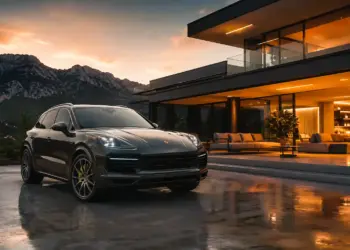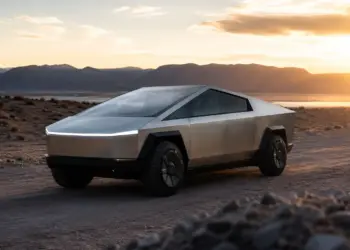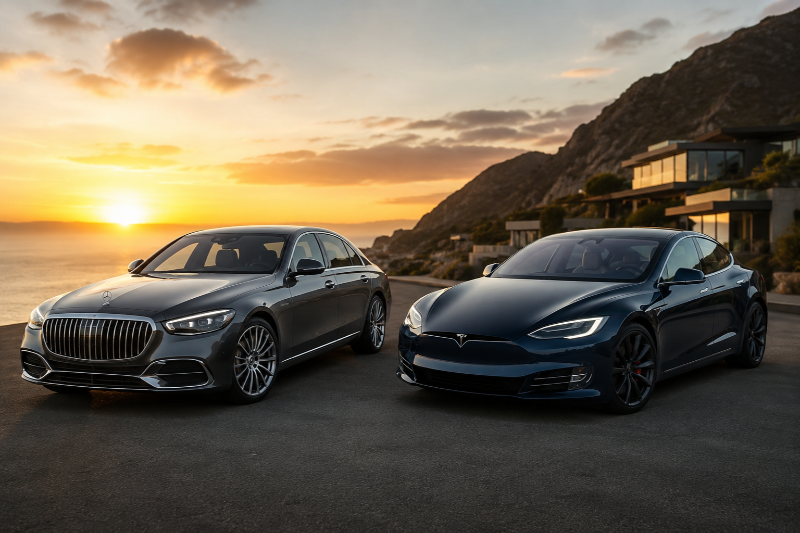
The debate surrounding luxury hybrid vs electric cars has become one of the defining conversations in the automotive industry in 2026. While electrification continues to reshape premium mobility, affluent buyers remain divided on whether fully electric vehicles or advanced hybrid models best suit their lifestyles. The luxury market is no longer driven solely by horsepower, prestige, or craftsmanship. Instead, modern buyers increasingly evaluate vehicles through the lenses of technology, sustainability, convenience, and long-term usability.
Luxury automakers have responded aggressively to changing consumer expectations. Electric flagships now dominate headlines with their impressive acceleration, software ecosystems, and futuristic designs. Meanwhile, premium hybrid vehicles continue to attract buyers who appreciate electrification without abandoning the flexibility of conventional driving.
Moreover, wealthy consumers often have unique mobility requirements. They frequently travel long distances, maintain multiple residences, and expect seamless transportation experiences regardless of location. Consequently, charging infrastructure, range confidence, and ownership convenience play major roles in purchasing decisions.
At the same time, environmental awareness has become increasingly important among affluent demographics. Buyers are seeking ways to reduce emissions without compromising comfort, exclusivity, or performance. Therefore, manufacturers are investing heavily in both hybrid and electric technologies while carefully positioning their brands for an evolving luxury landscape.
The result is a fascinating market where innovation and practicality coexist. Understanding the preferences behind luxury hybrid vs electric cars provides valuable insight into the future of premium mobility and the psychology of high-end automotive consumers.
Why Luxury Buyers Are Divided Between Hybrid and Electric Cars?
Luxury vehicle buyers are not a monolithic group. While some eagerly embrace technological disruption, others prefer gradual transitions that preserve familiarity and convenience. Consequently, the move toward electrification has created distinct consumer segments within the premium automotive market.
Many affluent drivers appreciate the environmental benefits and technological sophistication of electric vehicles. However, concerns about charging availability, long-distance travel logistics, and battery longevity still influence purchasing behavior. Nevertheless, these concerns vary significantly depending on geography, lifestyle, and driving habits.
Meanwhile, emotional attachment continues to shape buying decisions. Luxury vehicles have historically represented freedom, performance, and engineering excellence. Therefore, some buyers remain cautious about fully abandoning traditional powertrains. Hybrids provide a compromise that allows consumers to participate in electrification without dramatically changing their routines.
Several factors contribute to the divide:
- Different levels of comfort with emerging technology
- Concerns about charging accessibility
- Varying travel and commuting patterns
- Personal sustainability priorities
- Differences in risk tolerance among buyers
As a result, adoption patterns differ considerably even among wealthy consumers with similar purchasing power.
Luxury Hybrid Cars: The Comfort of Familiar Innovation
Luxury hybrid vehicles continue to thrive because they offer a familiar ownership experience while introducing significant efficiency improvements. For many premium buyers, this combination feels reassuring during a period of rapid automotive transformation.
A hybrid luxury sedan or SUV combines an internal combustion engine with electric assistance. Consequently, drivers benefit from improved fuel economy, smoother operation, and reduced emissions without depending entirely on charging infrastructure. This flexibility remains particularly attractive for individuals who frequently travel between cities or regions where charging networks may still be developing.
Moreover, hybrid systems eliminate many of the behavioral changes associated with EV ownership. Drivers can refuel quickly at conventional stations while still enjoying electric assistance during urban driving. Therefore, hybrids often serve as an ideal bridge between traditional vehicles and fully electric alternatives.
Another important advantage involves long-distance convenience. Executive travelers and business leaders frequently value reliability and flexibility above all else. In such cases, hybrid powertrains reduce range-related concerns while maintaining premium comfort and refinement.
Luxury Hybrid Cars vs Electric Luxury Cars
| Feature | Luxury Hybrid Cars | Electric Luxury Cars | Buyer Benefit | Lifestyle Impact |
|---|---|---|---|---|
| Refueling | Fuel + electric support | Charging required | Greater flexibility | Easier long-distance travel |
| Range | Typically very long | Improving rapidly | Reduced range anxiety | Simplified planning |
| Transition Ease | Familiar experience | New ownership habits | Lower learning curve | Less behavioral adjustment |
| Emissions | Reduced | Zero tailpipe emissions | Sustainability options | Environmental appeal |
| Infrastructure Dependence | Low | Higher | Greater freedom | Location-sensitive ownership |
Electric Luxury Cars: The Future of Premium Mobility
Electric luxury vehicles represent the most ambitious vision of future transportation. Their appeal extends far beyond environmental responsibility. In many ways, EVs have become symbols of technological leadership and forward-thinking lifestyles.
One of the strongest advantages of electric vehicles is instant torque delivery. Unlike conventional engines, electric motors provide immediate acceleration, creating an exceptionally smooth and powerful driving experience. Consequently, many luxury EVs outperform traditional performance vehicles in straight-line acceleration.
Moreover, premium EVs increasingly function as software platforms on wheels. Advanced operating systems, over-the-air updates, intelligent route planning, and AI-enhanced features continuously improve the ownership experience. Therefore, buyers often perceive EVs as technology products as much as automobiles.
Charging infrastructure has also expanded significantly across major luxury markets. While concerns remain, particularly in rural regions, premium buyers now enjoy growing access to fast-charging networks, private charging installations, and integrated energy management solutions.
Several factors drive EV adoption among wealthy consumers:
- Desire for cutting-edge technology
- Strong sustainability commitments
- Interest in innovation leadership
- Superior acceleration characteristics
- Enhanced digital ecosystems
As a result, electric vehicles increasingly define the future direction of luxury mobility.
Technology Differences Between Hybrids and EVs
Technology remains one of the most significant distinctions in the luxury EV vs hybrid conversation. Although both vehicle types incorporate advanced electronics and energy management systems, their underlying architectures differ substantially.
Hybrid vehicles rely on dual powertrains that coordinate combustion and electric propulsion. Consequently, they require sophisticated energy balancing systems designed to optimize efficiency and performance. Meanwhile, fully electric vehicles eliminate engine complexity and focus entirely on battery management and software optimization.
Regenerative braking technology exists in both categories. However, EVs often deliver more aggressive energy recovery capabilities because their systems are designed around battery utilization rather than supplemental electric assistance.
Additionally, software integration tends to be more central to the electric ownership experience. Many luxury EV manufacturers continuously refine vehicle performance, charging efficiency, and user interfaces through remote updates.
Technology Comparison
| Technology Aspect | Hybrid Approach | Electric Approach | Luxury Advantage | Market Trend |
| Propulsion | Dual powertrain | Full electric drive | Diverse options | EV growth |
| Energy Management | Engine + battery optimization | Battery optimization | Efficiency improvements | AI integration |
| Regenerative Braking | Supplemental | Extensive | Energy recovery | Increasing adoption |
| Software Updates | Limited in some models | Core functionality | Continuous improvement | Rapid expansion |
| Driver Assistance | Advanced | Highly integrated | Enhanced convenience | Industry standard |
What Wealthy Buyers Really Value in 2026?
The preferences of affluent consumers extend far beyond powertrain selection. Luxury buyers evaluate vehicles as comprehensive lifestyle tools rather than simple transportation devices.
Comfort remains a top priority. Whether hybrid or electric, premium buyers expect exceptional ride quality, refined interiors, and effortless driving dynamics. Consequently, manufacturers invest heavily in noise reduction, suspension technology, and cabin craftsmanship.
Brand identity also plays a significant role. Luxury vehicle ownership often communicates values, status, and personal priorities. Therefore, some consumers select EVs to signal innovation and environmental consciousness, while others choose hybrids to emphasize practicality and versatility.
Moreover, ownership convenience has become increasingly important. Wealthy individuals frequently prioritize solutions that minimize complexity and maximize efficiency. As a result, convenience often outweighs ideological preferences regarding technology.
Key purchase considerations include:
- Ride comfort
- Brand prestige
- Long-distance usability
- Technology integration
- Ownership convenience
Ultimately, luxury buyers seek experiences that eliminate friction from everyday life.
Sustainability vs Practicality in Luxury Cars
Sustainability has become deeply embedded in luxury automotive marketing. However, environmental responsibility rarely exists in isolation from practical concerns.
Many affluent consumers genuinely prioritize reducing their environmental footprint. Consequently, electric vehicles often align closely with personal values and corporate sustainability objectives. Furthermore, businesses increasingly encourage environmentally conscious transportation choices among executives and leadership teams.
However, practicality continues to influence real-world decisions. Charging availability, travel patterns, and geographic limitations remain relevant considerations. Therefore, some buyers select hybrid vehicles as a pragmatic compromise between environmental goals and everyday convenience.
Meanwhile, luxury brands carefully balance sustainability messaging with performance and exclusivity. Consumers increasingly expect premium products to deliver environmental benefits without sacrificing comfort or capability.
This tension between ideals and practicality continues to shape purchasing behavior throughout the luxury market.
How Luxury Brands Are Positioning Hybrids and EVs?
Luxury manufacturers have adopted sophisticated dual-product strategies designed to serve diverse customer preferences during the industry transition.
Many brands view hybrids as transitional products that help traditional buyers adapt to electrification. Consequently, premium hybrid SUVs and sedans remain important components of luxury portfolios despite growing EV investment.
At the same time, manufacturers increasingly position electric vehicles as technological flagships. These models often showcase the latest innovations in software, battery development, digital experiences, and autonomous driving capabilities.
Moreover, brands recognize that different customer segments value different attributes. Therefore, they strategically market hybrids around flexibility and practicality while promoting EVs as symbols of future mobility.
Current positioning strategies often include:
- Hybrid models for transitional buyers
- Flagship EVs for innovation-focused consumers
- Performance differentiation through electrification
- Sustainability-led branding campaigns
- Market segmentation based on lifestyle needs
As a result, both technologies continue to coexist within premium automotive portfolios.
The Future of Luxury Hybrid vs Electric Cars Beyond 2026
Looking beyond 2026, the long-term trajectory clearly favors electrification. However, the transition is unlikely to occur uniformly across all markets and consumer groups.
Some regions are already accelerating plans to reduce dependence on combustion engines. Consequently, hybrids may gradually decline in markets with mature charging infrastructure and supportive regulatory frameworks. Nevertheless, hybrids are likely to remain relevant in areas where charging accessibility develops more slowly.
Battery innovation represents another major factor. Solid-state battery technology promises significant improvements in charging speed, energy density, and safety. Therefore, future EVs could eliminate many of the concerns currently influencing hesitant buyers.
Meanwhile, artificial intelligence will increasingly optimize vehicle energy management. Smart routing, predictive charging, and personalized driving assistance systems will enhance ownership experiences across both hybrid and electric platforms.
Future developments may include:
- Wider adoption of solid-state batteries
- AI-driven energy optimization
- Expanded charging ecosystems
- Greater vehicle autonomy
- Integrated mobility services
The future luxury vehicle will likely be defined by intelligence and adaptability rather than a specific propulsion technology.
Unique Insight: Luxury Mobility Is Becoming a Lifestyle Decision
The discussion surrounding luxury hybrid vs electric cars reflects a much broader transformation in premium mobility. Wealthy consumers are no longer choosing solely between engine types. Instead, they are selecting mobility solutions that align with their lifestyles, values, and daily routines.
Hybrids symbolize security, flexibility, and familiarity. They appeal to buyers who appreciate technological progress but prefer minimizing disruption. Electric vehicles, in contrast, represent innovation, status leadership, and future-oriented thinking.
Moreover, the luxury market demonstrates that technological transitions rarely occur overnight. During periods of change, dual-market demand often emerges as consumers adopt different solutions based on individual priorities. Consequently, hybrids and EVs currently serve complementary roles rather than functioning as direct replacements.
Luxury itself is evolving. Instead of being defined exclusively by performance or craftsmanship, premium mobility increasingly emphasizes adaptability, convenience, and seamless integration into modern lifestyles.
The most successful vehicles of the future will not simply offer advanced technology. Rather, they will deliver intelligent experiences that effortlessly support the complex lifestyles of affluent consumers.
Conclusion
The competition between luxury hybrid and electric vehicles is reshaping the premium automotive landscape in 2026. While electric vehicles continue advancing as the long-term future of mobility, hybrid models remain highly relevant for buyers seeking flexibility, familiarity, and convenience.
Moreover, wealthy consumers evaluate vehicles through a broader lens that includes sustainability, technology, comfort, prestige, and practicality. Consequently, purchasing decisions often reflect lifestyle requirements as much as technological preferences.
As charging networks expand and battery technology improves, electric luxury vehicles will likely capture an increasingly larger share of the market. Nevertheless, hybrids continue to provide an attractive bridge for consumers navigating the transition.
Ultimately, the debate surrounding luxury hybrid vs electric cars is not simply about propulsion systems. It is about how effectively a vehicle integrates into the lives of those who demand excellence, convenience, and innovation without compromise.
FAQs
Which is better: luxury hybrid or electric cars?
The better choice depends on lifestyle needs. Hybrids offer flexibility and convenience, while electric cars provide advanced technology and zero-emission driving.
Are luxury hybrids still worth buying in 2026?
Yes. Luxury hybrids remain attractive for buyers seeking efficiency, long-range capability, and reduced dependence on charging infrastructure.
Why are wealthy buyers choosing electric cars?
Many affluent consumers value innovation, sustainability, software-driven experiences, and the prestige associated with cutting-edge technology.
Do luxury EVs have better performance than hybrids?
In many cases, yes. Electric vehicles often deliver faster acceleration due to instant torque from electric motors.
What are the disadvantages of luxury EVs?
Charging infrastructure limitations, charging times, and long-distance planning remain concerns for some owners.
Are hybrids being phased out?
Some markets are gradually reducing hybrid emphasis. However, hybrids continue serving an important transitional role in many regions.
Which luxury brands make the best hybrids?
Several premium manufacturers offer strong hybrid portfolios, including luxury sedans and SUVs designed for efficiency and comfort.
How does charging affect EV luxury ownership?
Charging can be highly convenient with home installations, although public charging availability still influences ownership experiences.
What is the future of luxury hybrid cars?
Luxury hybrids are expected to remain relevant during the transition to full electrification, particularly in regions with evolving infrastructure.
Will EVs fully replace hybrids?
Eventually, EVs may dominate many luxury segments. However, the transition timeline will vary based on infrastructure, technology, and consumer preferences.