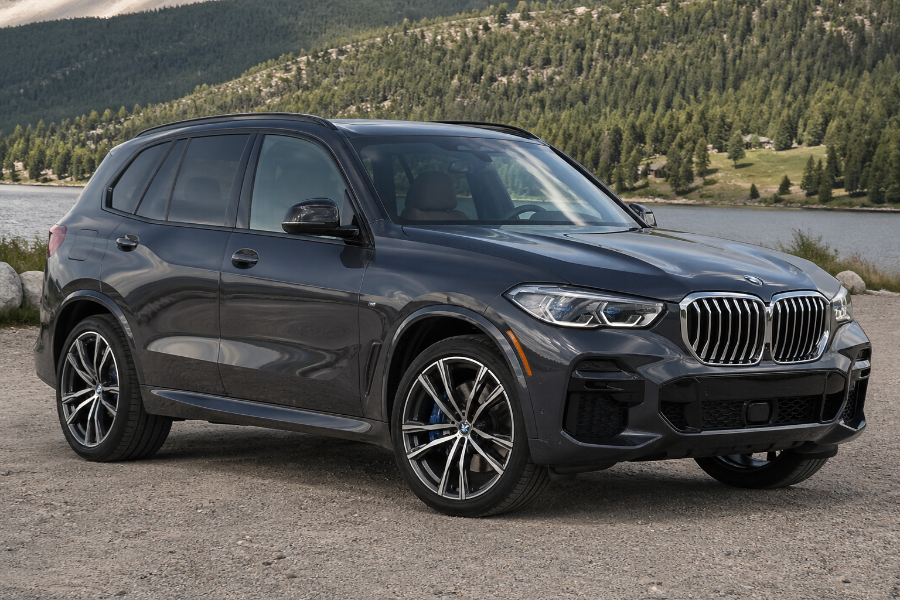
The BMW X5 continues to define what a modern luxury SUV should represent in 2026, standing at the intersection of performance engineering, premium comfort, and everyday usability. Over the years, the model has evolved from being one of the pioneers of the luxury SUV segment into a refined benchmark that competitors continuously chase. Its appeal lies not in excess, but in its ability to deliver a well-rounded driving and ownership experience.
In today’s automotive landscape, luxury is no longer defined purely by opulence or size. Instead, it is increasingly measured by how effectively a vehicle integrates advanced technology, driving dynamics, and real-world practicality. The BMW X5 embodies this shift, offering a balanced package that caters to both driving enthusiasts and comfort-focused buyers.
Executives, entrepreneurs, and affluent families are gravitating toward vehicles that provide versatility without compromising prestige. The BMW X5 meets these expectations by offering strong road presence, refined interiors, and performance capabilities that rival sport sedans—all while maintaining the utility of a full-size SUV.
BMW X5 Overview (2026)
The 2026 BMW X5 lineup reflects a mature and highly optimized product strategy, offering multiple powertrain configurations designed to suit a wide range of buyers. From efficient daily commuting to high-performance driving, the X5 delivers flexibility without fragmenting its identity.
The engine lineup includes turbocharged inline-6 options, a powerful V8 variant, and a plug-in hybrid model that caters to the growing demand for electrified mobility. Power outputs range from approximately 335 horsepower in base trims to over 523 horsepower in performance-focused variants, allowing buyers to choose a configuration that aligns with their driving needs.
Acceleration figures are equally impressive, with 0–60 mph times spanning from around 5.5 seconds in entry-level models to as low as 3.8 seconds in high-performance trims. This performance spectrum ensures that the BMW X5 remains competitive not just in the luxury SUV category, but also against performance-oriented crossovers.
Pricing for the 2026 BMW X5 starts at roughly $66,000 and can exceed $95,000 depending on trim level, optional features, and performance upgrades. This pricing strategy positions it squarely within the premium SUV segment while still undercutting ultra-luxury competitors.
Key Specifications:
- Engine options: Inline-6, V8, Plug-in Hybrid
- Power output: ~335 hp to 523+ hp
- 0–60 mph: ~3.8 to 5.5 seconds
- Drivetrain: xDrive AWD (standard/optional depending on market)
- Price range: ~$66,000–$95,000+
Why the BMW X5 Defines Modern Luxury?
The BMW X5 stands apart because it embraces a philosophy of balanced luxury rather than excessive indulgence. While some rivals prioritize visual extravagance or extreme comfort, the X5 focuses on delivering a cohesive driving and ownership experience that works across multiple scenarios.
This balance is particularly evident in its driving dynamics, where the X5 maintains a level of responsiveness that is rare in its segment. Unlike heavier, comfort-biased SUVs, it retains agility and road feedback, making it suitable for drivers who still value engagement behind the wheel.
Moreover, the concept of luxury is evolving toward functional sophistication. Buyers increasingly prefer vehicles that integrate seamlessly into their daily lives, offering intuitive technology, efficient performance, and adaptable interiors. The BMW X5 captures this trend by providing a refined yet practical solution that does not compromise on performance.
Core Strengths:
- Balanced luxury without excessive styling
- Strong driving dynamics compared to segment rivals
- High usability for daily and executive use
- Refined yet understated design language
BMW X5 vs Key Competitors
| Feature | BMW X5 | Mercedes GLE | Audi Q7 | Range Rover Sport |
|---|---|---|---|---|
| Price Range | $66K–$95K+ | $65K–$90K+ | $60K–$85K | $85K–$120K+ |
| Power Output | 335–523+ hp | 255–603 hp | 261–500 hp | 355–626 hp |
| Comfort | High | Very High | High | Ultra High |
| Technology | Advanced | Advanced | High-Tech | Premium |
| Driving Dynamics | Best-in-class | Comfort-focused | Balanced | Performance-luxury |
| Best Use Case | All-rounder | Comfort luxury | Tech-focused family | Premium performance |
Performance & Driving Dynamics
The defining characteristic of the BMW X5 is its ability to deliver engaging driving dynamics in a segment typically dominated by comfort-oriented vehicles. At the core of this experience is the xDrive intelligent all-wheel-drive system, which continuously adjusts torque distribution to optimize traction and handling.
This system works in tandem with adaptive suspension technologies, including available air suspension, which allows the vehicle to switch seamlessly between comfort and sport modes. In urban environments, the suspension absorbs road imperfections with minimal cabin disturbance, while on highways or winding roads, it tightens to deliver sharper handling.
Steering precision is another standout feature, offering a level of feedback that is uncommon in large SUVs. BMW engineers have tuned the steering system to provide confidence at high speeds while maintaining ease of use in city conditions.
Performance Highlights:
- xDrive AWD with dynamic torque distribution
- Adaptive air suspension for dual-mode comfort and sport
- Responsive steering with strong road feedback
- Sport-oriented tuning across trims
Interior & Technology Experience
Inside the BMW X5, the focus shifts to a modern interpretation of luxury that prioritizes usability and digital integration. The curved digital display, powered by the latest iDrive system, serves as the centerpiece of the cabin, combining instrument cluster and infotainment functions into a single seamless interface.
Material quality remains a key strength, with premium leather, real wood trims, and metallic accents creating an environment that feels both upscale and contemporary. Unlike some competitors that lean heavily into visual extravagance, the X5 maintains a clean and functional design language.
Advanced driver assistance systems enhance both safety and convenience, offering semi-autonomous capabilities such as adaptive cruise control, lane-keeping assist, and traffic jam assistance. These features are particularly valuable for long-distance commuting and highway driving.
Technology Features:
- Curved digital display with intuitive interface
- Premium material finishes and customization options
- Advanced driver assistance systems
- Seamless smartphone and connectivity integration
Read also: BMW X7 2026: The Most Luxurious 7-Seater SUV Explained
Comfort & Daily Usability
The BMW X5 excels in providing comfort without sacrificing practicality, making it suitable for a wide range of users. Seating configurations accommodate up to seven passengers, although the third row is best suited for occasional use.
Cargo capacity is generous, supporting both daily errands and extended travel needs. The rear seats can be folded to create additional storage space, enhancing the vehicle’s versatility.
Noise insulation is another key strength, with the cabin remaining quiet even at highway speeds. This contributes to a relaxed driving experience, particularly during long journeys.
Usability Benefits:
- Flexible seating for 5–7 passengers
- Large cargo space for lifestyle needs
- Quiet cabin with strong noise insulation
- Comfortable ride for urban and highway driving
BMW X5 vs Luxury vs Performance SUVs
| Category | BMW X5 | Luxury SUVs | Performance SUVs |
|---|---|---|---|
| Driving | Engaging | Smooth | Aggressive |
| Comfort | High | Very High | Moderate |
| Technology | Advanced | Premium | High-tech |
| Fuel Efficiency | Moderate | Low | Low |
| Prestige | Strong | Very High | High |
Why Executives Prefer the BMW X5?
The BMW X5 has become a preferred choice among executives due to its understated approach to luxury. Unlike ultra-luxury SUVs that emphasize status through bold design, the X5 communicates sophistication through subtlety.
Performance is another critical factor, particularly for professionals who spend significant time commuting on highways. The X5 offers strong acceleration and stability, making it both efficient and enjoyable to drive.
Its versatility also plays a major role, as it can transition seamlessly between personal and professional use. Whether attending business meetings or family outings, the BMW X5 adapts without compromise.
Executive Appeal:
- Understated yet premium design
- Strong highway performance
- Multi-purpose usability
- Balanced luxury and practicality
Read also: BMW vs. Tesla | Brand & Model Comparison
Cost & Ownership Economics
From an ownership perspective, the BMW X5 offers a relatively balanced cost structure compared to other vehicles in its class. While maintenance costs are higher than mainstream SUVs, they remain moderate within the luxury segment.
Resale value is another advantage, as the X5 maintains strong demand in the pre-owned market. This helps offset initial purchase costs and contributes to lower long-term ownership expenses.
Fuel efficiency varies depending on the chosen powertrain, with the plug-in hybrid model offering the most efficient solution for urban driving. However, even traditional combustion engines have improved efficiency due to advancements in engineering.
Ownership Insights:
- Moderate maintenance costs for its class
- Strong resale value
- Hybrid option improves efficiency
- Competitive total cost of ownership
Limitations & Considerations
Despite its strengths, the BMW X5 is not without limitations. It does not reach the same level of opulence as ultra-luxury SUVs, which may be a consideration for buyers seeking maximum comfort and exclusivity.
Higher trims can approach pricing levels typically associated with more premium vehicles, potentially reducing its value advantage. Buyers must carefully consider optional features and packages.
Fuel efficiency also remains dependent on engine choice, with V8 models prioritizing performance over economy. This trade-off is common in the segment but still worth noting.
Considerations:
- Less opulent than ultra-luxury SUVs
- High-end trims can be expensive
- Fuel efficiency varies by engine
- Performance vs cost trade-offs
2026 Luxury SUV Trends
The luxury SUV market in 2026 is undergoing significant transformation, driven by electrification, digital integration, and changing consumer expectations. Hybrid and electric powertrains are becoming increasingly common as manufacturers respond to environmental regulations and consumer demand.
Technology is another major focus, with interiors evolving into digital ecosystems that support connectivity, productivity, and entertainment. Buyers now expect seamless integration between their vehicles and digital lifestyles.
Additionally, there is a noticeable shift toward understated luxury, where design emphasizes refinement over flamboyance. The BMW X5 aligns closely with this trend, offering a sophisticated alternative to more aggressive styling approaches.
Perhaps most importantly, SUVs are evolving into multi-purpose platforms that serve as both transportation and productivity spaces. The BMW X5 exemplifies this evolution by combining performance, comfort, and technology into a single cohesive package.
FAQs
How much does the BMW X5 cost?
The BMW X5 starts at approximately $66,000 and can exceed $95,000 depending on trim level and options.
Is BMW X5 a luxury SUV?
Yes, the BMW X5 is a premium luxury SUV known for its balance of performance, comfort, and advanced technology.
Is BMW X5 better than Mercedes GLE?
The BMW X5 offers better driving dynamics, while the Mercedes GLE focuses more on comfort. The choice depends on priorities.
What engine options are available?
It offers inline-6, V8, and plug-in hybrid powertrains with outputs ranging from ~335 hp to over 523 hp.
Is BMW X5 good for families?
Yes, it provides spacious seating, strong safety features, and practical cargo space, making it suitable for families.