The Feast of Corpus Christi, a solemn and joyous celebration in the Catholic Church, is a profound expression of faith in the Real Presence of Jesus Christ in the Eucharist. At the heart of this feast is the solemn procession, a vibrant manifestation of the Church’s love and adoration for the Blessed Sacrament. While many elements contribute to the sacred beauty of this procession, one item stands out for its symbolic significance and visual grandeur: the processional canopy, often referred to as a baldacchino or pavilion. This magnificent structure serves not merely as an ornate covering but as a powerful theological statement, underscoring the divinity and kingship of Christ as He is carried through the streets.
A Symbol of Divine Kingship and Protection
The use of a canopy in religious and royal processions dates back centuries, signifying honor, dignity, and elevated status. In the context of Corpus Christi, the canopy is not just a symbol of earthly royalty; it is a direct representation of Christ’s heavenly sovereignty. As the monstrance, containing the consecrated Host, is placed beneath the canopy, it is elevated above all else, mirroring the reverence shown to kings and emperors. The canopy acts as a portable throne, a testament to Jesus as King of Kings and Lord of Lords. Furthermore, the canopy offers a form of divine protection, shielding Christ from the elements, both literal and metaphorical, thus signifying His omnipresence and safeguarding His sacred presence as He blesses His people.
The Theology of Elevation and Adoration
The very act of carrying the canopy above the monstrance during the Corpus Christi procession is a profound act of adoration. It physically elevates Christ’s presence, drawing the eyes and hearts of the faithful upwards. This elevation is not merely physical; it is also theological. It reminds us that Christ’s presence in the Eucharist transcends the mundane, the earthly, and the temporal. The canopy, with its rich fabrics and often intricate designs, serves to enhance this sense of sacredness, creating a focal point for prayer and contemplation. The faithful, walking in procession or kneeling as Christ passes, are drawn into a posture of humility and worship, acknowledging their reliance on His divine grace and love.
Craftsmanship and Significance: The Materials and Design
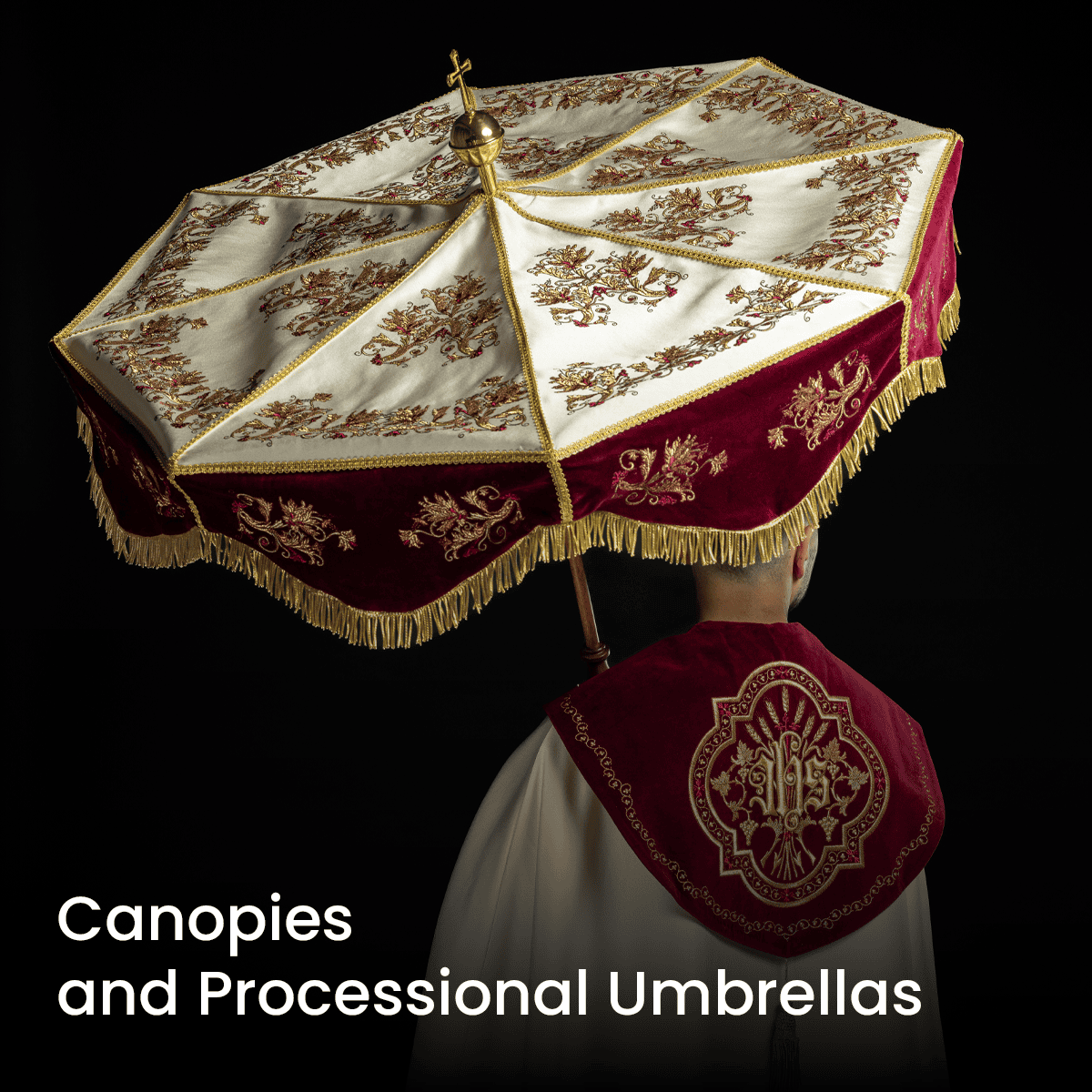
The construction and design of processional canopies are as varied as the traditions of the Church, yet they consistently aim for splendor and reverence. Often crafted from rich fabrics like velvet or silk, they are frequently adorned with intricate embroidery, religious symbols, and even precious metals or stones. Common motifs include the Chi Rho (☧), the Alpha and Omega (Α-Ω), the Sacred Heart, the Lamb of God, or symbols representing the Trinity. These designs are not merely decorative; they are imbued with theological meaning, reinforcing the doctrines of the faith. The elaborate embroidery, whether done by hand or through advanced machine techniques, speaks to the dedication and artistry involved in creating such sacred objects, reflecting the immense value placed on the presence of Christ.
The Canopy in Action: A Visual Demonstration of Faith
During the Corpus Christi procession, the canopy is typically held aloft by dedicated individuals, often members of specific ministries or appointed stewards. Their role is crucial, requiring strength, coordination, and a deep sense of devotion. As the procession moves through the streets, the canopy, held high, becomes a beacon of faith, visible from afar. It transforms ordinary streets into sacred pathways, hallowed by the divine presence it shelters. For onlookers, both faithful and curious, the sight of the canopy is an invitation to witness and perhaps participate in this public declaration of Christian belief. It is a powerful visual sermon, communicating the central tenets of Catholicism through its visual splendor and symbolic weight.
Enhancing the Sacred Atmosphere
Beyond its theological symbolism, the canopy significantly contributes to the overall sacred atmosphere of the Corpus Christi procession. Its visual presence adds a layer of solemnity and grandeur, distinguishing the event from everyday occurrences. The gentle swaying of the canopy as it moves, the play of light and shadow upon its rich fabrics, and the collective gaze of the faithful directed towards it all combine to create a deeply moving and spiritual experience. It helps to foster a sense of awe and reverence, allowing participants to feel more closely connected to the divine mystery they are celebrating. The canopy acts as a tangible reminder of the sacred space being created and traversed, from the church doors to the streets and back again.
Conclusion: A Timeless Symbol of Divine Presence
The processional canopy, or baldacchino, is far more than a decorative element in the Corpus Christi procession. It is a deeply symbolic and theologically rich object that eloquently communicates the divinity, kingship, and protective presence of Jesus Christ in the Eucharist. Its historical roots, elaborate craftsmanship, and visual grandeur all serve to elevate the experience of procession, drawing the faithful into a profound act of adoration and public witness. As Christ, truly present in the Blessed Sacrament, is carried under its sheltering embrace, the canopy becomes a living testament to the enduring faith and love of His people, a spiritual beacon shining brightly in our world.
| Go to Website |
| Priest Chasubles – Chasubles.com |