Luxury dining has long meant famous restaurants, difficult reservations, polished rooms and celebrated chefs. Yet private dining is introducing another idea of value: not simply where the table is, but who is at it, how the meal is designed and how much of the experience guests can control.
Restaurants remain central to fine dining. Still, the growth of private chefs, chef’s tables and private dining spaces points to a broader shift toward access, privacy and personal relevance.
Why Private Dining Is Becoming a New Form of Luxury
The appeal of private dining begins with control. A private setting can allow a host to determine the guest list, timing, menu and atmosphere. A chef can adapt the meal to dietary requirements, cultural preferences or a particular occasion, while service can become less standardized because one team is serving one group.
That distinction matters because expensive and exclusive are not the same thing. A costly tasting menu may still be a structured public experience. Private dining can also be expensive, but its defining feature is the ability to create conditions that are difficult to reproduce for a wider audience.
This fits a wider movement in luxury consumption toward experiences that feel personal rather than merely prestigious.
From Restaurant Room to Private World
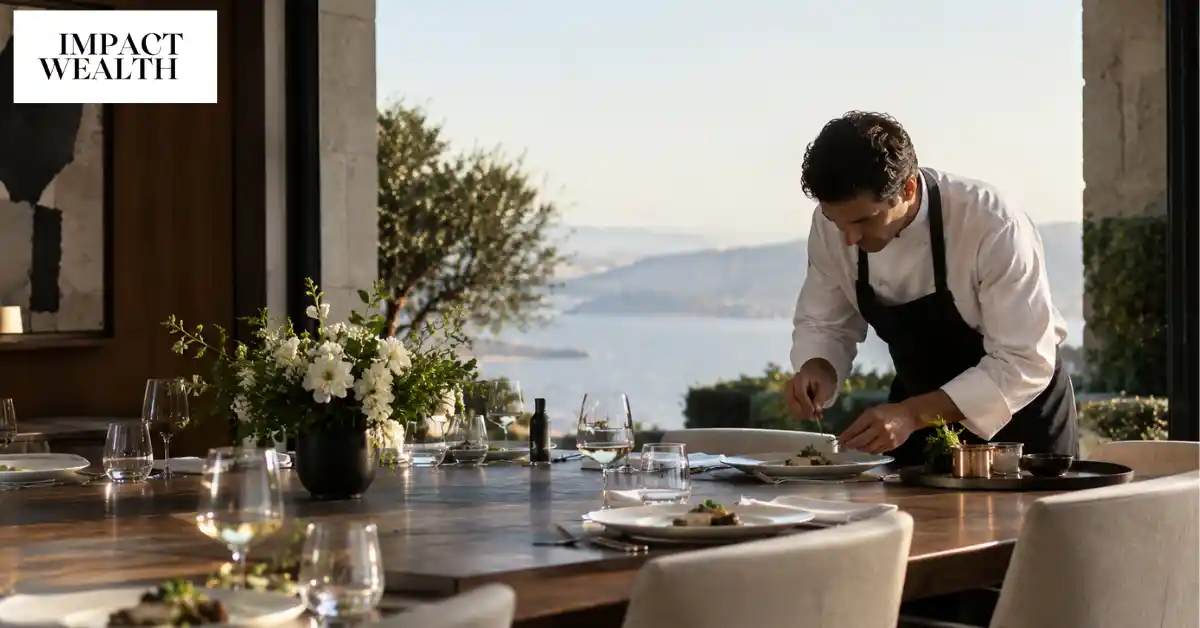
Private dining can take place in a residence, hotel suite, members’ club, estate, villa, yacht or destination property. It can also exist inside a restaurant through a chef’s table or dedicated room.
The setting changes the relationship between guest and service team. A traditional restaurant creates a shared social environment and operates around a menu, service sequence and multiple tables. In a private setting, the meal can be organized around one group. The chef may explain ingredients directly, adjust the pace or build part of the menu around the guests.
That intimacy also makes private dining relevant to luxury travel. A meal can become part of a larger itinerary involving a villa, vineyard, cultural visit or private event rather than remaining a separate restaurant booking.
OpenTable’s 2026 research found a 46% year-over-year increase in experiential dining, while 36% of Americans said they would like more group and private dining options. The figures cover the wider U.S. market, not UHNW consumers specifically, but they show that private and experience-led formats are gaining visibility.
The Rise of the Private Chef
Private chefs sit at the center of the most personalized form of this shift.
Food & Wine reported in 2026 that affluent U.S. households are increasingly hiring private chefs, citing privacy, flexibility, domestic dining and personalized nutrition among the reasons. It also cited Morgan & Mallet data showing the U.S. represented 35% of global private-chef demand in its data set, with average U.S. private-chef salaries around $300,000. These figures describe a specific staffing market rather than the entire luxury-dining industry, but they illustrate the level of labor and specialization involved.
What connects these models is a shift from a fixed menu toward a relationship.
Ingredients can reflect personal tastes. Dietary requirements can be considered from the beginning. Wine can be selected around the menu, while the chef can explain provenance, technique or cultural influences directly to guests. For some diners, that access to culinary expertise may be more meaningful than simply eating at a famous restaurant.
When Personalization Becomes the Real Luxury
Personalization has become a central language of modern luxury, but dining reveals its limits.
A private meal can be shaped around an occasion. A family gathering may call for a relaxed sequence and familiar dishes; a business dinner may require discretion; a destination celebration may combine local ingredients with a menu created specifically for the group.
The details can extend beyond food: seating, timing, music, wine, service style and setting can all influence the experience.
However, customization does not automatically create quality. Too much personalization can become a checklist of preferences without a coherent culinary idea. Fine dining still depends on judgment, technique and hospitality. The strongest private experiences balance what the guest wants with what the chef does well.
How Private Dining Differs From Traditional Fine Dining
| Dining Model | Primary Appeal | Why Luxury Diners Choose It |
|---|---|---|
| Traditional Fine Dining | Prestige and culinary excellence | Reputation, technique and established service |
| Private Dining | Privacy and personalization | Exclusivity and bespoke experiences |
| Chef’s Table | Direct chef access | Intimacy and culinary storytelling |
| Private Residence Dining | Control and comfort | Familiarity, privacy and customization |
| Luxury Hotel Dining | Convenience and hospitality | Service, setting and integrated experiences |
These models are not mutually exclusive. A luxury hotel can provide a private dining room, a restaurant can offer a chef’s table, and a private chef can work in a residence or yacht.
The key difference is the degree of control. Traditional fine dining often creates value through reputation, technique and the experience of entering a recognized institution. Private dining creates value through adaptation to a particular group.
From Fine Dining to Experiential Dining
Fine dining traditionally placed the restaurant at the center. Its architecture, service ritual, chef reputation and tasting menu created a recognizable experience. Experiential dining places greater emphasis on the story surrounding the meal.
A private dinner might follow a visit to a historic estate, accompany a vineyard experience or take place within distinctive architecture. Art, design, wine, local ingredients and cultural knowledge can all become part of the occasion.
OpenTable’s research found that nearly half of surveyed Americans were more likely to book a restaurant when it offered something unique to experience.
For luxury travelers, that can make destination dining more significant. The meal is no longer simply something consumed during a trip; it can become part of why the destination was chosen.
The Economics Behind Exclusivity
Private dining carries costs that traditional restaurants can distribute across many guests. A private chef requires specialized labor, small events may require more staff per guest, and remote settings can add transportation, equipment and sourcing requirements.
Limited capacity can therefore create genuine scarcity. However, scarcity does not automatically create value.
| Private Dining Trend | Rising Demand Driver | Key Challenge |
|---|---|---|
| Private Chef Experiences | Personalization | High operating costs |
| Members-Only Dining | Exclusivity | Limited accessibility |
| Residence Dining | Privacy and comfort | Logistics and service complexity |
| Destination Dining | Experiential travel | Location and accessibility |
| Bespoke Culinary Events | Customization | Maintaining authenticity |
The strongest models will likely be those where exclusivity comes from genuine constraints: limited space, specialized expertise, a particular setting or a chef’s time. Artificial scarcity is different. Restricting access simply to make an experience appear valuable does not necessarily improve the food or hospitality.
The Risk of Turning Privacy Into a Luxury Cliché
Not every private meal is inherently better.
Private dining can become formulaic when the same visual language, expensive ingredients and scripted personalization appear repeatedly. It can also turn intimacy into a marketing device, where exclusivity matters more than culinary substance.
Accessibility presents another tension. A dining culture increasingly built around private rooms, members-only spaces and personal chefs can create experiences that are difficult for wider audiences to access. That does not invalidate the model, but it makes the distinction between hospitality and social signaling worth examining.
Authenticity matters too. A private dinner built around local food, skilled cooking and genuine knowledge of place can create depth. A generic menu placed in an expensive setting may offer privacy without much cultural meaning.
What Private Dining Says About the Future of Fine Dining
Private dining does not point to the disappearance of restaurants. Instead, it suggests that fine dining is becoming more varied.
Restaurants can compete through culinary excellence, atmosphere, chef reputation and cultural relevance. Private formats can add intimacy, access and personalization. Chef’s tables can sit between the two.
Technology is also making curated formats easier to organize. OpenTable’s current platform includes private and group dining options and prepaid Experiences, showing how reservation infrastructure is adapting to limited-capacity and experience-led dining.
Unique Insight: Private Dining Is About Control, Not Just Exclusivity
The deeper significance of private dining is that it changes the unit of luxury.
For much of modern fine dining, status has been attached to the restaurant: its address, reputation, awards and difficulty of obtaining a table. Private dining shifts some of that value toward the experience itself.
The question becomes less, “Where can I get a reservation?” and more, “How closely can this experience reflect the people at the table?”
That is why private dining belongs to the wider evolution of luxury from visibility toward access, personalization, privacy and experience. Its appeal does not come simply from being expensive or difficult to book. At its best, it comes from the fact that the experience has been shaped for a particular group, place and moment.
Conclusion
Private dining is becoming an important part of the changing luxury-dining landscape because it offers something traditional restaurant formats cannot always provide: a high degree of control over the people, place, menu and rhythm of the experience.
Traditional fine dining will remain important because culinary excellence, service and restaurant culture still matter. Private dining simply adds another model, one built around intimacy and personalization.
The real shift is not from restaurants to private rooms. It is from a single definition of luxury dining toward several. For affluent consumers who value privacy, access and tailored experiences, private dining can make the table itself part of the luxury.
FAQs
What is private dining?
Private dining is a meal arranged for a specific group or occasion in a controlled setting such as a private room, residence, hotel suite, club or estate.
Why is private dining becoming more popular?
Interest in experiential dining, personalization, group occasions and privacy is helping expand private and curated formats. OpenTable found that 36% of Americans wanted more group and private dining options in 2026.
How is private dining different from fine dining?
Fine dining describes a high level of culinary technique, service and hospitality. Private dining describes the setting and degree of exclusivity and personalization. The two can overlap.
What makes private dining a luxury experience?
Privacy, personalized service, chef access, control over the setting and a meal designed around a particular group can make private dining more exclusive.
Will private dining replace traditional fine dining?
There is no clear evidence of that. Current trends point toward a more diverse dining landscape in which restaurants, chef’s tables, private rooms and private chefs can coexist.