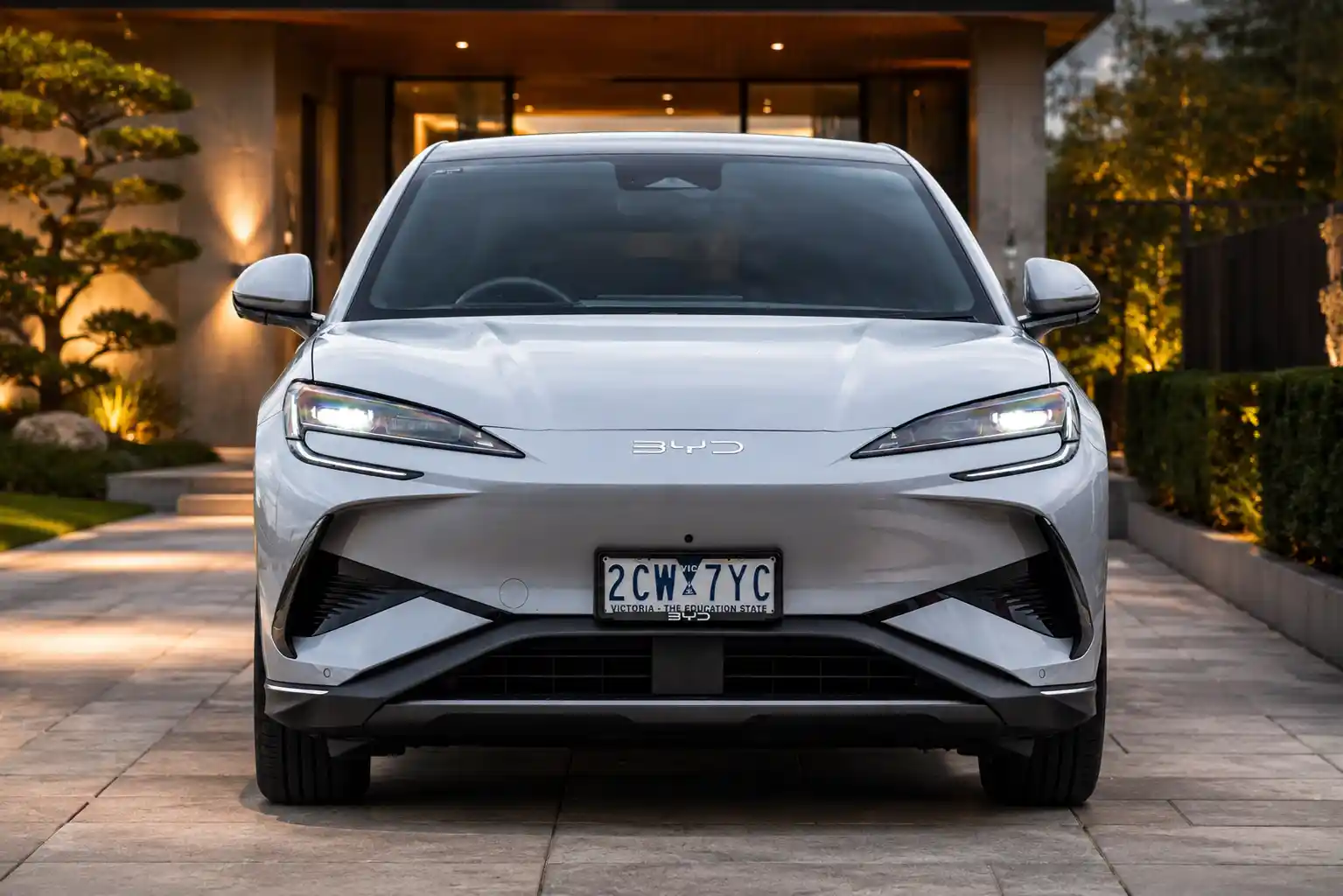
BYD Sealion has rapidly become one of the most closely watched electric SUVs in the automotive industry, reflecting how quickly the balance of power is shifting in global vehicle manufacturing. Within just a few years, the BYD Sealion 7 and the broader Sealion family have attracted worldwide attention by combining advanced battery technology, premium design, intelligent software, and competitive pricing into a package that challenges both mainstream and premium rivals.
BYD’s rise mirrors the rapid transformation of the electric SUV market. Consumers no longer view electric vehicles as niche alternatives reserved for early adopters. Instead, buyers increasingly expect long driving range, fast charging, advanced driver assistance, connected digital experiences, and refined interiors without paying luxury-brand prices. That shift has created an opportunity for companies capable of delivering innovation at scale, and BYD has positioned itself at the center of that movement.
Unlike many automakers that transitioned into electrification from traditional combustion-engine lineups, BYD built its reputation on battery expertise before becoming a global vehicle manufacturer. Today, every BYD electric SUV benefits from technologies such as the renowned Blade Battery, intelligent software integration, and increasingly sophisticated manufacturing methods. As the company expands into Europe, Asia-Pacific, Latin America, and the Middle East, the Sealion lineup has become a symbol of how Chinese electric vehicles are redefining expectations across the global EV market.
The Story Behind the BYD Sealion
The Sealion family represents a major milestone in BYD’s evolution from battery supplier to one of the world’s largest electric vehicle manufacturers. While many consumers first recognized BYD for its battery technology, the company has steadily transformed into a vertically integrated automotive powerhouse that develops its own batteries, electric motors, software, semiconductors, and vehicle platforms.
This integrated approach allows BYD to innovate rapidly while maintaining greater control over quality and production costs. Instead of depending heavily on external suppliers, the company designs many of its most important technologies in-house, enabling faster development cycles and more competitive pricing.
The BYD Sealion reflects this philosophy perfectly. Rather than entering an already crowded SUV segment with incremental improvements, BYD introduced a family of electric SUVs that combines premium styling, advanced engineering, and digital intelligence into a platform designed for global markets.
The strategy also demonstrates growing confidence among Chinese electric vehicles. Manufacturers are no longer competing solely on affordability. Increasingly, they are challenging established brands through engineering innovation, battery leadership, intelligent mobility, and premium customer experiences.
How BYD Is Reshaping the Electric SUV Market?
The electric SUV category has become one of the fastest-growing segments in the automotive industry, attracting intense competition from nearly every major manufacturer. Success now depends on much more than driving range or acceleration. Buyers expect seamless technology integration, practical usability, and sophisticated design alongside strong efficiency.
The BYD Sealion responds to those expectations with a balanced approach.
Rather than focusing on headline performance figures alone, BYD emphasizes real-world ownership. Efficient battery management, comfortable ride quality, intuitive software, and spacious cabin design contribute to an experience intended to satisfy families as well as technology-focused buyers.
BYD’s global strategy also strengthens the Sealion’s position. Expansion into new international markets is supported by localized dealer networks, growing service infrastructure, and product development tailored to regional customer preferences. This long-term investment suggests the company views global growth as a sustained commitment rather than a short-term export opportunity.
Equally important, BYD benefits from exceptional manufacturing scale. Because batteries represent one of the most expensive components in any electric vehicle, the company’s in-house production capabilities provide both cost advantages and technological flexibility. That combination allows BYD to offer premium features at prices that remain highly competitive within the evolving global EV market.
Design, Battery Technology, and Intelligent Features
Visually, the BYD Sealion adopts a clean, contemporary design language that communicates both efficiency and refinement. Sculpted body panels, aerodynamic proportions, slim LED lighting, and carefully integrated details create an appearance that feels modern without becoming overly aggressive.
Inside, the cabin emphasizes digital simplicity. Premium materials, supportive seating, generous passenger space, and expansive displays create an environment comparable with many established premium electric SUVs.
Much of the Sealion’s appeal, however, lies beneath the surface.
The vehicle incorporates several technologies that have become central to BYD’s competitive advantage:
- Blade Battery for enhanced safety and energy efficiency
- Cell-to-Body (CTB) construction for improved structural rigidity
- High-efficiency electric drivetrain
- Over-the-air software updates
- Large digital infotainment display
- Voice recognition and connected services
- Wireless smartphone integration
- Intelligent energy management systems
Advanced driver assistance further enhances everyday usability through features such as:
- Adaptive cruise control
- Automatic emergency braking
- Lane centering assistance
- Blind-spot monitoring
- Rear cross-traffic alert
- Driver attention monitoring
- 360-degree camera system
- Intelligent parking assistance
Among these innovations, the Blade Battery deserves particular attention. Unlike conventional battery pack designs, it emphasizes structural efficiency, thermal stability, and packaging optimization. Combined with BYD’s Cell-to-Body architecture, the battery becomes an integral part of the vehicle structure rather than simply an energy storage component. This engineering approach contributes to improved rigidity, cabin packaging, and overall efficiency.
Together, these technologies illustrate how software, battery engineering, and intelligent safety have become just as influential as traditional measures of automotive performance.
Table 1
| BYD Sealion Feature | Customer Benefit | Competitive Advantage |
|---|---|---|
| Blade Battery | Enhanced safety and durability | Industry-leading battery innovation |
| Cell-to-Body construction | Improved rigidity and efficiency | Better structural integration |
| Digital cockpit | Modern connected experience | Premium technology at competitive pricing |
| Advanced ADAS | Greater driving confidence | Comprehensive intelligent safety |
| OTA software updates | Continuous feature improvements | Supports software-defined vehicle ownership |
Rather than relying on one standout specification, the BYD Sealion succeeds because it integrates multiple technologies into a cohesive ownership experience. That holistic approach explains why it continues attracting attention from both consumers and industry analysts as global EV competition intensifies.
How BYD Sealion Compares With Today’s Leading Electric SUVs?
Competition within the electric SUV segment has never been stronger. Buyers considering the BYD Sealion will inevitably compare it with some of the market’s most established names, each offering distinct strengths.
The Tesla Model Y remains one of the segment’s benchmarks thanks to its extensive charging ecosystem, strong software integration, and impressive efficiency. The BYD Sealion counters with premium interior quality, Blade Battery technology, and highly competitive value in many markets.
The Hyundai Ioniq 5 stands out through its futuristic design, rapid charging capability, and spacious cabin. BYD responds with a more integrated battery strategy and vertically developed electric powertrain that strengthens cost competitiveness.
The Kia EV5 focuses on practicality, everyday usability, and attractive design. While it offers strong family appeal, the Sealion differentiates itself with advanced battery engineering and a broader emphasis on software-defined vehicle development.
The Volkswagen ID.4 combines familiar driving manners with European refinement, making it attractive to buyers transitioning from conventional vehicles. The BYD Sealion, however, often delivers more technology as standard while benefiting from BYD’s battery expertise.
Meanwhile, the Volvo EX40 appeals to premium buyers through Scandinavian design and strong safety credentials. BYD narrows the gap by offering upscale materials, advanced driver assistance, and impressive technology at a more accessible price point.
These comparisons highlight an important trend. Electric SUVs are no longer competing solely on driving range or acceleration. Instead, software, battery innovation, connectivity, charging convenience, and overall ownership value increasingly determine purchasing decisions.
The Sealion’s ability to perform strongly across all these categories positions it as one of the most balanced new entrants in today’s rapidly evolving market.
Global Expansion and BYD’s Competitive Strategy
BYD’s ambitions extend far beyond selling electric vehicles in its domestic market. Over the past several years, the company has accelerated its international expansion, establishing a presence across Europe, Southeast Asia, Australia, Latin America, and the Middle East. The BYD Sealion plays a central role in that strategy because midsize SUVs remain one of the most popular vehicle categories worldwide.
Unlike some manufacturers that adapt older combustion platforms for electric power, BYD has developed dedicated EV architectures designed to maximize efficiency, interior space, and battery integration. This allows the Sealion lineup to compete not only on specifications but also on packaging, driving refinement, and overall user experience.
Another competitive advantage lies in BYD’s vertically integrated business model. By producing batteries, electric motors, power electronics, and many semiconductor components internally, the company reduces reliance on external suppliers while improving manufacturing efficiency. This level of control also enables faster product development and greater flexibility in responding to changing market demands.
Pricing further strengthens BYD’s global appeal. The Sealion delivers premium features—including advanced driver assistance, digital connectivity, high-quality interiors, and sophisticated battery technology—at price points that often undercut traditional premium competitors. That value proposition is particularly attractive in markets where consumers want advanced EV technology without entering the luxury segment.
Long-term success, however, will depend on more than competitive products. Dealer expansion, after-sales support, software reliability, charging partnerships, and customer confidence will play increasingly important roles as BYD establishes itself as a permanent global automotive brand.
Challenges and Opportunities in the Global EV Market
The rapid growth of electric vehicles creates significant opportunities, but it also introduces new challenges for manufacturers.
Charging infrastructure remains uneven across global markets. While many urban regions continue investing heavily in public charging networks, rural areas and developing markets still face gaps that influence consumer confidence. Manufacturers must therefore design products capable of meeting diverse regional needs while supporting broader electrification goals.
Competition has also intensified dramatically. Nearly every major automaker now offers multiple electric SUVs, forcing companies to differentiate themselves through software, battery technology, ownership experience, and continuous innovation rather than relying solely on performance figures.
For BYD, these challenges also represent opportunities. The company’s expertise in battery development, manufacturing scale, and cost management provides a strong foundation for sustained growth. As governments continue encouraging low-emission transportation and consumers become increasingly comfortable with EV ownership, demand for practical, well-equipped electric SUVs is expected to remain strong.
Software-defined vehicles further reshape the competitive landscape. Buyers increasingly expect their vehicles to improve over time through over-the-air updates, new digital services, and enhanced driver assistance capabilities. Manufacturers capable of delivering continuous software improvements are likely to strengthen long-term customer loyalty.
These trends suggest that the future of the electric SUV market will be determined not simply by battery size or acceleration times, but by the quality of the overall ownership ecosystem.
Why the BYD Sealion Represents the Next Generation of Electric SUVs?
The BYD Sealion stands out because it reflects the industry’s broader transformation rather than following established conventions.
Modern SUV buyers expect vehicles that seamlessly combine efficiency, connectivity, safety, and comfort. They also expect digital interfaces that feel intuitive, advanced driver assistance that reduces fatigue, and charging solutions that integrate naturally into everyday life. The Sealion addresses these evolving expectations through a carefully balanced package rather than chasing a single headline feature.
Battery technology remains at the center of this strategy. The Blade Battery and Cell-to-Body construction demonstrate how engineering innovation can simultaneously improve safety, structural rigidity, efficiency, and interior packaging. Instead of treating the battery as an isolated component, BYD has integrated it into the vehicle’s architecture in ways that enhance the overall driving experience.
The Sealion also reflects the growing importance of intelligent mobility. Connectivity, cloud-based services, voice interaction, and software updates have become essential parts of vehicle ownership. As consumers spend more time interacting with digital systems inside their vehicles, software quality increasingly shapes perceptions of overall product quality.
Perhaps most importantly, the Sealion demonstrates that premium electric mobility no longer needs to remain exclusive to high-priced luxury brands. Advanced technology, refined design, and sophisticated engineering are becoming accessible to a much wider audience, accelerating the democratization of premium EV ownership.
| Electric SUV | Key Strength | Ideal Buyer |
|---|---|---|
| BYD Sealion | Battery innovation and balanced value | Buyers seeking premium technology at competitive pricing |
| Tesla Model Y | Software ecosystem and charging network | Technology-focused drivers |
| Hyundai Ioniq 5 | Fast charging and futuristic design | Early EV adopters |
| Kia EV5 | Practical family versatility | Everyday family use |
| Volkswagen ID.4 | Familiar driving experience | Drivers transitioning from ICE vehicles |
| Volvo EX40 | Scandinavian luxury and safety | Premium-oriented buyers |
Rather than producing a vehicle that excels in only one category, BYD has created an electric SUV capable of competing across design, technology, safety, efficiency, and overall ownership value. That balanced approach explains why the Sealion has become one of the most closely watched new entrants in the global EV market.
Unique Insight
The BYD Sealion represents far more than another electric SUV. It symbolizes BYD’s remarkable transformation from a battery manufacturer into one of the world’s most influential automotive innovators. Few companies have reshaped their identity so comprehensively while simultaneously expanding into multiple international markets.
Its greatest contribution lies in demonstrating how battery innovation can influence every aspect of vehicle development. Technologies such as the Blade Battery and Cell-to-Body construction are not simply engineering achievements; they redefine expectations for safety, packaging, efficiency, and structural design across the industry.
At the same time, software, connectivity, charging convenience, and intelligent driver assistance are becoming just as important as traditional measures such as horsepower or top speed. Buyers increasingly evaluate digital ecosystems alongside mechanical engineering, encouraging manufacturers to think beyond conventional vehicle development.
Still, long-term leadership will depend on more than innovation alone. Global service networks, localized market strategies, reliable software support, and sustained customer trust will ultimately determine whether BYD maintains its momentum. The Sealion’s greatest strength is therefore not merely competitive pricing, but its ability to combine battery leadership, premium design, intelligent technology, and scalable global manufacturing into a compelling electric SUV platform.
Conclusion
The BYD Sealion has emerged as one of the defining electric SUVs of its generation by combining advanced battery technology, intelligent software, premium design, and competitive pricing into a package that appeals to a broad international audience. As BYD continues expanding across global markets, the Sealion demonstrates how innovation, vertical integration, and strategic investment can challenge even the industry’s most established manufacturers.
Rather than competing on price alone, the BYD Sealion showcases a new model for success in the modern automotive industry—one built on engineering excellence, connected technology, and practical everyday usability. As electrification accelerates and customer expectations continue to evolve, the Sealion is well positioned to remain a benchmark for the future of electric SUVs.
Frequently Asked Questions
What is the BYD Sealion?
The BYD Sealion is a family of electric SUVs developed by BYD, combining advanced battery technology, premium design, and intelligent digital features.
Who manufactures the BYD Sealion?
The BYD Sealion is manufactured by BYD, one of the world’s leading electric vehicle and battery technology companies.
What is the Blade Battery?
The Blade Battery is BYD’s proprietary battery technology designed to improve safety, durability, thermal stability, and energy efficiency.
Is the BYD Sealion a fully electric SUV?
Yes. The BYD Sealion lineup is primarily designed as a fully electric SUV family for global markets.
How does the BYD Sealion compare with the Tesla Model Y?
The Sealion emphasizes battery innovation, premium cabin quality, and competitive value, while the Model Y is known for its software ecosystem and charging network.
What technology features does the BYD Sealion offer?
It includes a digital cockpit, connected infotainment, intelligent driver assistance, over-the-air updates, and advanced energy management systems.
Which countries sell the BYD Sealion?
Availability continues expanding across Europe, Asia-Pacific, Australia, Latin America, the Middle East, and other international markets.
Is the BYD Sealion considered a premium electric SUV?
Yes. Its refined design, advanced technology, and high-quality interior position it within the premium electric SUV segment.
Why is the BYD Sealion gaining global popularity?
The BYD Sealion combines advanced battery technology, modern design, competitive pricing, and intelligent features, making it attractive to buyers worldwide.
Is the BYD Sealion worth considering for EV buyers?
For buyers seeking a well-rounded electric SUV with strong technology, practical range, and premium features, the Sealion is a compelling option.