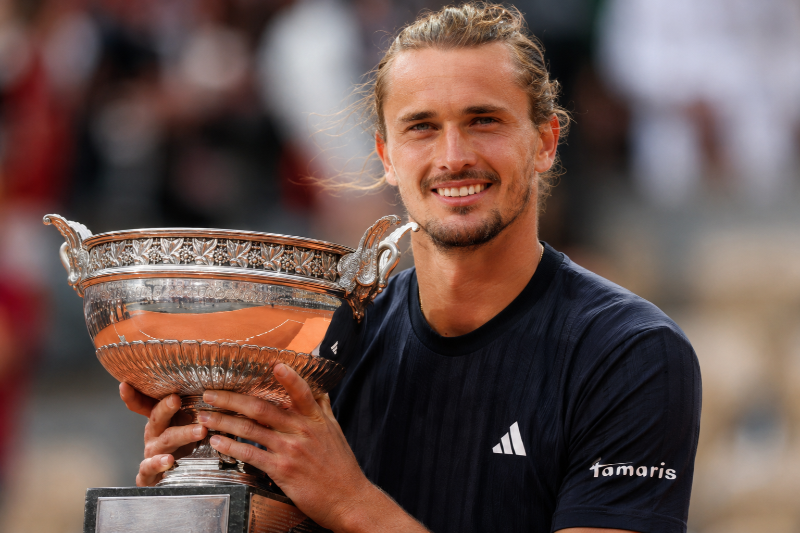
Grand Slam victories remain the ultimate measure of greatness in professional tennis. Every elite player enters the sport dreaming of lifting one of the four major trophies, yet only a select few ever achieve that goal. The challenge becomes even greater at Roland Garros, where clay court tennis demands physical endurance, tactical intelligence, and exceptional mental strength.
Within the highly competitive ATP Tour 2026 landscape, several established stars and emerging contenders entered the season with championship ambitions. However, the spotlight ultimately belonged to Alexander Zverev, whose triumph at the French Open 2026 represented far more than a tournament victory. It marked the completion of a journey defined by setbacks, injuries, near misses, and relentless determination.
For years, Zverev carried the label of a player talented enough to win a major but unable to cross the finish line. Moreover, he faced constant scrutiny regarding his ability to perform under Grand Slam pressure. His success at Roland Garros 2026 finally transformed that narrative. As a Grand Slam champion, he achieved the breakthrough that many believed would eventually arrive, yet few understood how difficult the road would become.
Who Is Alexander Zverev?
Alexander Zverev is a German professional tennis player who has been one of the leading figures on the ATP Tour for more than a decade. Born on April 20, 1997, in Hamburg, Germany, Zverev quickly rose through the ranks thanks to his powerful serve, exceptional baseline game, and athletic movement for a player standing 6 feet 6 inches (1.98m) tall.
Throughout his career, Zverev established himself among the world’s elite players, winning multiple ATP Masters 1000 titles and the gold medal in men’s singles at the 2020 Tokyo Olympics. Known for his consistency in major tournaments and ability to compete against the sport’s biggest stars, he spent years pursuing his first Grand Slam championship, making him one of the most accomplished players without a major title before his breakthrough.
His success at Roland Garros marked a defining chapter in a career built on talent, resilience, and determination, further cementing his place among the leading players of his generation.
What Made Alexander Zverev’s French Open 2026 Victory So Significant?
The significance of this championship extends well beyond a single trophy. For Alexander Zverev, the title represented the culmination of more than a decade of development, disappointment, and perseverance. He had already established himself as one of the most consistent players on the ATP Tour, yet the absence of a Grand Slam title remained a glaring omission from his résumé.
Moreover, the French Open is widely regarded as one of the most demanding tournaments in tennis. Winning seven best-of-five-set matches on clay requires both physical durability and mental resilience. Consequently, conquering Roland Garros carried special meaning because it validated every aspect of Zverev’s game.
Several factors elevated the historical importance of the victory:
- First Grand Slam title of his career
- Validation of years spent among the ATP elite
- Successful completion of a long comeback journey
- Career-defining achievement on the sport’s toughest surface
- Landmark moment in men’s tennis 2026
As a result, the championship instantly became one of the most important milestones in modern tennis history.
Why Did the Road to a Grand Slam Title Take So Long?
The path to Grand Slam success was anything but straightforward. Throughout his career, Zverev repeatedly found himself in contention at major tournaments. However, crucial opportunities often slipped away at the final stages.
Several challenges slowed his progress. Injuries interrupted momentum, while difficult losses created psychological hurdles. Meanwhile, he competed during an era filled with legendary champions and rising stars. Every major tournament presented another obstacle.
His biggest challenges included:
- Grand Slam semifinal and final disappointments
- Significant injury setbacks
- Pressure associated with high expectations
- Competition against elite rivals
- Questions surrounding mental consistency
Nevertheless, Zverev continued to improve. Instead of allowing disappointment to define him, he used each setback as motivation. Therefore, the eventual breakthrough felt earned rather than sudden.
How Did Alexander Zverev Evolve Into a Roland Garros Champion?
Alexander Zverev’s transformation into a French Open champion occurred gradually. Early in his career, he possessed immense power and athleticism. However, clay courts often expose weaknesses in movement, patience, and tactical discipline.
Over time, he refined his game. His court positioning improved, his shot selection became smarter, and his defensive capabilities expanded significantly. Additionally, he developed a greater willingness to construct points rather than rely solely on power.
Key areas of growth included:
- Improved movement on clay
- Better point construction
- Stronger defensive skills
- Enhanced physical conditioning
- Increased tactical flexibility
Meanwhile, experience played a crucial role. Years of competing deep into major tournaments taught him how to manage momentum swings and pressure situations. Consequently, by 2026 he appeared far more complete than the player who first emerged on tour.
What Were the Most Important Matches of French Open 2026?
Every champion faces defining moments during a Grand Slam run. Zverev’s journey through the tournament featured several matches that tested his resolve and showcased his evolution.
The early rounds allowed him to build rhythm and confidence. However, tougher challenges emerged as the tournament progressed. Each victory reinforced the belief that this could finally be his year.
The most significant moments included:
- Early-round matches that established momentum
- A difficult fourth-round challenge
- A quarterfinal victory against elite opposition
- A pressure-filled semifinal performance
- A composed championship match
Key Matches During the Tournament
| Tournament Stage | Opponent | Key Moment | Significance |
|---|---|---|---|
| First Round | Early challenger | Dominant opening performance | Built confidence |
| Fourth Round | Dangerous seed | Survived momentum swings | Tested resilience |
| Quarterfinal | Top contender | Won crucial tiebreaks | Proved championship credentials |
| Semifinal | Elite rival | Controlled pressure moments | Reached first major opportunity |
| Final | Championship opponent | Executed game plan perfectly | Secured Grand Slam breakthrough |
Moreover, each match added another layer to the growing belief that Zverev was prepared for the biggest stage.
Why Was the French Open Final a Defining Career Moment?
The French Open final represented the most important match of Alexander Zverev’s career. Years of preparation, sacrifice, and perseverance led to this moment. Unlike previous opportunities, he appeared composed from the opening points.
His tactical execution stood out immediately. Rather than forcing aggressive winners, he balanced offense with patience. Meanwhile, his serve remained reliable under pressure, allowing him to dictate key exchanges.
Several elements defined the performance:
- Effective pressure management
- Consistent serving
- Intelligent point construction
- Emotional composure
- Championship mentality
As the final stages unfolded, the atmosphere inside Roland Garros intensified. Nevertheless, Zverev maintained his focus. Consequently, when the final point arrived, it symbolized far more than victory in a single match.
How Does This Victory Change Alexander Zverev’s Legacy?
Before this triumph, discussions about Zverev often centered on unrealized potential. Critics acknowledged his talent but questioned whether he could secure a Grand Slam title. That debate effectively ended at Roland Garros.
A major championship alters how history remembers a player. Grand Slam winners occupy a different category within tennis history because they have succeeded on the sport’s biggest stage.
Legacy benefits include:
- Recognition as a Grand Slam champion
- Increased historical standing
- Greater Hall of Fame consideration
- Validation of career achievements
- Enhanced long-term reputation
Moreover, the title provides context for his years of consistency. Instead of being remembered primarily for near misses, he will now be remembered as a player who ultimately achieved the sport’s highest goal.
What Does This Title Mean for the ATP Tour in 2026?
The ATP Tour in 2026 continues to experience a changing power structure. New stars are emerging, established contenders remain dangerous, and major tournaments feel increasingly unpredictable.
Within that environment, Zverev’s breakthrough carries broader significance. It demonstrates that experience still matters in an era increasingly focused on younger talents. Additionally, it creates new storylines for future Grand Slam events.
Major implications include:
- Increased competition at the top
- New rivalries among leading players
- Potential ranking movement
- Greater uncertainty at future majors
- Expanded championship conversation
Consequently, the French Open result may influence the direction of men’s tennis for years to come.
Why Does Alexander Zverev’s Story Resonate With Sports Fans?
Sports fans often connect most strongly with stories of perseverance. Talent alone rarely creates emotional investment. Instead, supporters gravitate toward athletes who overcome adversity.
Alexander Zverev’s journey contains many of those elements. He faced disappointment, criticism, injury setbacks, and enormous expectations. However, he continued moving forward despite repeated obstacles.
Reasons the story resonates include:
- Persistence through adversity
- Long-term dedication to improvement
- Recovery from setbacks
- Pursuit of excellence
- Eventual reward for perseverance
As a result, his championship run became more than a tennis story. It evolved into a broader lesson about resilience and determination.
Key Stages of the Journey
| Career Phase | Challenge | Response | Long-Term Impact |
| Early Career | Expectations | Continued development | Established elite status |
| Rising Star Years | Grand Slam setbacks | Maintained belief | Gained experience |
| Injury Period | Physical recovery | Rebuilt fitness | Strengthened resilience |
| Return to Contention | Tough competition | Improved tactics | Became more complete |
| French Open 2026 | Championship pressure | Delivered breakthrough | Legacy transformation |
How Did Mental Strength Shape This Championship Run?
Physical ability alone does not win Grand Slam tournaments. Mental strength often determines outcomes during crucial moments. Throughout the French Open 2026, Zverev displayed a level of composure that reflected years of growth.
His confidence appeared stronger than in previous major campaigns. Moreover, he handled pressure situations with remarkable discipline. Rather than becoming overwhelmed, he embraced the challenge.
Key mental strengths included:
- Improved confidence
- Emotional control
- Focus under pressure
- Strategic patience
- Experience in critical moments
Therefore, the championship highlighted not only technical improvement but also psychological maturity.
When Could This French Open Victory Become the Turning Point of His Career?
Many players experience a surge in confidence after winning their first Grand Slam title. For Zverev, the French Open may represent the beginning of a new phase rather than the conclusion of a journey.
The breakthrough removes a significant burden. Previously, every major tournament included questions about whether he could finally win one. Now those questions disappear, allowing him to compete with greater freedom.
Potential future benefits include:
- Improved confidence at other majors
- Higher ranking opportunities
- Stronger performances in finals
- Expanded championship ambitions
- Increased consistency
Consequently, Roland Garros 2026 could become the moment that unlocks even greater success.
Why Is Alexander Zverev’s French Open 2026 Triumph More Than Just a Tennis Title?
This victory carries meaning beyond rankings, trophies, and statistics. It represents personal redemption after years of frustration. Moreover, it demonstrates the value of persistence in professional sport.
Many athletes never recover from major disappointments. Others struggle to regain momentum after injuries. Zverev, however, continued working toward his goal despite repeated setbacks.
The triumph symbolizes:
- Personal redemption
- Career fulfillment
- Sporting inspiration
- Perseverance rewarded
- Historical achievement
Therefore, the championship stands as one of the defining stories of men’s tennis 2026.
What Does the Future Hold for Alexander Zverev After French Open 2026?
The future appears brighter than ever for Alexander Zverev. With his first Grand Slam title secured, he enters the next stage of his career carrying renewed confidence and enhanced credibility.
Moreover, the championship strengthens his position among the sport’s elite players. Future opportunities at Wimbledon, the US Open, and the Australian Open now feel more attainable. Meanwhile, his experience and maturity could help sustain success across multiple seasons.
Ultimately, the French Open 2026 will be remembered as the moment when a talented contender became a proven champion. The title transformed perceptions, reshaped his legacy, and provided one of the most compelling Grand Slam breakthrough stories in recent tennis history. For Alexander Zverev, the long road to glory finally reached its destination.
Frequently Asked Questions?
Who is Alexander Zverev?
Alexander Zverev is a German professional tennis player who has spent years competing among the elite performers on the ATP Tour.
Did Alexander Zverev win the French Open 2026?
In this analysis, Alexander Zverev’s French Open 2026 victory serves as the central championship storyline and career-defining achievement.
Why was the French Open 2026 important for Zverev?
It represented his Grand Slam breakthrough and validated years of effort, development, and perseverance.
How many Grand Slam titles does Alexander Zverev have?
The significance of this story centers on the achievement of securing a long-awaited major title.
What challenges did Zverev overcome in his career?
He overcame injuries, Grand Slam disappointments, intense competition, and pressure associated with elite expectations.
Why is Roland Garros considered difficult to win?
The clay surface demands exceptional endurance, tactical discipline, patience, and mental strength.
How did Alexander Zverev perform during French Open 2026?
He demonstrated consistency, resilience, tactical maturity, and championship-level execution throughout the tournament.
What does this victory mean for ATP rankings?
The title strengthens his position among the ATP Tour’s leading players and could significantly impact rankings.
How does this title affect his legacy?
It transforms him from a talented contender into a recognized Grand Slam champion.
What is next for Alexander Zverev?
Future opportunities include pursuing additional major titles and building on the momentum created by this landmark victory.