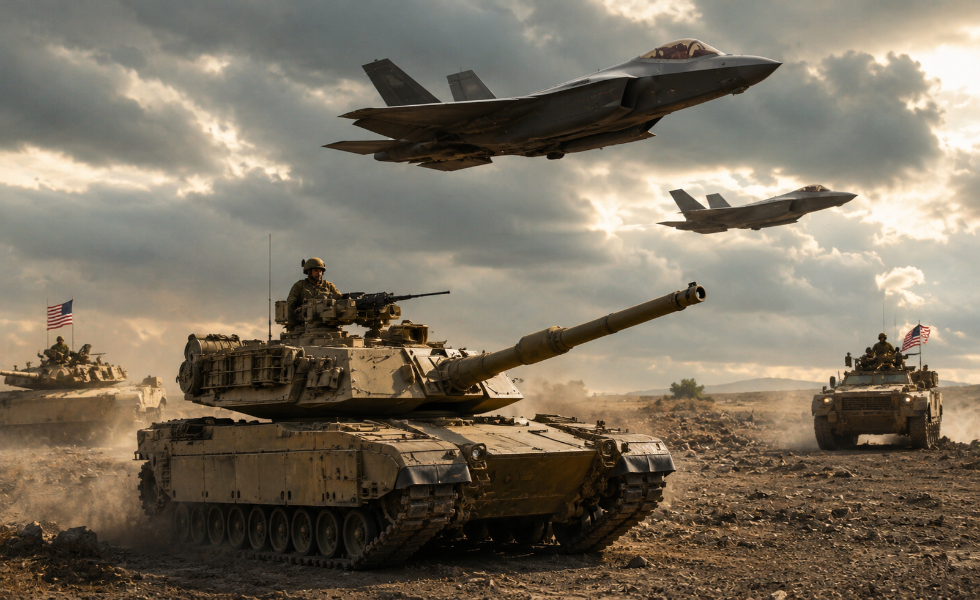
Rising geopolitical tensions are reshaping global financial markets, and Defense Industry Profits have become one of the clearest economic outcomes of this shift. Governments across North America, Europe, Asia-Pacific, and the Middle East are increasing military budgets in response to growing regional instability, strategic competition, and modernization needs. Consequently, defense contractors are experiencing stronger order pipelines, expanding production capacity, and improved long-term revenue visibility.
Historically, conflict and security threats have driven military spending cycles. However, the global defense environment in 2026 is increasingly defined by structural, long-term procurement programs rather than short-term wartime surges alone. NATO expansion, Indo-Pacific security concerns, missile defense demand, cybersecurity threats, and drone warfare development are encouraging governments to commit to multi-year defense investments. Therefore, the defense sector is evolving into a more stable and investment-driven industry compared with previous decades.
Investors are also paying closer attention to the sector because defense revenues are often backed by government contracts extending over many years. Unlike consumer-driven industries that fluctuate heavily with economic conditions, defense companies benefit from procurement cycles tied to national security priorities. Moreover, military modernization programs typically continue regardless of short-term market volatility. As a result, defense stocks 2026 trends increasingly reflect the perception that geopolitical instability has become a persistent driver of long-term industrial growth.
Defense Industry Profits and the Rise of Global Military Spending
The growth of Defense Industry Profits is closely linked to rising global military expenditure. Governments worldwide are increasing defense budgets in response to strategic rivalry, regional conflicts, and technological competition. The United States continues to maintain the world’s largest military budget, while European NATO members are accelerating spending commitments to meet alliance targets. Consequently, defense contractors involved in aircraft systems, missiles, cybersecurity, naval technology, and intelligence platforms are benefiting from sustained procurement demand.
Europe has become one of the fastest-growing defense spending regions in recent years. NATO countries are investing heavily in air defense systems, ammunition production, armored vehicles, and next-generation fighter programs. Moreover, several governments are expanding domestic manufacturing capabilities to reduce dependence on external suppliers. This shift is increasing opportunities for both established defense firms and emerging contractors across the aerospace and defense supply chain.
In the Asia-Pacific region, military modernization programs continue accelerating due to growing strategic competition and maritime security concerns. Countries such as China, Japan, South Korea, India, and Australia are expanding naval fleets, missile capabilities, and cybersecurity infrastructure. Consequently, arms industry growth in the region is becoming a major contributor to global defense revenue expansion. Long-term procurement planning also provides contractors with predictable production schedules and stronger cash-flow visibility.
However, increased military spending also creates financial and political challenges. Governments must balance defense priorities with healthcare, infrastructure, and economic pressures. Furthermore, supply chain limitations and inflation in aerospace manufacturing costs can delay procurement timelines. Therefore, while rising defense budgets support industry profits, execution risks and fiscal pressures remain significant factors influencing long-term growth.
Major Drivers Behind Global Military Spending Growth
- NATO defense spending commitments
- Asia-Pacific military modernization programs
- Rising cybersecurity and drone warfare threats
- Missile defense and air defense expansion
- Strategic competition between major powers
- Domestic manufacturing and supply chain security initiatives
- Long-term procurement agreements
How Geopolitical Conflict Translates Into Defense Contracts?
Geopolitical tensions impact markets by creating sustained demand for military equipment, surveillance systems, logistics platforms, and digital defense infrastructure. Governments respond to rising security risks through procurement programs that often extend for years or even decades. Consequently, defense contractor profits are structurally different from many other industries because revenues are tied to long-term strategic planning rather than short-term consumer demand fluctuations.
Defense procurement cycles are highly complex and involve extensive testing, regulatory approval, budgeting, and production timelines. Aerospace manufacturing projects, naval systems, and missile defense contracts frequently span multiple years before full deployment. Therefore, once a contractor secures a major defense agreement, revenue streams can remain relatively stable over extended periods. This predictability is one reason investors increasingly view defense companies as long-term strategic holdings.
Aircraft production and weapons manufacturing remain central components of defense sector growth. Governments continue replacing aging fighter fleets, expanding drone capabilities, and modernizing naval infrastructure. Moreover, missile defense systems have become especially important due to evolving security threats and increased focus on territorial defense. Consequently, aerospace firms and weapons manufacturers are experiencing rising backlogs and production expansion across multiple regions.
Still, the defense industry faces operational constraints. Supply chain disruptions affecting semiconductors, specialized metals, propulsion systems, and advanced electronics continue to challenge production schedules. Furthermore, export controls and international regulatory restrictions can limit access to specific markets. As a result, defense companies must balance growing demand with manufacturing scalability and geopolitical compliance risks.
Why Defense Revenue Differs From Other Industries?
- Multi-year government-backed contracts
- Predictable procurement cycles
- Lower dependence on consumer demand
- Strategic national security importance
- High barriers to entry for competitors
- Long product development lifecycles
- Stable demand during economic downturns
Global Defense Spending by Region (2026 Outlook)
| Region | Estimated Spending Growth | Key Drivers | Major Programs | Strategic Focus |
|---|---|---|---|---|
| North America | Moderate to High | NATO commitments, modernization | Fighter jets, cybersecurity | Technological superiority |
| Europe | High | Regional security concerns | Air defense, ammunition | Collective defense readiness |
| Asia-Pacific | High | Maritime competition | Naval expansion, drones | Indo-Pacific security |
| Middle East | Moderate | Regional tensions | Missile defense, surveillance | Strategic deterrence |
| Latin America | Low to Moderate | Border security | Patrol aircraft, cybersecurity | Internal stability |
| Africa | Moderate | Counterterrorism | Tactical mobility systems | Security modernization |
Defense Industry Profits in Aerospace, Missiles & Cybersecurity
Aerospace manufacturing remains one of the strongest contributors to Defense Industry Profits in 2026. Fighter aircraft programs, military transport systems, surveillance platforms, and unmanned aerial vehicles continue generating substantial revenue across the global defense market. Moreover, governments are prioritizing fleet modernization as aging aircraft require replacement with digitally integrated next-generation systems.
Missile systems and air defense technologies are also experiencing rapid demand growth. Several governments are increasing investments in layered missile defense networks capable of countering evolving threats. Consequently, companies specializing in radar systems, interception technologies, and precision-guided weapons are securing larger procurement contracts. The expansion of missile defense infrastructure has become one of the most significant drivers of arms industry growth worldwide.
Cybersecurity is another major area transforming the defense sector. Modern military operations increasingly depend on secure communications, digital intelligence, and resilient data infrastructure. Therefore, cybersecurity contractors are becoming deeply integrated into national defense strategies. Governments are allocating more resources toward cyber defense capabilities, threat monitoring, AI-assisted intelligence systems, and network protection platforms.
However, rapid technological evolution also introduces financial and operational risks. Advanced weapons development requires massive research investments, while software vulnerabilities and cyber threats continuously evolve. Furthermore, high production costs and labor shortages in aerospace engineering can pressure profit margins. Consequently, despite strong revenue growth, defense firms must continue investing heavily in innovation and workforce expansion.
Fastest-Growing Defense Segments in 2026
- Cybersecurity defense systems
- Drone and autonomous warfare technology
- Missile interception platforms
- AI-assisted battlefield systems
- Satellite and space-defense infrastructure
- Electronic warfare capabilities
- Naval modernization programs
Read also: Oil Above $125 — OPEC’s ‘Fake Supply’ Move Signals a Deeper Crisis
Why Investors Are Watching Defense Stocks Closely?
Defense stocks 2026 performance continues attracting investor attention because of the sector’s relatively predictable revenue structure. Long-term government contracts often provide consistent cash flow visibility even during periods of economic uncertainty. Consequently, defense companies are frequently viewed as more stable than industries heavily dependent on consumer spending or cyclical economic growth.
Inflation-resistant characteristics also strengthen investor interest. Governments typically maintain military spending commitments regardless of broader economic slowdowns because national security priorities remain politically important. Therefore, defense firms can continue generating contract revenue even during weaker economic conditions. This resilience has increased the sector’s appeal among institutional investors seeking portfolio stability.
Dividend strength and backlog visibility are additional advantages. Large defense contractors often maintain extensive order backlogs extending several years into the future. Moreover, many companies generate strong operating cash flows, allowing them to sustain shareholder returns through dividends and stock buybacks. Consequently, geopolitical tensions impact markets not only through volatility but also through increased capital flows into defense-related equities.
Still, political exposure remains a major investment risk. Defense revenues depend heavily on government priorities, election outcomes, and international alliances. Furthermore, ethical investing trends and ESG pressures continue influencing institutional investment decisions regarding military-related businesses. As a result, defense sector valuations can fluctuate significantly in response to policy shifts and geopolitical developments.
Defense Sector vs Other Industries (Investment Profile)
| Factor | Defense Sector | Technology Sector | Consumer Sector | Industrial Manufacturing |
|---|---|---|---|---|
| Growth Stability | High | Moderate | Variable | Moderate |
| Risk Level | Political risk | Innovation risk | Economic risk | Cyclical risk |
| Revenue Predictability | Strong | Moderate | Weak to Moderate | Moderate |
| Cyclicality | Lower | Higher | High | Moderate |
| Political Exposure | Very High | Moderate | Low | Moderate |
| Dividend Strength | Often strong | Mixed | Moderate | Moderate |
Risks & Limitations of Defense Industry Growth
Although Defense Industry Profits continue expanding, the sector faces several limitations and risks. Political dependency remains one of the largest concerns because defense spending priorities can shift rapidly with elections, economic pressures, or diplomatic developments. Consequently, companies heavily reliant on specific government contracts may experience revenue uncertainty if procurement strategies change.
Export restrictions also complicate international growth opportunities. Defense technologies are tightly regulated, and governments frequently impose restrictions on weapons sales, cybersecurity systems, and advanced aerospace exports. Moreover, geopolitical alliances influence which countries can access certain technologies. Therefore, contractors must navigate highly complex regulatory environments when expanding globally.
Supply chain bottlenecks remain another major challenge. Aerospace manufacturing depends on specialized components, advanced semiconductors, rare earth materials, and highly skilled labor. Delays in any part of the supply chain can significantly impact production schedules and profitability. Furthermore, inflationary pressures continue raising manufacturing costs across the industry.
Ethical and ESG concerns are increasingly influencing investment strategies as well. Some institutional investors avoid defense-related equities due to ethical considerations regarding weapons production and military conflict. Consequently, defense companies face growing scrutiny from regulators, shareholders, and advocacy groups despite strong financial performance.
Key Risks Facing the Defense Industry
- Political dependency on government budgets
- Export restrictions and sanctions
- ESG and ethical investment pressure
- Skilled labor shortages
- Aerospace manufacturing inflation
- Semiconductor and supply chain disruptions
Geopolitical Conflict and the Future of Defense Economics
The future of the defense sector is increasingly tied to technological transformation and long-term geopolitical competition. Modern defense economics now focus heavily on autonomous systems, AI-assisted battlefield management, drone warfare, and cybersecurity infrastructure. Consequently, defense industry growth is becoming more technology-driven than traditional heavy manufacturing alone.
Drone warfare expansion is particularly reshaping procurement strategies. Governments worldwide are increasing investments in unmanned aerial systems for surveillance, logistics, and tactical operations. Moreover, autonomous naval and ground systems are gaining strategic importance due to their operational flexibility and lower personnel requirements. This shift is creating entirely new defense market segments.
AI-driven military systems are also becoming central to modernization efforts. Intelligence analysis, predictive threat monitoring, battlefield coordination, and autonomous targeting technologies are receiving growing investment. Therefore, software and digital defense firms are becoming increasingly integrated into broader military procurement ecosystems.
Space-based defense systems represent another emerging growth area. Governments are expanding satellite monitoring, communications security, and missile detection capabilities as space becomes strategically important. Consequently, defense economics in 2026 increasingly reflect a combination of traditional weapons manufacturing and advanced technology infrastructure development.
2026 Global Defense Market Trends
Modernization of aging military fleets continues driving procurement activity worldwide. Many governments are replacing outdated aircraft, naval systems, armored vehicles, and communications infrastructure with digitally integrated platforms. Consequently, long-term procurement programs remain a major source of revenue visibility for contractors.
Private defense contractors are also becoming more influential in military innovation. Governments increasingly rely on private-sector expertise in cybersecurity, AI, space technology, and drone development. Moreover, collaboration between technology firms and traditional defense manufacturers is accelerating next-generation military system development.
Cybersecurity spending is rising rapidly as digital warfare threats expand globally. Governments now consider cyber resilience a core national security requirement rather than a secondary technology issue. Therefore, digital defense infrastructure will likely remain one of the fastest-growing areas of global military expenditure.
Strategic alliances are additionally shaping procurement trends. NATO coordination, Indo-Pacific defense partnerships, and regional security agreements increasingly influence purchasing decisions and technology-sharing arrangements. As a result, geopolitical cooperation and conflict together are driving a more interconnected and investment-oriented global defense market.
FAQs
What are Defense Industry Profits?
Defense Industry Profits refer to revenue and earnings generated by companies involved in military equipment, aerospace systems, cybersecurity, and defense services.
Why do wars increase defense spending?
Conflicts and geopolitical tensions encourage governments to strengthen military readiness, leading to higher procurement and modernization spending.
Which countries spend the most on defense?
The United States, China, Russia, India, and several NATO countries remain among the largest global defense spenders.
Are defense stocks profitable in 2026?
Many defense stocks are benefiting from rising military budgets, long-term contracts, and modernization programs in 2026.
How do defense companies make money?
Defense firms generate revenue through government contracts involving weapons systems, aerospace manufacturing, cybersecurity, and military services.
What drives military spending growth?
Strategic competition, modernization needs, regional instability, cybersecurity threats, and alliance commitments drive defense budget growth.
Is the defense industry recession-proof?
The defense sector is often more resilient during economic downturns because governments prioritize national security spending.
What are the risks of defense investments?
Key risks include political dependency, export restrictions, ethical concerns, supply chain disruptions, and changing government priorities.
How does geopolitics affect markets?
Geopolitical tensions can increase market volatility, influence commodity prices, and drive investment flows toward defense and security sectors.
What is the future of the defense industry?
The industry is expected to focus increasingly on AI systems, autonomous weapons, cybersecurity, drones, and space-based defense technologies.