
We spend most of our lives inside our homes. Yet the places meant to shelter us are often built from materials that slowly release chemicals into the air and eventually end their lives in landfills.
For decades, housing construction has barely changed. Wood, drywall, insulation, adhesives, sealants. Layer upon layer of materials that grow mold, hide toxins, and leave homes vulnerable to fire, storms, and decay.
The deeper issue is not just the materials. The entire system has remained largely untouched by the kind of first-principles innovation that has transformed industries like transportation, electronics, and energy. Most homes are still assembled through a fragmented process that combines dozens of incompatible materials sourced from separate suppliers. Multiple subcontractors coordinate work on site. Each layer depends on the previous one being installed correctly, and every stage introduces new waste, delays, and labor costs. The result is a system that is not only difficult to scale, it is also difficult to keep projects on time without spiraling costs.
Geoship’s approach begins by questioning those assumptions from the ground up. Instead of treating the home as a collection of unrelated parts, the company is attempting to design the entire system as one integrated product. This means innovating simultaneously across materials, structural geometry, and manufacturing. Mineral-based bioceramics replace the patchwork of conventional building components. Dome geometry uses less material while distributing forces more efficiently. A vertically integrated production model moves much of the complexity into factory manufacturing, where quality, cost, and speed can be controlled far more effectively than on a traditional construction site. Parts are made in a factory and applied onsite, like a “general assembly” process at a car plant.
“We are catalyzing a movement,” says Geoship founder Morgan Bierschenk. “We’ve called our reservation holders, and felt the same energy from them about our domes as (Lead Technical Advisor) Craig Derian experienced delivering the first 10 Model-S cars during his time at Tesla.”
3D printing can’t replicate this, not only because its materials aren’t up to par but also because operators haven’t obtained regulatory approval to use them. This, along with the need to revitalize the housing industry, has brought iconic investor Tim Chang and sustainability-minded celebrities like the skier Bode Miller into the fold for Geoship to address this crux:
Housing sits at the center of many of the challenges investors increasingly care about. Climate resilience. Public health. Loneliness. Affordability. The steady spread of suburban sprawl. Regions prone to fire or flood are increasingly difficult to insure.
What if many of those problems could be addressed by redesigning the home itself?
While a generation of startups believes there are solutions, California-based Geoship is among the closest to bringing that vision to market. The team of engineers and product leaders from companies like Tesla, Apple, and SpaceX, promises something rare: the chance to see capital translate into physical change in the built world.
“We’re creating a space that feels wonderful to be inside of,” Bierschenk says. “We’re optimizing for health and living experience, not just efficiency.”
Disruption in real estate may be one of the most consequential impact opportunities of the next decade, and the change is coming to life in the oak woodlands of the western Sierra.
A material breakthrough with architectural implications
Geoship’s attempt to rethink housing begins with something most developers rarely question, the materials themselves. The company has created a proprietary family of bioceramic composites engineered specifically for residential construction. While ceramics have long been used in building, bioceramics represent a newer field of material science, and as a cousin of Geopolymers, a new family of materials in itself. Until recently they were most often found in medicine, particularly orthopedic implants and dental work, because of their stability and compatibility with the human body.
Geoship’s founders began exploring whether those same characteristics, developed during an 11-year research and development project at US National Labs for use in the nuclear industry, could translate to architecture.
The result is GeoRock, a family of mineral-based composites designed to replace many of the individual materials normally stacked together in residential construction. Instead of wood framing, drywall, insulation, siding, and a web of sealants and coatings, GeoRock allows the structural frame, floors, interior walls, insulation, and the exterior shell to be formed from a unified mineral system.
As the materials cure, they chemically bond together, creating a continuous structural shell rather than a structure assembled from hundreds of independent parts. The mineral-based materials used in Geoship’s system are chemically inert. They do not rely on synthetic adhesives or polymer binders that degrade the sun and can slowly off-gas into the indoor environment with a 10 to 20 year life.
“As the composites cure, they fuse molecularly, forming a single monolithic structure,” says Dr. Ali Özer, Geoship’s Lead Material Scientist, and a researcher with more than 1,000 citations “With minimal maintenance, the air and water tightness at installation is the same that will exist centuries from now.”
The difference may sound subtle, but it has major implications. Conventional homes rely on layers of materials joined together with fasteners and adhesives. Over time those seams weaken, sealants degrade, and small failures begin to accumulate.
A structure that behaves as a single integrated shell eliminates many of those weak points before they appear. This also prevents original materials from ending up in a landfill, and makes repairs less frequent as there is no roof or shingles, and no exterior paint. The system is modular, and therefore, repairs can be made by simply swapping in the same bioceramic material.
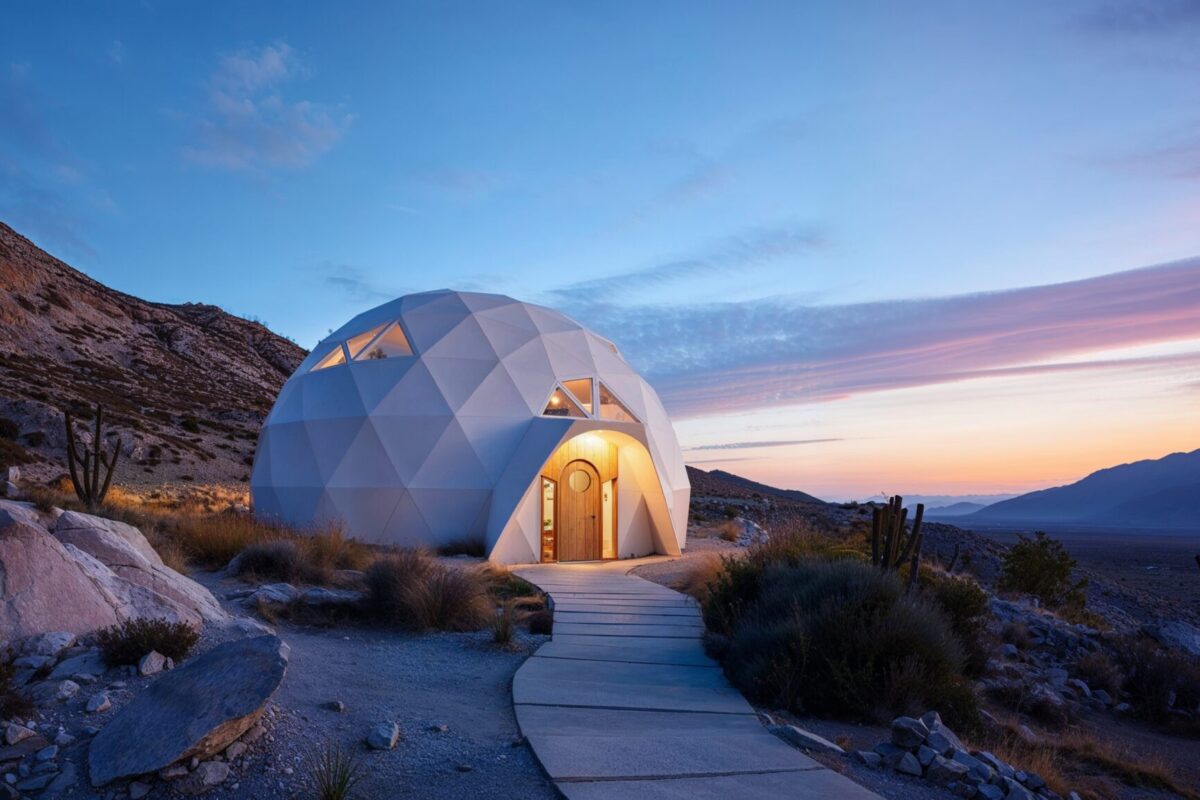
The company has launched a pilot production facility in Northern California, where it is building and refining its first integrated dome homes. This factory environment allows Geoship to bring much of the construction process indoors, improving precision and laying the groundwork for scalable manufacturing.
Geoship secured California Factory-Built Housing certification from the state’s Housing and Community Development department, validating that its materials, engineering systems, and manufacturing processes meet rigorous safety and quality standards. The approval streamlines permitting by centralizing plan review at the state level, allowing domes to be installed across California without repeating the full local approval process each time.
Strength through geometry
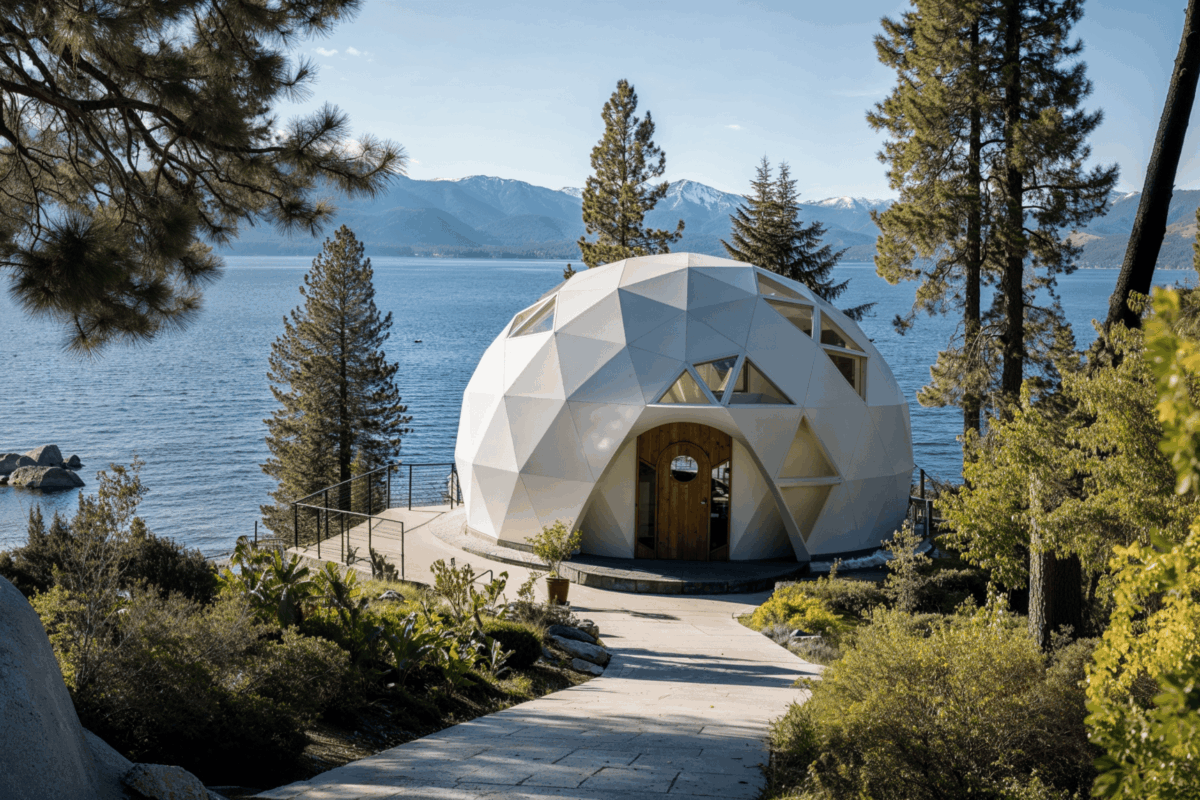
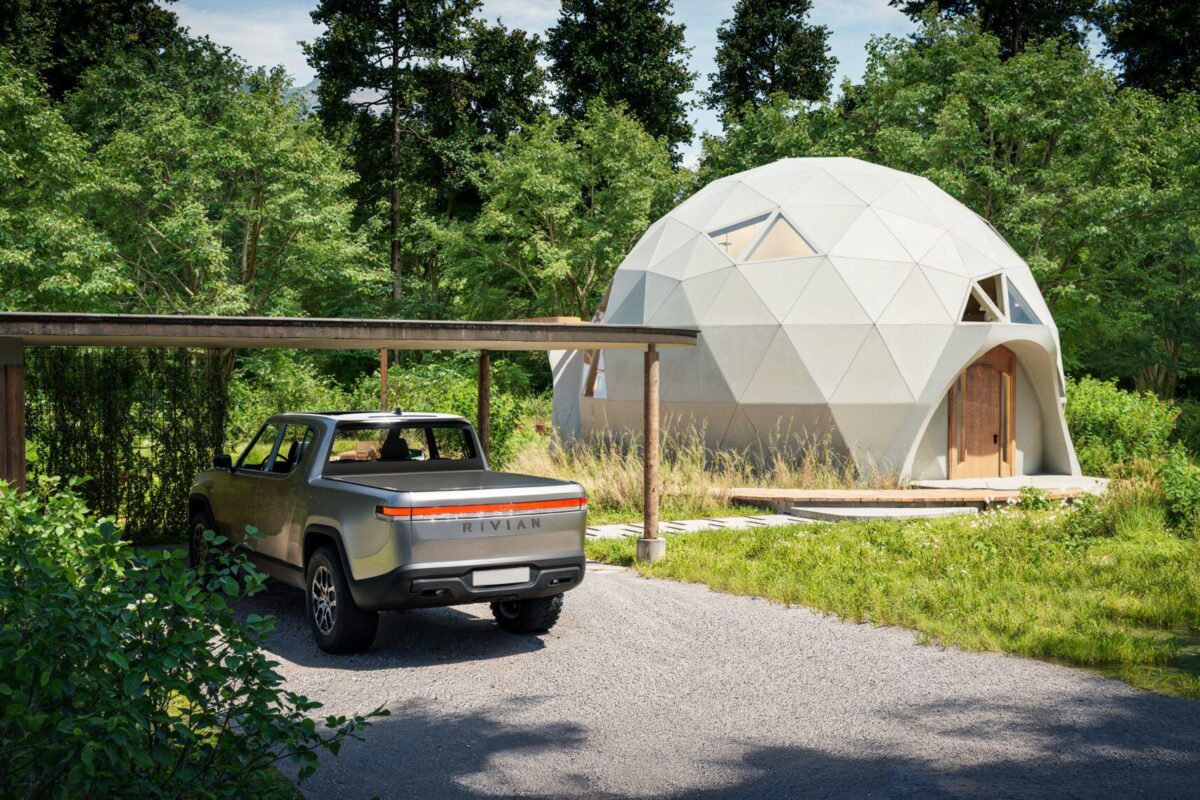
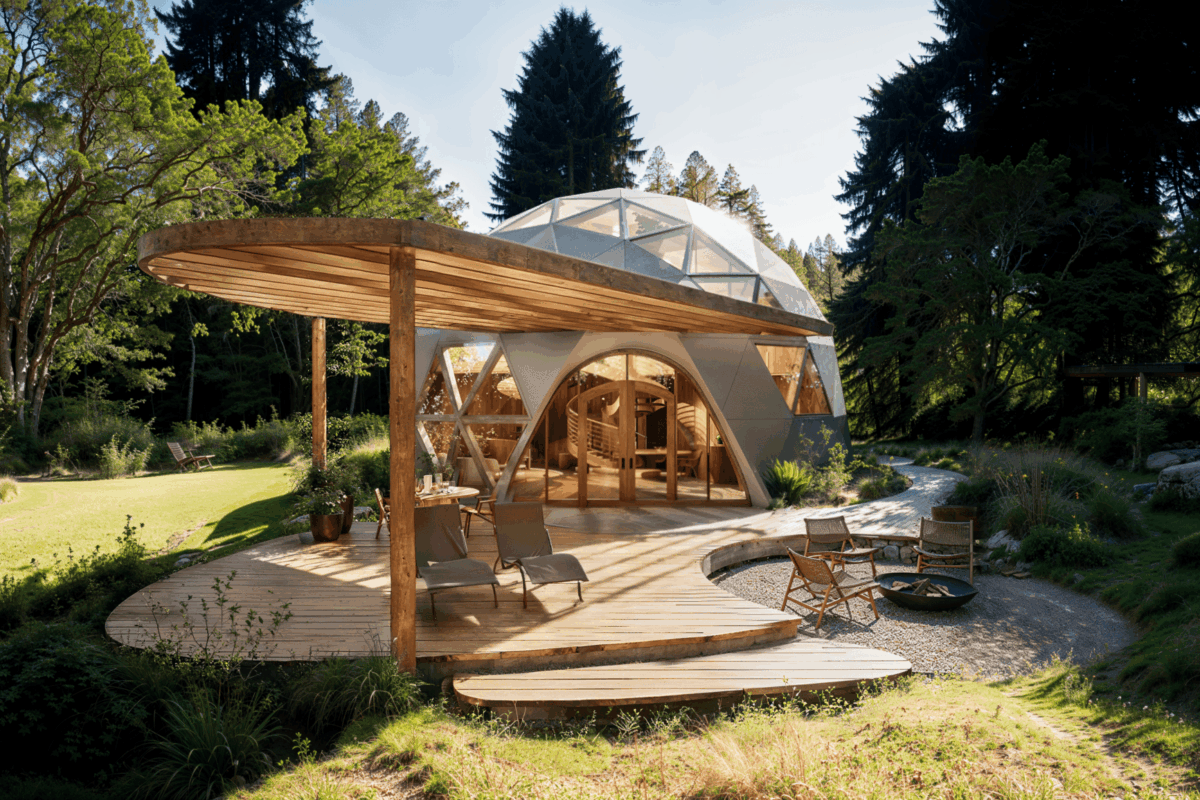
Material innovation is only half of Geoship’s strategy. The shape of the structure matters just as much. The homes are based on geodesic dome geometry, a structural concept popularized by Buckminster Fuller. The design distributes loads evenly across the surface of the building instead of concentrating stress at corners.
That efficiency allows the structure to resist many of the forces that routinely damage conventional homes.
Combined with GeoRock, which is stronger than concrete,, the result is a building that naturally resists fire, wind, moisture damage. Without organic materials such as wood or paper-backed drywall, \built into standard housing, it also resists mold and insect infestation.
In a world where climate disasters are increasing in frequency and cost, resilience is becoming a defining feature of housing markets. Insurance companies are already withdrawing from certain wildfire and flood-prone regions, leaving homeowners exposed. Geoship homes are designed to resist fire and earthquakes, as well as hurricanes and high winds. They can even withstand high snow loads (the dome shape eliminates worry of roof damage)
Buildings designed with durability in mind could help stabilize communities that might otherwise become difficult to insure.
But resilience is only part of the opportunity. Geoship has already built a significant demand signal, with more than 3,200 dome reservations representing a projected sales pipeline exceeding $500 million. These reservations, backed by deposits from customers, demonstrate early market traction as the company moves toward larger-scale production.


Affordability through manufacturing
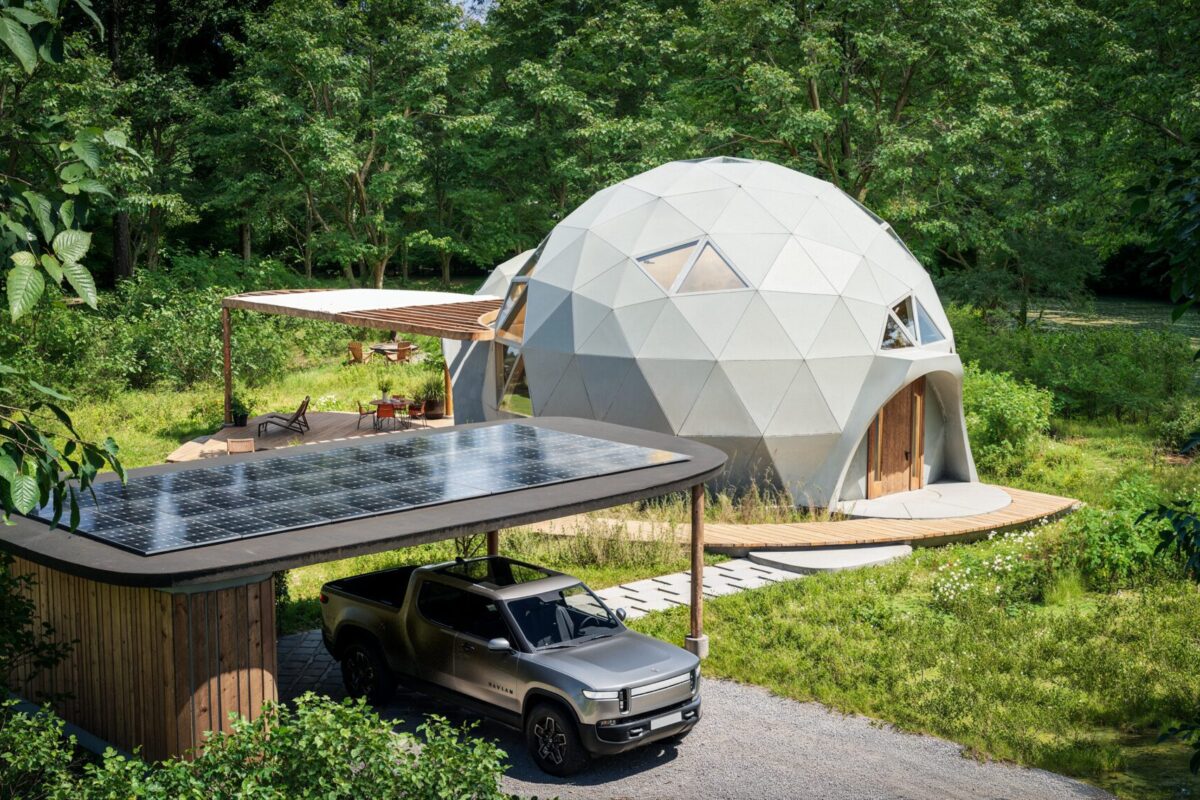
One of the most surprising aspects of the model is the cost. Geoship’s production strategy relies on standardized components manufactured in factories and assembled on site. The dome geometry requires less material than traditional box construction, and the design relies on a limited number of repeatable parts built specifically for longevity. The dome itself increases energy efficiency, which drops energy costs by 70% to 90%.
Those efficiencies could also reduce construction costs dramatically as production scales. Much like Tesla advanced the manufacturing of automobiles, incorporating refined (and consistently updated) technology, Geoship is attempting to bring a streamlined, factory-scale production model to housing. This not only makes the home more affordable, but it also speeds up the installation of a home from months to weeks, and requires no skilled trades..
Effectively, it’s advanced manufacturing applied to the largest asset class in the world.
“At scale, Geoship targets under $100 per square foot, roughly half the cost of conventional construction, without compromising on durability, health, or resilience,” says Bierschenk. “These are multi-generational assets customers can pass to their great-great grand children,”
Lower construction costs do more than improve housing affordability for buyers. They also change the economics of development. Projects that prioritize shared infrastructure, ecological design, or cooperative ownership models often struggle to pencil financially under traditional construction costs. When the underlying structures become dramatically cheaper, entirely new development models begin to make sense.
Geoship also plans to develop a digital coordination layer designed to connect landowners, investors, and future residents. The idea is to streamline the process of creating new communities by bringing together the key ingredients, land, capital, and people, through a single platform. In concept, it functions less like a traditional real estate development model and more like the marketplaces that have reshaped other industries, similar to how platforms like Airbnb, Uber, or Amazon connect participants in a fragmented ecosystem.
Climate-resilient villages, regenerative land communities, and cooperative housing networks all become easier to build.
Rethinking the shape of communities
Where Geoship becomes especially interesting for impact-focused investors is how these homes could influence the design of entire communities. Domes enclose interior space more efficiently than rectangular buildings. That means they require less material while still providing a generous living space. Multiple domes can also be connected into clusters, creating flexible layouts for neighborhoods. This means demand can be met across markets. For example, a cluster of Geoship domes could be used for short-term rentals, while another is used as student housing.
Instead of the familiar suburban model of large homes spread across wide lots, dome clusters lend themselves to compact, village-style development patterns organized around shared courtyards, gardens, and pedestrian paths.
Urban planners increasingly see this kind of design as a response to one of the most overlooked challenges of modern housing: loneliness. The U.S. Surgeon General has warned that social isolation now represents a major public health risk. Neighborhood design plays a quiet but powerful role in that reality. When homes are physically separated and daily life revolves around cars, casual human interaction becomes rare.
Community-centered layouts can change that dynamic.
We are already seeing early experiments in this direction. Culdesac, a development in Tempe, Arizona, has built the first car-free urban neighborhood in the United States designed specifically for walkability and social connection. Residents rely on transit, bikes, and shared mobility rather than personal vehicles. The physical design encourages interaction in ways that suburban subdivisions rarely do.
Similarly, companies such as Boxabl are attempting to industrialize housing production through highly standardized modular units manufactured in factories. The goal is to reduce construction costs and dramatically accelerate home production, applying manufacturing efficiency to a sector that has historically lagged behind other industries.
Geoship’s approach overlaps with both ideas. Like Boxabl, it seeks to bring advanced manufacturing into housing. Like Culdesac, it opens the door to new models of neighborhood design that bring people together rather than close them, a real-life manifestation of Malvina Reynold’s famous song, “Little Boxes” (nobody ever likes the “ticky-tacky,” anyhow).
For investors searching for solutions to multiple systemic problems, that convergence matters. Housing itself functions as a platform technology. Residential real estate is the world’s largest asset class, valued at more than $300 trillion globally. When new housing is developed, the value creation extends far beyond the construction of the home itself. Financing, insurance, land appreciation, infrastructure, and long-term property value all sit on top of that foundation.
Historically, the most successful companies in the sector have understood this. Large public homebuilders did not scale by radically reinventing construction. They scaled by becoming community builders, controlling land, development, and financing while the underlying building methods remained largely unchanged. The majority of value in housing does not come from the builder’s 10 to 20 percent construction margin. It emerges from the broader ecosystem surrounding the home.
Geoship’s strategy reflects that reality. The company is not only redesigning how homes are built, it is also working to create a digital coordination layer that connects people, land, and capital before construction begins. In many ways, the model resembles marketplace platforms that transformed other industries, such as Amazon in commerce or Airbnb in travel.
Communities form first. Construction follows.
An industry ready for change
The effort to reinvent housing has also attracted an unusual level of engineering talent. Geoship’s head of manufacturing, Ryan Simpson spent time at Tesla as well as Phoenix-based construction firm Diamond Age, while Lead Technical Advisor Craig Derian came from Tesla and the tech-driven home design company Cover. Other Geoship leaders previously worked in advanced manufacturing environments such as Lucid Motors, Toyota, and Apple, helping to build some of the most complex production systems in the world.
The founders themselves spent years developing the underlying material science before expanding the team to include specialists in manufacturing, product design, and operations. That combination of scientific experimentation and industrial execution is rare in real estate.
Housing is one of the largest markets in the world. The global housing sector exceeds $10 trillion, and the United States alone faces a shortage of millions of homes.
At the same time, the industry faces simultaneous pressures from rising construction costs, climate risk, regulatory complexity, and increasing awareness around healthy living environments.
Those forces are pushing developers, policymakers, and investors to explore entirely new approaches. If a better system can be developed and scaled, the implications go far beyond housing. It could reshape how neighborhoods are designed, how land is used, and how people live together.
For investors focused on long-term impact, that possibility is worth serious attention. Housing is not just an asset class, it is the physical framework of society. Geoship is currently raising capital through Regulation CF Crowdfunding and Regulation D offerings for individual and family offices interested in supporting the next generation of resilient housing and community development. The approach differs from other homebuilders in that it includes smaller, mission-aligned investors rather than venture capital that prioritizes short-term returns. This allows Geoship to remain mission-focused with the vigor of a bootstrapped startup, even as it moves closer to production.
Geoship’s question reflects this moment. The impact of the company’s success will extend far beyond architecture. Housing is the basis of modern society, shaping everything from how communities gather to how land is used and how resilient neighborhoods are in the face of ever-evolving risks. Change the way homes are built, and you begin to change the structure of society itself.
“Blue Jeans. Computers. Electric Cars. They all started as niche counter culture products before they became inevitable,” Bierschenk says. “Housing is next.”
Dive deeper into Geoship