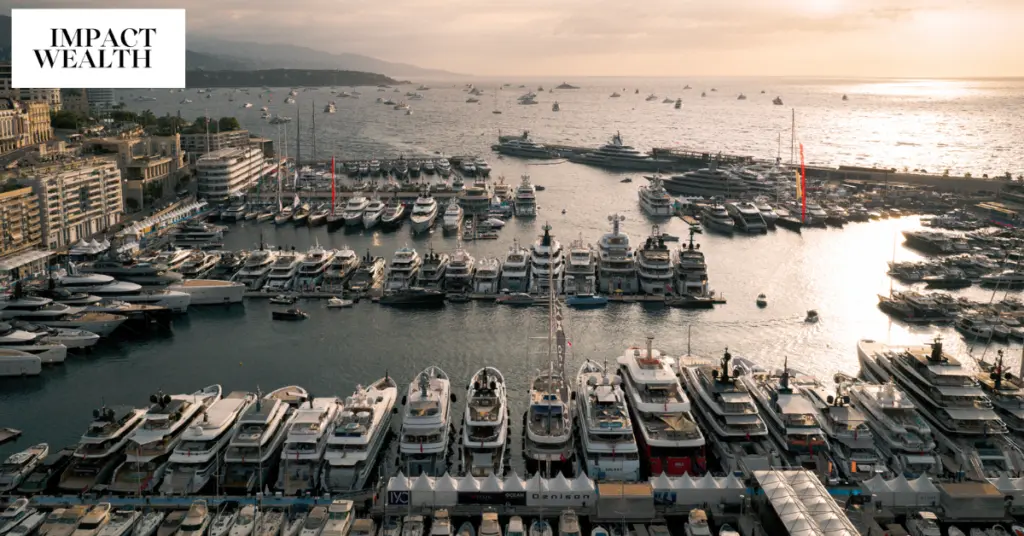
For decades, luxury travel meant getting closer to the world’s most famous places. Today, the luxury of distance is creating a different definition of exclusivity: the value of being far from crowds, constant visibility and conventional tourism.
That definition is changing.
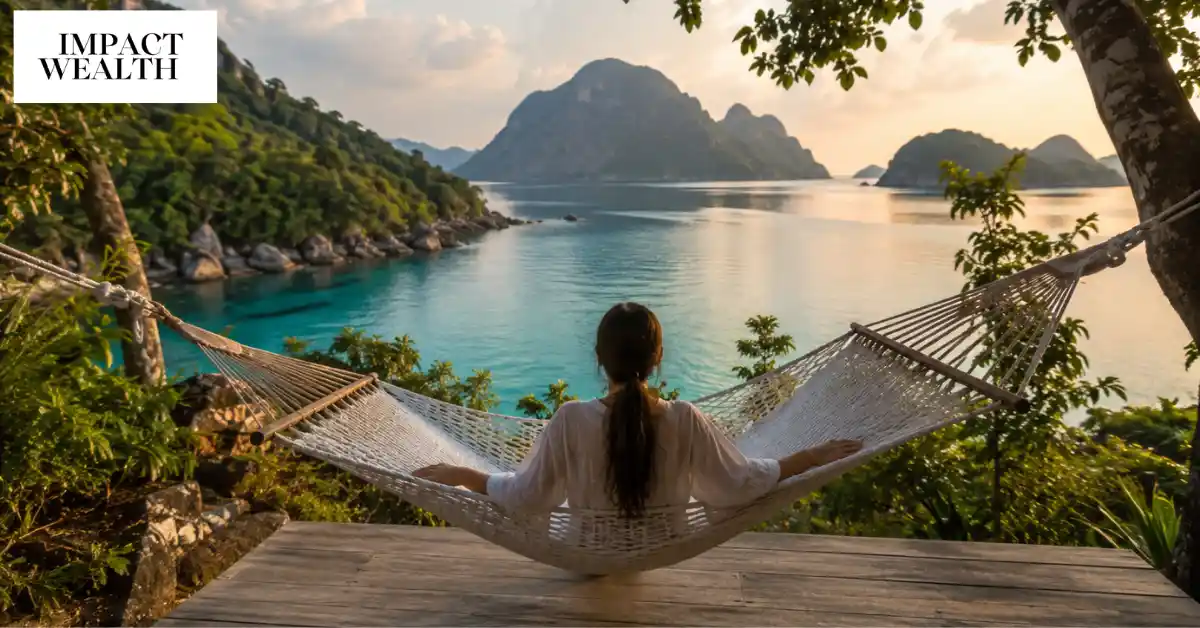
The emerging luxury of distance is based on a different proposition: sometimes the most valuable destination is the one that requires effort to reach, offers few rooms, attracts relatively few visitors and provides a degree of privacy that famous hotspots increasingly struggle to deliver.
Current luxury travel research points in this direction. Virtuoso’s 2026 Luxe Report identifies “crowd control” as a major trend, with travelers seeking destinations and travel periods that allow them to avoid crowds. Expedition cruising, authenticity and adventure also rank among its leading trends for affluent travelers.
The shift is not simply about finding somewhere remote. It reflects a broader change in what wealthy travelers value: space over spectacle, privacy over visibility, discovery over recognition and personalization over standardized luxury.
Why the World’s Most Famous Destinations Are Losing Some of Their Exclusivity
Fame has always created demand. However, digital platforms have made famous destinations easier than ever to discover, photograph and visit.
Social media can turn a relatively unknown location into a global attraction within a short period. At the same time, luxury hotels, restaurants and travel operators have expanded into many established destinations, making premium experiences more accessible to a wider affluent audience.
That creates an unusual problem for luxury.
The more people who can access an experience, the harder it becomes for that experience to function as a meaningful symbol of scarcity.
Overtourism adds another layer. WTTC has warned that overcrowding often reflects deeper problems involving infrastructure, planning and destination management rather than simply too many tourists.
For wealthy travelers, the consequence can be practical as much as psychological. A beautiful destination loses some of its appeal when traffic, queues, packed beaches or crowded landmarks dominate the experience.
This helps explain why luxury travel trends increasingly emphasize timing and location rather than simply hotel quality.
The luxury question is changing from “How luxurious is the hotel?” to “How much of the destination can I experience without competing with everyone else?”
The Rise of the Luxury of Distance in Ultra-Luxury Travel
The luxury of distance turns remoteness into part of the experience.
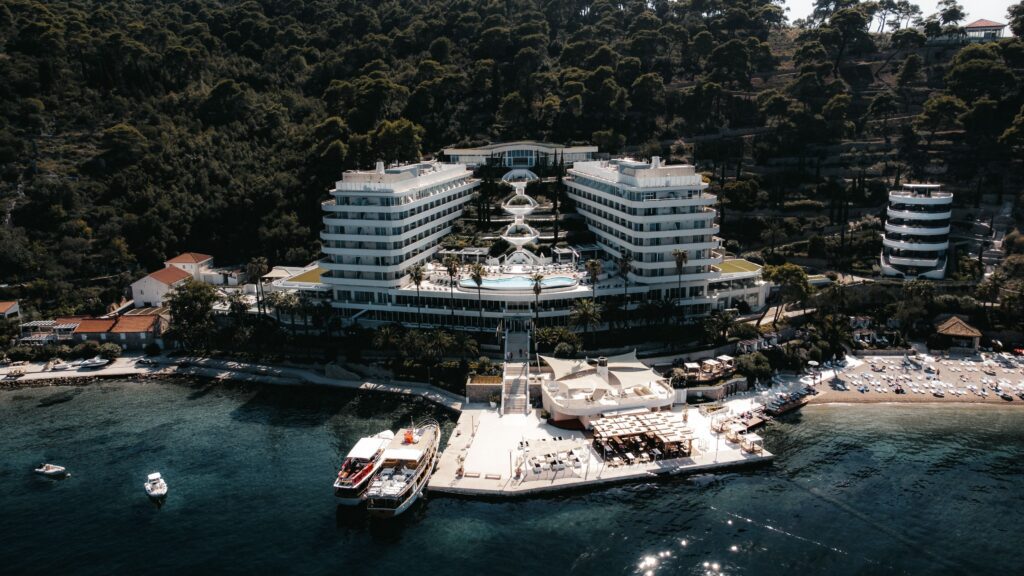
Private islands, secluded resorts, remote mountain properties, exclusive safari camps and expedition journeys all share one characteristic: they create a degree of separation from conventional tourism.
| Luxury Travel Model | Primary Appeal | Why Ultra-Wealthy Travelers Choose It |
|---|---|---|
| Private islands | Privacy and control | Limited access and personalized service |
| Remote lodges | Nature and solitude | Distance from crowded destinations |
| Expedition travel | Discovery | Access to unusual environments |
| Exclusive safari camps | Space and wildlife | Low-density experiences |
| Private residences | Autonomy | Personalization and discretion |
| Off-season travel | Fewer crowds | Greater freedom within famous destinations |
This does not mean wealthy travelers have abandoned famous destinations. Virtuoso’s 2026 data still places Italy, Japan, Greece and France among the most popular destinations for affluent travelers.
Instead, the change may be happening within luxury travel.
A traveler may still want Italy, but choose a quieter region or travel outside the busiest period. They may visit France but prioritize a private residence over a highly visible hotel. They may choose a famous destination but seek an itinerary that keeps them away from its most crowded attractions.
Distance, therefore, does not always mean geographical remoteness.
Sometimes it means distance from the crowds.
Privacy Has Become the New Status Symbol
Luxury has traditionally been highly visible.
Today, however, privacy can carry its own status.
Ultra-high-net-worth travelers live in an environment where personal information, locations and activities can be easily photographed, shared and distributed. Digital visibility can make even an expensive experience feel surprisingly public.
That helps explain the appeal of private travel.
A private villa, yacht, residence, aircraft or island can offer something a five-star hotel cannot always guarantee: control over who is present.
Recent reporting on ultra-wealthy travel has highlighted growing interest in secluded properties, private arrangements and experiences designed around discretion rather than conspicuous luxury.
This represents an important cultural shift.
The traditional luxury signal was being seen in the right place.
The emerging signal may be having access to a place where almost nobody else can see you.
For wealthy travelers accustomed to constant connectivity, that distinction becomes increasingly important.
How Luxury Hospitality Is Moving Further Off the Map
Luxury hospitality is adapting to this demand through properties and experiences that make remoteness part of the product.
Remote luxury can include a lodge surrounded by wilderness, a private island with limited accommodation, an expedition vessel traveling through polar regions or a private residence designed around complete autonomy.
The accommodation itself remains important, but it is no longer necessarily the main attraction.
The journey becomes part of the luxury.
Deloitte has identified hyperpersonalization, private islands, private villas and highly tailored experiences among the forces shaping luxury travel, while also noting increasing interest in adventure and experiential travel.
Technology makes this model more practical.
Private aviation can reduce the time cost of reaching difficult locations. High-end expedition vessels can provide accommodation while moving through remote environments. Digital connectivity can allow travelers to remain reachable without remaining physically close to major urban centers.
The result is a new form of accessibility paradox:
Technology makes distance easier to overcome, while distance itself becomes more valuable.
The Sustainability Paradox of Remote Luxury
Remote luxury creates an important contradiction.
Getting away from crowded destinations can reduce pressure on particular tourism hotspots. Yet reaching remote locations can require substantial transportation, energy, water and infrastructure.
Private aviation is the clearest example. It can make remote destinations accessible, but it also carries an environmental cost.
Remote hospitality faces similar questions. A property operating far from established infrastructure may need its own power generation, water systems, waste management and supply chains.
Therefore, remoteness should not automatically be described as sustainable.
The more useful question is whether tourism creates sufficient environmental and economic value to justify its footprint.
Conservation-led tourism can play a role. So can local employment, habitat protection, renewable energy, responsible water management and longer stays that reduce the frequency of travel.
Virtuoso’s 2026 research illustrates the complexity of the issue. It found that 45% of surveyed advisors reported clients adjusting travel plans because of climate change; among those advisors, 76% said clients were choosing shoulder-season or off-peak travel and 75% said clients were favoring destinations with moderate weather.
| Destination Trend | Rising Demand Driver | Key Challenge |
|---|---|---|
| Remote destinations | Privacy and discovery | Infrastructure |
| Shoulder-season travel | Fewer crowds | Weather variability |
| Expedition tourism | Adventure and scarcity | Environmental footprint |
| Private islands | Exclusivity | Energy and water use |
| Conservation tourism | Nature and purpose | Managing visitor pressure |
| Rural luxury | Space and authenticity | Limited accessibility |
The future of remote luxury will therefore depend partly on whether destinations can balance exclusivity with responsible development.
The New Geography of Ultra-Luxury Travel
The geography of luxury is becoming less predictable.
Established luxury capitals will remain important because they offer culture, infrastructure, dining, shopping and international connectivity. However, a second geography is emerging around places where scarcity itself creates value.
Remote regions, conservation areas, mountain environments, islands and polar destinations can offer something that major cities cannot easily reproduce: low density.
Virtuoso’s 2026 report specifically identifies Greenland, Iceland and Antarctica among destinations benefiting from the desire to avoid crowds, while expedition cruising ranks among its leading luxury travel trends.
Meanwhile, hotel groups are also responding to overcrowding by expanding into less saturated rural and secondary locations. Recent Financial Times reporting describes major hospitality companies moving beyond heavily visited Mediterranean areas toward inland and less crowded parts of Europe.
That is significant because it suggests the trend extends beyond individual wealthy travelers.
The hospitality industry itself is beginning to recognize that scarcity can be commercially valuable.
The Future of Exclusive Travel
The next phase of ultra-luxury travel is unlikely to be defined by simply adding more amenities.
Instead, competition may increasingly center on access.
Who can arrange the experience?
How difficult is it to reach?
How many people can be there?
Can the itinerary be customized?
Can the traveler remain private?
And can the destination preserve what makes it special?
This is where experiential travel becomes important.
Virtuoso’s 2026 research shows strong interest in adventure, cultural immersion, expedition cruising and authenticity alongside traditional luxury categories.
At the same time, AI is making mainstream travel discovery easier. Deloitte reports that generative AI use in travel planning has increased, while 2026 travel research shows technology changing how consumers discover and organize trips.
That creates another paradox.
The easier algorithms make it to find the world’s “best” destinations, the more valuable genuinely hard-to-discover experiences may become.
Unique Insight: When Inaccessibility Becomes Luxury
The luxury of distance represents a deeper change in what luxury means.
For much of the modern luxury industry, scarcity came from price. The experience was expensive, so relatively few people could afford it.
Increasingly, scarcity can come from something else: access.
A destination may be expensive, but that alone does not make it exclusive if thousands of people can visit it. A remote property may be less famous yet more valuable to a particular traveler because reaching it requires time, planning, specialized transportation or private arrangements.
This creates a new hierarchy of luxury.
The most valuable experience may not be the one everyone recognizes.
It may be the one almost nobody knows about.
That is particularly relevant in an era of constant digital exposure. Wealth can buy bigger rooms, faster transportation and better service. But it can also buy something increasingly difficult to obtain: the ability to become temporarily unreachable.
The ultimate luxury may therefore be less about being seen somewhere desirable and more about having access to somewhere that remains outside the mainstream travel system.
Conclusion
The luxury of distance is not simply a trend toward remote holidays.
It reflects a broader change in how affluent travelers define value.
Famous destinations will continue to attract wealthy visitors. However, as social media, tourism infrastructure and global connectivity make those destinations increasingly visible and accessible, exclusivity can become harder to preserve.
That is creating demand for privacy, space, discovery, personalization and controlled access.
Remote luxury, private islands, expedition travel, secluded hospitality and shoulder-season journeys all offer different ways to achieve the same objective: distance from ordinary tourism.
Yet the trend also carries responsibilities. Remote travel can create environmental and infrastructure pressures of its own. Sustainability cannot simply be assumed because a destination is isolated.
For the luxury travel industry, the opportunity is therefore not to make every destination more exclusive.
It is to understand why scarcity, privacy and genuine access are becoming valuable forms of luxury in their own right.
As the world’s most famous destinations become easier to reach, the places that remain difficult to reach may become the ones that wealthy travelers value most.
Frequently Asked Questions
What is the luxury of distance?
The luxury of distance describes the growing value wealthy travelers place on physical separation from crowds, heavily visited destinations and ordinary tourism. It can involve remote locations, private access, secluded properties or simply traveling outside peak periods.
Why are wealthy travelers moving away from famous destinations?
Not necessarily permanently. Many still visit famous destinations, but they increasingly seek quieter regions, private experiences, shoulder-season travel and itineraries that reduce exposure to crowds.
Why is privacy becoming more important in luxury travel?
Constant digital visibility has made privacy harder to obtain. Private residences, villas, yachts and secluded destinations can provide greater control over who shares the travel experience.
What are the most popular forms of remote luxury travel?
They include private islands, remote lodges, expedition cruises, exclusive safari camps, private residences, polar journeys and highly personalized adventure travel.
Why are private islands attractive to ultra-high-net-worth travelers?
Private islands can combine space, privacy, controlled access and personalized hospitality. Their appeal comes partly from limiting the number of people who can share the environment.
How is overtourism changing luxury travel?
Crowding can reduce the sense of exclusivity and comfort associated with luxury. As a result, some travelers are choosing quieter destinations, less busy seasons and lower-density experiences.
Is remote luxury travel sustainable?
Not automatically. Remote destinations can require significant transportation, energy, water and infrastructure. Sustainability depends on how tourism is designed, managed and integrated with local communities and conservation.
How does private aviation enable access to remote destinations?
Private aviation can reduce the time and logistical barriers associated with difficult-to-reach locations. However, it also carries environmental costs that travelers and operators increasingly need to consider.
What is experiential luxury?
Experiential luxury emphasizes meaningful, personalized and memorable experiences rather than material amenities alone. Adventure, cultural immersion, wellness, nature and private access can all form part of it.
Will remote destinations become the next major luxury travel trend?
Remote travel is already part of the 2026 luxury-travel conversation, particularly through expedition travel, crowd avoidance, privacy and authenticity. However, the broader trend is better understood as a shift toward scarcity, personalization and control, rather than a simple move toward remote destinations.