
From resurrecting forgotten public companies to assembling a U.S.-based autonomous defense platform, David Lazar has built a career around seeing value before the market does. With Quantum Cyber, his most ambitious bet yet, the veteran dealmaker is applying that instinct to the rapidly changing economics of modern warfare.
From Rainmaker to Builder
If you ask people who have worked with David Lazar over the last decade what he actually does, the answer rarely fits neatly on a business card. Rainmaker. Dealmaker. Fixer. The person who can walk into a public company that has been left for dead, understand the legal and financial machinery beneath it, and figure out how to make it function again.
For years, Lazar operated in one of the least glamorous corners of the capital markets: dormant tickers, delinquent filings, broken capitalization tables, court proceedings and public shells that most traditional Wall Street professionals would rather avoid. He became known for taking neglected corporate structures, cleaning them up and positioning them for a second life.
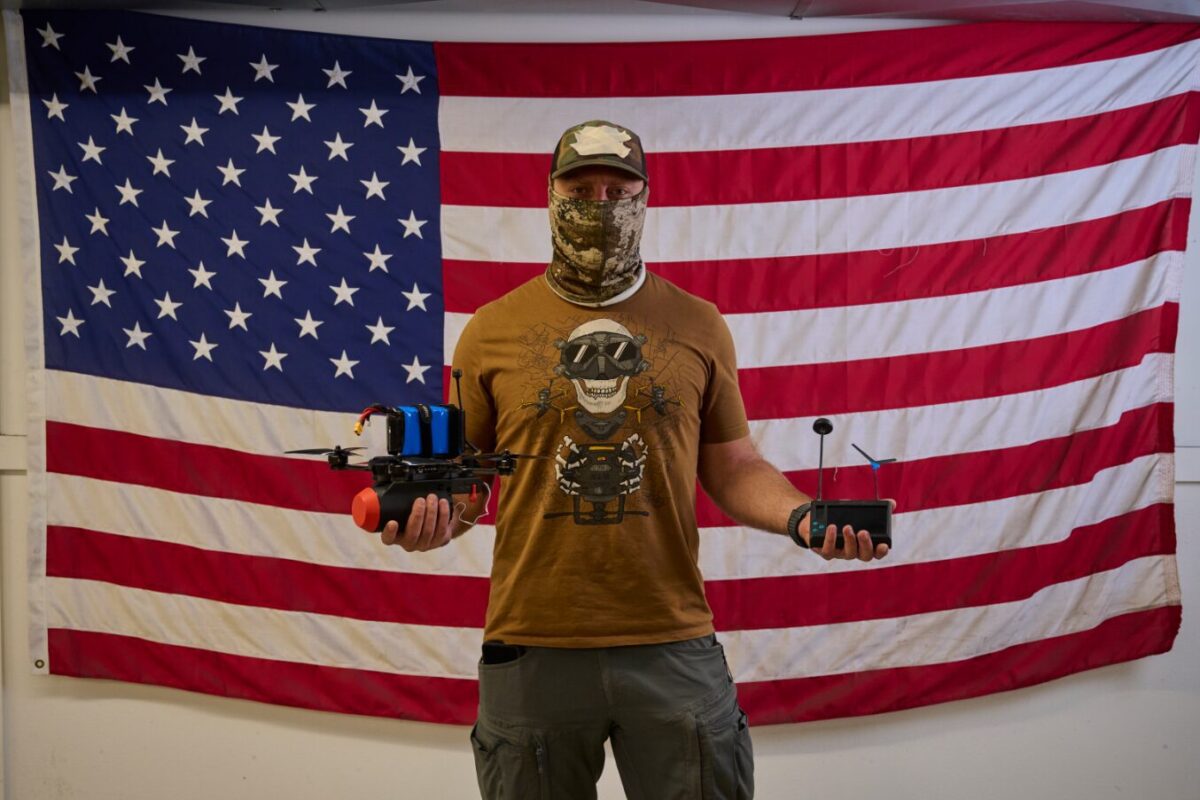
Today, however, the story is no longer simply about Lazar’s ability to engineer a transaction. At Quantum Cyber N.V. (Nasdaq: QUCY), he is attempting something fundamentally different: building and operating the company himself. The platform is being developed around autonomous defense systems, U.S. manufacturing, drone technology and an emerging quantum-photonic architecture that, if successfully translated from concept to field-ready hardware, could address some of the most consequential constraints facing autonomous systems.
For Lazar, it is the evolution from sponsor to operator — and perhaps the clearest expression yet of the instinct that has defined his career: find the overlooked asset, understand what others have missed, and build around the opportunity before the crowd arrives.

Oceanside Roots
Lazar grew up in Oceanside on Long Island’s South Shore, an environment that helped shape a style that remains distinctly unvarnished. Long before he became associated with public-company restructurings, he was fascinated by markets, tickers and the mechanics of how companies were assembled.
That curiosity eventually led him into the over-the-counter market, where success depends less on glossy presentations than on mastering details: transfer agents, court orders, securities filings, shareholder disputes, convertible securities and the often messy history sitting inside an abandoned corporation.
The Custodian’s Playbook
Working through Custodian Ventures LLC, Lazar built his early career as a court-appointed custodian for abandoned or delinquent public companies. The work could involve restoring corporate good standing, resolving liabilities, reconstructing records, addressing legacy securities issues, holding shareholder meetings and bringing years of filings back into order.
He did it repeatedly. Over time, each situation became another layer of institutional knowledge. What looked from the outside like a niche practice became a highly specialized playbook for corporate rehabilitation — one that combined legal precision, capital-markets fluency and an operator’s tolerance for complexity.
By the time the COVID-era market dislocation arrived, Lazar had spent years preparing for a moment he could not have predicted. As private companies searched for faster routes to public capital, clean public vehicles became more valuable. His obscure specialty suddenly sat at the intersection of timing and demand.
When the Market Caught Up
The transactions that followed moved Lazar from the OTC world toward major exchanges. Among the most notable was IKONICS Corp., where he took an activist position and helped shepherd a transaction that ultimately became TeraWulf Inc. (Nasdaq: WULF), now associated with large-scale digital infrastructure and high-performance computing.
Other situations followed, including NovaBay Pharmaceuticals and Indaptus Therapeutics. At Mainz Biomed N.V., Lazar’s involvement ultimately led to the platform that became Quantum Cyber. The common thread was not industry. It was structure: Lazar was drawn to situations where the existing corporate vehicle and its future potential were dramatically out of alignment.
“It’s a series of victories,” Lazar says of the process. “You keep the process the same, you don’t get emotional, you show up the next day.”
The Moment the Playbook Changed
For much of his career, Lazar’s role ended once a transaction was completed. He could acquire influence, restructure the vehicle, install leadership and move on. Eventually, that became the part of the model he questioned most.
“The problem with handing the keys over,” he says, “is that half the time the person you hand them to doesn’t drive the way they said they would. And the shareholders, my shareholders, pay the price.”
The lesson changed his approach. Rather than viewing the closing of a transaction as the finish line, Lazar increasingly began to see it as the beginning. He took operating roles when necessary, committed his own capital and focused on what happened after the corporate restructuring.
Quantum Cyber is the fullest expression of that shift. This is not a company Lazar intends merely to reposition and hand off. It is the company he intends to build.
Quantum Cyber: A Bet on the Autonomous Era
Quantum Cyber is being positioned around a structural change in defense: the rise of autonomous, attritable systems. Modern conflicts have demonstrated that inexpensive unmanned platforms can alter battlefield economics. Instead of relying exclusively on a smaller number of exquisite, extremely costly systems, militaries increasingly need scalable autonomous platforms that can be deployed in volume, operate in contested environments and, in some cases, be lost without creating an unacceptable economic or strategic cost.
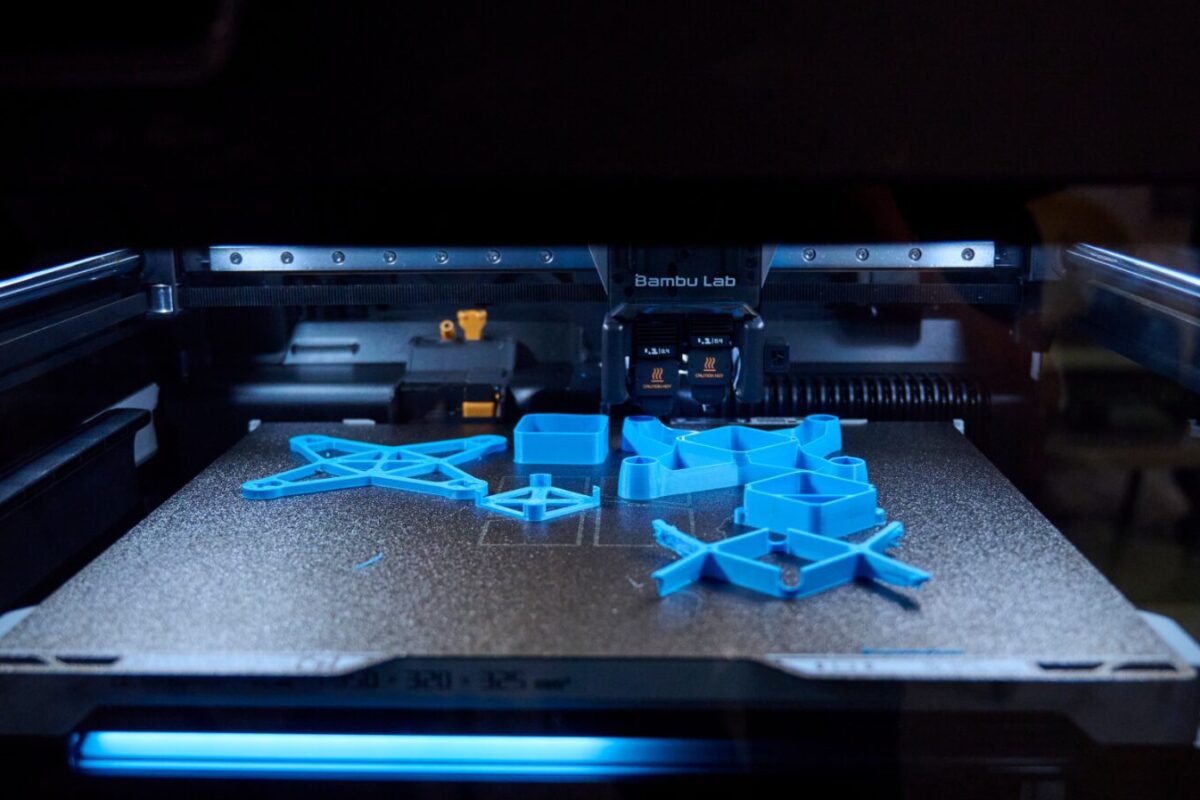
Quantum Cyber’s corporate presentation frames the opportunity as an integrated autonomy platform spanning air, ground and maritime domains, with a common control architecture intended to reduce the cost and complexity of deploying multiple autonomous systems. The company also emphasizes a U.S.-based supply chain and manufacturing footprint, including its Bridgeport, Connecticut facility.
That vertical integration matters strategically. In a defense environment increasingly focused on domestic manufacturing, resilient supply chains and rapid procurement, owning or controlling more of the path from design to production can reduce dependence on external suppliers and potentially shorten the distance between engineering changes and field deployment.
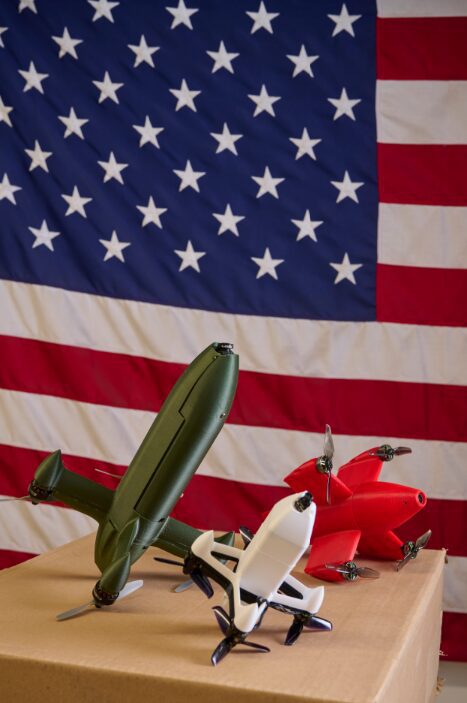
The company’s stated strategy also extends beyond a single drone. Its materials describe aerial systems, autonomous ground vehicles, maritime systems, counter-UAS capabilities and a portfolio of filed patent positions. The larger ambition is to create a platform in which software, autonomy, manufacturing and intellectual property reinforce one another rather than exist as disconnected products.
The Strategic Advantage: Economics, Autonomy and Control
The most important strategic argument behind Quantum Cyber is not that drones are new. It is that the economics and operating doctrine surrounding them are changing quickly. A low-cost autonomous system can force an adversary to expend a far more expensive interceptor, expose a position or devote scarce personnel and equipment to defense. At scale, that imbalance becomes a strategic weapon of its own.
Quantum Cyber is attempting to build around that asymmetry. Its presentation emphasizes coordinated swarms, compressed decision cycles and autonomous operation in environments where GPS or communications may be degraded. In that model, advantage comes from combining quantity with intelligence: systems inexpensive enough to deploy in meaningful numbers, but sophisticated enough to coordinate, adapt and continue operating when traditional command links become unreliable.
A second advantage is architectural. Rather than approaching air, ground and maritime systems as entirely separate businesses, Quantum Cyber describes a common autonomy layer across domains. If executed, that could allow software, control systems, training and mission logic to be reused across multiple platforms — potentially lowering integration costs and accelerating deployment.
A third is industrial. The company’s emphasis on U.S. manufacturing places it within a broader policy shift toward domestic defense production and more secure supply chains. For government customers, the provenance of critical components and the ability to manufacture at scale can be nearly as important as the performance of the platform itself.
The Quantum Photonic Antenna
The technology that gives Quantum Cyber its name may also become one of its most differentiated assets. Through an exclusive worldwide license from Project LightShift, Inc. for defense and national-security drone applications, Quantum Cyber is developing a patent-pending Quantum Photonic Antenna designed as a multifunction photonic surface.
In simple terms, conventional photovoltaic and communications hardware typically works within defined portions of the electromagnetic spectrum. The proposed Quantum Photonic Antenna architecture is designed to interact with a broader range of light, separate photons by wavelength, convert different inputs toward a common band, compress or “squeeze” the resulting stream and coordinate its propagation through phase control.
The company compares the concept to a digital soundboard for light: different channels receive different wavelengths, a translator brings those inputs toward a common form, and a compressor organizes the result into a controlled stream. The proposed surface is intended to serve multiple functions, including supplemental energy capture and transmitter-receiver communications.
For autonomous systems, that combination could be meaningful. Small unmanned aircraft operate within unforgiving constraints: every additional battery adds weight; every antenna occupies space; every sensor competes for power. A thin surface capable of supporting more than one mission function could help address those constraints without simply adding more hardware.
Why the Photonic Layer Could Matter in a Contested Environment
The most strategically interesting application may be communications. Quantum Cyber’s whitepaper describes a transmitter-receiver architecture in which encoded photonic signals can be distributed across multiple frequencies rather than relying on one predictable channel. The intended result is a communications pathway that is more difficult to identify, intercept, jam or disrupt. Post-quantum cryptography could then protect the information carried across that link — in the company’s formulation, one layer protects how the signal travels while the other protects what the signal says.
The architecture is also being explored for multispectral sensing and optical navigation. In a GPS-denied environment, a platform that can use celestial, terrain-referenced or other optical information to help determine its position could have obvious military relevance. Supplemental broad-spectrum energy capture, meanwhile, is intended not to replace a drone’s battery but potentially to slow depletion, extend loiter time or preserve payload capacity.
Those possibilities are significant, but they remain developmental. Quantum Cyber’s own August 2026 whitepaper describes the technology as early-stage and pre-commercial, moving from modeled architecture toward a demonstrable module. The next milestones are concrete: fabrication, measured capture and conversion, transmitter-receiver testing, communications-resilience testing, repeatable manufacturing yield, environmental validation and integration with a representative drone platform.
That distinction is important. The strategic value today lies in the combination of intellectual property, a defined defense use case and a pathway toward hardware validation — not in treating modeled capabilities as already proven in the field.
Building a Defense Company, Not Just a Technology Story
This is where Lazar’s background becomes unusually relevant. Deep technology companies often fail for reasons that have little to do with the elegance of the underlying science. They need capital, public-market discipline, manufacturing, procurement relationships, regulatory fluency and the patience to survive long development cycles.
Lazar has spent his career inside precisely those less glamorous layers of company building. Quantum Cyber is therefore a convergence of two stories: a defense technology platform built around autonomy and an operator whose principal skill has always been navigating complexity.
The company’s materials point to a Bridgeport manufacturing facility, an owned U.S. production footprint, autonomous systems across multiple domains and a growing intellectual-property position. The thesis is that these assets can become more valuable together than they would be separately: autonomy software informs the platforms; field requirements inform the hardware; manufacturing supports iteration; and the photonic program offers a potential technology layer that could ultimately differentiate the entire system.
Capital at Risk, Reputation on the Line
Lazar has also structured his involvement in a way that makes the bet personal. The original profile notes that he has committed millions of dollars of his own capital to the platform, retired legacy debt and maintained a substantial beneficial ownership position. That alignment is consistent with the way he has approached previous situations: if shareholders are being asked to believe in the transformation, he wants his own capital exposed to the outcome as well.
“I don’t want to be the guy who took the deal and left,” he says. “I want to be the guy who built the thing.”
It may be the most concise explanation of what has changed. Lazar’s earlier career was built on optionality — restore the vehicle, complete the transaction, find the next situation. Quantum Cyber demands the opposite: concentration, patience and execution over years rather than quarters.
Beyond the Balance Sheet
For all the capital-markets intensity, Lazar’s interests extend beyond the tape. He supports the Soul Center of Oceanside, a supported-living initiative for adults with developmental disabilities, alongside Chabad of Oceanside and Soul Purpose New York. He has also supported STEM programming for underserved youth, business education connected to his former high school and founder mentorship.
The through line is familiar: identify a system that is not working as well as it should, bring resources and structure to it, and leave something more durable behind.
The Long Game
There is a temptation to frame Quantum Cyber as Lazar’s arrival. He rejects that idea.
“You don’t get to arrive in this business,” he says. “You just get to keep showing up.”
Yet the scale of the wager is different. The Oceanside trader who built a career around forgotten public companies is now attempting to assemble a vertically integrated, Nasdaq-listed defense platform around one of the defining military shifts of the decade. The custodian who once specialized in bringing companies back to life is trying to create something designed for the future.
Whether Quantum Cyber ultimately realizes the full promise of its autonomous and photonic technologies will depend on engineering, manufacturing, procurement and field validation. But Lazar’s bet is already clear: the next generation of strategic advantage will belong not simply to whoever builds the most sophisticated platform, but to whoever can combine autonomy, affordability, resilient communications, domestic production and speed at scale.
For a man who made his career seeing value in structures others overlooked, it is a remarkably consistent next act. David Lazar is no longer merely finding the vehicle. He is building the machine.