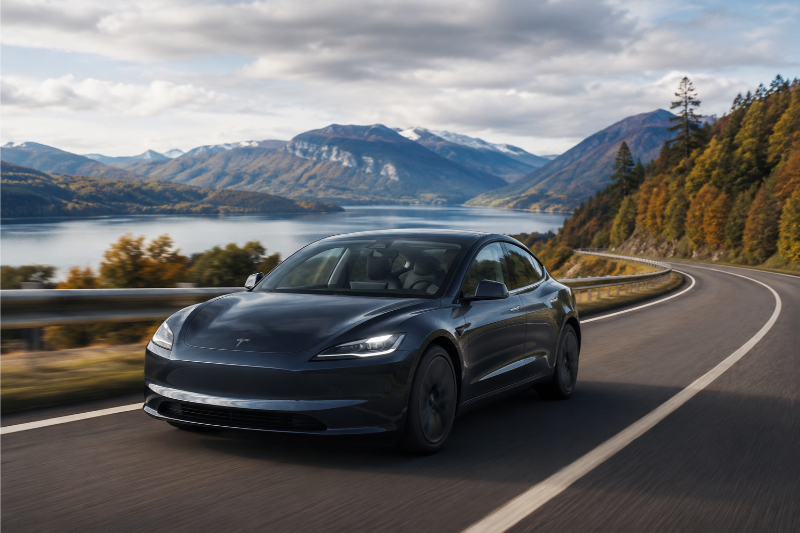
Tesla has officially expanded its Tesla Full Self-Driving technology into Lithuania, marking another step in the company’s broader effort to scale autonomous-driving capabilities across Europe. The rollout reflects more than a regional software update. Instead, it highlights how artificial intelligence is becoming increasingly central to the future of the automotive industry in 2026.
Tesla’s move into Lithuania arrives during a period of accelerating competition in autonomous mobility. Companies across the United States, Europe, and China are investing heavily in AI-powered transportation systems, advanced driver-assistance software, and connected vehicle ecosystems. Moreover, governments and regulators are paying closer attention to safety validation, driver monitoring, and liability frameworks as self-driving technology expands into public roads.
The Tesla Full Self-Driving rollout also reinforces Tesla’s software-first strategy. While the company remains known for electric vehicles, it increasingly positions software, AI systems, and over-the-air digital services as long-term growth drivers. However, Europe remains one of the most difficult regions for autonomous-driving deployment because regulators maintain stricter approval standards than the United States.
Meanwhile, investors continue watching Tesla’s autonomous-driving progress closely. Many analysts believe software monetization and AI mobility services could influence Tesla’s long-term valuation more than vehicle manufacturing alone. Nevertheless, public debate around safety, marketing terminology, and real-world usability continues to shape how consumers and regulators view self-driving systems.
As a result, Lithuania’s inclusion in Tesla’s growing FSD network represents an important moment in the evolving global race toward AI-powered transportation.
Why Tesla Full Self-Driving Expansion Matters?
Tesla Full Self-Driving expansion matters because it strengthens Tesla’s long-term software ecosystem strategy rather than simply adding another feature to its vehicles. The company has spent years developing an AI-based driving platform designed to improve continuously through real-world driving data. Consequently, every new market potentially contributes additional road conditions, traffic behaviors, and environmental scenarios that help train Tesla’s machine-learning systems.
Lithuania may appear smaller compared to major automotive markets like Germany or France. However, the launch demonstrates Tesla’s intention to expand FSD gradually across Europe wherever regulatory approval becomes possible. Moreover, it signals Tesla’s willingness to navigate Europe’s complicated legal and compliance environment despite ongoing scrutiny surrounding autonomous-driving claims.
Tesla also sees Full Self-Driving as a potential recurring revenue engine. Drivers can purchase the software outright or subscribe to future services linked to autonomous functionality. Therefore, Tesla increasingly treats software as a critical part of its business model rather than a secondary feature attached to electric vehicles.
Several factors explain why this expansion matters globally:
- Tesla aims to build a software-centered automotive ecosystem
- AI driving systems could generate long-term subscription revenue
- Europe represents a strategically important EV market
- Autonomous features differentiate Tesla from traditional automakers
- Real-world driving data strengthens Tesla’s AI training process
Meanwhile, autonomous driving has become one of the automotive sector’s most competitive battlegrounds. Companies are no longer competing only on battery range or vehicle performance. Instead, software capabilities increasingly shape consumer expectations and investor narratives.
How Tesla Full Self-Driving Technology Works?
Tesla Full Self-Driving uses AI-driven software designed to assist drivers with navigation, lane positioning, traffic management, and certain urban-driving tasks. Unlike some competitors that depend heavily on lidar systems, Tesla primarily relies on cameras, neural networks, onboard computing hardware, and large-scale driving data collection.
The company continuously improves Tesla self-driving software through over-the-air updates. As a result, vehicles can receive new features and behavioral refinements without requiring physical modifications. Tesla argues that this software-centric model allows rapid iteration and broader scalability across global markets.
Tesla’s AI driving system also depends heavily on real-world driving data gathered from millions of miles driven by Tesla vehicles worldwide. For example, the system learns from intersections, weather conditions, pedestrian movement, and unusual traffic scenarios encountered by drivers. Consequently, Tesla believes large-scale data collection improves the adaptability of its machine-learning models.
However, Tesla Full Self-Driving still requires driver supervision in most markets. European transportation laws remain particularly strict regarding hands-on monitoring and driver accountability. Therefore, Tesla’s technology currently operates as an advanced driver-assistance system rather than fully autonomous transportation.
Key elements of Tesla Full Self-Driving include:
- AI-based traffic interpretation
- Camera-focused perception systems
- Neural-network driving decisions
- Over-the-air software updates
- Driver monitoring requirements
- Real-world machine-learning feedback loops
Tesla Full Self-Driving vs Autonomous Driving Competitors
| Category | Tesla FSD | Waymo | Mercedes Drive Pilot | BYD/Chinese Systems | Traditional ADAS |
|---|---|---|---|---|---|
| Core Approach | Camera-based AI | Lidar-heavy autonomy | Regulatory-focused autonomy | Hybrid AI systems | Driver assistance |
| Deployment Model | Consumer vehicles | Robotaxi fleets | Limited certified markets | Rapid domestic scaling | Broad industry use |
| Driver Supervision | Required in most markets | Limited in robotaxis | Conditional autonomy | Usually supervised | Always supervised |
| Data Collection | Large consumer fleet | Controlled environments | Selective testing | Fast-growing EV fleets | Limited AI learning |
| Regulatory Strategy | Aggressive expansion | Partnership-focused | Compliance-first | Domestic regulatory support | Conventional approvals |
Europe’s Regulatory Challenges for Autonomous Vehicles
Europe remains one of the most cautious regions regarding autonomous-driving approvals. Regulators across the European Union emphasize safety validation, liability clarity, and driver accountability before allowing broader deployment of self-driving technologies. Consequently, Tesla Full Self-Driving faces stricter oversight in Europe than in several U.S. markets.
European authorities also maintain detailed rules regarding driver supervision and operational responsibility. Even when advanced driving software is active, drivers generally remain legally responsible for vehicle operation. Therefore, regulators carefully evaluate how companies market autonomous features to consumers.
Moreover, Europe’s transportation agencies continue debating terminology surrounding autonomy. Some critics argue that phrases like “Full Self-Driving” may create unrealistic consumer expectations. As a result, regulators increasingly focus on transparency and public understanding of system limitations.
Several challenges complicate autonomous-driving approvals in Europe:
- Complex multi-country regulatory coordination
- Strict safety certification standards
- Legal liability concerns
- Mandatory driver supervision requirements
- Data privacy and digital compliance regulations
Meanwhile, European governments are also investing in smart mobility infrastructure and digital transportation policy development. However, policymakers generally prefer gradual deployment supported by measurable safety evidence rather than rapid commercialization.
In contrast to some U.S. states, European regulators often prioritize incremental autonomy frameworks. Consequently, Tesla and other companies must adapt their rollout strategies market by market across the region.
Why Investors Care About Tesla’s Software Expansion?
Investors closely monitor Tesla Full Self-Driving because software could become a major long-term profit engine for Tesla. Traditional automakers usually depend heavily on vehicle manufacturing margins, which can fluctuate due to supply chains, pricing pressure, and competition. However, software services typically offer higher margins and recurring revenue opportunities.
Tesla’s autonomous-driving ambitions also strengthen its positioning within the broader AI economy. Many investors increasingly evaluate automotive companies not only as manufacturers but also as technology platforms. Therefore, Tesla’s AI mobility strategy plays a significant role in valuation discussions.
Additionally, recurring subscription models could provide more predictable revenue streams over time. If autonomous-driving services expand successfully, Tesla may generate income through feature subscriptions, premium software upgrades, and future mobility services.
Nevertheless, investors also recognize significant risks surrounding Tesla Full Self-Driving:
- Regulatory uncertainty across global markets
- Ongoing safety investigations
- Consumer skepticism toward autonomy claims
- Competitive pressure from rivals
- Legal liability exposure
Meanwhile, autonomous-driving progress often influences broader investor sentiment toward Tesla stock. Positive regulatory developments may support optimism around future monetization opportunities. On the other hand, accidents or legal disputes can quickly raise concerns regarding operational risks and public trust.
As a result, Tesla’s software expansion remains both an opportunity and a source of uncertainty within financial markets.
Safety Concerns and Public Trust in Self-Driving Technology
Safety remains one of the most important issues surrounding Tesla Full Self-Driving and autonomous-driving technology overall. Regulators, transportation experts, and consumers continue debating whether current AI systems can consistently handle unpredictable road situations safely.
Several accident investigations involving driver-assistance systems have intensified scrutiny across the industry. Consequently, authorities increasingly examine how drivers interact with semi-autonomous technologies and whether overreliance creates dangerous situations.
Public trust also depends heavily on communication clarity. If consumers misunderstand system capabilities, they may expect levels of autonomy that current technology cannot reliably provide. Therefore, accurate marketing terminology and driver education remain essential.
Important safety concerns include:
- Driver distraction or overconfidence
- AI decision-making limitations
- Edge-case traffic scenarios
- Weather and visibility challenges
- Ethical questions around automated decisions
Moreover, autonomous-driving systems still struggle with certain unpredictable situations involving pedestrians, emergency vehicles, and complex urban traffic patterns. As a result, many experts believe widespread fully autonomous driving will develop gradually rather than suddenly.
Nevertheless, AI mobility systems continue improving rapidly through software updates and expanded training data. Supporters argue that advanced driver-assistance technology could eventually reduce accidents caused by human error. However, regulators continue demanding stronger evidence before allowing broader unsupervised deployment.
How Tesla Competes in the Global Autonomous Driving Race?
Tesla operates in an increasingly competitive autonomous vehicle market where rivals pursue very different strategies. While Tesla emphasizes scalable consumer deployment through software updates, other companies focus on highly controlled environments or regulatory-first approaches.
Waymo concentrates heavily on robotaxi operations using lidar-intensive systems and mapped environments. In contrast, Tesla prioritizes camera-based AI trained through large-scale real-world driving data gathered from customer vehicles.
Meanwhile, Mercedes-Benz has taken a more regulation-focused path with Drive Pilot, seeking limited but officially certified autonomous capabilities in select jurisdictions. This approach emphasizes legal compliance and operational restrictions rather than broad consumer rollout.
Chinese EV manufacturers are also advancing rapidly. Companies including BYD and several domestic technology firms continue expanding AI-powered driver-assistance systems supported by China’s aggressive EV adoption environment. Consequently, competition within software-defined mobility is intensifying globally.
Tesla’s advantages include:
- Massive real-world driving datasets
- Global EV brand recognition
- Integrated hardware and software ecosystem
- Frequent over-the-air updates
- Strong consumer familiarity with autonomous features
However, competitors also possess important strengths. Waymo leads in certain robotaxi deployments, Mercedes emphasizes regulatory credibility, and Chinese firms benefit from rapid domestic scaling.
Therefore, the autonomous-driving race increasingly revolves around balancing innovation, scalability, safety, and regulatory adaptation simultaneously.
Why Europe Is Becoming a Key Battleground for EV Software?
Europe has become a critical battleground for software-defined vehicles and AI mobility services. The region combines strong EV adoption, advanced digital regulation, and growing interest in sustainable transportation systems. Consequently, automotive companies increasingly view Europe as strategically important for long-term software expansion.
Moreover, European consumers are becoming more interested in digital vehicle capabilities such as connected services, advanced navigation systems, and AI-assisted driving features. This shift reflects a broader transformation within the automotive industry where software increasingly shapes purchasing decisions.
At the same time, Europe’s strict regulatory environment creates high barriers for autonomous-driving deployment. Companies that successfully navigate European compliance requirements may strengthen their credibility globally. Therefore, Tesla’s Lithuania launch represents more than geographic expansion; it also reflects the importance of regulatory positioning.
Several trends are shaping Europe’s AI mobility future:
- Growth in software-defined vehicles
- Smart transportation infrastructure investment
- Expansion of connected mobility ecosystems
- Development of AI transportation policies
- Increased digital compliance standards
Meanwhile, European policymakers continue balancing innovation with public safety concerns. In contrast to faster-moving markets, Europe generally favors structured approval frameworks supported by extensive validation processes.
As a result, Europe may influence global standards for autonomous-driving governance in the coming years.
Key Challenges Facing Autonomous Driving Adoption
| Challenge | Impact on Tesla | Regulatory Sensitivity | Consumer Concern | Long-Term Outlook |
|---|---|---|---|---|
| Safety Validation | High | Very High | High | Gradual improvement |
| Legal Liability | Significant | High | Moderate | Ongoing policy evolution |
| Driver Misuse | Major risk | High | High | Better monitoring systems |
| Infrastructure Gaps | Moderate | Medium | Medium | Slow modernization |
| Public Trust | Critical | High | Very High | Dependent on reliability |
| Terminology Debate | Brand sensitivity | High | Moderate | Stronger disclosure rules |
Could Full Self-Driving Become Tesla’s Biggest Long-Term Advantage?
Tesla Full Self-Driving could eventually become one of Tesla’s most important competitive advantages if the company successfully balances technology development, regulation, and public trust. Unlike traditional automotive features that competitors can quickly replicate, advanced AI software ecosystems may create longer-term differentiation.
Software monetization also presents major financial opportunities. Tesla could potentially expand recurring subscription services, mobility integrations, fleet-management tools, and AI-assisted transportation platforms. Consequently, software revenue may become increasingly important alongside vehicle sales.
However, several uncertainties remain. Regulatory frameworks continue evolving, technological limitations still exist, and public acceptance varies significantly across markets. Therefore, autonomous-driving growth will likely occur gradually rather than through sudden transformation.
The broader automotive industry is also changing rapidly. Vehicles are increasingly becoming AI-powered software platforms rather than purely mechanical products. Consumers now evaluate digital experiences, connectivity, and software functionality alongside traditional automotive performance metrics.
Meanwhile, future competition may depend less on horsepower and more on software ecosystems, data infrastructure, and AI capabilities. Regulators will also continue shaping the pace of adoption globally through safety standards and compliance requirements.
Ultimately, the Tesla Full Self-Driving expansion into Lithuania reflects a much larger transformation occurring throughout the automotive sector. Innovation alone will not determine future leadership. Instead, companies must simultaneously balance technological advancement, regulatory compliance, safety validation, and consumer confidence.
Autonomous driving is evolving steadily through infrastructure development, AI refinement, legal adaptation, and public trust-building. Consequently, the future of mobility may emerge through gradual integration rather than overnight disruption.
FAQs
What is Tesla Full Self-Driving technology?
Tesla Full Self-Driving is an advanced driver-assistance software system that helps with navigation, lane control, traffic handling, and certain urban-driving tasks while still requiring driver supervision.
Why did Tesla launch FSD in Lithuania?
Tesla launched FSD in Lithuania as part of its broader European software expansion strategy and ongoing effort to grow its AI mobility ecosystem across additional markets.
Is Tesla Full Self-Driving fully autonomous?
No. Tesla Full Self-Driving currently requires active driver supervision in most regions and does not qualify as completely autonomous driving.
How does Tesla FSD differ from Waymo?
Tesla primarily uses camera-based AI systems and consumer fleet data, while Waymo relies heavily on lidar technology and controlled robotaxi environments.
Why is Europe stricter about self-driving cars?
European regulators emphasize safety validation, liability clarity, and driver accountability before approving broader autonomous-driving deployment.
Can Tesla Full Self-Driving operate without driver supervision?
In most markets, Tesla FSD still requires driver attention and hands-on readiness to intervene when necessary.
How does Tesla improve its self-driving AI?
Tesla improves its AI systems using real-world driving data, machine-learning training, neural-network updates, and over-the-air software improvements.
What are the biggest safety concerns with autonomous driving?
Major concerns include driver overreliance, unpredictable traffic situations, AI decision-making limitations, and public understanding of system capabilities.
Why is autonomous-driving technology important for Tesla?
Autonomous-driving software represents a potential long-term revenue source and strengthens Tesla’s position within the AI-driven transportation market.
Could Tesla Full Self-Driving become mainstream in Europe?
It could expand gradually over time; however, regulatory approval, infrastructure readiness, safety validation, and public trust will heavily influence adoption rates.