Updated posts August 2026
Brendan Holt Dunn: Five Generations of Wealth, Innovation, and the Future of Fintech
While establishing a family office has become the ultimate hallmark for the ultra wealthy, few families represent five generations of wealth. Meet Brendan Holt Dunn, the Principal and CEO of a fifth generation family office that has been managing and preserving family wealth since the early 1900s through The Holdun Family Office.
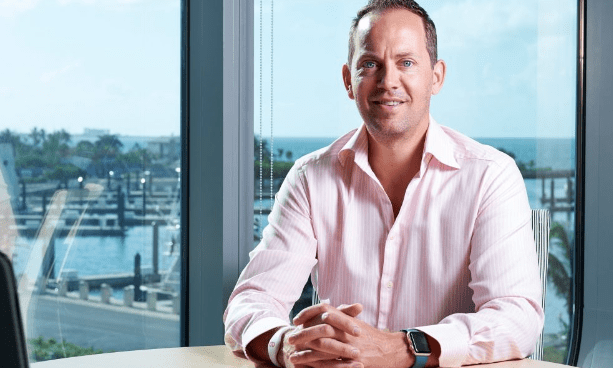
Since taking over operational control and responsibility from his father, Stuart Dunn, Brendan has led the international expansion of Holdun, which is headquartered in the Bahamas with offices in four countries. He now serves as Principal and CEO of the Holdun Family Office, an owner of HOLT Wealth Management, which functions as a discretionary wealth management firm, as well as HOLT Xchange and Cypher by HOLT.
Denise: Brendan, your family has an extraordinary history. Sir Herbert Holt was responsible for leading the effort to build critical infrastructure in Canada. Can you tell us more about his contribution?
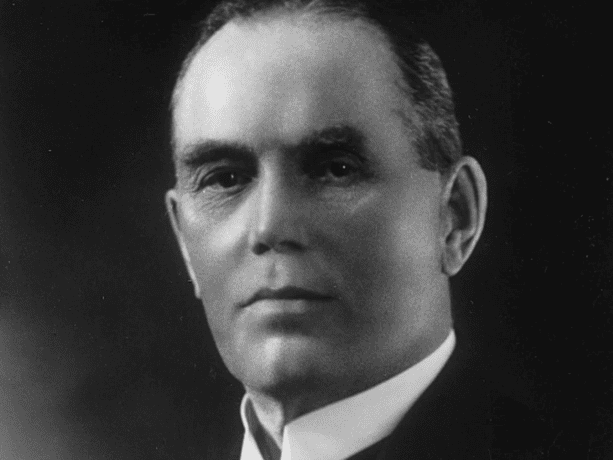
Brendan: Sir Herbert Holt was my great-great-grandfather. He immigrated from Ireland to Canada in 1873, when he was only eighteen years old. After working at Toronto Water Works, he met James Ross, a coal baron who had been awarded permits to build several railroad lines for what’s now known as Canadian Pacific Railway. He quickly earned the title of Superintendent of Construction and went on to launch his own railway construction company, eventually becoming a board member of Canadian Pacific Railway.
He was one of Canada’s most prominent railway builders, and he was knighted by King George in 1915 for his contributions to building rail infrastructure across Canada. When rail construction began to slow, he turned to the power industry. Electricity was a highly competitive field at the time, and Montreal was served by eighteen small gas and electricity firms. He was eventually appointed to the boards of both Montreal Gas and Royal Electric, and in 1901, merged these companies to form the Montreal Light Heat and Power Corporation (MLHPC).
That company was later nationalized by the Quebec government to become Hydro-Quebec. Today, Hydro-Québec is the largest power utility in Canada and a major player in the global hydropower industry. In 2022, Hydro-Québec signed its largest-ever export deal, which will help keep the lights on in New York City for the next two decades.
Denise: Your great-great-grandfather’s vision is embedded in North American infrastructure, what an extraordinary history. How did he then transition from rail and electricity to banking?
Brendan: He knew J.P. Morgan, and together they formulated a plan to acquire $500,000 of stock in the Montreal based Royal Bank of Canada. He was shortly thereafter named President of RBC in 1908 and held the position until 1934, remaining chairman of the board until his death in 1941.
During his tenure at Royal Bank of Canada, Sir Herbert Holt grew the bank’s assets by fifteen times and increased the number of branches tenfold, to 688. He is said to have been the richest Canadian to have ever lived, with an estimated net worth of $3 billion CAD in 1928, equivalent to roughly $51 billion CAD today. He achieved this by acquiring several competing banks, including Union Bank of Halifax, the Colonial Bank of London’s West Indies branches, the Traders Bank, the Quebec Bank, and the Northern Crown Bank.

Sir Herbert Holt had many other ventures as well, holding over 250 board positions and dominant influence over 65 power companies, including municipal systems in Monterrey, Mexico, Baltimore, Calgary, Thunder Bay, Sydney, Nova Scotia, the Okanagan Valley, and most of Quebec. He financed the Andean National Corporation, which built a 350 mile pipeline across Colombia for the Tropical Oil Company, now Esso Colombiana. He also financed and merged Montreal textile mills to form Dominion Textiles, bought a controlling interest in Montreal Tramways, later taken over by Société de Transport de Montréal, joined a syndicate that invested $2 million in the Ritz-Carlton Hotel in 1913, and was behind the launch of the movie theater chain Famous Players in Quebec.
Following its formation in 1979, Sir Herbert Holt’s significant contribution to the Canadian economy was recognized through his election to the Canadian Business Hall of Fame.
Denise: How did your family make the transition to the Bahamas?
Brendan: During my great-great-grandfather’s tenure at the Royal Bank of Canada, the bank was hired to oversee The Central Bank of The Bahamas. That brought him to Nassau for the first time. He came down here and fell in love with the island. Our family has now been in The Bahamas for over a hundred years, across five generations. His initial home was in eastern Nassau, and later, on the grounds of what would eventually become Lyford Cay.
Denise: How did the name The Holdun Family Office come about?
Brendan: My grandmother, Pam Holt, married investment banker Timothy Dunn in 1943. Holdun is simply a combination of Holt and Dunn.
Denise: Brendan, as an Investment Advisor to your family office, we have a fiduciary responsibility not to share any information. Would you be comfortable sharing with Impact Wealth Magazine your investment journey as a generational family office?
Brendan: My pleasure. As a family, we recognized some years ago that traditional fixed income and equity strategies alone were unlikely to deliver what we considered acceptable returns.
As a result, we shifted our investment strategy toward a broader range of exposure across the risk and liquidity spectrum. These new asset classes included traditional alternatives like private equity, venture capital, and real estate, which provided additional diversification, reduced volatility, and produced attractive returns. But we’re always on the lookout for non-traditional asset classes as well.
We have a history of investing in, growing, supporting, and building financial companies across five generations. It’s part of our legacy and our DNA.
Denise: Brendan, can you share some of the investments you’ve previously made, or some of the technology companies you’re now looking at?
Brendan: Having been an LP in several technology funds, as well as a direct early investor in organizations such as Uber, SpaceX, and Addepar, I plan to continue the family legacy of building important companies. Inspired by my great-great-grandfather’s vision to connect continents with rail systems, and by our deep experience with RBC, I see fintech as the sector paramount to developing innovation through what I think of as digital financial rails.
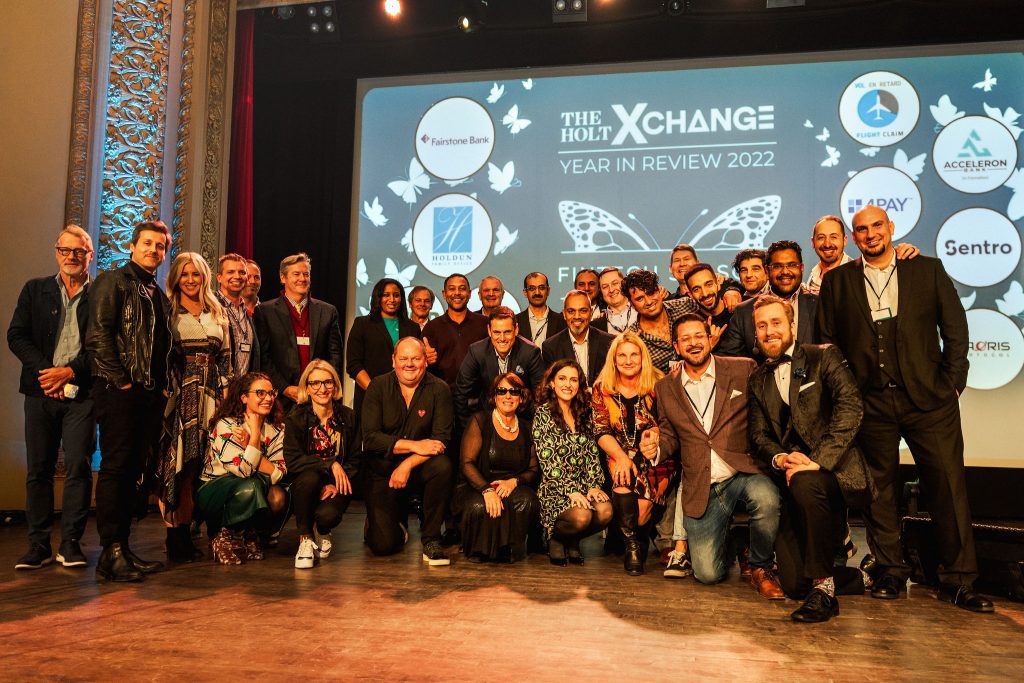
We started investing in fintech in 2019. We receive an enormous amount of deal flow, so we decided to launch HOLT Xchange, which we grew into a network of more than 600 advisors to support selection and due diligence. We eventually launched HOLT Xchange Fund I, leveraging our network and expertise to build a growing, diversified portfolio of 35 high growth global fintech companies. We’re now one of the most active early stage investors in Canada, already tracking a 3x increase from our initial investments. We’ve invested in reg tech, digital ID, alternative banking structures, alternative scoring technology, innovative payment solutions, capital markets tech, cybersecurity, and underlying technologies such as AI, DeFi, and blockchain.
In this digital age, banking has to innovate, and we want to be at the forefront of that shift.
A Legacy Rooted in Bold, Early Bets
What continues to define the Holdun family’s approach across five generations isn’t simply wealth preservation, but a consistent willingness to invest ahead of where markets are clearly headed. Sir Herbert Holt built infrastructure before industries fully understood its value, and that same instinct now shapes Brendan’s early positioning in fintech, sports data, and digital media monetization, sectors that, much like rail and hydroelectric power once did, are quietly becoming the infrastructure of tomorrow’s economy.
Denise: Brendan, your family has always been at the center of innovation. Can you share any exciting themes you’re seeing in the fintech space?
Brendan: As a passionate sports fan with a love of technology, I saw a great opportunity about ten years ago. I took the first step when we created The Holdun Innovation and Technology Fund, a data driven sports analysis platform researching more than 65 football leagues across the globe. The algorithm based platform is programmed to analyze historical data trends alongside the latest performance research on teams and individual players to identify areas of mispricing in the market. Since its inception in 2011, this $100 million plus fund has generated an average annual return of over 23 percent while remaining completely uncorrelated to the stock market.
With the recent growth in applied artificial intelligence and data monetization, we see a particular, largely unmet opportunity at the intersection of digital infrastructure and the sports, media, and entertainment sector. The pandemic pushed everything digital, and we’re now seeing significant disruption in how content is monetized. Fintech sits at the forefront of that shift, enabling these new revenue streams.
Anyone with a phone can now record a video and make it available to billions of people for free. Every hour, more content is uploaded to YouTube than Disney has in its entire streaming catalog.
There was a great line in The Economist that stated, at first, Hollywood wrote off Silicon Valley nerds. Now, nerds have enough money to take creative risks. Silicon Valley is now on a different track, racing ahead of Hollywood. Amazon’s growing ad business is already three times the size of Disney’s. This is just a precursor to a broader, evolving problem in content creation and distribution.
We’re very focused on identifying opportunities around innovative business models that impact how content is produced, aggregated, distributed, consumed, and of course, monetized.
In 2022, less than three years after entering the movie business, Apple won the Best Picture Oscar with CODA. Microsoft’s proposed acquisition of Activision Blizzard, whose games include Call of Duty and Candy Crush, amounted to nearly ten times what Amazon paid for MGM.
The ease of creating and sharing content online has empowered individuals to become creators in their own right. Platforms like YouTube, TikTok, and Crunchet have democratized content creation, giving anyone with a smartphone the ability to reach a global audience. This has led to an explosion of diverse content and a real challenge for traditional content producers trying to keep pace.
As demand for streaming content increases, more players have entered the market, intensifying competition. Companies like Netflix, Amazon Prime Video, Disney Plus, Apple TV Plus, and HBO Max are all vying for subscribers and investing heavily in original content to differentiate themselves.
Tech giants from Silicon Valley, including Apple, Amazon, and Microsoft, have entered the content production space, leveraging their vast resources and user bases to create original content and acquire existing media companies. This disruption has genuinely challenged traditional studios.
The influx of online content has also reshaped the advertising industry, with digital advertising becoming a major revenue source. Technology companies like Amazon have leveraged their platforms for targeted advertising, creating entirely new revenue streams in the process.
The popularity of video games and esports has also grown significantly, and their intellectual properties have become valuable assets across the entertainment industry. Companies are now adapting popular games into films, and vice versa, capitalizing on existing fan bases. The entire space is converging, and the data behind it is extremely valuable, capable of being monetized at volume across sports, esports, media, and entertainment.
Denise: We’re now in the third wave of fintech. The first wave began about fifteen years ago, when evolving financial technology started competing with major financial players by offering better digital processes. Ten years later, we saw acquisitions and partnerships as fintech moved mainstream. Now we’re seeing these technologies move into other markets. Where do you see the trend heading at this intersection?
Brendan: I believe there’s a huge opportunity to invest in the infrastructure and data sitting at the intersection of sports, esports, media, and entertainment. The industry went through significant change during nearly two years of global pandemic shutdown, which created a real need to explore new, innovative digital monetization streams. Our family office maintains extensive relationships and a broad network across sports, media, and entertainment. We saw a lot of synergy with the investments we’d already been making in fintech, an enabling technology capable of making real impact in any market, especially sports, media, and entertainment.
My great-great-grandfather was an early investor in Famous Players Cinema, now Paramount. I have large shoes to fill, but I intend to follow in those footsteps. We’re looking for innovation, and investing in the infrastructure and content monetization at the intersection of sports, media, and entertainment is, in my view, the next big trend.
By Denise Holzer, Managing Director at Chatsworth Securities LLC, a Greenwich, Connecticut based investment bank. Prior to joining Chatsworth, she spent over a decade at Morgan Stanley as a Wealth Advisor. Ms. Holzer continues to advise several family offices and specializes in technology, data and artificial intelligence, blockchain, and esports, working with both public and private companies as well as venture funds. She also has operational experience launching a technology startup, having co-founded Crunchet, an urban culture app at the intersection of sports, esports, media, and entertainment, where users can add content from any social channel into a link that can be shared anywhere.
She is a graduate of Tufts University and serves on the board of the American Society of the University of Haifa. She also serves as a board advisor to several tech companies, including Agorai, Syndesis Health, and Soulbound Gaming.