The Comprehensive Scope of Commercial Property Maintenance
Effective commercial property maintenance extends far beyond simple repairs; it’s a sophisticated discipline requiring meticulous trade coordination, strategic facility management, and an unwavering commitment to safety. For property managers, orchestrating the myriad tasks involved can be a significant challenge. We recognize that commercial facilities are complex ecosystems, demanding expertise across a wide array of specialized trades—from HVAC technicians and licensed electricians to skilled plumbers and landscaping professionals. The sheer volume and diversity of these needs underscore the importance of a robust maintenance strategy.
A key to streamlining this complexity is adopting a single-point contact approach for maintenance services. This strategy significantly reduces vendor fragmentation, simplifies communication channels, and ensures consistent quality across all aspects of your property. By consolidating services under one reliable partner, property managers can minimize administrative overhead and improve response times, ultimately leading to greater operational efficiency. Furthermore, prioritizing safety compliance and implementing proactive measures for risk reduction are paramount. Regular inspections and adherence to industry standards not only protect occupants and visitors but also safeguard the property owner from potential liabilities, ensuring a secure and well-managed environment.
Interior Systems and Commercial Property Maintenance Priorities
The interior of a commercial property significantly influences tenant satisfaction, operational efficiency, and overall asset value. Therefore, meticulous attention to interior systems is a top priority in any comprehensive maintenance plan.
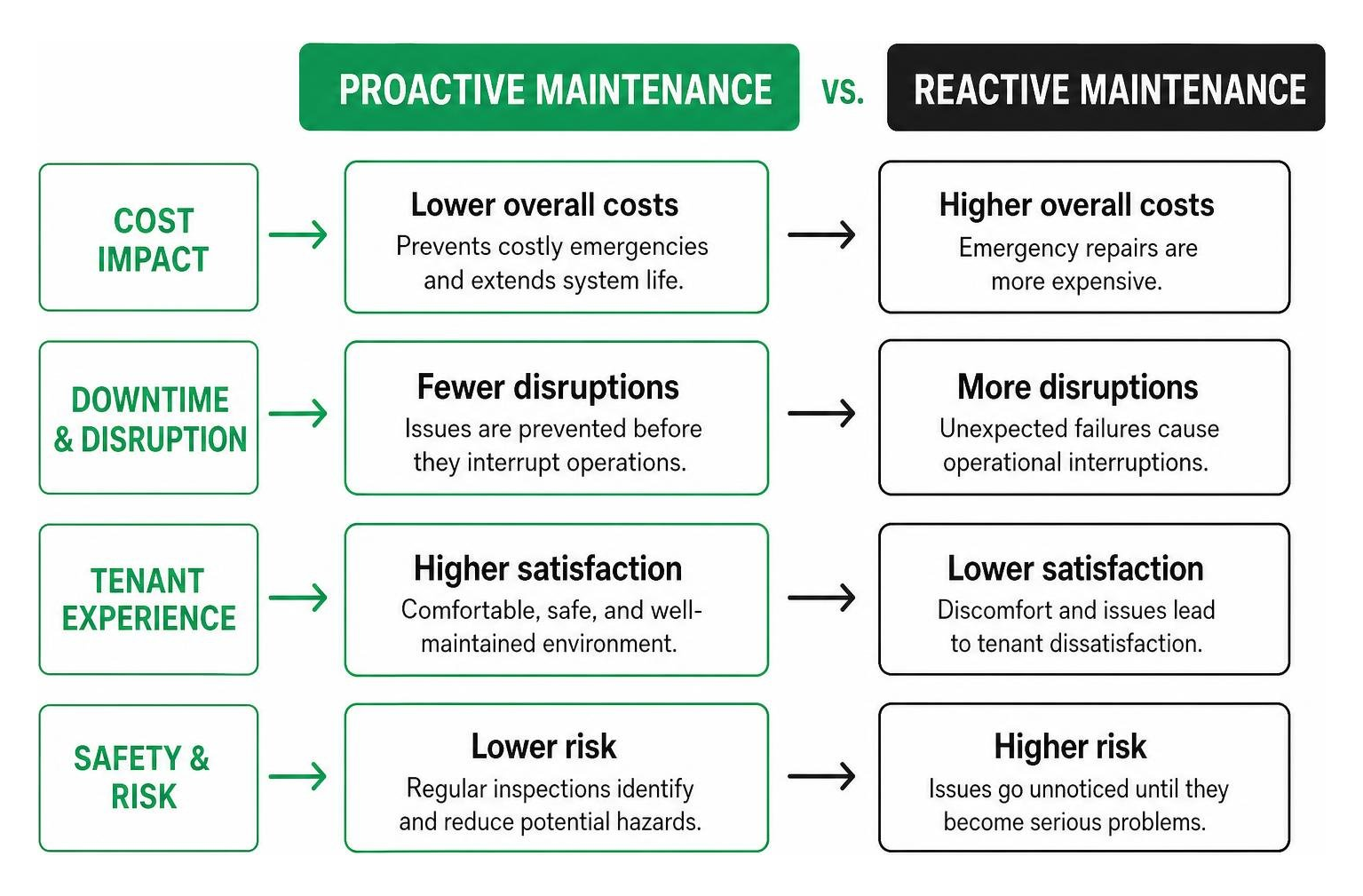
HVAC Preventive Servicing: The heating, ventilation, and air conditioning (HVAC) system is the lifeblood of tenant comfort and indoor air quality. Regular preventive servicing is crucial. We recommend professional inspections at least twice a year, ideally before the peak heating and cooling seasons. This proactive approach prevents costly emergencies and maintains optimal energy efficiency, potentially improving it by up to 15%. For instance, a facility that diligently schedules quarterly filter changes can drastically reduce HVAC breakdowns and extend the lifespan of its units. Neglecting HVAC can lead to uncomfortable tenants, increased utility bills, and expensive emergency repairs that could have been avoided.
Electrical Compliance: Electrical systems are fundamental to operations, but they also pose significant safety risks if not properly maintained. Regular inspections by licensed electricians are essential to ensure compliance with current codes and to identify potential hazards. Addressing issues like faulty wiring, overloaded circuits, or outdated panels proactively can reduce the risk of fire and ensure uninterrupted power supply for tenants.
Plumbing Diagnostics: From restrooms and break rooms to industrial applications, plumbing systems are critical. Routine diagnostics can detect minor leaks or blockages before they escalate into major water damage or operational disruptions. Clean, functional restrooms and well-maintained break rooms are small interior details that significantly influence tenant satisfaction and retention.
Common Areas: Beyond the technical systems, the upkeep of common areas—lobbies, hallways, elevators, and shared amenities—is vital. These spaces create an immediate impression on tenants and their clients. Consistent cleaning, prompt repairs, and attention to aesthetic details ensure these areas are safe, inviting, and reflective of a well-managed property. A property manager who overlooks interior cleanliness might notice higher tenant turnover, underscoring the importance of these seemingly minor details.
The contrast between proactive and reactive maintenance approaches is stark, particularly for interior systems. Embracing a proactive strategy not only saves money in the long run but also fosters a more stable and desirable commercial environment.
Structural Envelope, Roofing, and Waterproofing
The structural envelope, encompassing the building’s facade, roof, and foundation, serves as the first line of defense against the elements and is critical for maintaining the property’s integrity and aesthetic appeal. Neglecting these areas can lead to significant structural damage, costly repairs, and potential safety hazards.
Facade Maintenance: The building’s facade is often the first impression a commercial property makes, influencing up to 68% of potential tenants’ leasing decisions. Consistent exterior aesthetics, including regular cleaning, painting, and repair of masonry or cladding, are paramount for attracting and retaining tenants. Proactive facade maintenance programs have been shown to reduce emergency repair calls related to water intrusion by as much as 50%. This includes addressing cracks, spalling, and sealant failures before they compromise the building’s weather resistance.
Roofing Systems: The roof is arguably the most vulnerable part of a commercial building. Regular, semiannual roof surveys, especially after severe weather events, are essential to identify and address issues such as punctures, membrane deterioration, flashing failures, and drainage problems. Prompt repair of minor roof damage can prevent extensive water intrusion, which can lead to interior damage, mold growth, and disruption to tenant operations.
Waterproofing and Drainage: Effective waterproofing measures, including the proper application and maintenance of sealants, expansion joints, and coatings, are vital to prevent water intrusion. This is particularly important around windows, doors, and other penetrations in the building envelope. Coupled with well-maintained drainage channels, gutters, and downspouts, these systems divert water away from the building, protecting the foundation and preventing costly water damage. For instance, a facility director once highlighted how rapid leak repair prevented costly elevator damage, underscoring the value of proactive waterproofing.

Investing in the upkeep of the structural envelope, roofing, and waterproofing systems is a strategic decision that safeguards the property’s value, extends its lifespan, and protects the assets within.
Managing Exterior Grounds and Parking Infrastructure
Beyond the building itself, the exterior grounds and parking infrastructure play a pivotal role in a commercial property’s overall presentation, safety, and functionality. These outdoor assets are not merely decorative; they are integral to creating a positive first impression, ensuring tenant and visitor safety, and facilitating smooth operational flow. Effective management of these areas includes adherence to ADA compliance, enhancing physical security through appropriate lighting and landscaping, and optimizing traffic flow with clear signage and well-maintained surfaces.
Grounds Management and Landscape Efficiency
The landscaping and grounds surrounding a commercial property are more than just an aesthetic feature; they are a strategic business asset. Well-maintained landscaping can significantly impact a property’s appeal, influencing tenant retention rates by up to 15% and even commanding 7-14% higher rental rates compared to properties with neglected grounds.
Effective grounds management encompasses a range of services designed to keep the property looking its best year-round. This includes regular mowing and turf maintenance, fertilization and weed control programs tailored to local conditions, detailed bed maintenance, and expert tree and shrub care. Beyond aesthetics, proactive pest monitoring and early treatment can prevent visible turf damage and maintain the health of the entire landscape.
Crucially, modern grounds management also focuses on landscape efficiency, particularly concerning water conservation. Implementing irrigation audits and utilizing smart irrigation systems can reduce water usage by 25-30% through efficient management, a significant saving in operational costs and a benefit to environmental sustainability. Seasonal cleanup, including leaf removal and debris management, ensures the property remains pristine and welcoming throughout the year. For comprehensive and professional care that treats your landscape as the business asset it is, consider exploring dedicated commercial landscaping services. They can provide the expertise needed to maintain consistent quality and enhance your property’s curb appeal.
Parking Lot Upkeep, Pavement Preservation, and Safety
The parking lot is often the first point of contact for tenants and visitors, making its condition a critical component of a property’s overall impression and safety. A well-maintained parking lot signals professionalism and care, while a neglected one can deter potential clients and pose significant safety risks.
Pavement preservation is key to extending the life of your parking lot and avoiding costly full-scale replacements. This involves regular asphalt sealcoating, which protects the pavement from UV rays, water penetration, and oil spills, slowing down deterioration. Prompt pothole remediation is essential not only for aesthetics but, more importantly, for preventing vehicle damage and reducing trip-and-fall hazards, which can lead to liability issues.
Clear and visible parking lot striping is fundamental for efficient traffic flow, designating parking spaces, and marking accessible routes in compliance with ADA regulations. Faded or unclear markings can cause confusion, congestion, and even accidents. Beyond striping, concrete curb repair addresses damaged edges that can pose tripping hazards or impede drainage. Comprehensive parking lot maintenance also includes ensuring adequate directional signage for easy navigation and maintaining exterior lighting for safety and security, especially during evening hours. A newly sealed asphalt parking lot with crisp, fresh markings not only looks professional but also significantly enhances the safety and functionality of the entire property.

Strategic Planning, Scheduling, and Vendor Management
The effective management of commercial property maintenance hinges on strategic planning, meticulous scheduling, and astute vendor relations. Property managers face the constant challenge of balancing quality service with budget constraints, making a well-thought-out approach indispensable.
One of the most impactful strategies is vendor consolidation. By partnering with a full-service commercial maintenance company, property managers can achieve a single point of contact for multiple trades, drastically reducing administrative burdens and communication complexities. This approach has been shown to result in up to 20% lower annual maintenance costs compared to juggling multiple contractors. A unified vendor can also ensure consistent service standards across different properties or locations, a significant advantage for multi-site operators.
Strategic planning also involves a shift from reactive repairs to proactive maintenance. Proactive maintenance can reduce overall repair costs by 30-40% compared to a reactive approach. This is achieved by identifying and addressing potential issues before they escalate into costly emergencies. Implementing workflow automation and utilizing cloud-based work order systems enhance efficiency and transparency, allowing for better tracking of tasks, resource allocation, and performance monitoring. Establishing clear Service Level Agreements (SLAs) with vendors ensures accountability and sets expectations for response times, quality of work, and reporting. These elements collectively contribute to significant maintenance cost reduction and improved operational flow.
Commercial Property Maintenance vs. Residential Upkeep
While both commercial and residential properties require maintenance, the scale, complexity, and implications of commercial property maintenance are distinctly different. Understanding these differences is crucial for property managers.
Firstly, commercial properties typically deal with significantly higher traffic volume, both pedestrian and vehicular, which leads to accelerated wear and tear on all systems and surfaces. This necessitates more frequent and robust maintenance cycles. Secondly, the equipment capacity required for commercial properties, from HVAC systems to elevators, is substantially larger and more complex, demanding specialized commercial-grade equipment and certified technicians for servicing.
Thirdly, commercial properties are subject to a much broader and stricter array of regulatory codes, including ADA compliance, fire safety regulations, health codes, and specific building ordinances. Non-compliance can result in hefty fines, operational shutdowns, and legal liabilities. Fourthly, the multi-tenant impact of commercial properties means that maintenance issues can affect numerous businesses, leading to potential loss of revenue for tenants and significant disruption. This elevates the urgency and stakes of every maintenance task. Finally, the liability mitigation aspect is far more critical in commercial settings. A slip-and-fall in a retail store or an electrical fire in an office building carries far greater legal and financial repercussions than similar incidents in a residential home. We understand that commercial maintenance is not just about upkeep; it’s about safeguarding investments, ensuring business continuity, and managing complex risks.
Building a Budget-Conscious Preventative Schedule
Creating a maintenance schedule that is both comprehensive and budget-conscious is a cornerstone of successful commercial property management. The goal is to maximize the lifespan of assets, minimize costly emergency repairs, and ensure tenant satisfaction, all while optimizing financial outlay.
The foundation of a budget-conscious schedule is preventive maintenance. As discussed, shifting from reactive to proactive approaches can reduce overall repair costs by 30-40%. This involves planning maintenance tasks in advance based on equipment lifecycles, seasonal needs, and usage patterns.
Property managers can leverage technology to streamline this process. Digital property management software, often incorporating Computerized Maintenance Management Systems (CMMS), allows for the creation of cloud work orders, automated scheduling, and digital inspection reporting. This transparency and automation ensure that tasks are not missed, resources are allocated efficiently, and a clear audit trail of all maintenance activities is maintained. For example, a property manager using such software can easily track quarterly HVAC servicing, ensuring filters are changed and systems are running optimally, preventing larger, more expensive issues down the line.
Here is a list of essential seasonal property maintenance tasks that should be integrated into a budget-conscious schedule:
- Winter (December – February, October 2026):HVAC system check for heating, boiler inspection, and filter replacement.
- Roof inspection for ice dam prevention and snow load capacity.
- Drainage system check for blockages.
- Emergency generator testing.
- Interior system checks (plumbing, electrical, lighting).
- Spring (March – May, October 2026):HVAC system check for cooling, condenser coil cleaning.
- Exterior facade inspection for winter damage.
- Landscaping startup: irrigation system activation and inspection, initial fertilization.
- Parking lot inspection for potholes and cracks from winter.
- Window cleaning.
- Summer (June – August, October 2026):HVAC system monitoring and filter replacement.
- Roof inspection for summer storm damage.
- Landscaping: regular mowing, pruning, pest control.
- Exterior pressure washing.
- Parking lot sealcoating and striping.
- Fall (September – November, October 2026):HVAC system check for heating, furnace inspection.
- Roof and gutter cleaning, drainage check for falling leaves.
- Landscaping winterization: irrigation system shutdown, fall fertilization, tree pruning.
- Exterior lighting inspection.
- Fire safety system checks.
By adhering to such a schedule, property managers can extend the lifespan of their assets, ensure tenant comfort and safety, and ultimately achieve significant cost savings.
Frequently Asked Questions About Commercial Facility Care
Property managers often have specific questions about the nuances of commercial maintenance. Here, we address some of the most common inquiries to provide clarity and actionable insights.
What are the main differences between commercial and residential property maintenance?
The distinctions between commercial and residential property maintenance are vast and critical. Commercial properties typically experience higher traffic volume, necessitating more durable materials and frequent upkeep. Equipment capacity is significantly larger and more complex, requiring specialized commercial-grade equipment and certified technicians. Regulatory codes are far more stringent for commercial buildings, encompassing everything from ADA compliance and fire safety to environmental regulations. The multi-tenant impact means that maintenance issues can affect numerous businesses and their operations, leading to potential revenue loss for tenants. Finally, liability exposure is substantially higher for commercial properties, making meticulous record-keeping and adherence to safety protocols paramount.
How often should commercial HVAC and roofing systems undergo professional inspection?
For optimal performance and longevity, commercial HVAC systems should undergo professional inspection and maintenance at least biannually, typically before the peak heating and cooling seasons (spring and fall). Seasonal filter replacement is also crucial. Commercial roofing systems require semiannual roof surveys to identify potential issues early, with additional inspections recommended after severe weather events like heavy storms or significant snowfall. Proactive inspections help catch minor problems before they escalate into costly emergency repairs.
What financial return can property managers expect from proactive maintenance programs?
Property managers can expect a substantial financial return from investing in proactive maintenance programs. Research indicates that proactive maintenance can reduce overall repair costs by 30-40% compared to a reactive approach. It also leads to an extended mechanical lifespan for critical systems, delaying expensive replacements. Furthermore, well-maintained commercial properties can increase property value by up to 10-20% compared to neglected ones. Higher tenant retention rates (up to 15% for properties with consistent exterior maintenance) and the ability to command 7-14% higher rental rates for properties with well-maintained landscaping also contribute significantly to asset appreciation and a stronger bottom line.
Conclusion
In the dynamic world of commercial real estate, effective property maintenance is not merely an operational necessity but a strategic imperative. We have explored how a holistic approach, encompassing everything from interior systems to exterior grounds and parking facilities, contributes to long-term asset value. By adopting unified vendor management, property managers can streamline operations, enhance communication, and achieve greater cost efficiencies. Prioritizing risk mitigation through diligent safety compliance and proactive inspections safeguards both occupants and the property owner’s investment. The emphasis on preventive maintenance yields a significant ROI, reducing emergency repair costs, extending asset lifespans, and fostering higher tenant satisfaction and retention. In October 2026, as property values continue to be influenced by operational excellence, a commitment to comprehensive, strategic commercial property maintenance remains the foundation for sustained success and profitability.


![ALT: Infographic showing how to build business credit in four steps for startups]](https://impactwealth.org/wp-content/uploads/2026/10/Screenshot-2026-10-28-165733-350x250.jpg)