Tennis is often celebrated as a universal language. It is a place where athletic excellence, grit, and mutual respect take center stage regardless of borders. Yet, the 2026 WTA Finals in Indian Wells delivered a stark reminder that real world geopolitics rarely stay outside the stadium gates.
When 19 year old Russian prodigy Mirra Andreeva defeated Ukraine’s Elina Svitolina to claim the season ending crown, the tennis was electric. However, it was what happened after match point that captured headlines around the globe. A skipped handshake, a one sided speech, and a simmering debate over sportsmanship quickly overshadowed the final score.
Dominance in the Desert
On November 15, 2026, at the Indian Wells Tennis Garden, Andreeva capped off a historic breakthrough season. Facing off against veteran star and 2018 champion Elina Svitolina, the teenager put on a masterclass.
- The Match: Andreeva defeated Svitolina in straight sets, 7-5, 6-3, in a gritty 1 hour, 48 minute battle.
- A Perfect Run: Making her debut in the WTA Finals singles draw, Andreeva went an undefeated 5-0 without dropping a single set all week. This is a feat previously achieved on debut only by legends Chris Evert and Serena Williams.
- Career High Milestone: The victory earned Andreeva $3.37 million, a Tour leading 55th match win of the year, and propelled her to a career high World No. 2 ranking to close out 2026.
The Handshake Snub and the Speech
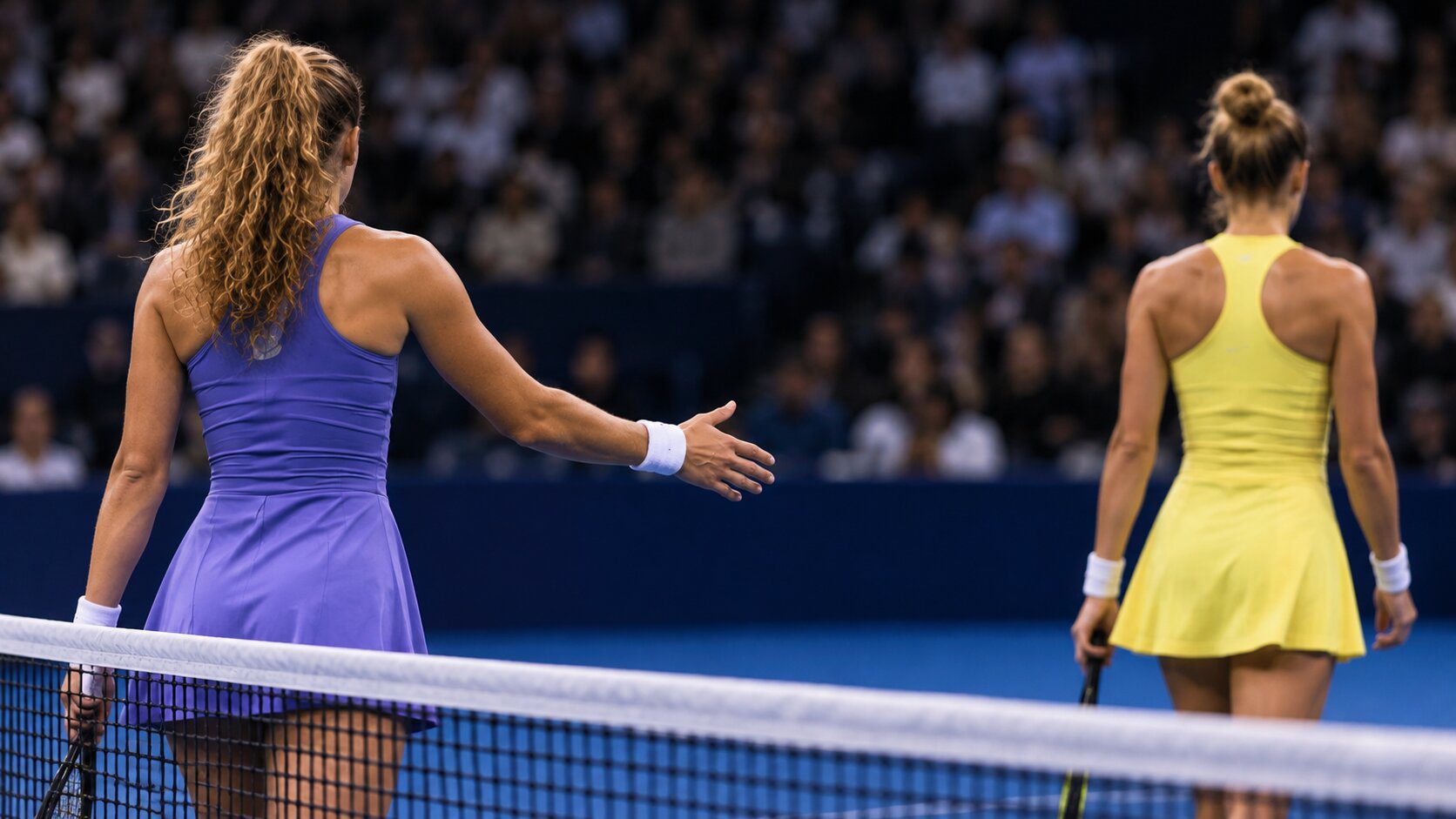
In tennis, the post match handshake at the net is one of the sport’s oldest traditions. Following the final point in Indian Wells, however, there was no handshake and no joint photo at the trophy ceremony.
Since Russia’s full scale invasion of Ukraine in February 2022, Svitolina and her fellow Ukrainian players have maintained a strict policy. They do not shake hands or pose with Russian and Belarusian athletes, who compete on the WTA Tour under neutral flags.
During the trophy ceremony, Svitolina thanked her team and her supporters back home in Ukraine, making no mention of Andreeva. When it was Andreeva’s turn at the microphone, the newly minted World No. 2 chose to bridge the silence.
“I just want to congratulate Elina and the team for an amazing week,” Andreeva told the crowd, praising Svitolina’s resilience in returning to the top of the sport after becoming a mother. “You have a young daughter, you are an amazing mom to come back and do this. It’s super hard. I wish you the best of luck for next season.”
Sportsmanship vs. Solidarity: Two Sides of the Net
The moment immediately sparked a familiar, complex debate across the sports world. Is refusing a handshake bad sportsmanship, or is it a necessary stand during a devastating war?
The Case for Keeping Sports Above Politics
For many fans and traditionalists, sports exist to unite people and showcase individual character rather than national politics. From this perspective, Andreeva, who was just 14 years old when the conflict began, is competing as an individual athlete. Extending congratulations to an opponent after a hard fought final is seen as the gold standard of grace and sportsmanship. Critics of the handshake ban argue that refusing basic athletic courtesy brings division onto the court and penalizes individual players for the actions of their governments.
The Case for the Ukrainian Stance
On the other hand, Ukrainian athletes view the situation through the lens of an ongoing, painful reality at home. Following the tournament, Svitolina told Ukrainian media that Andreeva’s on court congratulations actually made her feel “very uncomfortable” and felt “like a provocation,” noting that both players know the strict boundaries Ukrainian athletes maintain. To Ukrainian players and their supporters, a handshake or a friendly photo is not a harmless formality. Instead, it symbolizes normalcy and friendship at a time when their country is under attack. For them, refusing the gesture is a vital act of solidarity with their nation and military.
Where Do We Draw the Line?
The WTA has acknowledged the emotional weight of the situation, largely leaving post match customs up to the players while allowing Russian and Belarusian athletes to compete as neutrals. Yet, as Mirra Andreeva rises to the very top of women’s tennis and continues to meet top Ukrainian contenders on the biggest stages, these tense moments are unlikely to fade anytime soon.
What do you think? Should athletes put geopolitical conflicts aside on the court in the name of traditional sportsmanship, or is refusing a handshake a justified form of protest during wartime? Drop your thoughts in the comments below!