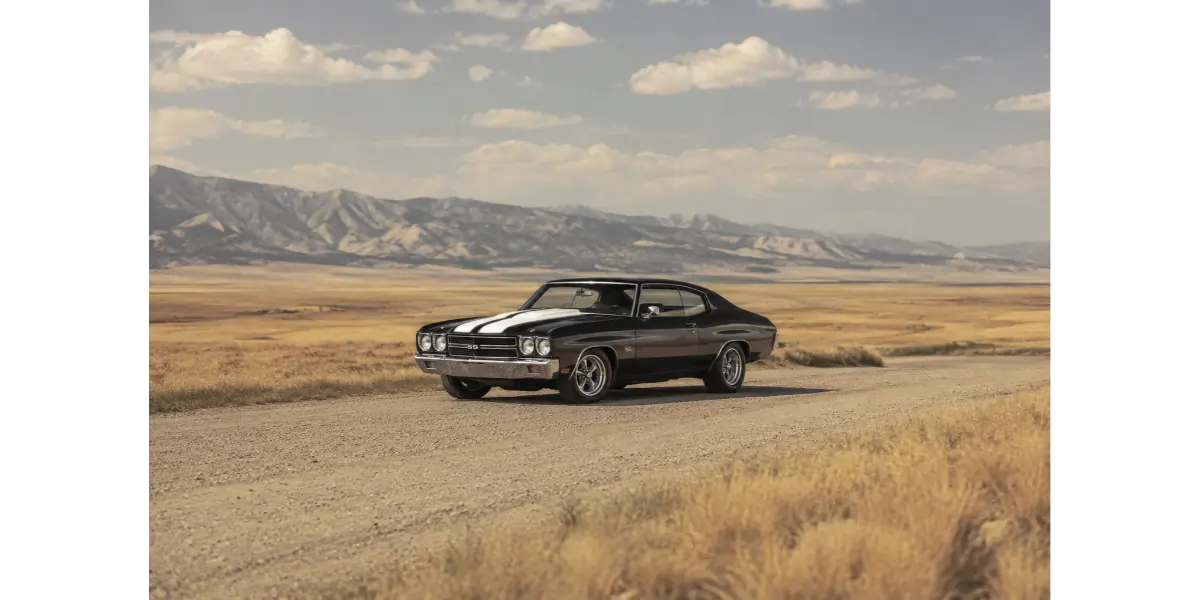
For more than half a century, the Chevrolet Chevelle has stood as one of the most celebrated names in automotive history. While countless performance cars have come and gone, few have left an imprint as deep as the Chevelle, particularly the legendary Chevelle SS models that came to symbolize the golden age of American horsepower. Combining aggressive styling, massive V8 engines, and an unmistakable street presence, the Chevelle became much more than a car—it evolved into a cultural icon.
In 2026, the fascination with classic muscle cars continues to grow as collectors, enthusiasts, and younger generations rediscover the thrill of analog performance. Auction houses regularly showcase pristine Chevelles for six-figure sums, while restored and restomod versions dominate classic car events across the world. The Chevelle’s blend of heritage, power, and emotional nostalgia ensures that it remains one of the most desirable American automotive icons ever built.
The History of the Chevrolet Chevelle
Introduced by Chevrolet in 1964, the Chevelle was originally designed as a mid-size family car positioned between the compact Chevy II and the full-size Impala. It was practical, stylish, and versatile, available in multiple body styles including sedans, wagons, coupes, and convertibles.
However, the rapidly evolving American automotive market of the 1960s transformed the Chevelle into something much greater. As demand for high-performance vehicles surged, manufacturers competed to produce increasingly powerful models. Chevrolet recognized the opportunity and introduced the Chevelle Super Sport (SS) package, marking the beginning of the car’s transition from sensible transportation to a true muscle car legend.
By the late 1960s and early 1970s, the Chevelle had become one of the defining vehicles of the muscle car era, representing everything enthusiasts admired about American performance: large-displacement V8 engines, rear-wheel drive, manual transmissions, and unapologetically bold styling.
From Mid-Size Family Car to Muscle Car Icon
The transformation of the Chevrolet Chevelle mirrors the evolution of the entire American performance industry. Initially marketed for families, the platform proved ideal for larger, more powerful engines. Chevrolet engineers steadily increased engine options, culminating in the introduction of monstrous big-block V8s.
The arrival of the SS396 and later the LS5 and LS6-powered Chevelles changed public perception forever. Suddenly, the once-practical mid-size coupe could challenge dedicated sports cars on the drag strip while remaining comfortable enough for everyday driving.
This dual personality made the Chevelle unique. It wasn’t merely a high-performance machine; it was a versatile platform that allowed drivers to experience thrilling acceleration without sacrificing practicality.
The Legendary Chevelle SS Models
No discussion of the Chevrolet Chevelle is complete without highlighting the iconic Chevelle SS. The Super Sport badge represented Chevrolet’s commitment to building some of the fastest and most exciting vehicles of its era.
The SS396 became an instant hit thanks to its 396-cubic-inch big-block V8, delivering exhilarating straight-line performance. Yet it was the 1970 Chevelle SS 454 that cemented the model’s legendary status.
The LS5 454 V8 officially produced 360 horsepower and 500 lb-ft of torque, while the optional LS6 version was conservatively rated at an astonishing 450 horsepower and 500 lb-ft of torque. Many enthusiasts and historians believe actual output exceeded factory ratings due to insurance and regulatory considerations.
These figures made the Chevelle SS one of the most powerful production cars of its time and a benchmark for Chevelle performance history.
LS5 and LS6: The Big-Block Kings
The LS5 and LS6 engines represent the pinnacle of factory-installed Chevrolet muscle.
LS5 454 V8
- 454 cubic inches (7.4 liters)
- 360 horsepower
- 500 lb-ft torque
- Broad power delivery ideal for street driving
LS6 454 V8
- 454 cubic inches (7.4 liters)
- Officially rated at 450 horsepower
- High-compression design with upgraded internals
- One of the most powerful muscle car engines ever factory-installed
The LS6-powered 1970 Chevelle SS became an instant legend, dominating street races and drag strips across America. Even today, original LS6 cars are among the most valuable and sought-after collector muscle cars in existence.
Engine Options, Transmissions, and Performance
Throughout its production run, the Chevrolet Chevelle offered an impressive range of powertrains. Buyers could choose economical inline-six engines or various small-block and big-block V8 configurations.
Popular Engine Choices
| Engine | Displacement | Approx. Horsepower |
|---|---|---|
| Inline-6 | 194–250 cu in | 120–155 hp |
| Small-Block V8 | 283–350 cu in | 195–300 hp |
| SS396 Big-Block | 396 cu in | 325–375 hp |
| LS5 V8 | 454 cu in | 360 hp |
| LS6 V8 | 454 cu in | 450 hp |
Transmission options included durable three-speed manuals, popular four-speed Muncie manual gearboxes, and Turbo Hydra-Matic automatic transmissions. Enthusiasts often favored the four-speed manual because it offered maximum driver engagement and helped extract the full potential of the big-block engines.
Quarter-mile performance became a defining characteristic of the Chevelle. Properly equipped LS6 models could run the quarter mile in the low 13-second range, with many modified examples dipping into the 12-second bracket—remarkable numbers for a production street car of the early 1970s.
Suspension, Handling, and the Driving Experience
Although the Chevelle was built during an era when straight-line speed took precedence over cornering ability, its suspension setup was well-balanced for the time. Independent front suspension and a sturdy rear live axle provided durability and predictable road manners.
The driving experience remains one of the car’s greatest attractions. The rumble of a naturally aspirated V8, the tactile feel of a manual gearbox, and the unfiltered mechanical feedback create an emotional connection that many modern vehicles struggle to replicate.
Inside, the Chevelle combined simplicity with muscle car attitude. Bucket seats, SS badging, round gauges, and sporty steering wheels gave performance models a purposeful appearance while retaining everyday usability.
Design Language and Styling Evolution
Part of the Chevrolet Chevelle’s enduring appeal comes from its timeless design. The early models featured clean, understated lines, but as the muscle car wars intensified, Chevrolet adopted a more aggressive styling language.
The 1970 model, often considered the definitive Chevelle, featured:
- Bold dual-headlight front fascia.
- Sculpted fenders and muscular body contours.
- Wide grille with aggressive proportions.
- Distinctive SS hood and performance graphics.
- A fastback-inspired roofline that emphasized speed and power.
The combination of elegant simplicity and muscular proportions has allowed the Chevelle to age gracefully, making it one of the most recognizable vintage muscle cars ever produced.
Chevrolet Chevelle vs Rival Muscle Cars
During the height of the muscle car era, the Chevelle competed against several legendary rivals, each helping define American performance culture.
Comparison Table
| Factor | Chevrolet Chevelle | Rival Muscle Cars | Market Impact |
| Performance | Dominant big-block V8 options, including LS6 454 | Strong competition from Mustang, Charger, GTO, and Road Runner | Helped establish the horsepower wars of the late 1960s |
| Styling | Balanced blend of elegance and aggression | Rivals often favored either sportiness or flamboyance | Became one of the most iconic American muscle designs |
| Collectibility | High demand for SS and factory-original models | Similar appreciation among top-tier muscle cars | Premium auction values continue rising |
| Versatility | Mid-size practicality with race-ready performance | Many rivals targeted narrower market segments | Expanded the appeal of muscle cars to broader audiences |
The rivalry with the Ford Mustang, Dodge Charger, Pontiac GTO, and Plymouth Road Runner elevated the entire segment, pushing manufacturers to innovate and compete for horsepower supremacy.
Drag Racing and Street Performance Legacy
The Chevelle quickly became a favorite among drag racers due to its robust chassis and easily modified V8 engines. Weekend racers discovered that factory SS models required relatively few modifications to become highly competitive.
Its success on both sanctioned drag strips and informal street races helped build the mythology surrounding the model. Stories of Chevelles outrunning rivals became part of American automotive folklore, reinforcing the vehicle’s image as a symbol of raw, unfiltered power.
The Chevrolet Chevelle as a Cultural Symbol
The Chevrolet Chevelle has transcended its mechanical specifications to become a powerful symbol of American identity. It represents an era of optimism, industrial strength, and a culture that celebrated freedom through the open road.
Movies, television shows, automotive magazines, and social media have kept the Chevelle in the public eye for decades. For many enthusiasts, owning a Chevelle is about more than driving a classic car—it’s about preserving a piece of history and participating in a shared cultural narrative.
Unique Insight: Why the Chevelle Means More Than Performance?
The enduring popularity of the Chevrolet Chevelle is rooted in emotion as much as engineering.
- Nostalgia and American identity: The Chevelle recalls the excitement of the 1960s and 1970s, an era closely associated with freedom and automotive innovation.
- Scarcity of original high-performance models: Authentic factory LS6 and well-documented SS cars are increasingly rare, boosting their desirability.
- Collector psychology: Enthusiasts value provenance, originality, and historical significance alongside horsepower.
- Storytelling power: Every restored or survivor Chevelle carries a unique history, creating a personal connection between owners and the car.
- Long-term value appreciation: Many collectors view exceptional Chevelles as tangible assets capable of preserving or increasing wealth over time.
Restoration, Restomods, and Collector Demand
The market for restored Chevelle models has never been stronger. Professional restorations that preserve factory specifications command significant premiums, especially when supported by original documentation.
At the same time, the rise of restomod culture has introduced modernized Chevelles equipped with fuel-injected engines, upgraded suspensions, and contemporary braking systems. These builds improve reliability and performance while retaining classic styling.
However, the growth of restomods has also fueled debates about authenticity. Purists often argue that preserving factory originality is essential, while others believe thoughtful modernization keeps these cars relevant for future generations.
How the Chevrolet Chevelle Reflects Muscle Car Market Trends 2026?
The Chevrolet Chevelle remains at the heart of several important trends shaping the classic car market in 2026. As interest in vintage vehicles continues to grow, the Chevelle stands out as one of the most wanted American muscle cars.
Rising Demand for Vintage Muscle Cars
First of all, demand for classic American muscle cars is rising around the world. Buyers from Europe, Australia, the Middle East, and many other regions are actively searching for top-quality examples. As a result, competition for well-kept Chevelles has become stronger than ever.
Investment-Grade Collector Vehicles
In addition, many people now see rare factory-spec Chevelles as long-term investments. As alternative assets become more popular, collector cars are attracting a wider audience. Moreover, major auction sales have shown that exceptional muscle cars can hold their value and often increase in price over time.
Scarcity and Originality
At the same time, original numbers-matching Chevelles with complete history records are becoming harder to find. Because of this, collectors are willing to pay more for authentic cars. The limited supply of untouched examples continues to push values higher.
Media and Pop Culture Influence
Meanwhile, television restoration shows, online car communities, YouTube channels, and digital auction sites have introduced younger audiences to the world of collector muscle cars. As these platforms grow, they help keep the Chevrolet Chevelle relevant and bring new enthusiasts into the hobby.
Restoration vs. Originality
However, one of the biggest discussions among collectors is whether to preserve a car in original condition or build a modern restomod. While both styles have strong followings, factory-original Chevelles with matching numbers and original parts usually command the highest prices. Even so, high-quality restomods remain very popular because they combine classic looks with modern performance and reliability.
Is the Chevrolet Chevelle a Good Investment?
Many market experts and classic car enthusiasts believe the Chevrolet Chevelle remains one of the best long-term choices in the collector car world. Its limited production numbers, especially for high-performance SS models, strong brand recognition, and rich history all help keep demand high.
At the same time, no collectible can guarantee future value. Even so, well-preserved or professionally restored Chevelle SS models with verified originality have performed very well at major auctions and private sales. For many owners, the Chevelle offers the best of both worlds: the joy of driving a true muscle car and the possibility of long-term value growth. Therefore, it continues to be a leading name in the classic car investment 2026 market.
Final Thoughts
The Chevrolet Chevelle represents the true spirit of American muscle. Although it started life as a practical mid-size family car, it quickly grew into one of the most respected performance machines ever built. Through its powerful engines, bold styling, and strong racing heritage, the Chevelle helped define the golden age of muscle cars.
More importantly, its legacy goes far beyond horsepower numbers and performance figures. The Chevelle tells the story of American engineering, freedom, and a love for the open road. Today, as the collector car market continues to evolve and younger buyers discover vintage performance cars, the Chevrolet Chevelle remains just as important as ever. In the end, its lasting appeal proves that true automotive legends never go out of style.
Frequently Asked Questions
What is the Chevrolet Chevelle?
The Chevrolet Chevelle is a mid-size car introduced by Chevrolet in 1964. Over time, it evolved into one of the most famous and respected American muscle cars ever built.
Why is the Chevelle considered a muscle car legend?
The Chevelle earned its legendary status through its powerful V8 engines, bold styling, strong drag-strip performance, and lasting influence on American car culture.
How fast was the Chevrolet Chevelle SS?
Depending on the model and engine, top Chevrolet Chevelle SS versions could complete the quarter mile in the low 13-second range. In addition, modified examples often achieved even quicker times.
What engines did the Chevelle have?
The Chevelle came with a wide range of engines, including inline-six, small-block V8, and big-block V8 options. Most notably, the LS5 and LS6 454-cubic-inch engines became true muscle car icons.
Is the Chevrolet Chevelle a good investment?
Yes, many collectors believe the Chevrolet Chevelle is a strong long-term investment because of its rarity, historical value, and steady demand in the classic car market.
How rare is the Chevelle today?
While standard models can still be found, factory-original SS and LS6-equipped Chevelles are becoming increasingly rare. As a result, they are among the most desirable collector cars.
What makes the Chevelle SS special?
The Chevelle SS stands out because of its high-performance engines, upgraded suspension, unique styling details, and excellent straight-line speed. Together, these features made it one of the top muscle cars of its era.
What are classic muscle car trends in 2026?
Current trends include growing global demand, increased interest from younger collectors, rising appreciation for original cars, continued popularity of restomods, and stronger auction prices for documented factory-spec vehicles.
How much is a restored Chevelle worth?
The value of a restored Chevelle depends on its condition, originality, engine, and history. In general, high-quality restored SS models can sell for impressive prices, while rare examples often reach six figures at major auctions.
Why do collectors love the Chevrolet Chevelle?
Collectors admire the Chevrolet Chevelle for its timeless styling, legendary V8 performance, rich history, and strong emotional appeal. In addition, its limited supply and lasting popularity make it one of the most desirable American muscle cars ever produced.