Photo courtesy of Pexels
Buying an investment property requires more cash than the listing price suggests. Investors need to account for the down payment, financing costs, closing expenses, reserves, and any further work required before the property can generate reliable rental income. Knowing these costs in advance helps investors avoid putting too much cash into the purchase and then struggling to fund the property afterward. These costs include:
1. Down Payment
The down payment is usually the largest upfront expense. The amount you need depends on the property, lender, and financing program. Investment-property financing can require different terms from those available for a primary residence, so investors should not assume that the minimum down payment advertised for owner-occupied homes will apply.
For example, if an investor is considering a $250,000 rental and plans to put 25% down, the down payment alone would be $62,500. But that is only the starting point.
The right down payment is not always the largest one you can afford. Putting additional cash into the property reduces the loan balance, but it also leaves less money available for repairs, vacancies, or another investment opportunity. If you are comparing financing options, our guide to DSCR loans explains how lenders assess rental income and what borrowers should check before applying.
2. Closing Costs
Closing costs are separate from the down payment. They can include lender charges, appraisal fees, title services, recording fees, prepaid interest, insurance, and other transaction expenses. According to the Consumer Financial Protection Bureau, closing costs range between 2% to 5% of the purchase price, excluding the down payment. On a $250,000 purchase, that range would equal roughly $5,000 to $12,500. The actual amount depends on the loan, property, and location.
Investors should review the loan estimate and later the closing disclosure rather than relying on a rough percentage. These documents show the specific charges associated with the transaction.
3. Repairs and Improvements
A property that looks profitable on paper can require immediate spending after closing. A rental may need new flooring, paint, appliances, plumbing work, landscaping, or safety upgrades before a tenant moves in. Instead of treating repairs as an afterthought, create a property-specific improvement budget before making an offer.
Obtain contractor estimates where possible and separate essential work from upgrades that can wait. This also helps investors compare properties more accurately. A $250,000 property requiring $20,000 of immediate work is economically different from a $250,000 property that can be rented with minimal preparation.
Check the Building Before Setting the Repair Budget
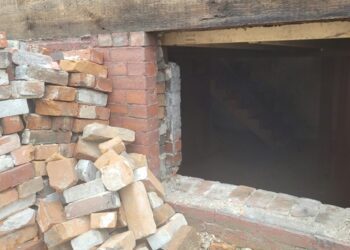
A low purchase price can be misleading when the roof, framing, foundation or drainage needs work. During the inspection period, note water stains, persistent dampness, uneven floors, visible movement and repairs that appear to cover a recurring problem. These observations are prompts for further investigation, not a diagnosis from a photograph or a quick walkthrough. For that decision, our guide to buying a house with foundation problems explains the questions to settle before the inspection deadline.
If the general home inspection raises a structural concern, ask a qualified structural engineer to assess that issue before you commit to a repair figure. Obtain a written scope and contractor bids for the proposed work, then add the likely cost and a contingency to the acquisition budget. Confirm the inspection deadline and contract terms with your own agent or attorney; an estimate obtained after the decision window may be too late to inform the purchase.
4. Cash Reserve
Investors should also keep money outside the transaction for unexpected costs. A vacancy, major appliance failure, roof repair, or insurance expense can create a cash-flow problem if every available dollar went toward the purchase. Consider an emergency cushion when determining how much cash is actually available for closing.
For an investment property, the reserve should be based on the property’s expected expenses and the investor’s broader financial position. A landlord with several properties may have different liquidity needs from someone purchasing a first rental.
Calculate the Total Cash Requirement
A practical way to estimate the required funds is:
Down payment + closing costs + immediate repairs + initial operating reserve = target cash needed
For example, an investor purchasing a $250,000 rental with a $62,500 down payment might also budget $8,000 for closing costs, $10,000 for immediate repairs, and $7,500 for an initial reserve. That produces a target of $88,000 in available cash.
The important point is that the purchase price alone does not determine whether an investment is affordable. Investors need enough liquidity to close the transaction and operate the property afterward.
Endnote
The amount of money needed to buy an investment property depends on the purchase price, financing structure, closing costs, property condition, and cash reserves. Before making an offer, investors should build a complete cash requirement instead of focusing only on the down payment. A property becomes a stronger investment when the buyer can afford not just to acquire it, but also to handle the costs that come with owning and operating it