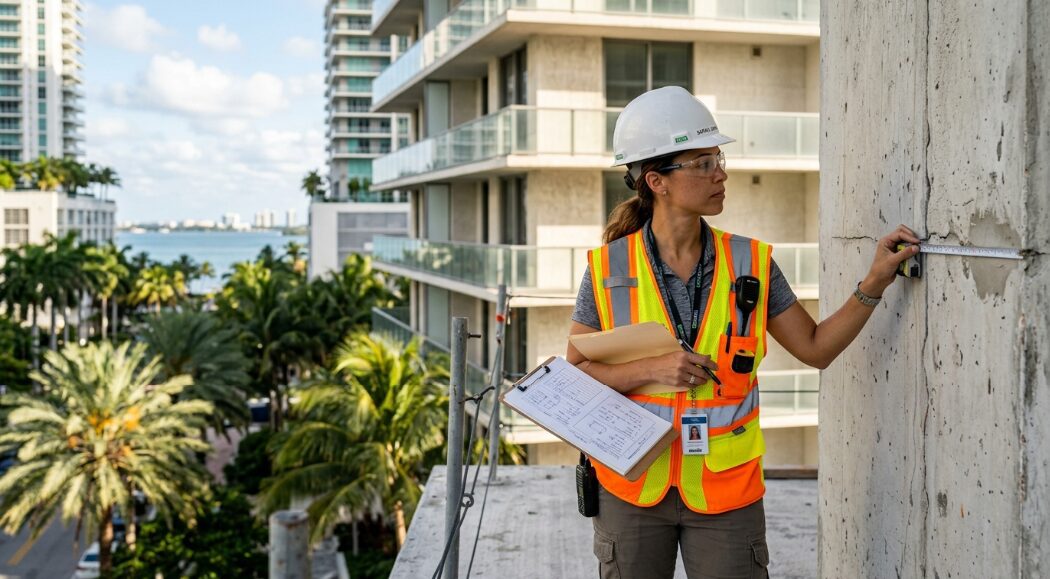
If you own or manage a commercial or multifamily building in Miami-Dade or Broward, you have probably heard people talk about the 40-year recertification. It is still the name most owners type into Google. The trouble is that the timeline behind it has changed, and owners who go by the old number can miss their deadline without realizing it.
So here is how building recertification actually works in South Florida today, who it applies to, and how to get through it without a last-minute scramble.
Why Recertification Exists
South Florida buildings live a hard life. Salt air, heat, humidity, and hurricane season wear down concrete, steel, wiring, and roofing faster than in most parts of the country. Small problems like cracks, corroded rebar, or aging electrical panels can grow quietly for years before anyone notices.
Recertification is meant to catch those problems early. Think of it as a scheduled health checkup for a building. It does not replace regular maintenance, but it forces a licensed professional to take a close look at the structure and the electrical system at set intervals.
Is the “40-Year” Name Still Accurate?
Partly. The programs started decades ago. Miami-Dade was one of the first counties in the country to require these inspections, back in the mid-1970s, and Broward followed in 2005 with a very similar program. Back then the rule was simple: a structural and electrical inspection at 40 years, then again every 10 years.
That is no longer the whole story. Under Section 8-11(f) of the Miami-Dade County Code, buildings now come up for recertification at 30 years if they are inland and 25 years if they are close to the coast, then every 10 years after that. People still say “40-year,” but for a lot of buildings the first inspection arrives much sooner.
The safest move is to look up your certificate of occupancy date and check how far your building sits from the coastline before you assume anything.
Who Has to Do It?
The program is aimed at larger commercial and multifamily properties. In Miami-Dade, single-family homes, duplexes, and small buildings (ten occupants or fewer and 2,000 square feet or less) are exempt. Broward keeps its own exemption list, which covers small residential buildings and certain government-owned properties.
Condo and co-op boards should also know that the state milestone inspection law is a separate requirement. It comes from Florida Statute 553.899 and applies to condominium and cooperative buildings that are three or more stories tall. Some sources say Miami-Dade now lets a completed milestone inspection count toward recertification, but confirm that with your building department before you rely on it. Assuming one covers the other without checking is a common and expensive mistake.
The Recertification Process, Step by Step
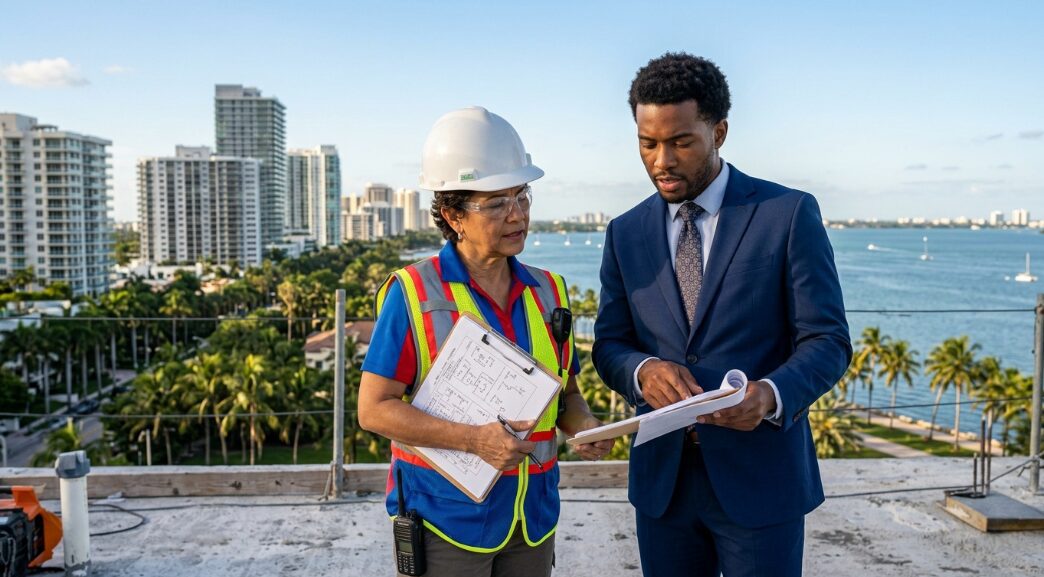
Once you know your building falls under the program, the 40 year recertification process follows a fairly predictable order. Here is how it runs from the first notice to final approval.
Step 1: Confirm your deadline
Find your building’s certificate of occupancy date and work out whether the inland or coastal timeline applies. Miami-Dade has an online recertification portal where you can search by property, which saves a lot of guessing. If your records are incomplete, your city’s building department can usually confirm the date.
Step 2: Watch for the Notice of Required Inspection
The building official sends the owner a formal notice once the building reaches its trigger age. Reports are generally due within 90 days of that notice, so do not let it sit in a mailbox or an old email account. If your ownership or management company changed recently, make sure the county has your current contact details on file.
Step 3: Hire a licensed professional early
The structural and electrical inspections must be done by a Florida-licensed Professional Engineer or Registered Architect. Reports from contractors or property managers do not count. Booking early matters because engineers with recertification experience get scheduled solid during deadline season. Firms that specialize in the Miami-Dade process, such as ASKGBATISTA, often see owners waiting until the 90-day notice arrives, by which point the best appointment windows are already gone. Whoever you choose, ask about their experience with your building type and how they handle repairs that come up along the way.
Step 4: Complete the inspections
The structural side looks at foundations, columns, beams, walls, floors, and the roof. The electrical side covers panels, wiring, and grounding. Larger electrical services can require extra testing, so ask your engineer what applies to your building. Give the inspector easy access to roofs, electrical rooms, and parking areas, because blocked access slows everything down.
Step 5: Handle any repairs
If the report finds unsafe conditions, those repairs must be finished and documented before the building can be certified. Put some money aside for this, especially if maintenance has been put off for a few years. Getting several repair quotes is worth the effort, since prices for concrete restoration and electrical upgrades can vary a lot.
Step 6: Submit the signed and sealed report
The finished report goes to your local building department, digitally signed and sealed. Approval can still stall over open permits, unpaid fees, or missing paperwork, even when the inspection itself went fine. Before you submit, check that no old permits are sitting open on the property.
Step 7: Keep your records
Once you are approved, the next cycle comes around in 10 years. Store the report, repair invoices, and permit records together. A clean file makes the next round much easier, especially when the board or management company changes hands.
What Does Recertification Cost?
There is no single price. Inspection fees depend on building size, height, and the number of electrical systems. The bigger cost is usually repairs, since a building with deferred maintenance can face concrete work, waterproofing, or electrical upgrades. Ask for a written scope and quote before work starts, and treat any estimate given before the inspection as a rough guess only.
What Happens If You Miss the Deadline?
Enforcement builds up in stages. In Miami Beach, for example, an unresolved recertification violation can be sent to a special master after 30 days. Continued non-compliance can escalate to the Unsafe Structure Board, and in the worst cases that may lead to a demolition order and the need to vacate the building. Fines can also pile up while the problem stays open. Most owners never get anywhere near that point, but it shows why acting early matters. Ask for a written scope and quote before work starts, and treat any estimate given before the inspection as a rough guess only. Repairs and upgrades also tie into how a property holds its value over time, a theme covered in this piece on modern luxury home features.
Practical Tips for Boards and Owners
- Start a year ahead. Waiting for the 90-day notice leaves almost no time for repairs.
- Ask about overlap. If your condo needs both a milestone inspection and a recertification, ask your engineer and building department whether one can cover the other.
- Budget before you inspect. Repair costs can end up bigger than the inspection fee itself.
- Check with your city. Places like Miami Beach and Homestead run their own processes, and the details can differ.
Final Thoughts
The old 40-year label is still what most owners search for, but the real requirements start earlier and are stricter than the name suggests. Confirm your building’s trigger age, plan ahead, and work with qualified professionals so your building stays compliant and your residents stay safe.