
Most people who struggle with saving money do not have an income problem. They have a planning problem. They know roughly what they want: a comfortable retirement, a paid-off mortgage, a college fund that does not require loans. But the gap between knowing what you want and building a realistic path to get there is where most financial intentions quietly die.
The personal finance industry has spent years trying to solve this with better visibility. Budgeting apps show you color-coded breakdowns of your spending. Investment platforms display portfolio performance in real time. Banking apps send push notifications every time your balance dips below a threshold. Yet despite all this visibility, the fundamental question remains unanswered for most people: am I actually on track?
The Dashboard Trap
Financial dashboards are excellent at describing the present. They tell you what you spent on groceries, how your portfolio performed last quarter, and whether your checking account can cover next week’s bills. What they do not do is connect today’s numbers to a specific future outcome.
This is more than a design limitation. It reflects a deeper assumption baked into most financial tools: that awareness leads to action. Show people where their money goes, the thinking runs, and they will naturally redirect it toward better outcomes. But decades of behavioral research suggest that awareness alone rarely changes behavior. What changes behavior is a clear goal, a specific plan, and regular feedback on whether you are keeping pace.
A Different Framework
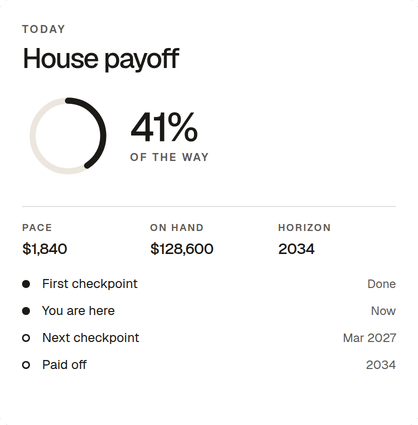
Saving Birds is a financial planning platform that replaces the dashboard model with something it calls a flight plan. The metaphor is intentional: instead of staring at gauges and dials, users chart a course from where they are to where they want to be, with defined stops along the way.
The process starts with naming a goal. Not a vague aspiration like “save more” or “be better with money,” but a specific target: $20,000 for a home down payment, $50,000 in retirement contributions over the next three years, or a fully funded emergency reserve by December. From there, the platform breaks that goal into milestones, each with its own dollar amount and deadline.
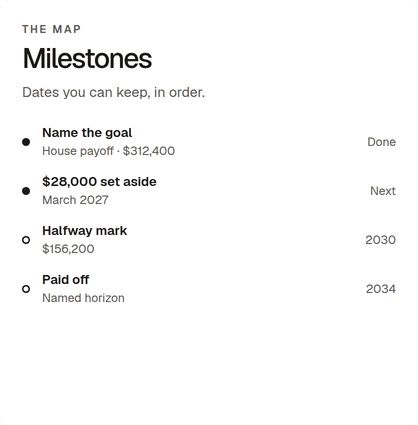
These milestones function as checkpoints on the flight plan. The platform continuously measures whether your current savings pace will get you to each checkpoint on time. If you fall behind, the system sends alerts. If you pull ahead, it adjusts your trajectory. The result is a planning tool that actively participates in your progress rather than passively recording it.
Pace Over Balance
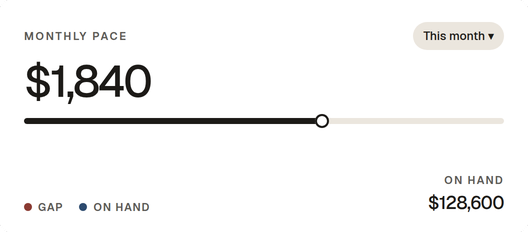
One of the more compelling ideas behind the platform is its focus on pace rather than account balance. Traditional tools celebrate the number in your account. Saving Birds measures whether that number, given your timeline and milestones, means you are ahead, on track, or falling behind.
This reframing matters. A person with $15,000 in savings could be in excellent shape or dangerously behind schedule, depending on what they are saving for and when they need it. Without the context of a plan, the number is meaningless. With a flight plan in place, that same $15,000 becomes a data point on a trajectory, and the platform can tell you exactly what it means for your timeline.
What It Is Not
Saving Birds is deliberate about its boundaries. The platform does not manage investments, offer financial advice, or try to replace a certified planner. It never touches your money. Its entire value proposition sits in the planning layer: the space between setting a goal and reaching it.
This restraint is part of the design philosophy. The team behind the platform describes their approach as “direction over dashboards,” and their tagline captures it plainly: “Turn vague money goals into a flight plan.” In a market crowded with tools trying to be everything, there is a certain clarity in a product that does one thing and commits to doing it well.
The Behavioral Case
The flight plan model aligns with what behavioral scientists have been saying for years. Research on goal-setting consistently shows that specificity drives results. People who commit to saving $500 a month until March outperform those who commit to “saving more,” even when their starting conditions are identical. Milestones create accountability. Deadlines create urgency. And regular check-ins create the feedback loops that keep intention from fading into neglect.
For the segment of earners who make enough to save but still feel like they are falling behind, the problem is rarely about willpower. It is about structure. A flight plan gives that structure a form, and checkpoint alerts give it a pulse. The rest, as Saving Birds would put it, is just staying on pace.
photo by depositphotos