
Key Takeaways
- Research is most valuable when it responds to a specific local need.
- Residents should help make decisions, not simply react to completed plans.
- Clear goals and a small set of useful measures make improvement possible.
- Fair evaluation combines data with participant experiences.
- Long-term programs need flexible planning, shared ownership, and sustainable funding.
Strong community programs rarely begin with a ready-made answer. They begin by listening, reviewing evidence, and identifying what people actually need. Practitioners such as Karen Miner-Romanoff emphasize the importance of integrating research, professional judgment, and community experience when designing services that yield meaningful results. In 2026, educators, nonprofit leaders, public agencies, health providers, and neighborhood partners face pressure to demonstrate the usefulness of their work. A research-based approach does not mean copying a study word-for-word. It means using credible findings as a starting point and then carefully adapting the work to local conditions, resources, cultures, and priorities.
Why Research-Based Programs Matter
Research helps organizations move beyond guesswork. It can reveal which approaches have helped similar groups, what barriers may limit participation, and which outcomes are realistic in a given time frame. Still, a program that succeeds in one city, school district, or neighborhood may need major changes elsewhere. Staffing levels, transportation, language, trust in institutions, and existing services all influence whether an idea will work locally. Published findings should sit alongside lived experience. For example, a neighborhood-specific health initiative in Alabama involves community members in identifying priorities and shaping strategies around nutrition and physical activity. That approach reflects a central lesson for any field: people closest to a problem often understand the practical obstacles that formal data cannot fully capture.
Start With A Clear Community Need
Before selecting workshops, referrals, mentoring, case management, or outreach campaigns, define the problem in plain language. Review local surveys, school records, public health reports, service-use data, and known gaps in support. Then speak directly with residents, families, frontline staff, and trusted local leaders.
Questions That Clarify The Need
- Who experiences the greatest barriers, and why?
- What services already exist, and where do they fall short?
- At what point do people lose access to help?
- What change would make the greatest difference to residents?
A vague goal such as “improve community well-being” is hard to act on. A clearer statement might be: “Increase access to after-school tutoring for middle school students who lack transportation and reliable internet at home.” Specificity helps partners choose appropriate actions and assess whether those actions worked.
Build The Program With The Community
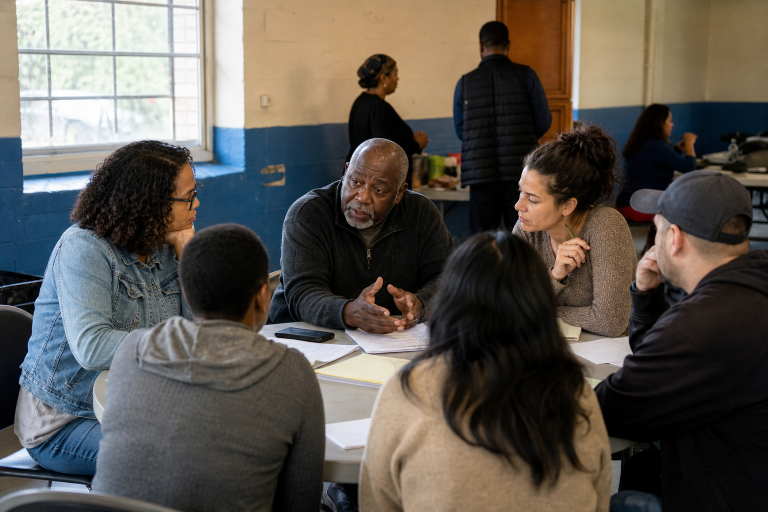
Community participation should be more than a symbolic advisory role. Invite residents into planning sessions, focus groups, short surveys, paid community panels, and pilot reviews. Compensating people for their time, expertise, and transportation communicates that their knowledge has real value. Access also shapes whose voice is heard. Offer language interpretation, childcare, disability accommodations, convenient meeting times, virtual options where appropriate, and locations served by public transportation. Trust grows when organizations report back clearly: explain what people said, which ideas were adopted, and why some requests could not be implemented.
Turn Research Into A Practical Plan
Broad evidence becomes useful only when it is translated into daily decisions. A simple planning model keeps partners aligned:
- Define the need: State the challenge in clear, local terms.
- Set the goal: Describe the change the program intends to create.
- Choose activities: List services, lessons, referrals, supports, or outreach steps.
- Identify the audience: Specify who the program is designed to reach.
- Assign responsibility: Name the partner accountable for each major task.
- Set a review date: Decide when early findings will be examined.
Use A Simple Theory Of Change
A theory of change describes how resources and activities are expected to lead to results. It can expose weak assumptions before a launch. Start with resources such as staff, funding, space, training, and local partners. Connect them to actions such as mentoring, workshops, outreach, referrals, or case support. Then identify early results, including attendance, knowledge, or access, followed by long-term goals such as improved health, safety, education, stability, or employment. This model is not fixed. If participant feedback or early data show that an assumption is wrong, revise the program rather than defending an ineffective plan.
Choose Measures That Show Real Progress
Track both activity measures and outcome measures. Activity measures show what the program delivered, such as completed sessions, attendance, referrals, response times, and materials distributed. Outcome measures show whether participants experienced the intended change, such as improved grades, stronger job retention, better health indicators, or fewer repeat contacts with a system. Do not let one number tell the whole story. Review reach, quality, equity, satisfaction, and outcomes together. The CDC approach to program evaluation also emphasizes regular data collection and the use of findings to support continuous improvement, rather than treating evaluation as a final report produced solely for funders.
Make Evaluation Useful And Fair
Compare results against the original goal rather than changing the standard after the program begins. Use methods that fit the question, including attendance records, administrative data, surveys, interviews, focus groups, and observations. Numerical data can identify patterns, while participant voices can explain why those patterns occurred. Be careful not to confuse correlation with causation. If outcomes improve, the program may have contributed, but other changes may also matter. Protect personal information, collect only the data that is necessary, and explain how it will be stored, shared, and used.
Watch For Equity Gaps And Build Strong Partnerships
Average results can hide unequal experiences. Review participation and outcomes by relevant factors such as age, income, language, disability, neighborhood, race, or access to transportation. Fees, work schedules, internet access, documentation requirements, and program location can quietly exclude the people a service was meant to reach. Strong partnerships help address those gaps. Universities can support research design, nonprofits can provide trusted outreach, schools and health providers can identify needs, agencies can coordinate systems, and residents can test whether plans make sense in real life. Written agreements should clarify decision rights, duties, data access, costs, credit, and communication expectations.
Common Problems And Better Responses
- Low participation: Reassess timing, location, transportation, outreach, and trust.
- Too much data: Keep only measures connected to the primary goal.
- Short-term funding: Build a sustainability plan before the pilot starts.
- Partner confusion: Assign one clear owner to every major responsibility.
- Unexpected results: Treat findings as guidance for improvement, not as failure.
A 90-Day Launch Checklist
- Days 1 through 30: Define the need, review evidence, and gather community input.
- Days 31 through 60: Set goals, assign partners, design activities, and select measures.
- Days 61 through 90: Train staff, test the process, remove access barriers, and collect baseline data.
Questions To Ask Before Scaling
- Did the program reach the people it was designed to serve?
- Did participants find the experience useful and accessible?
- Were results stronger than the starting point?
- Can the program grow without lowering quality?
- Does the community support continued expansion?
- What new risks could appear at a larger scale?
Conclusion
Research gives community programs a stronger starting point, but evidence alone does not create lasting change. The most effective work combines credible data with local knowledge, clear goals, fair evaluation, and shared responsibility. Organizations should understand the needs of the people they serve before designing programs or measuring success. Regular feedback can reveal what is working, where barriers remain, and which approaches need improvement. Transparent reporting also helps build trust among residents, partners, and funders. Rather than following a fixed plan regardless of results, community programs should remain flexible enough to respond to changing conditions and emerging needs. Organizations that listen closely, measure honestly, and adapt quickly will be better prepared to create services that communities can use, trust, and sustain. Over time, this approach can strengthen partnerships, improve resource allocation, and support more meaningful outcomes.
photo by depositphotos