Florida has become one of the busiest destinations for private capital in the country. Family offices and high-net-worth investors are pouring money into waterfront developments, mixed-use towers, and large-scale infrastructure projects from Miami to Tampa to Jacksonville. Most due diligence on these deals focuses on the obvious variables: land value, zoning, market demand, and the track record of the developer. Fewer investors look closely at a quieter factor that shapes whether a project holds up structurally and legally over time, which is the ongoing professional standards of the engineers signing off on the work.
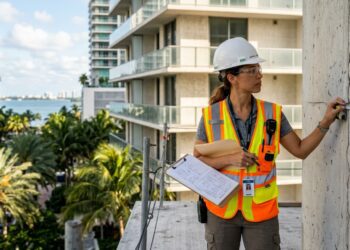
Every structural calculation, drainage plan, and load analysis behind a Florida development carries the stamp of a licensed professional engineer. That license is not a one-time credential. Florida requires PEs to complete 18 hours of continuing education every two years to keep their license active, with specific hours dedicated to state laws and rules, professional ethics, and the engineer’s area of practice. An engineer who lets that requirement slide risks a lapsed license, and a project built on work from a lapsed license creates exposure that surfaces years later, often during a sale, a refinance, or a lawsuit.
Why This Matters to Investors Who Never Touch a Blueprint
Family offices rarely hire engineers directly. They fund developers, back construction partners, or invest in firms that employ engineering teams. That distance from the technical work is exactly why the compliance layer deserves attention during diligence. A developer’s financial statements and permit history tell part of the story. The professional standing of the engineering firm behind the project tells another part, and it is the part most investment committees never ask about.
A firm with engineers who treat continuing education as a genuine professional practice, choosing coursework tied to their specialty rather than the fastest option available before a deadline, tends to produce more consistent work. That consistency shows up in fewer change orders, fewer disputes with municipal reviewers, and fewer surprises during a post-construction audit. None of that guarantees a project’s success, but it removes one layer of risk that is cheap to check and expensive to ignore.
The Numbers Behind Florida’s Requirement
Florida’s continuing education structure breaks down cleanly. Of the 18 required hours per two-year cycle, one hour must cover Florida’s laws and rules for engineering practice, one hour must cover professional ethics, and four hours must relate directly to the engineer’s stated area of practice. The remaining 12 hours can cover any topic relevant to the field. Licenses renew on February 28, and the state requires engineers to keep documentation of completed coursework for four years in case of an audit.
These details matter less for their specifics and more for what they represent. A framework this structured exists because the state treats ongoing competency as a public safety issue, not a formality. Buildings that fail, drainage systems that back up during a hurricane, and foundations that shift under load are not abstract risks in Florida. They are recurring headlines. The continuing education requirement is one of the mechanisms meant to keep that risk lower, and it works best when engineers and the firms that employ them take it seriously rather than treating it as paperwork.
Building Compliance Checks Into Diligence
Investors and family offices structuring deals around Florida real estate or infrastructure can add a short, specific set of questions to their diligence process. Asking a developer or construction partner whether their engineering team’s licenses are current, whether any have faced disciplinary action, and how the firm tracks continuing education requirements takes little time and produces useful signal. A firm that answers quickly and specifically usually has good internal systems. A firm that hesitates or has to check with someone else often does not.
For investors or advisors who want a clear picture of what the state actually requires, a resource that lays out Florida PE Continuing Education rules in plain language is more useful than trying to interpret statute language directly. Having that context on hand makes it easier to ask informed questions during a diligence call and to recognize a vague or evasive answer when one comes up.
The Insurance and Resilience Angle
Florida’s insurance market adds another reason to pay attention to this layer of a deal. Carriers underwriting coastal and hurricane-exposed properties have grown far more selective about the engineering documentation behind a structure, and post-storm claims increasingly hinge on whether the original design met current code and whether the engineer of record was in good standing at the time. A project backed by an engineering team with a clean, current licensing history and coursework that reflects real study of wind load, flood mitigation, and updated building codes is in a stronger position when a claim gets scrutinized. That translates directly into insurability, premium costs, and how quickly a property can be rebuilt or refinanced after a major storm. Investors who treat resilience as a financial variable, not just an engineering one, have another reason to ask about the professional standing of the team behind a project before capital goes out the door.
A Small Line Item With Outsized Consequences
None of this suggests that continuing education hours should carry the same weight as a project’s financial model or market analysis. It suggests something narrower: that the professional discipline behind an engineering firm is a legitimate, low-cost data point that belongs in the diligence conversation for any large Florida development. Family offices spend considerable resources verifying a developer’s balance sheet and litigation history. Spending a fraction of that effort verifying the licensing status and professional standards of the engineers behind the physical structure is a reasonable extension of the same instinct.
Florida’s growth is not slowing, and neither is the flow of private capital chasing it. As more family offices and high-net-worth investors move from passive real estate positions into direct development and infrastructure stakes, the quality of the engineering underneath those investments becomes harder to ignore. Checking whether that quality is backed by real, current professional standards rather than assumed reputation is a small step that protects capital in a way most diligence checklists still miss.