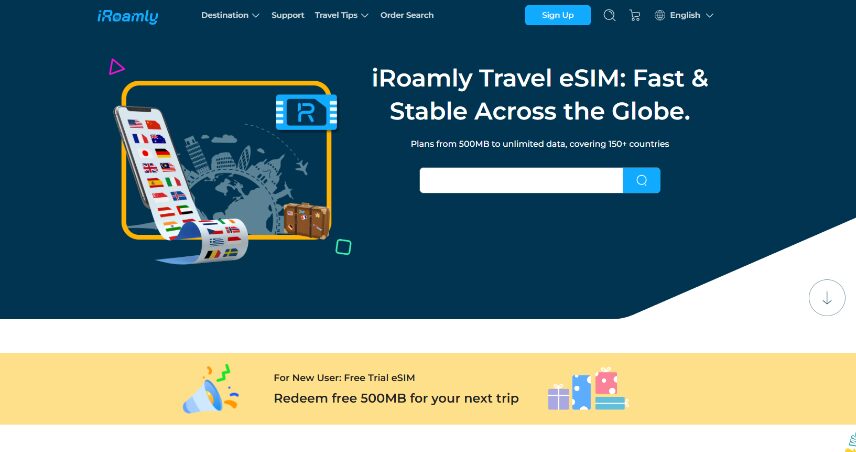
The moment of truth for any travel service is not when everything works perfectly. It is when something goes wrong. On my third day in Istanbul, my primary SIM card stopped recognising the local network, leaving me with no way to call my hotel or access the reservation confirmation I had saved in my email. That was when I realised how much I had come to rely on my secondary data connection. The service that saved that trip was Iroamly esim, and what followed was three weeks of testing across cities, trains, and remote areas to understand how reliable it actually is.
The Setup That Made a Difference
The installation process was the first indicator of how the service would perform. After purchasing a plan, I received a QR code and activation code via email. The instructions were clear: install the eSIM one to two days before departure using a stable Wi-Fi connection. I followed that advice, and the installation took about three minutes on both an iPhone and an Android device.
The Labelling Trick That Prevents Mistakes
One small but useful detail I discovered during setup was the ability to label the eSIM line. On iOS, you can name the line something like “iRoamly Data” to distinguish it from your primary SIM. This becomes important when you are managing multiple lines and need to ensure that data is routed through the correct one. It is a minor feature, but it reduces the risk of accidentally using your home carrier’s roaming, which can result in unexpected charges.
How the Service Performed in Real Conditions
I tested the service across three distinct environments: dense urban areas, train routes between cities, and coastal regions with less infrastructure. The results were consistent but not without variation.
Urban Performance in Major Cities
In Istanbul, Tokyo, and Singapore, the connection was stable and fast. Navigation apps loaded quickly, social media feeds refreshed without delays, and video calls over WhatsApp maintained acceptable quality. The service appeared to connect to the best available local network automatically, which is consistent with the claim that iRoamly handles network switching smoothly. From a practical user perspective, the experience was indistinguishable from using a local SIM card.
Transit and Moving Connections
On trains and buses, the connection occasionally dropped when passing through tunnels or remote stretches, but this is expected with any mobile network. What impressed me was how quickly the service reconnected once the train emerged from the tunnel. The handoff between network towers appeared seamless, and I rarely had to manually refresh or toggle settings to restore connectivity.
Coastal and Less Dense Areas
In coastal towns and areas with lighter infrastructure, the connection was still usable but slower. Streaming video required buffering, and large file uploads were not practical. However, basic tasks like checking email, using maps, and sending messages remained functional. The result may vary depending on the local partner network’s coverage, and iRoamly’s claim of providing stable signal and high-speed data in 99% of countries appears to align with my experience.
The Support Experience When Things Were Unclear
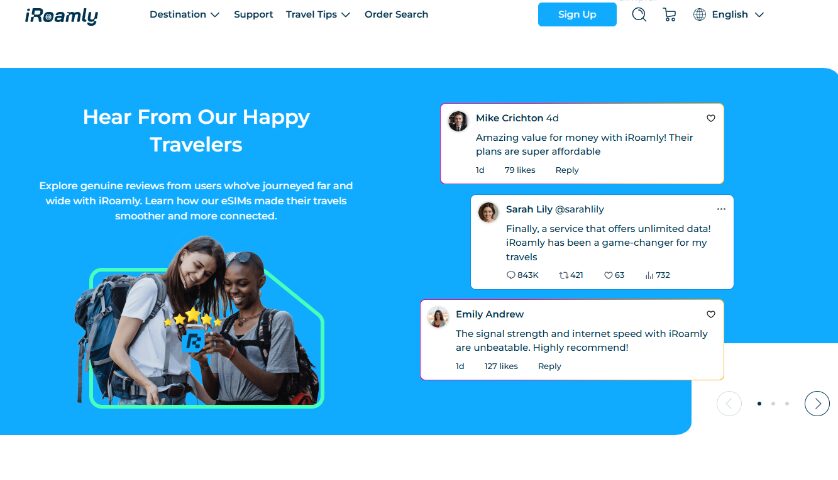
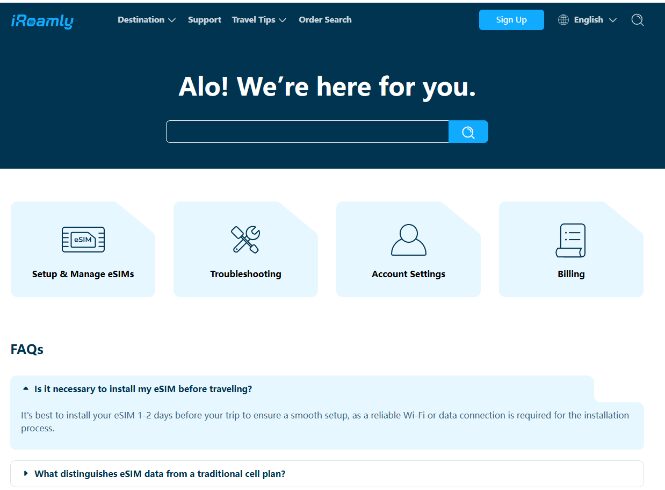
At one point, I had a question about whether the eSIM would work on a secondary device. I reached out to customer support through the app and received a response within a few hours. The reply was clear and directed me to the compatible device list on the website. While I did not have a major issue that required urgent resolution, the support interaction was professional and informative. This matters because travel services often fail when you need help the most, and iRoamly’s support appeared responsive.
The Device Compatibility Question
One limitation worth noting is that eSIM functionality depends entirely on your device. Most phones released in the last three years support eSIM, but not all models do. Additionally, the eSIM can only be installed on one device and cannot be reused after removal. If you plan to switch devices during your trip, you will need to plan accordingly. This is not a flaw in the service but a constraint of the technology itself.
A Step-by-Step Look at the Daily Experience
To give a clearer picture of what using iRoamly actually feels like, here is a breakdown of the daily routine.
Morning: Checking Data Usage
Each morning, I checked the data usage in my phone settings to ensure I was not exceeding my daily limit. The iRoamly app also provides usage tracking, which I found helpful for monitoring consumption. The data calculator I used before purchasing the plan had estimated around 1.85GB per day for my activities, and my actual usage was close to that number. This alignment between prediction and reality gave me confidence that I had chosen the right plan.
Midday: Navigating and Sharing
During the day, I used the connection for navigation, messaging, and occasional social media updates. The hotspot feature allowed me to share the connection with a companion’s phone and a laptop. Sharing did not appear to affect speed significantly, though I suspect that performance would degrade if multiple devices were streaming simultaneously. The capability itself is valuable, as many competing services restrict or cap hotspot sharing.
Evening: Streaming and Video Calls
In the evenings, I tested the connection with video calls and streaming. The quality varied depending on the location and time of day, but it was consistently usable. For travellers who rely on video calls for work or staying in touch with family, the unlimited plans offer peace of mind without the anxiety of overage charges. The daily plans, which throttle after a set limit, are less suitable for heavy evening usage but work well for lighter travellers.
The Free Trial as a Reliability Test
Before committing to a paid plan, I claimed the free 500MB trial available in over 100 countries. The trial does not require a credit card, which removed the hesitation of entering payment details for an untested service. I used the trial at my destination to verify coverage and speed before purchasing a longer plan. The fact that the trial is available for destinations like Turkey, the United States, Japan, and many others means you can test the service in the exact location where you will be travelling.
Where the Service Could Be Better
No service is without limitations, and iRoamly is no exception. The data-only nature of the service means you do not receive a phone number, which can be inconvenient if you need to receive SMS verification codes or make traditional phone calls. While you can use internet-based calling apps, this is not a complete substitute for a local number in some situations.
Additionally, the service relies on partner networks, and the quality of those networks varies by country. In some destinations, the partner network may have limited coverage in rural areas. Checking the coverage map before purchasing is advisable, especially if you plan to travel outside major cities.
Finally, the installation process requires a stable internet connection. If you wait until you are at the airport with unreliable Wi-Fi, you may encounter difficulties. The recommendation to install the eSIM one to two days before departure is practical advice that I would echo based on my experience.
Who Should Consider This Service
Based on my testing, iRoamly is a good fit for travellers who prioritise convenience and reliability over absolute cost minimisation. If you frequently travel internationally and want a consistent experience across destinations, the service delivers. If you value the ability to share your connection with others, the unlimited hotspot feature is a differentiator. If you are visiting Turkey and want to avoid the airport SIM card queues, the turkey esim option follows the same straightforward process.
For occasional travellers, the free trial may be sufficient for short trips. You can claim the 500MB, use it for a day, and decide whether to purchase a longer plan. The flexibility of the service, combined with the risk-free entry point, makes it accessible to a wide range of travellers.
The Bottom Line After Three Weeks
After three weeks of using iRoamly across multiple destinations, I came away with a clear assessment: the service is reliable, the setup is straightforward, and the performance is consistent with what you would expect from a local provider. The free trial removes the risk of commitment, and the transparent plan structure makes it easy to choose the right option. It is not perfect, and the data-only limitation and device compatibility requirements are real constraints. But for travellers who understand those trade-offs and plan accordingly, iRoamly offers a dependable way to stay connected without the headaches of physical SIM cards or unpredictable roaming bills.