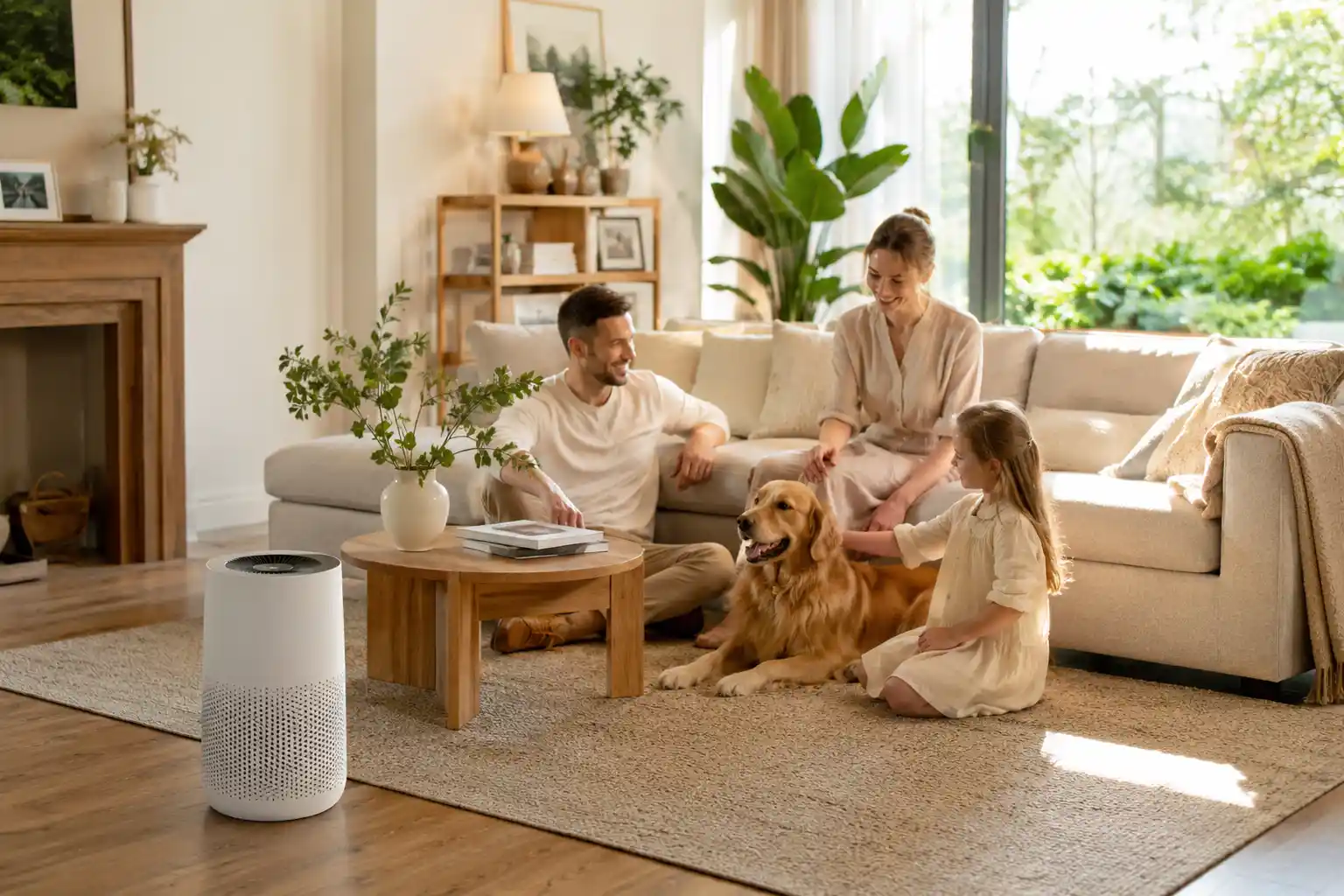
Indoor air quality has become a growing concern for homeowners, and many people now want to improve air quality at home as part of a healthier lifestyle. While outdoor pollution often receives the most attention, the air inside a home can contain dust, allergens, pet dander, volatile organic compounds (VOCs), and other contaminants that affect daily comfort and well-being. As awareness of these issues grows, more households are investing in technology designed to create a healthier indoor environment.
At the same time, smart home innovation has transformed the way people manage their living spaces. Today’s smart air purifier systems, smart humidifier devices, and connected monitoring tools provide real-time insights into home air quality while automating many aspects of indoor environmental management. Rather than relying on guesswork, homeowners can now track air conditions and respond to changing circumstances with greater precision.
The result is a growing movement toward smart home wellness, where technology supports preventive health habits and improves everyday living. From advanced HEPA air purifier systems to intelligent humidity control, modern devices make it easier than ever to create cleaner, more comfortable indoor spaces.
Why Indoor Air Quality Matters More Than Ever?
People spend a significant portion of their lives indoors, whether working remotely, sleeping, relaxing, or caring for family members. Consequently, the quality of indoor air has a direct impact on comfort and overall well-being.
Poor indoor air quality can contribute to a range of concerns, including irritation of the eyes, nose, and throat, increased allergy symptoms, unpleasant odors, and reduced comfort levels. Long-term exposure to airborne pollutants may also negatively affect respiratory health, especially among children, older adults, and individuals with existing sensitivities.
Several trends have increased interest in home air quality:
- Greater awareness of indoor environmental health
- Increased time spent indoors
- Growing adoption of smart home technology
- Rising concern about allergens and pollutants
- Focus on wellness-oriented living spaces
As a result, homeowners increasingly view air quality management as an essential component of modern home wellness rather than a luxury feature.
Common Sources of Indoor Air Pollution
Indoor air pollution often originates from everyday household activities and materials. Many pollutants are invisible, making them difficult to identify without monitoring technology.
Common indoor air challenges include:
- Dust accumulation
- Pet dander and pet hair
- Mold spores
- Cooking emissions
- Smoke particles
- Household cleaning chemicals
- Building materials and furnishings
- Outdoor pollutants entering through windows and doors
Homes with pets frequently experience elevated levels of airborne particles. Likewise, cooking activities can release fine particulate matter that lingers long after meals are prepared. Even new furniture and flooring materials may emit VOCs that affect indoor air conditions.
Because multiple pollution sources often exist simultaneously, homeowners benefit from a comprehensive approach that combines filtration, humidity control, and monitoring technology.
How Smart Air Purifiers Help Improve Air Quality at Home?
One of the most effective ways to improve air quality at home is through the use of modern air purification systems. Unlike traditional models that operate at a fixed setting, today’s smart air purifier devices continuously monitor environmental conditions and adjust performance automatically.
Many premium systems incorporate advanced sensors capable of detecting airborne particles and changes in air quality. When pollution levels rise, the purifier increases filtration speed. When conditions improve, it reduces energy consumption and noise levels.
HEPA filtration technology remains one of the most important components of modern purification systems. A HEPA air purifier is designed to capture extremely small airborne particles, helping reduce dust, pollen, pet dander, and other contaminants.
Smart purifier features commonly include:
- Real-time air quality sensors
- Smartphone app controls
- Automatic fan-speed adjustment
- Voice assistant compatibility
- Scheduled operation
- Filter-life monitoring
- Energy-efficient automation
Several leading consumer brands now offer connected air purification solutions. For example, Dreame’s AP10 Air Purifier targets pet owners with multi-stage filtration and visible hair collection, while the PM20 Air Purifier uses AI-powered airflow technology and advanced filtration to manage larger spaces.
The growing popularity of these devices reflects a broader shift toward intelligent environmental management that requires less manual intervention.
Indoor Air Problems and Solutions
| Indoor Air Problem | Potential Cause | Recommended Solution |
|---|---|---|
| Excess dust | Poor filtration, outdoor particles | HEPA air purifier |
| Pet dander | Cats, dogs, shedding animals | Smart air purifier with pet-focused filtration |
| Dry air | Heating systems, winter weather | Smart humidifier |
| Cooking odors | Food preparation emissions | Air purifier with activated carbon filtration |
| High allergen levels | Pollen and airborne particles | HEPA filtration and monitoring |
| Mold concerns | Excess moisture | Humidity control and ventilation |
While identifying problems is important, effective air quality management requires understanding another key factor: humidity.
The Role of Humidity in a Healthy Indoor Environment
Air quality discussions often focus on pollutants, yet humidity plays an equally important role in creating a healthy indoor environment.
Air that is too dry may contribute to discomfort, including dry skin, irritated nasal passages, and increased static electricity. On the other hand, excessive humidity can encourage mold growth and create conditions that support dust mites.
Maintaining balanced indoor humidity helps support comfort throughout the year. Smart humidifier systems simplify this process by automatically monitoring moisture levels and adjusting output accordingly.
Modern humidifiers offer several advantages:
- Automated humidity regulation
- Smartphone-based controls
- Scheduling features
- Quiet operation
- Real-time humidity monitoring
- Improved moisture consistency
Devices such as the Dreame H40 Humidifier demonstrate how smart technology is transforming humidity management. With app connectivity and automated controls, users can maintain desired humidity levels without constant manual adjustments.
When paired with purification technology, humidity management creates a more balanced indoor environment that supports comfort and air quality goals simultaneously.
Air Quality Monitoring and Smart Automation
The next evolution in home air quality management involves monitoring technology that provides continuous environmental feedback.
Traditional approaches often relied on assumptions. Today, air quality monitoring systems provide measurable data that helps homeowners make informed decisions.
Many smart monitoring systems track:
- Fine particulate matter (PM2.5)
- Temperature
- Humidity
- VOC levels
- Air quality trends
- Filter performance
Access to this information through smartphone applications gives homeowners greater visibility into daily environmental changes. For example, users can observe how cooking affects air quality, identify seasonal pollution patterns, or determine when filters require replacement.
Automation further enhances these benefits. Connected devices can communicate with one another and respond automatically to changing conditions. If pollutant levels rise, a purifier can increase airflow. If humidity drops below a target threshold, a humidifier can activate automatically.
This intelligent responsiveness reduces the need for manual adjustments while helping maintain consistent indoor conditions.
Building a Smart Home Wellness Ecosystem
As smart home adoption continues to accelerate, many homeowners are integrating multiple devices into a unified wellness ecosystem.
Instead of viewing air purification, humidity control, and monitoring as separate functions, connected systems enable them to work together toward common environmental goals.
Smart Air Quality Devices and Their Benefits
| Device Type | Primary Benefit | Best Use Case |
| Smart Air Purifier | Removes airborne particles | Homes with allergies or pets |
| HEPA Air Purifier | Advanced particle filtration | Dust and allergen reduction |
| Smart Humidifier | Maintains balanced humidity | Dry climates and winter months |
| Air Quality Monitor | Tracks environmental conditions | Data-driven home management |
| Smart Fan | Improves air circulation | Comfort and airflow optimization |
A complete smart home wellness strategy may include purification, humidity management, circulation, and monitoring technologies operating together.
For example, a homeowner could use a smart air purifier in the living room, an air quality monitor throughout the house, a smart humidifier in bedrooms, and a connected fan to improve circulation. Through smartphone controls and automation routines, these devices create a coordinated approach to environmental management.
This integration aligns with broader consumer interest in healthier living spaces and technology-enabled wellness practices.
Maintenance Tips for Better Indoor Air
Even the most advanced devices require proper maintenance to perform effectively. Fortunately, a few consistent habits can significantly improve results.
Key maintenance practices include:
- Replace filters according to manufacturer recommendations
- Clean purifier intake areas regularly
- Refill and sanitize humidifier reservoirs
- Monitor humidity levels throughout the year
- Vacuum frequently using quality filtration systems
- Improve ventilation when outdoor conditions permit
Additionally, homeowners should periodically review air quality data to identify patterns and opportunities for improvement. Small adjustments can often produce meaningful long-term benefits.
When maintenance becomes part of a routine, smart devices can operate more efficiently while providing more reliable performance.
Unique Insight: Why Cleaner Indoor Air Is Becoming a Wellness Priority?
Efforts to improve air quality at home increasingly represent more than a technology trend. They reflect a broader shift toward proactive wellness and preventive lifestyle management.
Historically, people focused on health primarily through nutrition, exercise, and medical care. Today, environmental factors are becoming an important part of the wellness conversation. Homeowners increasingly recognize that the spaces where they spend most of their time influence daily comfort, productivity, and quality of life.
Technology plays a crucial role in this transformation. Air quality sensors provide actionable environmental data, allowing individuals to make informed decisions rather than relying on assumptions. Meanwhile, smart devices automate many wellness-supporting activities, making healthier habits easier to maintain.
Looking ahead, future smart home wellness strategies will likely combine air purification, humidity control, environmental monitoring, temperature management, and automation into unified systems. As connected home technology continues to evolve, healthier indoor environments may become a standard feature of modern living rather than an optional upgrade.
For that reason, the decision to improve air quality at home increasingly represents an investment in long-term comfort, wellness, and quality of life.
Conclusion
The desire to improve air quality at home reflects a growing understanding of the connection between indoor environments and overall well-being. As smart home wellness technology continues to advance, homeowners have access to increasingly sophisticated tools that simplify air quality management.
From smart air purifier systems and HEPA filtration to smart humidifier technology and air quality monitoring, connected devices provide practical solutions for creating healthier living spaces. When combined with good maintenance habits and thoughtful environmental management, these technologies help support a healthier indoor environment while aligning with broader trends in wellness-focused living and connected home innovation.
Frequently Asked Questions
What is the best way to improve air quality at home?
The best way to improve air quality at home is through a combination of HEPA filtration, humidity management, regular cleaning, ventilation, and air quality monitoring.
Do smart air purifiers really work?
Yes. Smart air purifiers use sensors and automated controls to adjust filtration levels based on current air conditions, helping remove airborne particles more efficiently.
What does a HEPA air purifier remove?
A HEPA air purifier can capture dust, pollen, pet dander, mold spores, and other fine airborne particles.
Why is humidity important indoors?
Balanced humidity supports comfort and helps prevent conditions that may contribute to dryness or excessive moisture-related concerns.
Can a smart humidifier improve comfort levels?
Yes. Smart humidifiers automatically maintain target humidity levels, creating more consistent indoor comfort.
What causes poor indoor air quality?
Common causes include dust, pet dander, cooking emissions, smoke, VOCs, mold spores, and inadequate ventilation.
Are air quality monitors worth buying?
Many homeowners find them valuable because they provide real-time environmental data and help guide air quality improvement strategies.
How often should air purifier filters be replaced?
Replacement schedules vary by manufacturer and usage patterns, although many filters require replacement every few months.
Can smart devices help reduce indoor allergens?
Yes. Smart purifiers equipped with HEPA filtration can help reduce airborne allergens such as pollen, dust, and pet dander.
How do I improve air quality at home year-round?
Use air purification, humidity control, regular maintenance, proper ventilation, and continuous monitoring throughout the year to maintain consistent indoor air quality.