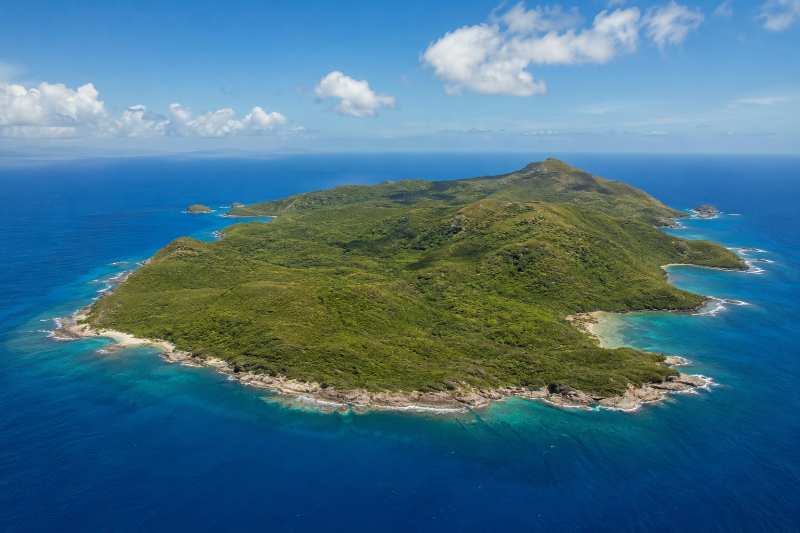
The global market for ultra-rare luxury assets continues to evolve as wealthy individuals seek investments that combine exclusivity, prestige, and long-term value. While trophy penthouses, historic estates, and fine art remain highly desirable, private islands occupy a category of their own. They offer something increasingly difficult to acquire in today’s interconnected world: complete control, privacy, and scale.
Over the past decade, billionaire investors, family offices, and luxury developers have shown growing interest in large island acquisitions. Moreover, shifting priorities around privacy, lifestyle flexibility, and wealth preservation have pushed private island ownership into the spotlight. As luxury property trends 2026 continue to emphasize scarcity-driven assets, opportunities for acquiring substantial island holdings remain exceptionally limited.
Among the most intriguing examples is Ronde Island, a remarkable Caribbean private island located near Grenada. Frequently discussed as a rare private island for sale opportunity, the island has attracted attention from investors seeking large-scale luxury private islands with significant development potential. Additionally, its strategic Caribbean location places it within one of the world’s most established luxury tourism regions.
Unlike many smaller island offerings, Ronde Island combines size, natural beauty, and long-term flexibility. Consequently, it has become increasingly relevant within conversations surrounding wealth preservation assets, private island investment, and the future of ultra-luxury real estate. In a world where scarcity drives value, large private islands remain among the rarest real estate opportunities available anywhere.
What Makes Ronde Island One of the Caribbean’s Most Unique Private Islands?
Ronde Island is situated off the coast of Grenada in the southeastern Caribbean. Its location provides both accessibility and seclusion, a combination that remains difficult to achieve within global luxury real estate markets. Moreover, the island enjoys proximity to international transportation networks while maintaining the privacy expected from an elite island destination.
The island’s scale immediately distinguishes it from many competing properties. While numerous Caribbean islands marketed to affluent buyers measure only a few dozen acres, Ronde Island spans thousands of acres, creating extraordinary development flexibility. As a result, future owners have the opportunity to envision projects ranging from private compounds to large hospitality ventures.
Natural features further enhance its appeal. The island offers:
- Extensive coastline and waterfront access
- Elevated terrain with panoramic Caribbean views
- Protected bays and natural harbors
- Diverse ecosystems and tropical landscapes
- Significant privacy buffers from neighboring developments
Meanwhile, its position within the Caribbean strengthens its attractiveness. The region continues to attract international travelers, investors, and luxury hospitality brands, creating long-term strategic advantages for large-scale island ownership.
Why Has Ronde Island Attracted Global Billionaire Interest?
Ultra-high-net-worth individuals increasingly seek assets that cannot be easily replicated. Unlike luxury residences in major cities, private islands represent finite opportunities. Therefore, ownership itself becomes a powerful status symbol.
Privacy remains one of the primary drivers behind billionaire interest. Many affluent individuals now prioritize controlled environments where they can operate, entertain, and relax away from public attention. Consequently, large islands offer advantages that even the world’s most exclusive residential communities struggle to match.
Several factors support growing interest in Ronde Island:
- Exceptional scarcity value
- Large-scale development possibilities
- Prestige associated with island ownership
- Potential legacy asset creation
- Strategic Caribbean location
Additionally, family offices increasingly evaluate tangible assets that combine lifestyle benefits with long-term appreciation potential. In contrast to highly liquid financial markets, island ownership provides a unique blend of personal enjoyment and strategic asset allocation.
Strategic Value Analysis
| Feature | Ronde Island Advantage | UHNW Appeal | Investment Significance |
|---|---|---|---|
| Scale | Thousands of acres | Rare ownership opportunity | Exceptional scarcity |
| Privacy | Limited public access | High security and discretion | Long-term demand driver |
| Location | Near Grenada | Caribbean lifestyle appeal | Tourism and development potential |
| Development | Flexible master planning | Custom luxury concepts | Value creation opportunities |
| Prestige | Landmark ownership | Global status asset | Legacy positioning |
How Does Ronde Island Compare With Other Caribbean Private Islands?
The Caribbean contains numerous island offerings; however, relatively few combine substantial land area with favorable geography and development flexibility. As a result, Ronde Island occupies a distinctive position within the regional market.
Many luxury private islands focus on turnkey residential experiences. Conversely, Ronde Island presents a blank canvas for visionary investors. This flexibility appeals to developers and long-term owners who seek customization rather than predefined structures.
Several differentiators stand out:
- Larger scale than many regional competitors
- Significant planning flexibility
- Potential for mixed-use development
- Strong privacy characteristics
- Strategic proximity to Grenada
Moreover, market positioning plays an important role. While smaller islands often compete primarily on lifestyle appeal, larger islands can support broader investment strategies. Therefore, investors may view them as both luxury assets and development platforms.
What Development Potential Makes Ronde Island So Valuable?
Development potential often represents the most compelling aspect of large island acquisitions. Because the island remains largely undeveloped, future owners possess substantial flexibility regarding long-term vision and implementation.
Luxury hospitality represents one possible pathway. The Caribbean remains one of the world’s strongest resort markets, and demand for exclusive experiences continues to rise. Consequently, a carefully designed resort could capitalize on growing interest in experiential luxury travel.
Potential development concepts include:
- Ultra-luxury private villa communities
- Boutique hospitality resorts
- Wellness and retreat destinations
- Eco-luxury tourism projects
- Multi-generational family compounds
Additionally, mixed-use development models may become increasingly attractive. For example, a project could integrate hospitality, residential ownership, marina facilities, and conservation initiatives within a unified master plan.
Meanwhile, the island’s size supports phased development strategies. Investors can therefore preserve flexibility while adapting to changing market conditions over time.
Why Is the Caribbean Still a Magnet for Luxury Island Investment?
The Caribbean continues to occupy a dominant position within global luxury property markets. Although alternative destinations exist, few regions offer comparable combinations of climate, accessibility, and tourism infrastructure.
Weather remains a significant attraction. Warm temperatures throughout much of the year create consistent appeal among international buyers. Moreover, many investors view Caribbean ownership as both a lifestyle enhancement and a strategic asset allocation decision.
Key regional advantages include:
- Established luxury tourism industry
- International flight connectivity
- Strong global brand recognition
- Diverse ownership opportunities
- Consistent demand from affluent travelers
Additionally, wealth migration trends support regional demand. As more high-net-worth individuals seek geographic diversification, Caribbean assets increasingly serve as secondary residences, retreat destinations, and long-term investments.
Furthermore, Grenada real estate has benefited from growing international awareness. Consequently, nearby assets such as Ronde Island gain additional visibility among global investors.
Long-Term Investment Assessment
| Investment Factor | Short-Term Value | Long-Term Potential | Strategic Importance |
| Scarcity | High | Very High | Core value driver |
| Tourism Growth | Moderate | High | Revenue potential |
| Luxury Demand | Strong | Stronger | Market support |
| Asset Diversification | High | High | Portfolio resilience |
| Development Optionality | Moderate | Exceptional | Value creation |
How Can Ronde Island Function as a Wealth Preservation Asset?
Wealth preservation increasingly influences purchasing decisions among affluent investors. Consequently, tangible assets with limited supply often attract significant attention during periods of economic uncertainty.
Large islands possess characteristics similar to other scarce luxury assets. Unlike traditional real estate markets where new inventory can emerge, private islands remain inherently limited. Therefore, scarcity creates a natural support mechanism for long-term value.
Several wealth preservation characteristics stand out:
- Finite global inventory
- Strong scarcity dynamics
- Potential inflation resilience
- Geographic diversification benefits
- Legacy planning opportunities
Additionally, ownership structures can support multi-generational wealth strategies. Family offices frequently seek assets capable of retaining relevance across decades rather than years. As a result, landmark properties often become central components of legacy portfolios.
In contrast to purely financial holdings, large islands combine emotional value, lifestyle utility, and investment potential within a single asset class.
What Sustainability Opportunities Exist on Ronde Island?
Sustainability has become increasingly important throughout the luxury real estate sector. Modern buyers frequently expect environmental responsibility alongside luxury and exclusivity.
Because Ronde Island offers significant undeveloped land, future projects could integrate sustainability principles from the beginning. Consequently, developers would have opportunities to implement advanced environmental strategies without retrofitting existing infrastructure.
Potential sustainability initiatives include:
- Renewable solar energy systems
- Water conservation technologies
- Sustainable building materials
- Marine ecosystem protection
- Biodiversity conservation programs
Moreover, eco-conscious development increasingly aligns with luxury consumer preferences. High-net-worth buyers often seek experiences that combine comfort with responsible stewardship. Therefore, sustainability may enhance both marketability and long-term asset value.
Meanwhile, conservation-oriented planning could preserve natural landscapes while supporting premium positioning within the global luxury market.
When Could Large Private Islands Become Even More Valuable?
Several macroeconomic trends suggest increasing relevance for large private islands in coming years. Global wealth creation continues to expand, particularly among entrepreneurs, investors, and technology founders.
At the same time, supply remains extremely limited. New private islands cannot be created on demand. Consequently, scarcity pressures may intensify as buyer competition grows.
Future value drivers include:
- Rising global billionaire populations
- Increasing demand for privacy
- Luxury tourism expansion
- Asset diversification trends
- Growing interest in experiential ownership
Additionally, geopolitical uncertainty often encourages investors to diversify geographically. Therefore, strategically located island assets may benefit from broader wealth preservation trends.
As luxury property trends 2026 continue emphasizing exclusivity and control, large-scale island ownership appears increasingly aligned with evolving investor priorities.
Why Is Ronde Island More Than Just a Private Island?
Ronde Island is no longer simply a luxury property opportunity. Instead, it represents a strategic asset capable of serving multiple objectives simultaneously.
The island combines exceptional scale with privacy, flexibility, and long-term optionality. Consequently, owners can pursue development strategies ranging from personal retreat concepts to sophisticated hospitality ventures.
Several structural advantages define its significance:
- Rare large-scale ownership opportunity
- Extensive development flexibility
- Strong privacy characteristics
- Multi-generational legacy potential
- Strategic Caribbean positioning
Moreover, changing wealth priorities increasingly favor assets that deliver both utility and exclusivity. In contrast to conventional investments, landmark islands create opportunities for legacy creation while maintaining tangible value.
Unique Insight: Why Ronde Island Reflects the Future of Ultra-Luxury Ownership
One of the most compelling aspects of Ronde Island is its alignment with evolving definitions of luxury. Historically, luxury centered on location and prestige. However, modern ultra-high-net-worth buyers increasingly prioritize autonomy, flexibility, and control.
Consequently, large island assets have become symbols of strategic independence rather than simple lifestyle purchases. Ronde Island reflects this transition. It offers a platform where private enjoyment, development vision, sustainability goals, and long-term wealth planning can coexist within a single asset.
Therefore, its significance extends beyond traditional real estate. It represents an emerging category of ultra-rare ownership opportunities that combine scarcity, utility, and legacy potential in ways few other assets can match.
What Does the Future Hold for Ronde Island and Caribbean Luxury Assets?
The outlook for Caribbean luxury assets remains positive as global wealth continues to expand. Moreover, demand for privacy-focused ownership experiences shows little sign of slowing.
Ronde Island remains particularly compelling because it combines characteristics that are increasingly difficult to find elsewhere. Its scale, location, development flexibility, and scarcity position it favorably within evolving luxury investment markets.
Looking ahead, several factors support continued interest:
- Growing UHNW investor participation
- Increasing scarcity value
- Expanding luxury tourism opportunities
- Rising demand for exclusive island ownership
- Greater emphasis on legacy asset creation
Ultimately, Ronde Island stands among the Caribbean’s most fascinating luxury asset opportunities. As demand for exclusive island properties, private island investment, and ultra-rare real estate continues to grow, the island remains uniquely positioned to capture attention from investors seeking a true billionaire island retreat. Consequently, its relevance within global luxury property markets is likely to strengthen in the years ahead.
Frequently Asked Questions?
What is Ronde Island?
Ronde Island is a large privately owned island located near Grenada in the Caribbean. It is known for its scale, development potential, privacy, and appeal among luxury real estate investors.
Where is Ronde Island located?
The island is situated off the northern coast of Grenada in the southeastern Caribbean region.
Why is Ronde Island famous among luxury investors?
Investors are attracted by its rarity, substantial land area, strategic Caribbean location, and potential for luxury development.
How large is Ronde Island?
Ronde Island is significantly larger than many Caribbean private islands, making it attractive for large-scale projects and private estate concepts.
Is Ronde Island a good investment?
Many investors view large private islands as long-term assets due to their scarcity, development flexibility, and potential wealth preservation characteristics.
Why do billionaires buy private islands?
Billionaires often seek privacy, exclusivity, control, and legacy-building opportunities that private islands can provide.
What makes Caribbean private islands attractive?
Climate, accessibility, tourism demand, international prestige, and limited inventory contribute to their appeal.
Can private islands preserve wealth?
Private islands may function as wealth preservation assets because of scarcity value, diversification benefits, and long-term ownership appeal.
What are luxury property trends 2026?
Luxury property trends 2026 emphasize privacy, exclusivity, sustainability, experiential ownership, and scarce real estate assets.
What is the future of Ronde Island?
The future of Ronde Island appears closely linked to growing global demand for rare luxury assets, large-scale private ownership opportunities, and Caribbean luxury development.