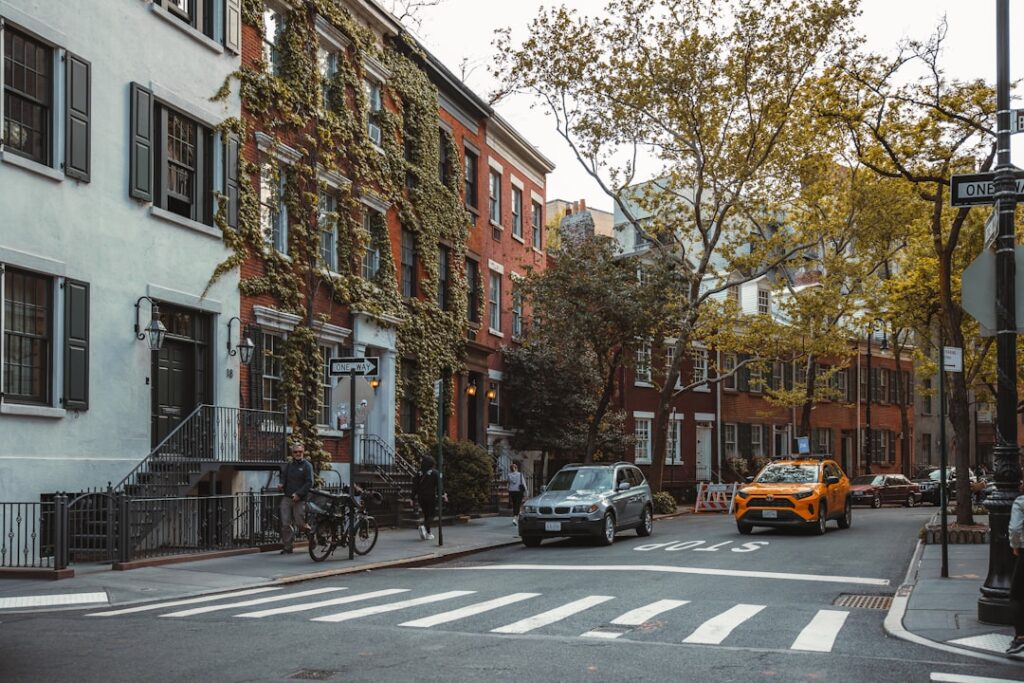
For decades, the world’s wealthiest individuals have competed for the most prestigious assets available. Luxury penthouses in global capitals, sprawling estates, museum-quality art collections, and superyachts have traditionally represented the pinnacle of status and success. However, luxury property trends 2026 reveal a noticeable shift in how ultra-high-net-worth (UHNW) individuals define exclusivity.
As global wealth expands and competition for scarce luxury assets intensifies, affluent buyers increasingly prioritize privacy, autonomy, and unique ownership experiences. Consequently, assets that offer both prestige and practical value are gaining attention across family offices, entrepreneurial circles, and billionaire investment portfolios.
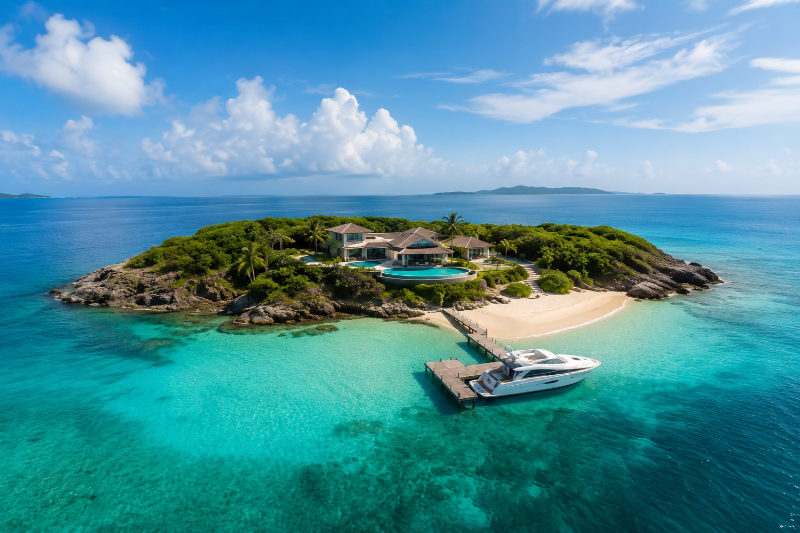
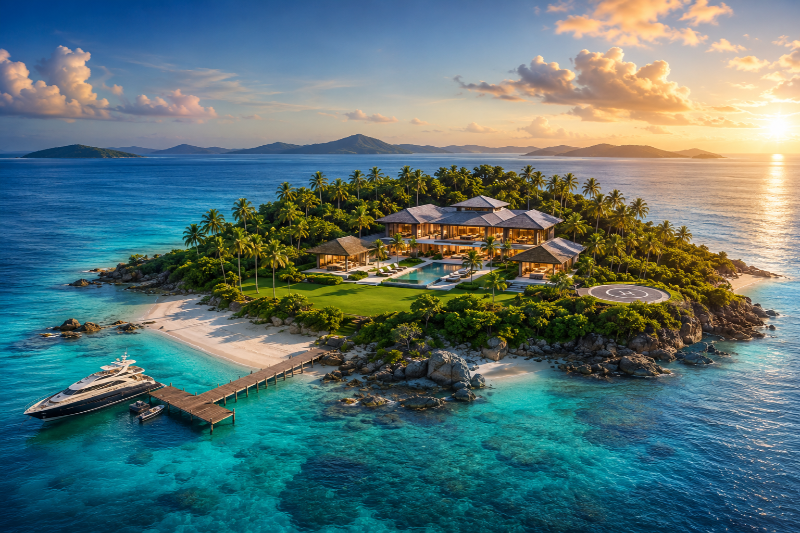
Within this evolving landscape, private islands as trophy assets are becoming a serious topic of discussion. While private islands for sale were once viewed primarily as lifestyle purchases, today many investors see luxury private islands as a compelling blend of exclusivity, wealth preservation assets, and long-term investment opportunities.
Moreover, private island ownership offers something increasingly difficult to obtain in an interconnected world: complete control over space, privacy, and environment. Therefore, private islands are beginning to compete directly with traditional trophy assets such as luxury estates, superyachts, and fine art collections.
What Defines a Trophy Asset in Modern Wealth Management?
A trophy asset occupies a unique position within a wealth portfolio. Unlike conventional investments, trophy assets combine financial value with prestige, rarity, and personal enjoyment. They often symbolize achievement while simultaneously serving as stores of wealth.
Modern trophy assets typically possess several defining characteristics. First, they are scarce by nature. Second, they command strong demand among elite buyers. Third, they offer enduring desirability that extends beyond short-term market cycles.
Key characteristics include:
- Limited availability
- Global prestige recognition
- Long-term desirability
- Status signaling power
- Wealth preservation potential
- Emotional and lifestyle value
Meanwhile, wealth managers increasingly recognize that certain luxury assets can perform both financial and personal functions. As a result, investors are evaluating trophy assets through a broader lens that includes lifestyle returns alongside financial considerations.
Why Are Private Islands Emerging as Trophy Assets?
The growing appeal of private islands stems largely from scarcity. Unlike luxury condominiums or custom-built mansions, new islands cannot simply be developed into existence. Their finite supply creates inherent exclusivity.
Moreover, privacy has become one of the most valuable commodities among high-net-worth individuals. Celebrities, entrepreneurs, technology founders, and global investors increasingly seek environments where they can operate without public visibility. Private islands deliver a level of seclusion that few other assets can match.
Several factors are driving demand:
- Extremely limited global inventory
- Complete ownership control
- High privacy and security
- Prestige associated with exclusivity
- Flexible development opportunities
Additionally, island ownership often allows buyers to create personalized retreats that align with their lifestyle preferences. Consequently, many billionaire island retreats now function as private resorts, family compounds, or luxury hospitality investments.
Comparison of Trophy Asset Characteristics
| Trophy Asset | Scarcity | Privacy Level | Prestige Factor | Wealth Preservation Potential |
|---|---|---|---|---|
| Private Islands | Very High | Very High | Very High | High |
| Superyachts | Moderate | High | Very High | Moderate |
| Fine Art | High | Low | Very High | High |
| Luxury Penthouses | Moderate | Moderate | High | Moderate |
| Historic Estates | High | High | High | High |
How Do Private Islands Compare to Superyachts, Art, and Luxury Real Estate?
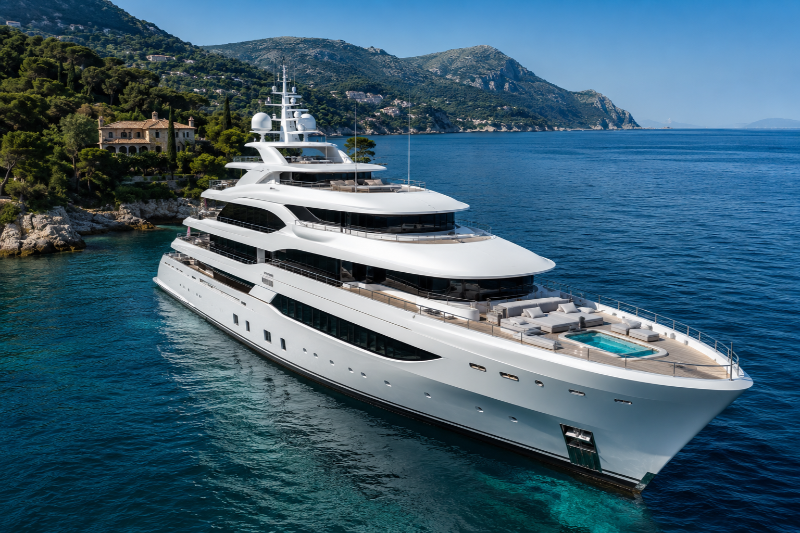
Private islands differ significantly from other luxury asset classes. Superyachts, for example, offer mobility and prestige. However, they typically depreciate and require substantial annual maintenance costs.
In contrast, many exclusive island properties possess land value that may appreciate over time. Therefore, owners gain both lifestyle benefits and potential capital preservation advantages.
Fine art offers exceptional portability and prestige. Nevertheless, valuation often depends heavily on market sentiment, collector demand, and auction activity. Private islands, on the other hand, represent tangible real estate with intrinsic utility.
Comparative advantages of islands include:
- Physical land ownership
- Development flexibility
- Potential appreciation
- Lifestyle utility
- Multi-generational use
Meanwhile, luxury real estate remains an important competitor. Yet island ownership provides a degree of exclusivity that even the world’s most prestigious urban addresses struggle to match.
Which Regions Offer the Most Desirable Private Islands for Sale?
Geography plays a crucial role in island desirability. Certain destinations consistently attract international buyers because of accessibility, climate, legal frameworks, and prestige.
The Bahamas remains one of the most sought-after markets due to its proximity to North America. Similarly, the Caribbean offers exceptional natural beauty and established luxury infrastructure.
Highly desirable regions include:
- Bahamas
- Caribbean islands
- French Polynesia
- Fiji
- Maldives
- Scotland
- Canada
French Polynesia attracts buyers seeking remote tropical luxury. Meanwhile, Fiji appeals to investors looking for pristine natural environments and long-term tourism potential.
On the other hand, Scotland and Canada provide unique opportunities for buyers interested in wilderness experiences, conservation projects, and cooler climates. Consequently, demand spans a broad range of geographic preferences.
What Makes Private Islands Attractive to Billionaires?
Privacy remains one of the strongest motivations behind private island ownership. Billionaires often operate under intense public scrutiny, making private environments increasingly valuable.
Furthermore, islands offer complete control over security, infrastructure, and guest access. As a result, owners can create highly customized environments tailored to their specific needs.
Major attractions include:
- Enhanced privacy
- Security advantages
- Family gathering spaces
- Prestige ownership
- Freedom from public intrusion
Additionally, many UHNW individuals view islands as family legacy assets. Rather than purchasing assets designed solely for consumption, they seek properties capable of serving multiple generations.
Therefore, billionaire island retreats frequently become long-term family destinations that strengthen generational connections while preserving wealth.
How Do Private Islands Support Wealth Preservation?
Wealth preservation has become a central concern for family offices and global investors. Economic uncertainty, inflation, and geopolitical volatility have encouraged greater interest in scarce hard assets.
Private islands possess characteristics that support wealth preservation. Their limited supply reduces the likelihood of oversaturation, while increasing global wealth continues to expand the buyer pool.
Benefits include:
- Scarcity-driven value support
- Portfolio diversification
- Inflation resilience
- Tangible asset ownership
- Long-term appreciation potential
Moreover, islands often behave differently from traditional financial assets. Consequently, they can provide diversification benefits that complement stocks, bonds, and private equity investments.
Many investors now view private island investment as part of a broader strategy focused on preserving purchasing power across generations.
Ownership Benefits of Private Islands
| Ownership Benefit | Lifestyle Value | Investment Value | Legacy Potential |
| Privacy | Very High | Moderate | High |
| Exclusivity | Very High | High | High |
| Development Rights | High | High | High |
| Family Retreat Use | Very High | Moderate | Very High |
| Scarcity | Moderate | Very High | High |
Why Are Luxury Property Trends 2026 Favoring Private Islands?
Several powerful forces are reshaping luxury property markets worldwide. Privacy-focused lifestyles have become increasingly important, particularly among technology entrepreneurs and globally mobile investors.
Meanwhile, remote work and digital connectivity have transformed perceptions of location. Wealthy individuals no longer need to remain tied to major urban centers for business operations.
Emerging trends include:
- Increased privacy demand
- Remote luxury living
- Sustainable development interest
- Growth in billionaire populations
- Experiential luxury preferences
Additionally, buyers increasingly seek experiences rather than possessions alone. Therefore, private islands provide immersive lifestyle environments rather than simply functioning as residences.
Luxury property trends 2026 suggest that experiential ownership will continue influencing purchasing decisions among affluent investors worldwide.
When Could Private Islands Become Mainstream Trophy Assets?
Although island ownership remains exclusive, broader market awareness continues to grow. Family offices increasingly evaluate islands alongside traditional ultra luxury real estate opportunities.
Moreover, rising wealth creation across technology, finance, and entrepreneurship expands the potential buyer base. Consequently, more investors are considering islands as part of diversified prestige portfolios.
Future growth drivers include:
- Expansion of UHNW populations
- Family office participation
- Global wealth creation
- Limited inventory growth
- Increasing lifestyle prioritization
Nevertheless, islands will likely remain niche due to finite supply. Their scarcity, however, may strengthen their status as elite trophy assets rather than limiting demand.
Why Are Private Islands as Trophy Assets Becoming More Than Luxury Purchases?
The evolution of private islands as trophy assets reflects a broader transformation in wealth management philosophy. Today’s affluent buyers seek assets that deliver multiple forms of value simultaneously.
Rather than serving solely as symbols of status, islands increasingly function as integrated lifestyle ecosystems. Owners can enjoy privacy, host family gatherings, preserve wealth, and potentially benefit from long-term appreciation.
Key functions include:
- Wealth-preservation vehicles
- Lifestyle enhancement platforms
- Family legacy assets
- Privacy-focused environments
- Alternative investment opportunities
Moreover, private islands as trophy assets offer a rare combination of emotional satisfaction and financial utility. Consequently, they occupy a unique position among modern luxury holdings.
This structural shift helps explain why many investors now view island ownership through the same strategic lens traditionally reserved for prime real estate and other wealth preservation assets.
What Does the Future Hold for Private Islands as Trophy Assets?
The outlook appears increasingly favorable. Global wealth growth continues to expand the pool of potential buyers, while the supply of premium islands remains fundamentally constrained.
Moreover, younger generations of wealthy entrepreneurs often prioritize experiences, privacy, and sustainability. Therefore, islands align closely with evolving luxury preferences.
Several trends support long-term demand:
- Growing UHNW populations
- Continued scarcity
- Rising interest from family offices
- Increasing lifestyle-driven investment decisions
- Expanding global luxury markets
As a result, private islands as trophy assets may become one of the defining symbols of wealth in the coming decade. While penthouses, yachts, and fine art will remain important, islands increasingly represent a unique convergence of prestige, privacy, lifestyle, and investment value.
Consequently, the future of private islands as trophy assets appears closely tied to the broader evolution of global wealth itself. For many affluent buyers, island ownership is no longer merely a luxury purchase—it is becoming a strategic expression of long-term wealth stewardship.
Frequently Asked Questions?
What are private islands as trophy assets?
Private islands as trophy assets are exclusive island properties owned primarily for prestige, privacy, lifestyle benefits, and wealth preservation. They combine luxury ownership with long-term investment potential.
Why are billionaires buying private islands?
Billionaires purchase private islands for privacy, security, family retreats, prestige, and control over their environment. Many also view them as long-term legacy assets.
Are private islands good investments?
They can be attractive investments because of scarcity, limited supply, and strong demand among wealthy buyers. However, returns vary by location, infrastructure, and market conditions.
How do private islands compare to superyachts?
Private islands offer permanent land ownership and potential appreciation, while superyachts generally depreciate and require significant maintenance expenses.
Which countries have the best private islands for sale?
Popular destinations include the Bahamas, Caribbean nations, Fiji, French Polynesia, Canada, Scotland, and the Maldives.
What are the costs of private island ownership?
Costs can include acquisition, infrastructure development, staffing, maintenance, transportation, utilities, insurance, and environmental management.
Can private islands preserve wealth?
Yes. Their scarcity, tangible nature, and long-term desirability can support wealth preservation strategies and portfolio diversification.
Why are private islands considered status symbols?
Ownership demonstrates exclusivity, financial capability, and access to one of the world’s rarest categories of luxury property.
What are luxury property trends 2026?
Luxury property trends 2026 include increased demand for privacy-focused properties, experiential luxury, sustainable developments, remote destinations, and ultra-exclusive real estate.
What is the future of private islands as trophy assets?
Demand is expected to grow as global wealth expands and buyers seek scarce, experience-driven assets that combine prestige, privacy, and investment value.