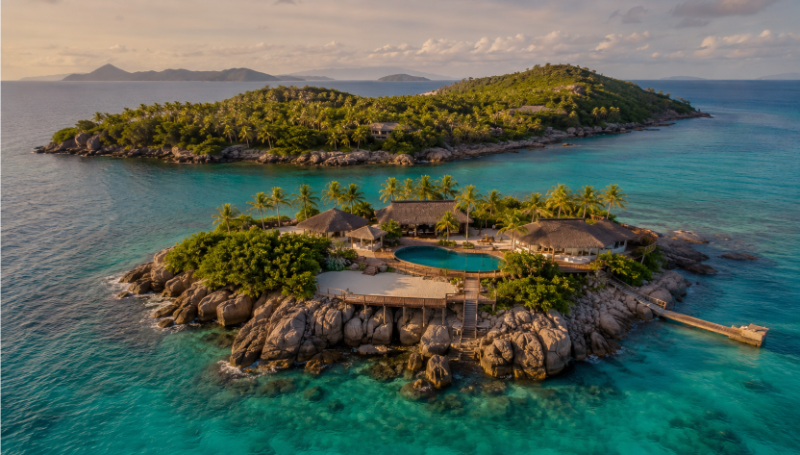
Rare assets have always attracted the world’s wealthiest individuals. However, few asset classes generate as much fascination as private islands. Across global luxury markets, investors continue searching for opportunities that combine exclusivity, prestige, privacy, and long-term value. As a result, interest in ultra-premium island ownership continues to expand among billionaires, entrepreneurs, celebrities, family offices, and sovereign wealth investors.
Among the most expensive private islands for sale, buyers find a unique blend of lifestyle and investment potential. Unlike traditional waterfront estates, private islands offer complete control over an environment, creating a level of exclusivity that few luxury assets can match. Moreover, the global inventory of premium islands remains extremely limited, making these properties some of the rarest forms of real estate available.
Demand for private islands for sale, luxury private islands, and other exclusive island properties has increased alongside broader luxury property trends 2026. Meanwhile, investors increasingly view island acquisitions as potential wealth preservation assets capable of maintaining value through economic cycles. Consequently, private island ownership has evolved beyond a lifestyle purchase and become a strategic component of global wealth management.
At any given time, only a small number of elite islands are available worldwide. Therefore, competition for the highest-quality offerings remains intense whenever exceptional properties enter the market.
What Makes the Most Expensive Private Islands for Sale So Valuable?
The value of elite private islands stems primarily from scarcity. While luxury homes can be built in many locations, islands are finite geographic assets. Moreover, many of the world’s most desirable islands occupy prime coastal regions with exceptional natural beauty and strategic accessibility.
Privacy represents another significant pricing driver. High-profile owners often seek locations where they can avoid public attention while maintaining complete control over access. Consequently, islands offer a level of security unavailable in most traditional luxury developments.
Several additional factors influence valuation:
- Geographic rarity
- Deep-water access
- Development potential
- Tourism opportunities
- Natural beaches and coastline
- Proximity to international airports
- Government ownership regulations
- Existing infrastructure
Prestige also plays an important role. Similar to trophy penthouses or iconic estates, island ownership serves as a status symbol among ultra-high-net-worth individuals. Therefore, buyers often pay substantial premiums for unique opportunities that may never become available again.
Why Are Billionaires Spending Tens of Millions on Private Islands?
Privacy remains one of the strongest motivations behind private island acquisitions. Many wealthy individuals seek environments where they can relax, entertain guests, and conduct business without constant public visibility.
Moreover, islands provide exceptional flexibility. Owners can create luxury resorts, family compounds, wellness retreats, conservation projects, or hospitality ventures. As a result, a single acquisition can satisfy both lifestyle and investment objectives.
Key motivations include:
- Enhanced security and privacy
- Multi-generational family planning
- Prestige ownership
- Hospitality development opportunities
- Portfolio diversification
- Long-term asset preservation
Nevertheless, emotional appeal often drives purchasing decisions as much as financial analysis. For many buyers, owning an entire island represents the ultimate expression of freedom and exclusivity.
Which Island Characteristics Command the Highest Prices?
Premium island valuations often reflect a combination of scale, location, infrastructure, and development potential. While smaller islands can command impressive prices, larger properties frequently attract institutional investors and family offices seeking long-term projects.
| Island | Location | Approximate Value Range | Size | Key Luxury Advantage |
|---|---|---|---|---|
| Ronde Island | Grenada | Near $100M | Nearly 2,000 acres | Massive development potential |
| Nengo Nengo | French Polynesia | Ultra-premium | Extensive acreage | South Pacific exclusivity |
| Crown Pigeon Island | Bahamas | High-end luxury | Significant estate scale | Existing infrastructure |
| Petalas Island | Greece | Premium European market | Large Mediterranean island | Rare European ownership |
| Rangyai Island | Thailand | High-value listing | Large island holding | Phuket proximity |
| Long Coco Caye | Belize | Luxury development market | Resort-scale opportunity | Caribbean growth potential |
| Pumpkin Key | Florida | Elite U.S. asset | Private enclave | Florida Keys exclusivity |
Which Are the World’s Most Expensive Private Islands for Sale?
Ronde Island (Grenada)
Ronde Island stands among the most famous examples of the most expensive private islands for sale. Covering nearly 2,000 acres, it represents one of the Caribbean’s largest privately owned island opportunities.
Moreover, investors value its significant development potential. Historical listings approached the $100 million range, reflecting both scale and strategic location within the Caribbean luxury tourism market.
Nengo Nengo (French Polynesia)
Nengo Nengo offers extraordinary South Pacific exclusivity. Its remote location appeals to buyers seeking complete privacy and a distinctive natural environment.
Additionally, the island provides substantial acreage suitable for resort-scale projects, luxury compounds, and sustainable development initiatives.
Crown Pigeon Island (Bahamas)
The Bahamas remains one of the world’s most active private island markets. Crown Pigeon Island benefits from developed infrastructure and access to major luxury travel routes.
Consequently, buyers can enjoy immediate usability while preserving future development options.
Petalas Island (Greece)
European private islands rarely become available. Therefore, Petalas Island commands significant attention among international investors.
Its Mediterranean location, favorable climate, and limited competition create exceptional long-term appeal within European luxury real estate markets.
Rangyai Island (Thailand)
Rangyai Island ranks among Southeast Asia’s highest-profile island opportunities. Located near Phuket, it benefits from strong tourism demand and global accessibility.
Moreover, investors recognize the property’s hospitality potential, which supports premium valuation levels.
Long Coco Caye (Belize)
Belize continues attracting luxury developers seeking Caribbean growth opportunities. Long Coco Caye offers significant development flexibility alongside strong tourism fundamentals.
As a result, it appeals to buyers interested in both private enjoyment and commercial possibilities.
Pumpkin Key (Florida)
Pumpkin Key represents one of the most exclusive island opportunities in the United States. Situated within the Florida Keys, it combines island privacy with convenient mainland access.
Furthermore, U.S.-based ownership appeals to investors seeking stable legal frameworks and established luxury markets.
How Do Private Islands Compare to Other Ultra Luxury Real Estate Assets?
Private islands compete directly with several categories of elite assets. However, their scarcity often differentiates them from other luxury investments.
Superyachts provide mobility, yet they depreciate significantly over time. In contrast, islands are fixed real estate assets that may appreciate based on market conditions and scarcity.
Similarly, trophy penthouses offer prestige but lack the complete control associated with island ownership. Meanwhile, luxury ranches provide acreage but cannot replicate oceanfront exclusivity.
Advantages of private islands include:
- Exceptional scarcity
- Greater ownership control
- Long-term development flexibility
- Unique branding opportunities
- Strong lifestyle appeal
| Asset Type | Privacy Level | Scarcity | Maintenance Complexity | Prestige Factor |
| Private Islands | Very High | Extremely High | Very High | Exceptional |
| Superyachts | High | Moderate | Extremely High | Very High |
| Trophy Penthouses | Moderate | High | Moderate | High |
| Luxury Ranches | High | Moderate | High | High |
What Challenges Come With Private Island Ownership?
Despite their appeal, islands present operational complexities. Infrastructure represents one of the largest ongoing expenses. Owners frequently invest in power generation, water systems, telecommunications, and transportation facilities.
Additionally, environmental regulations can influence development plans. Many governments maintain strict policies regarding coastal ecosystems, conservation requirements, and construction limitations.
Common ownership challenges include:
- Utility installation and maintenance
- Staffing and security costs
- Environmental compliance
- Marine transportation logistics
- Emergency services access
- Weather-related infrastructure protection
Nevertheless, experienced owners often view these expenses as acceptable tradeoffs for unparalleled privacy and exclusivity.
How Are Private Islands Becoming Wealth Preservation Assets?
Many investors increasingly classify premium islands as strategic wealth preservation holdings. Unlike financial instruments, islands represent tangible assets with intrinsic scarcity.
Moreover, limited global inventory creates natural supply constraints. Therefore, high-quality islands may retain value even during periods of broader market uncertainty.
Several factors support investment appeal:
- Global scarcity
- Diversification benefits
- Inflation resistance
- Legacy planning potential
- Tourism development opportunities
Additionally, family offices frequently incorporate island assets into long-term ownership structures designed to preserve wealth across generations.
Why Are Luxury Property Trends 2026 Favoring Private Islands?
Several market forces support growing demand. Remote work flexibility has expanded lifestyle choices among wealthy individuals. Consequently, buyers increasingly prioritize privacy, space, and unique experiences.
Sustainability also influences purchasing decisions. Modern island developments increasingly incorporate renewable energy systems, water management technologies, and environmentally conscious construction practices.
Important drivers include:
- Privacy-first lifestyles
- Expanding UHNW wealth
- Sustainable development opportunities
- Growth in luxury tourism
- Demand for experiential ownership
Moreover, younger wealthy entrepreneurs often favor unique assets that reflect personal values and lifestyle preferences rather than conventional luxury purchases.
When Could Demand for Private Islands Reach New Highs?
Future wealth creation may significantly expand the buyer pool for elite islands. Technology founders, private equity leaders, and international entrepreneurs continue generating substantial capital globally.
Meanwhile, family offices increasingly pursue alternative assets that combine lifestyle benefits with long-term ownership value. As a result, private islands may receive greater institutional attention in coming years.
Additional growth factors include:
- International wealth migration
- Luxury tourism expansion
- Improved transportation infrastructure
- Cross-border investment activity
- Rising demand for private retreats
Consequently, market observers anticipate continued interest in premium island opportunities over the long term.
Why Are the Most Expensive Private Islands for Sale Becoming More Than Real Estate?
The most expensive private islands for sale are increasingly viewed as complete ecosystems rather than simple vacation properties. Owners often manage transportation networks, utilities, hospitality facilities, environmental programs, and residential communities within a single asset.
Unique Insight: The Evolution of Island Ownership
Historically, private islands served primarily as luxury retreats. However, modern ownership models have evolved considerably.
Today’s elite islands frequently function as:
- Wealth-preservation assets
- Private hospitality brands
- Family legacy platforms
- Sustainable development projects
- Multi-generational compounds
Therefore, the most expensive private islands for sale occupy a unique position between lifestyle investment and strategic asset ownership. Few other luxury properties provide a comparable combination of privacy, scale, flexibility, and prestige.
What Does the Future Hold for Private Island Ownership?
Private island ownership appears positioned for continued growth among global ultra-high-net-worth buyers. Scarcity remains the market’s defining characteristic, and new island inventory cannot be created.
Moreover, rising international wealth and evolving lifestyle preferences continue supporting demand for unique luxury assets. As investors seek diversification and privacy, interest in island ownership is likely to remain strong.
The future may also bring expanded luxury island development, improved sustainability technologies, and broader participation from family offices and institutional investors. Consequently, the most expensive private islands for sale should remain among the world’s rarest and most desirable forms of ultra luxury real estate.
For buyers capable of navigating acquisition and operational complexities, private islands offer an unmatched combination of exclusivity, legacy value, and long-term prestige.
Frequently Asked Questions?
What are the most expensive private islands for sale?
Some of the most notable examples include Ronde Island in Grenada, Nengo Nengo in French Polynesia, Petalas Island in Greece, Rangyai Island in Thailand, Long Coco Caye in Belize, Crown Pigeon Island in the Bahamas, and Pumpkin Key in Florida.
How much does a luxury private island cost?
Prices vary significantly. Smaller islands may sell for several million dollars, while elite properties can exceed $50 million or even approach $100 million depending on size, location, and infrastructure.
Why do billionaires buy private islands?
Billionaires often seek privacy, security, prestige, family legacy opportunities, and long-term asset ownership benefits.
Are private islands good investments?
They can be attractive investments because of scarcity, diversification potential, tourism opportunities, and long-term ownership appeal. However, operational costs remain substantial.
Which country has the most private islands for sale?
The Bahamas, Canada, the United States, Belize, and several Caribbean nations frequently offer some of the largest inventories of private islands.
Can foreigners buy private islands?
In many countries, foreigners can purchase private islands, although ownership structures, regulations, and approval requirements vary by jurisdiction.
What are the costs of private island ownership?
Owners typically face infrastructure expenses, staffing costs, transportation logistics, utility systems, maintenance, environmental compliance, and insurance requirements.
What makes an island more valuable?
Location, accessibility, acreage, natural features, development potential, infrastructure, tourism opportunities, and privacy all influence value.
What are luxury property trends 2026?
Key trends include increased demand for privacy-focused assets, sustainable luxury development, experiential ownership, and alternative wealth-preservation investments.
What is the future of the most expensive private islands for sale?
The outlook remains positive because the most expensive private islands for sale benefit from global scarcity, growing UHNW demand, increasing international investment, and expanding interest in unique luxury assets.