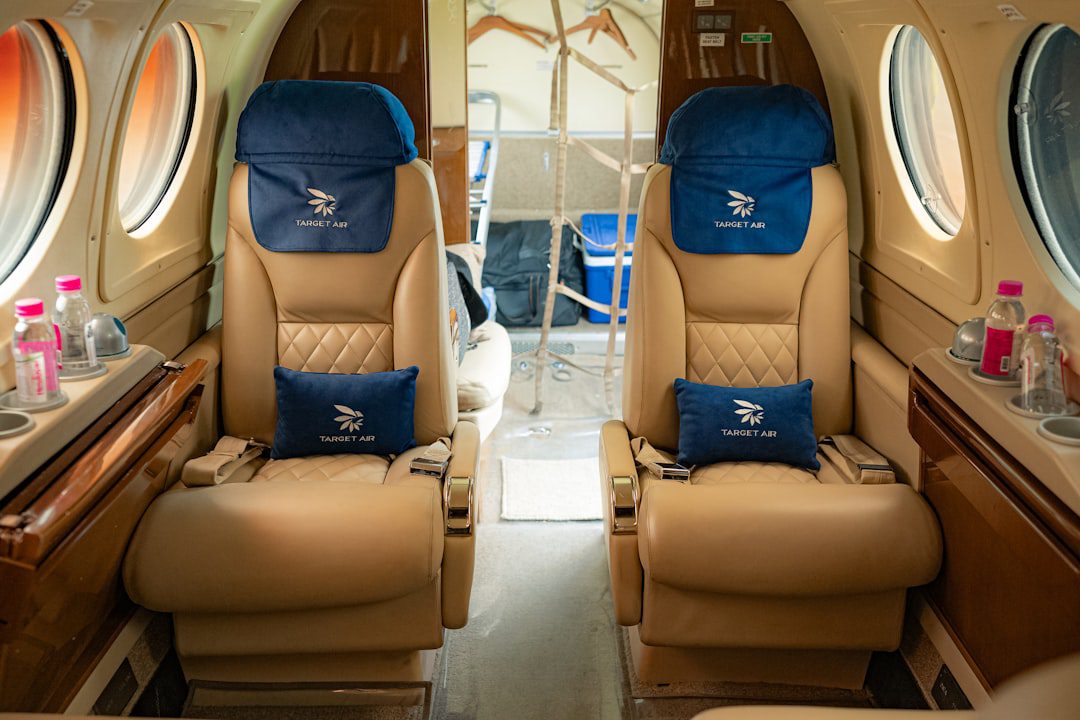
Why Choosing the Right Airplane Charter Companies Can Transform How You Travel
Airplane charter companies give wealthy travelers something commercial airlines simply cannot: complete control over where you go, when you leave, and how you arrive.
Here are the top airplane charter companies to know in 2026:
| Company | Best For | Key Strength |
|---|---|---|
| NetJets | Fractional ownership | World’s largest private jet fleet |
| VistaJet | Global membership | Guaranteed fleet access, starts at $11,000/hr |
| XO | On-demand booking | 2,000+ aircraft, 60,000 routes worldwide |
| flyExclusive | Jet club membership | ARG/US Platinum + Wyvern Wingman certified |
| Aero | By-the-seat flights | ARGUS Platinum, top 5% of operators |
| Victor | Transparent booking | Full operator disclosure, SAF options |
| Tradewind Aviation | Northeast & Caribbean | Condé Nast top 5 U.S. airline, 5 years running |
| Four Seasons Jet | Ultra-luxury charters | ~$115,000/day, full hotel-grade service |
Private aviation is no longer just about skipping the security line. For family offices and ultra-high-net-worth individuals, it’s a strategic tool — one that compresses time zones, protects privacy, and opens access to more than 40,000 airports that commercial carriers never touch.
But the market is crowded, and the options are genuinely complex. On-demand charters, jet cards, fractional shares, membership programs — each model suits a different travel pattern and budget. Picking the wrong one can mean paying for hours you never fly, or worse, being locked into a contract that doesn’t serve how you actually travel.
This guide cuts through the noise.
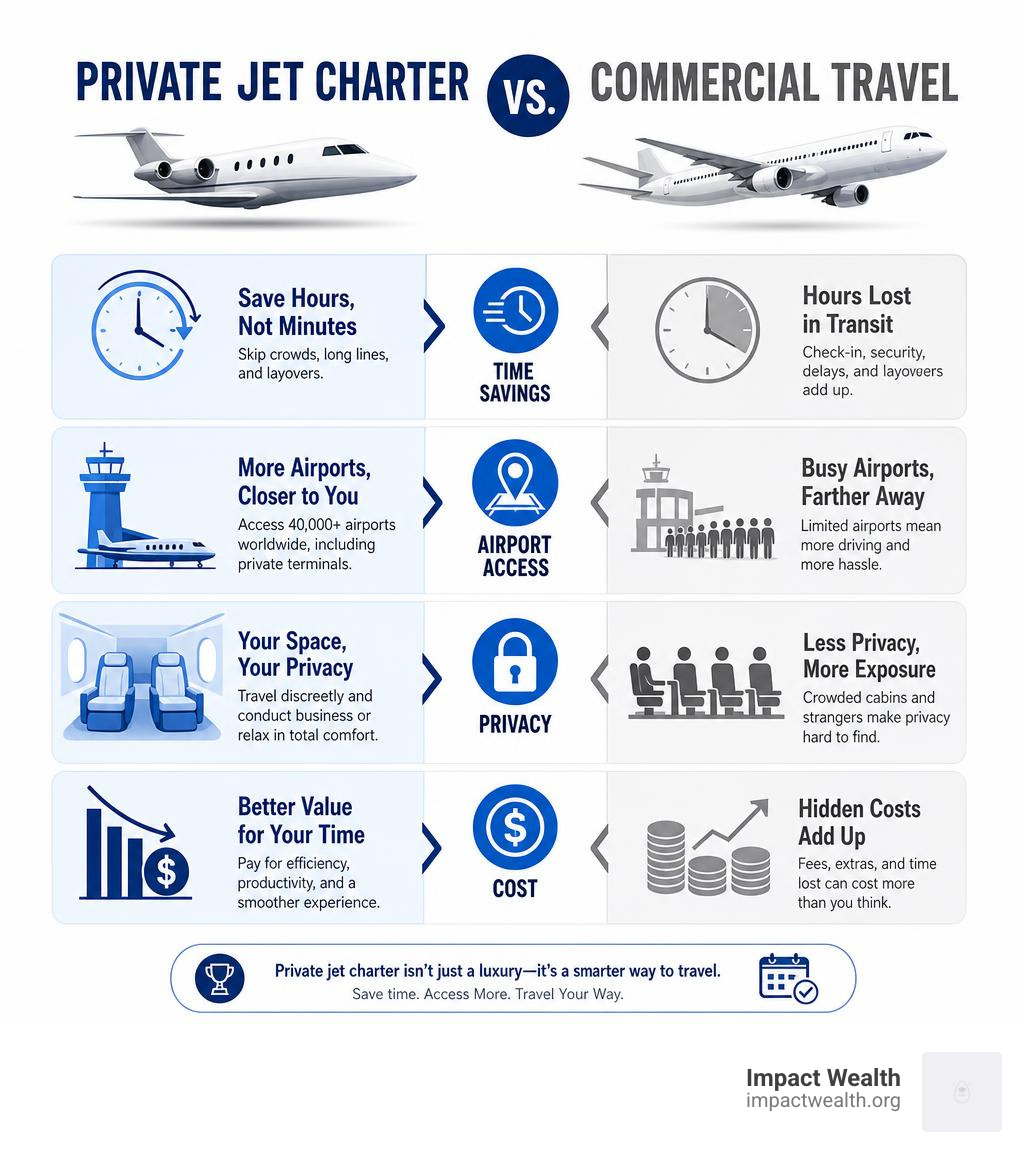
Know your airplane charter companies terms:
Understanding the Private Aviation Landscape

When navigating private aviation, the first hurdle is understanding how different services are structured. Not all airplane charter companies operate under the same business model. Depending on your annual flight hours, your need for consistency, and your tolerance for upfront capital commitments, you will find yourself choosing between four primary avenues.
To put this in perspective, choosing a private aviation model is a lifestyle investment. Much like how ultra-high-net-worth individuals evaluate luxury assets—deciding why billionaires charter yachts instead of booking resorts or analyzing the market when mega-yachts for sale attract new generation of wealthy buyers—selecting an aviation program requires balancing capital allocation with personal flexibility.
1. On-Demand Jet Charter
The ultimate pay-as-you-go model. You contact a broker or operator, request a specific route, select from available aircraft, and pay for that single trip. There are no upfront acquisition fees, no monthly management fees, and no long-term commitments. It is highly flexible but leaves you subject to market pricing and availability, especially during peak holiday seasons.
2. Jet Cards
Jet cards allow you to purchase a block of flight hours (usually starting at 25 hours) or deposit a fixed sum of money (typically $100,000 to $250,000) in exchange for locked-in hourly rates. This model offers predictability and guaranteed availability with relatively short notice, making it highly popular for those flying between 25 and 50 hours annually.
3. Fractional Ownership
If you fly more than 50 hours a year, fractional ownership becomes financially viable. You purchase a share of a specific aircraft (ranging from a 1/16th share up to a 1/2 share). This gives you the tax depreciation benefits of owning an asset without the operational headaches. You pay an upfront acquisition cost, a monthly management fee, and an occupied hourly rate when you fly.
4. Membership Programs
Membership programs function as a middle ground. You pay an annual or monthly subscription fee to gain access to a fleet at preferred, dynamic, or capped hourly rates. Some innovative companies, such as The Private Jet Airline | Aero™, have redefined this space by offering premium “by-the-seat” scheduled flights. This model allows you to enjoy the luxury of private terminals and custom-configured jets without chartering an entire aircraft.
Here is how these structures compare:
| Service Type | Typical Annual Hours | Upfront Capital Commitment | Pricing Model | Availability Guarantee |
|---|---|---|---|---|
| On-Demand Charter | 1 – 25 hours | None | Dynamic market rates | Subject to fleet availability |
| Jet Cards / Funds | 25 – 50 hours | $100,000 – $250,000 | Fixed hourly or tiered rates | Capped response time (e.g., 24-72 hours) |
| Fractional Ownership | 50+ hours | High (Asset acquisition) | Monthly management + hourly rate | Guaranteed (usually with 4-10 hours notice) |
| Membership / By-the-Seat | Variable | Low to Moderate | Subscription + seat/charter price | Scheduled flights or priority booking |
For those looking to explore the regulatory framework of these operators, the Category:Charter airlines of the United States – Wikipedia provides a comprehensive historical and structural overview of how public and private charter operators are classified.
Key Criteria for Selecting Top Airplane Charter Companies

With hundreds of operators and brokers vying for your business, establishing a rigorous vetting process is essential. We advise focusing on three pillars: fleet diversity, operational footprint, and customer service standards.
When evaluating a company, look at their operational depth. For instance, flyExclusive | Your Partner in World-Class Private Travel stands out because they control their fleet directly, maintaining a massive inventory of Light, Mid, and Super-Mid aircraft. This vertical integration allows them to control safety protocols, crew training, and maintenance schedules directly rather than relying on third-party operators.
On a global scale, Private Jet Hire | Private Jets: Charter, Rental & Flights | VistaJet offers a completely different level of consistency. With their iconic silver-and-red fleet, VistaJet operates as a global subscription service. Their flights start at approximately $11,000 per hour, providing guaranteed access to their entire global fleet with no positioning fees.
For travelers based in Europe, localized premium operators like The #1 Private Jet Charter • GlobeAir provide highly efficient, very light jet (VLJ) services perfect for short-haul European business trips. Conversely, if your business or leisure takes you to Asia, utilizing specialized regional services like Top China Private Jet Services for Seamless Travel Experience ensures that you navigate the complex airspace, permits, and handling requirements unique to the Far East.
Evaluating the Fleet and Global Reach of Airplane Charter Companies
The composition of a charter company’s fleet dictates your travel capabilities. If you regularly fly transoceanic routes, you require ultra-long-range aircraft capable of sustained high-altitude cruise. The pinnacle of this class is represented by aircraft like the Gulfstream G700: The Future of Precision Prestige, which offers unmatched cabin comfort, advanced aerodynamics, and precise engineering designed to eliminate jet lag.
When booking, ensure your charter company offers a range of cabin classes:
- Very Light / Light Jets: Ideal for 1-3 hour regional flights (e.g., Miami to Palm Beach or Bal Harbour).
- Midsize / Super-Midsize: Perfect for coast-to-coast travel (e.g., Los Angeles to Palm Beach).
- Large / Ultra-Long-Range: Required for transatlantic or transpacific journeys (e.g., London to Los Angeles).
The luxury experience shouldn’t end when the wheels touch the tarmac. Leading charter programs seamlessly coordinate your ground transportation. Arriving in style at a private terminal demands a vehicle of equal stature, such as when you experience elite driving with the 2026 Cadillac Escalade.
Furthermore, choosing the right departure and arrival airport can save you hours of travel time. In major metropolitan areas, private aviation relies on dedicated general aviation airports. For example, when flying into Southern California, using a premier private terminal like the Los Angeles Private Jet Charter – Clay Lacy Aviation at Van Nuys Airport (VNY) allows you to bypass the congestion of LAX entirely.
Similarly, in our key coastal hubs, utilizing regional experts makes a world of difference:
- For South Florida travel, look into West Palm Beach Private Jet Charter | evoJets to access Palm Beach International (PBI) efficiently.
- To coordinate flights in the Miami metro area, operators like Miami – Air Charter – Shoreline Aviation and platforms like Private Jet Charter in Miami Florida | Flights & Services | Jettly provide localized fleet access.
- If you are staying in northern Miami-Dade or Broward County, booking Hallandale Beach Private Jet and Air Charter Flights allows you to utilize Fort Lauderdale-Hollywood International (FLL) or Miami Opa-locka Executive Airport (OPF) with minimal ground transfer times.
Booking Technology and On-Demand Services of Modern Airplane Charter Companies
The digital transformation of private aviation has made booking a jet as simple as ordering a luxury car service. Leading airplane charter companies utilize sophisticated mobile apps that offer instant booking, live tracking, and digital contract signing.
While some travelers prefer the high-touch service of a dedicated 24/7 phone broker, tech-driven platforms allow you to search thousands of aircraft in seconds. However, booking timelines still require strategic planning. While some operators can get you airborne in as little as three to four hours in an emergency, booking three to four weeks in advance for domestic flights—and six-plus weeks for international or peak holiday travel—is highly recommended to secure the best aircraft and rates.
For those who value flexibility, empty-leg flights offer an exceptional opportunity. These occur when an aircraft needs to fly empty to its next destination to pick up charter passengers or return to base. Platforms like TrueSkies Aviation | Private Jet Charter & Empty Leg Flights specialize in matching travelers with these repositioning flights, often at a fraction of the standard charter cost. TrueSkies also offers an innovative funds-on-account program with built-in “TS Trip Protection,” which covers up to 100% of mechanical recovery costs if your aircraft experiences an unexpected technical issue before departure.
Safety Standards and Regulatory Compliance
In private aviation, safety is the ultimate luxury. While all commercial charter operators in the United States must meet strict FAA Part 135 regulations, the premier airplane charter companies go far beyond these baseline government requirements.
When vetting an operator or broker, always ask for their third-party safety accreditations. The gold standards to look for include:
- ARGUS (Aviation Research Group United States): ARGUS rates operators as Gold, Gold Plus, or Platinum. Platinum is the highest rating, awarded only to operators who demonstrate a fully functional Safety Management System (SMS), a clear safety history, and rigorous pilot background checks.
- Wyvern Wingman: This accreditation requires operators to undergo continuous monitoring and on-site audits to ensure their pilot experience, aircraft maintenance, and operational safety meet standards far exceeding regulatory baselines.
- IS-BAO (International Standard for Business Aircraft Operations): Developed by the International Business Aviation Council (IBAC), this code of best practices is designed to help flight departments achieve high levels of safety and professionalism globally.
For example, elite operators like Private Jet Charter Services | Luxury Global Aviation (VICE Jets) build their entire business model around these stringent standards, pairing 24/7 personalized concierge service with rigorously audited aircraft and crews. Working with companies that belong to the top 5% of safety-accredited operators ensures that your pilots have thousands of hours of flight time and that the aircraft has been maintained to the highest standards.
Pricing Structures and Transparency
Understanding private jet pricing can feel like deciphering a complex financial derivative. Unlike commercial airlines, where you pay per seat, private charters charge for the entire aircraft, primarily based on hourly operating rates. Standard on-demand charter prices are subject to market rates and typically start around $11,000 per hour for midsize jets, while ultra-luxury, fully managed experiences—such as the Four Seasons Private Jet—can cost upwards of $115,000 per day.
However, the hourly rate is rarely the final price. To avoid “sticker shock,” you must understand the components of a private jet quote:
- Billable Flight Time: Calculated from takeoff to landing, often with a minimum daily flight time requirement (usually 2 hours per day).
- Fuel Surcharges: Adjusted dynamically based on current fuel prices.
- Landing and Ramp Fees: Charged by airports to cover infrastructure costs. These are significantly higher at major hubs than at quiet regional airports.
- Repositioning / Ferry Fees: The cost of flying the aircraft empty to pick you up or return to its home base after dropping you off.
- Crew Overnight Fees: Covers lodging, meals, and transport for your pilots and cabin crew if you book a multi-day round trip.
To combat opaque pricing, look for brokers and operators that prioritize absolute transparency. For instance, Private Jet Charter Service, Luxury Jet Airplane Hire, Book Flights (Victor) pioneered a fully transparent booking model. Victor is unique in disclosing the actual operator name, aircraft tail number, interior images, and estimated fuel consumption in every single quote. This prevents brokers from hiding excessive markups and ensures you know exactly what aircraft you are stepping onto.
Sustainability and the Future of Private Flight
As environmental considerations shape the investment portfolios of high-net-worth individuals, the private aviation industry is undergoing a green transition. Today, forward-thinking travelers view sustainability not as an afterthought, but as a core component of their beyond portfolios: lifestyle investments for high net worth individuals.
The industry is addressing its carbon footprint through three primary avenues:
- Sustainable Aviation Fuel (SAF): Produced from renewable waste materials, SAF can reduce lifecycle CO2 emissions by up to 80% compared to conventional jet fuel. Leading charter companies allow clients to purchase SAF to offset their specific flights.
- Carbon Offsetting: Many top-tier programs now build carbon offsetting directly into their pricing. For example, TrueSkies Aviation includes 100% carbon offsetting at no extra cost to the client through their partnership with 4AIR.
- Electric and Hybrid Propulsion: For regional flight networks, the transition to hybrid and fully electric aircraft is accelerating, with commercial regional routes expected to adopt electric propulsion within the next decade.
Frequently Asked Questions about Private Jet Charters
How far in advance do I need to book a private jet charter?
For standard domestic flights within the United States, booking 3 to 4 weeks in advance is ideal to secure your preferred aircraft type and departure window. For international travel or trips during peak holiday seasons (such as Thanksgiving, Christmas, or major sporting events), we highly recommend booking at least 6 to 8 weeks in advance to navigate international permits and secure airport landing slots.
What are the typical safety accreditations to look for?
You should always confirm that the operator holds an ARGUS Platinum rating, a Wyvern Wingman certification, or is IS-BAO registered. These third-party audits verify that the company’s safety management systems, pilot flight hours, and maintenance protocols exceed minimum FAA requirements.
How do charter companies handle international customs and regulations?
When flying internationally, your charter company’s operations team handles all customs declarations, flight permits, and landing approvals. Upon arrival, you will bypass the main commercial terminal and clear customs through a private terminal (FBO), where dedicated customs officers typically process your passport and luggage in a matter of minutes.
Conclusion
Finding the best airplane charter companies in 2026 requires looking beyond glossy brochures and focusing on safety certifications, fleet ownership, and transparent pricing structures. Whether you choose the asset-light flexibility of on-demand chartering, the predictability of a jet card, or the ultimate consistency of fractional ownership, aligning your aviation choices with your annual travel patterns is key.
At Impact Wealth, we believe your travel should be as refined, efficient, and precise as your investments. Let your choice of private aviation partner reflect that commitment to excellence, ensuring that every journey is as seamless as it is spectacular.
Ready to take control of your travel? Explore our curated insights on private charter programs to find the perfect fit for your lifestyle.