Image source
According to the National Highway Traffic Safety Administration’s 2023 crash data, fault determination remains disputed in approximately 40% of multi-vehicle accidents — yet the evidence collected in the first hour after a crash often decides who pays and how much. As insurance companies increasingly rely on advanced analytics and real-time data to assess claims, the gap between drivers who understand evidence collection and those who don’t has never been more consequential. For anyone involved in an accident, knowing exactly what to document and preserve can mean the difference between a straightforward claim and months of disputed liability that affects insurance rates, out-of-pocket costs, and legal outcomes for years to come.
How to Collect and Document Evidence After an Accident
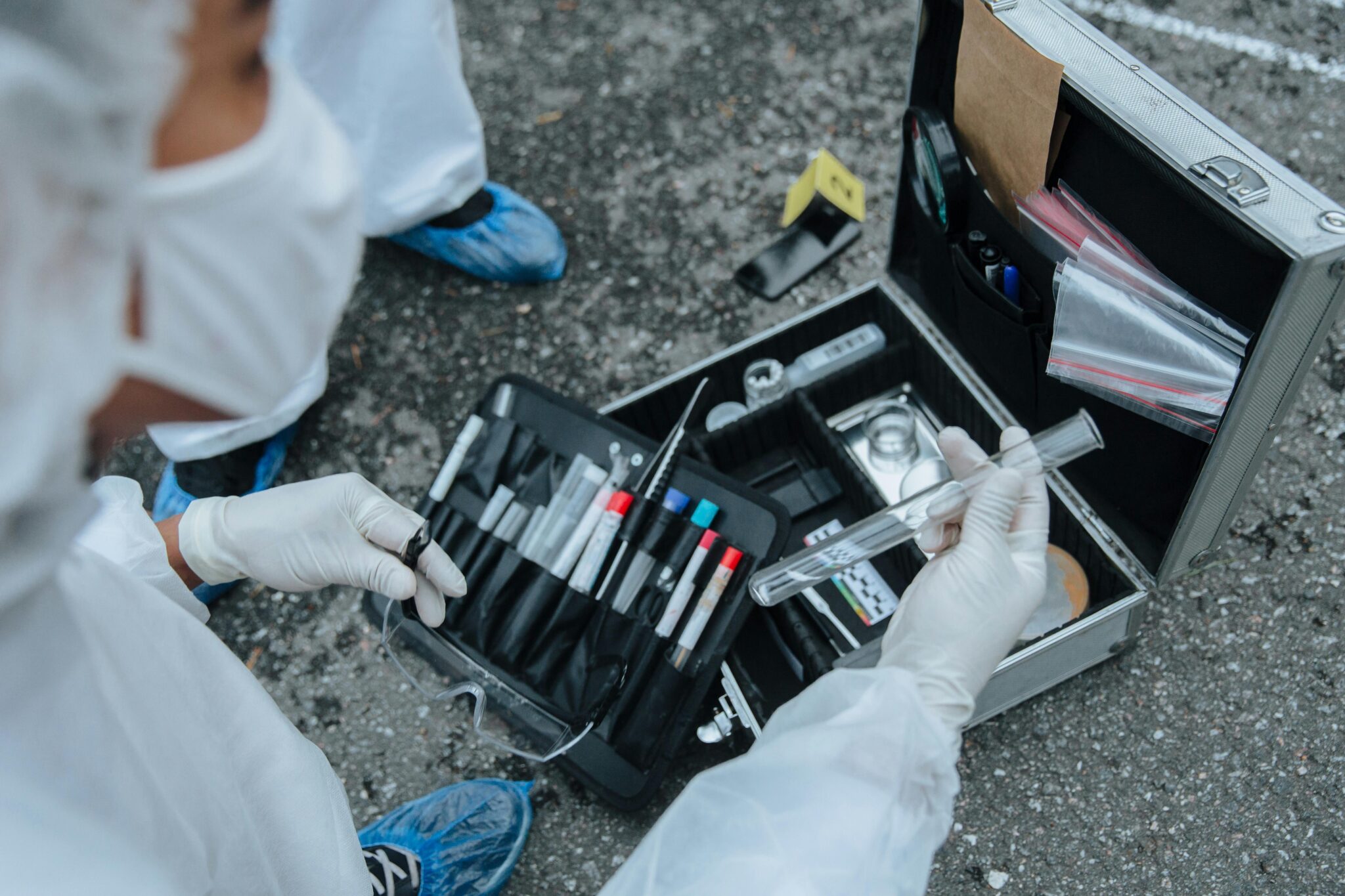
The moments immediately following a collision are critical for establishing a clear record of what happened. Your phone becomes your most valuable tool — start with wide-angle photos of the entire accident scene, including all vehicles involved, street signs, traffic signals, and road conditions. Capture the position of vehicles before they’re moved, focusing on damage patterns, skid marks, and debris fields that show the direction and force of impact.
Move systematically through documentation. Photograph each vehicle from multiple angles, paying special attention to damage that contradicts the other driver’s version of events. A rear-end collision where the front car shows side damage, for instance, suggests the story is more complex than initial appearances indicate. Document license plates, insurance cards, and driver’s licenses, but also capture environmental factors like weather conditions, road construction, or visibility issues that might have contributed to the accident.
Witness information proves equally crucial. Collect names and phone numbers, but also ask witnesses to describe what they saw in their own words while their memory is fresh. Record these statements on your phone if they’re willing — spontaneous statements carry more weight than reconstructed accounts days later. Independent witnesses (those not connected to either driver) hold the most credibility in fault determinations.
Don’t overlook the police report process. While officers don’t determine legal fault, their observations about traffic violations, driver statements, and physical evidence become foundational documents for insurance companies. Request the report number and ask how to obtain a copy once it’s filed. This documentation creates an official timeline and preserves key details that memory might distort later.
How Legal Standards and State Laws Affect Fault Determination
Comparative and Contributory Negligence Rules
The legal framework for assigning fault varies dramatically across states, fundamentally affecting how evidence gets evaluated and what outcomes become possible. Most states follow comparative negligence rules, where fault can be shared between drivers in percentages — meaning you might be found 30% at fault while the other driver bears 70% responsibility. This system rewards thorough evidence collection because reducing your percentage of fault directly increases your compensation.
However, a handful of states still operate under contributory negligence, where even minimal fault on your part can eliminate your right to compensation entirely. In Maryland, Virginia, and Washington D.C., for example, being found just 5% responsible for an accident can bar recovery completely. This harsh standard makes evidence collection exponentially more important — what might be a minor factor in a comparative negligence state becomes case-ending in these jurisdictions.
Understanding Traffic Laws and Burden of Proof
Traffic law violations create powerful presumptions of fault, but they don’t automatically determine liability. Running a red light or failing to yield establishes a baseline of negligence, but other evidence can overcome these presumptions. Consider a scenario where Driver A runs a red light but Driver B was texting and could have avoided the collision with reasonable attention — both factors influence the final fault determination.
The burden of proof in fault disputes typically requires clear and convincing evidence rather than absolute certainty. This means your evidence doesn’t need to eliminate all doubt, but it must be substantially more persuasive than conflicting accounts. GPS data showing your speed was appropriate, for instance, can outweigh estimates based purely on damage assessment. Understanding this standard helps prioritize which evidence matters most when building your case.
How Insurance Companies Assess and Assign Fault
Insurance Adjusters’ Evaluation Methods
Insurance adjusters follow systematic protocols for fault determination that go far beyond reviewing police reports and damage photos. They create detailed collision diagrams using specialized software that factors in vehicle speeds, impact angles, and physics-based reconstruction models. Modern adjusters often have access to telematics data from vehicles equipped with event data recorders, which capture precise information about speed, braking, and steering inputs in the seconds before impact.
The adjuster’s investigation typically begins with statement analysis — comparing accounts from all drivers, passengers, and witnesses for consistency and credibility. They look for specific details that can be verified against physical evidence, timelines that make logical sense, and admissions that support or contradict fault claims. A driver who admits to “looking down for just a second” provides crucial evidence of distracted driving, even if they otherwise maintain they had the right of way.
The Importance of Timely and Accurate Documentation
Insurance companies operate on strict timelines that can work for or against claimants depending on how quickly they receive quality evidence. Most insurers require notification within 24-72 hours of an accident, but fault determinations often happen within the first week based on available information. Evidence submitted after this initial assessment faces higher scrutiny and may struggle to overcome preliminary conclusions.
The quality of your initial evidence submission significantly influences how thoroughly adjusters investigate your case. Well-organized documentation with clear photos, complete witness information, and a coherent narrative typically receives more detailed review than sparse or disorganized submissions. Beyond the immediate aftermath, many accident survivors find that navigating the legal and insurance aspects of a serious collision often requires legal support after a car crash — particularly when fault disputes complicate the claims process and affect long-term financial recovery.
Common Misconceptions and Challenges When Proving Fault
One of the most persistent misconceptions involves the relationship between fault and financial responsibility. Many drivers assume that being “at fault” automatically means paying for all damages, but insurance coverage, policy limits, and state laws create a more complex reality. A driver who causes an accident might have minimal insurance, forcing the injured party to rely on their own coverage regardless of fault determination.
Eyewitness testimony, while valuable, proves less reliable than most people expect. Studies in cognitive psychology demonstrate that witness accounts of fast-moving events like car accidents are susceptible to memory distortion, perspective bias, and post-event information. Witnesses often confidently recall details that contradict physical evidence, creating challenges for adjusters trying to reconstruct events. This limitation doesn’t invalidate witness statements but emphasizes why corroborating physical evidence carries more weight in fault determinations.
The “no-witness” scenario presents unique challenges but doesn’t make fault determination impossible. Advanced accident reconstruction techniques can establish fault through damage analysis, skid mark patterns, and vehicle positioning. However, these cases require more sophisticated evidence collection and often benefit from expert analysis that goes beyond basic documentation. Speed calculations based on crushing damage, trajectory analysis from debris patterns, and sight distance studies can all contribute to fault determination even when no independent witnesses observed the collision.
The Impact of Specific Evidence Types on Fault Determination
Police reports carry significant weight in fault determinations, but their influence depends heavily on the responding officer’s training and investigation thoroughness. Reports that simply document damage and exchange information provide limited value compared to those including traffic citations, detailed measurements, and officer opinions about contributing factors. Citations for specific violations — failing to yield, following too closely, or exceeding safe speed for conditions — create strong presumptions that significantly influence insurance company decisions.
Modern technology increasingly shapes fault determinations through GPS tracking, dashboard cameras, and traffic surveillance footage. Telematics data from smartphones or vehicle systems can provide precise speed and location information that contradicts driver statements about their actions before the collision. Dash cam footage, while not always capturing the moment of impact, often reveals crucial context about traffic patterns, signal timing, and driver behavior in the seconds leading up to the accident.
Skid marks and road evidence require expert interpretation to maximize their impact on fault determination. The length, direction, and pattern of skid marks can establish vehicle speeds, braking response times, and the sequence of events during a collision. However, this analysis requires understanding of factors like road surface conditions, tire types, and vehicle characteristics that affect braking distances. Without proper interpretation, physical evidence that could strongly support your position might carry minimal weight in the fault determination process.
The key to effective evidence collection lies in understanding that fault determination operates as a reconstruction puzzle where each piece of evidence either supports or contradicts a particular version of events. Building a compelling case requires systematic documentation that addresses not just what happened, but why alternative explanations are less credible than your account of the collision.