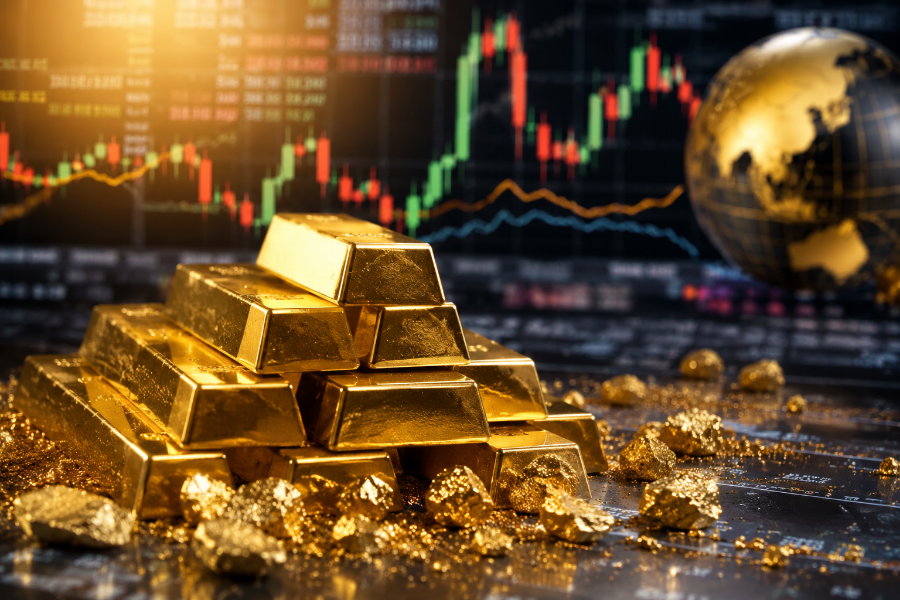
Gold Macro Volatility has become one of the defining themes of the global financial system in 2026. For decades, gold was primarily viewed as a slow-moving defensive asset designed to preserve wealth during periods of economic instability. However, the modern macro environment has transformed gold into a far more reactive and actively traded financial instrument. Rising interest rate uncertainty, geopolitical fragmentation, central bank diversification, and aggressive capital rotation across global markets have increased gold price swings significantly compared with previous cycles.
The shift reflects a broader transformation in investor behavior. In earlier eras, gold often moved gradually in response to inflation fears or currency weakness. Today, institutional investors treat gold as a macro-sensitive asset closely tied to real yields, US dollar strength, Federal Reserve expectations, sovereign risk, and liquidity conditions. Consequently, gold now experiences rapid directional moves as traders respond to changing monetary policy signals and geopolitical developments almost in real time.
Moreover, investor reliance on gold has intensified amid recurring global uncertainty. Persistent inflation concerns, banking-sector fragility, regional conflicts, and rising debt burdens have increased demand for safe haven assets across both developed and emerging economies. At the same time, higher interest rates and stronger bond yields occasionally create pressure on non-yielding assets like gold. Therefore, Gold Macro Volatility now represents the intersection of fear, monetary policy, and institutional capital flows rather than traditional commodity demand alone.
Gold Macro Volatility and the New Era of Unstable Safe Havens
Gold behaves differently in modern high-rate environments than it did during previous monetary cycles. Historically, gold performed strongly when central banks maintained low interest rates and inflation accelerated. However, the 2024–2026 cycle demonstrated that gold can remain resilient even while nominal rates stay elevated. This shift is largely tied to investor concerns about fiscal sustainability, geopolitical instability, and long-term currency purchasing power rather than simple inflation hedging alone.
Real yields remain one of the most important drivers of Gold Macro Volatility. When inflation-adjusted bond yields rise sharply, gold often faces downward pressure because investors can generate higher returns from income-producing assets. Conversely, falling real yields typically support gold prices because the opportunity cost of holding non-yielding bullion declines. Consequently, traders closely monitor central bank policy guidance, inflation data, and labor market reports to anticipate changes in real-rate dynamics.
Another important development involves the changing nature of safe-haven behavior. During earlier market crises, investors frequently rotated into government bonds and the US dollar first, with gold acting as a secondary defensive allocation. However, persistent debt expansion and concerns regarding sovereign fiscal conditions have complicated that relationship. In some cases, investors increasingly view gold as a hedge against systemic financial instability itself rather than simply against inflation or recession.
Nevertheless, gold’s role as a safe haven is no longer straightforward. Elevated volatility means investors can experience sharp short-term price swings even during periods of strong long-term demand. Therefore, while gold remains strategically important for diversification, modern investors increasingly approach it as an actively traded macro asset rather than a passive store of value.
Key Forces Behind Gold Macro Volatility
- Rapid shifts in interest rate expectations
- Inflation uncertainty across developed economies
- Increased geopolitical fragmentation globally
- Central bank reserve diversification strategies
- Institutional ETF inflows and outflows
- Currency volatility and US dollar fluctuations
- Liquidity shocks across equity and bond markets
Central Banks and the Structural Demand for Gold
One of the most important structural drivers supporting gold markets in recent years has been aggressive central bank accumulation. Central banks across emerging markets and several developed economies continued increasing gold reserves as part of broader diversification strategies away from heavy US dollar dependence. This trend accelerated following periods of sanctions risk, currency volatility, and heightened geopolitical tensions.
Countries including China, India, Turkey, and several Middle Eastern economies maintained sustained gold purchases throughout recent years. These acquisitions reflected long-term reserve management priorities rather than short-term speculative trading. Consequently, central bank demand has become a stabilizing force within global gold markets even during periods of rising rates and stronger dollar conditions.
The strategic rationale behind central bank buying extends beyond simple inflation protection. Gold offers reserve diversification benefits because it carries no direct sovereign liability and is less exposed to external political systems than fiat reserve currencies. Moreover, central banks increasingly view gold as a neutral reserve asset during a period of growing geopolitical fragmentation and evolving global trade alliances.
However, central bank demand alone does not eliminate downside risks for gold prices. Stronger economic growth, aggressive monetary tightening, or sustained US dollar appreciation can still pressure bullion markets. Therefore, while official-sector buying provides long-term structural support, short-term volatility remains heavily influenced by broader macroeconomic conditions.
Why Central Banks Continue Buying Gold
- Diversification away from concentrated USD reserves
- Protection against currency instability
- Strategic reserve accumulation during geopolitical uncertainty
- Reduced exposure to sovereign debt systems
- Long-term inflation protection objectives
- Financial stability considerations during crisis periods
- Increased trust in physical reserve assets
Macro Drivers of Gold Price Movement
| Factor | Bullish Impact | Bearish Impact | Market Mechanism | 2026 Outlook Influence |
|---|---|---|---|---|
| Falling Real Yields | Supports gold demand | — | Lower opportunity cost of holding gold | High |
| Rising US Dollar | — | Pressures gold pricing | Gold becomes costlier globally | High |
| Inflation Expectations | Encourages hedge buying | Stable inflation reduces urgency | Safe-haven allocation increases | Moderate-High |
| Central Bank Buying | Structural demand support | — | Long-term reserve diversification | High |
| Geopolitical Conflict | Flight-to-safety demand | Conflict resolution reduces flows | Risk-off capital movement | High |
| ETF Inflows | Boosts institutional demand | Outflows pressure prices | Liquidity-driven market moves | Moderate |
| Strong Bond Yields | — | Encourages fixed-income allocation | Competes with non-yielding gold | High |
Geopolitics, Inflation & Market Fear Cycles
Geopolitical instability remains one of the most immediate catalysts for Gold Macro Volatility. Military conflicts, trade fragmentation, sanctions disputes, and regional instability frequently trigger rapid safe-haven flows into bullion markets. During periods of heightened uncertainty, investors often seek liquid assets perceived as independent from national political systems and sovereign credit risk.
Inflation cycles also continue shaping gold demand patterns globally. Although inflation rates moderated from earlier peaks in several economies, concerns regarding structural inflation persistence remain active across institutional markets. Wage pressures, supply chain realignment, energy market disruptions, and fiscal deficits contribute to fears that inflation could remain elevated longer than previously expected. Consequently, many investors continue using gold as part of broader inflation hedge strategies.
Risk-off capital flows have become increasingly interconnected across asset classes. In previous decades, gold often moved independently from equities and currencies. However, modern algorithmic trading systems, ETF liquidity structures, and macro hedge fund strategies create faster and more synchronized reactions across financial markets. Therefore, gold price swings can intensify during periods of market stress even when long-term fundamentals remain supportive.
At the same time, geopolitical risk does not guarantee sustained bullish momentum for gold. Markets frequently experience short-lived spikes followed by rapid reversals once immediate fears subside. As a result, investors must distinguish between temporary fear-driven rallies and broader structural demand trends tied to monetary policy and reserve diversification.
Geopolitical Drivers Supporting Gold
- Regional military conflicts
- Trade fragmentation and sanctions risk
- Energy market disruptions
- Sovereign debt concerns
- Banking system instability
- Currency devaluation fears
- Global recession uncertainty
Read also: Gold Price Today: How UAE’s OPEC Exit Is Quietly Reshaping Millionaire Investment Strategy
Gold Macro Volatility in Institutional Portfolio Strategy
Institutional investors increasingly treat gold as a tactical portfolio instrument rather than merely a passive hedge. Exchange-traded funds linked to gold continue serving as one of the most visible indicators of institutional positioning. ETF inflows often accelerate during periods of macro uncertainty, while outflows typically emerge when investors favor equities, bonds, or risk-sensitive assets.
Hedge funds also play a major role in amplifying Gold Macro Volatility. Large macro-focused funds frequently use gold futures and derivatives to express views on inflation, monetary policy, or geopolitical risk. Consequently, speculative positioning can create rapid momentum-driven price swings that extend beyond underlying physical demand conditions.
Asset allocation strategies are also evolving. Pension funds, sovereign wealth funds, and diversified institutional portfolios increasingly view gold as a strategic diversifier during periods of elevated cross-asset correlation. In environments where both equities and bonds face simultaneous pressure, gold often regains importance as an alternative defensive allocation.
However, institutional demand remains highly sensitive to liquidity conditions. During severe market stress, investors sometimes sell gold temporarily to raise cash or meet margin requirements. Therefore, even fundamentally bullish environments can experience sudden corrections driven by broader financial system pressures.
Institutional Uses of Gold
- Portfolio diversification
- Inflation protection strategies
- Currency risk hedging
- Tactical macro positioning
- Crisis-event protection
- Liquidity reserve allocation
- Long-term reserve management
Gold vs Other Safe-Haven Assets (2026 View)
| Asset | Volatility | Yield | Liquidity | Crisis Performance | Institutional Preference |
|---|---|---|---|---|---|
| Gold | Moderate-High | None | Very High | Strong | Very High |
| US Treasuries | Moderate | Positive Yield | Extremely High | Traditionally Strong | High |
| US Dollar Cash | Low-Moderate | Moderate Yield | Extremely High | Strong during liquidity stress | High |
| Swiss Franc | Moderate | Low Yield | High | Stable during crises | Moderate |
| Bitcoin | Very High | None | High | Mixed | Speculative Institutional Interest |
Why Gold Is No Longer a “Simple Safe Haven”?
Gold’s relationship with interest rates has become increasingly complex in modern financial markets. Earlier market cycles often assumed that higher rates would automatically weaken gold because investors could earn better returns elsewhere. However, persistent fiscal concerns and inflation uncertainty altered that traditional relationship. Consequently, gold sometimes strengthens even in elevated rate environments when investors question long-term economic stability.
The US dollar remains another critical factor shaping gold prices. Since gold is primarily priced in dollars globally, a stronger dollar can reduce international demand by increasing local currency costs. Conversely, dollar weakness often supports gold markets by improving affordability for international buyers. Therefore, currency movements remain deeply connected to Gold Macro Volatility.
Modern markets also experience more frequent volatility shocks than previous decades. Algorithmic trading, leveraged financial products, and rapid information flows contribute to sharper intraday and short-term price movements. Gold now reacts not only to macroeconomic fundamentals but also to positioning dynamics, liquidity conditions, and cross-asset correlations.
This transformation reflects what many analysts describe as the “financialization of uncertainty.” Gold is no longer merely a passive hedge stored during crises. Instead, it functions as an actively traded macro instrument influenced by institutional capital allocation, monetary policy expectations, and global risk sentiment.
2026 Macro Trends Shaping Gold Markets
Several macro trends continue shaping gold markets throughout 2026. Central bank diversification remains among the most powerful structural forces supporting long-term demand. Governments increasingly seek reserve flexibility amid changing geopolitical alliances and concerns regarding concentrated exposure to major reserve currencies.
Persistent geopolitical fragmentation also contributes to elevated uncertainty across global markets. Trade disputes, sanctions frameworks, supply chain realignment, and regional security tensions increase investor demand for assets perceived as politically neutral. Consequently, gold retains strategic relevance despite competing pressures from higher yields and stronger currencies.
Inflation uncertainty cycles remain another defining trend. While headline inflation rates moderated from earlier peaks, structural inflation drivers including labor shortages, fiscal deficits, and energy volatility continue affecting long-term expectations. Therefore, many institutional investors maintain gold exposure as protection against renewed inflation surprises.
Currency instability and sovereign debt concerns also influence long-term gold allocation decisions. Rising government borrowing costs and debt sustainability debates encourage diversification into tangible reserve assets. However, strong economic growth and stable monetary conditions could still reduce urgency for defensive allocations in certain market environments.
Key 2026 Gold Market Trends
- Continued central bank accumulation
- Rising geopolitical fragmentation
- Elevated inflation uncertainty
- Greater institutional macro trading activity
- Increased correlation with monetary policy expectations
- Growing reserve diversification strategies
- Higher sensitivity to liquidity conditions
FAQs
What is Gold Macro Volatility?
Gold Macro Volatility refers to sharp price movements in gold driven by macroeconomic factors such as inflation, interest rates, currency fluctuations, and geopolitical risk.
Why is gold so volatile in 2026?
Gold is reacting more aggressively to central bank policy shifts, real yield changes, geopolitical tensions, and institutional trading flows.
Is gold still a safe haven asset?
Yes, gold remains a major safe-haven asset, although it now experiences larger short-term price swings than in earlier decades.
How do interest rates affect gold prices?
Higher real interest rates can pressure gold because investors may prefer yield-producing assets, while falling real yields often support gold demand.
Why are central banks buying gold?
Central banks buy gold to diversify reserves, reduce currency concentration risk, and strengthen long-term financial stability.
Does inflation increase gold prices?
Inflation can support gold demand because investors often view gold as a hedge against declining purchasing power.
How does the US dollar impact gold?
A stronger US dollar generally pressures gold prices, while a weaker dollar often supports bullion demand globally.
Is gold good for portfolio diversification?
Gold is widely used for diversification because it can behave differently from stocks and bonds during periods of market stress.
What drives gold price movements?
Interest rates, inflation expectations, geopolitical tensions, ETF flows, currency movements, and central bank demand all influence gold prices.
What is the gold outlook for 2026?
The 2026 outlook for gold remains closely tied to inflation trends, monetary policy expectations, geopolitical developments, and institutional demand dynamics.